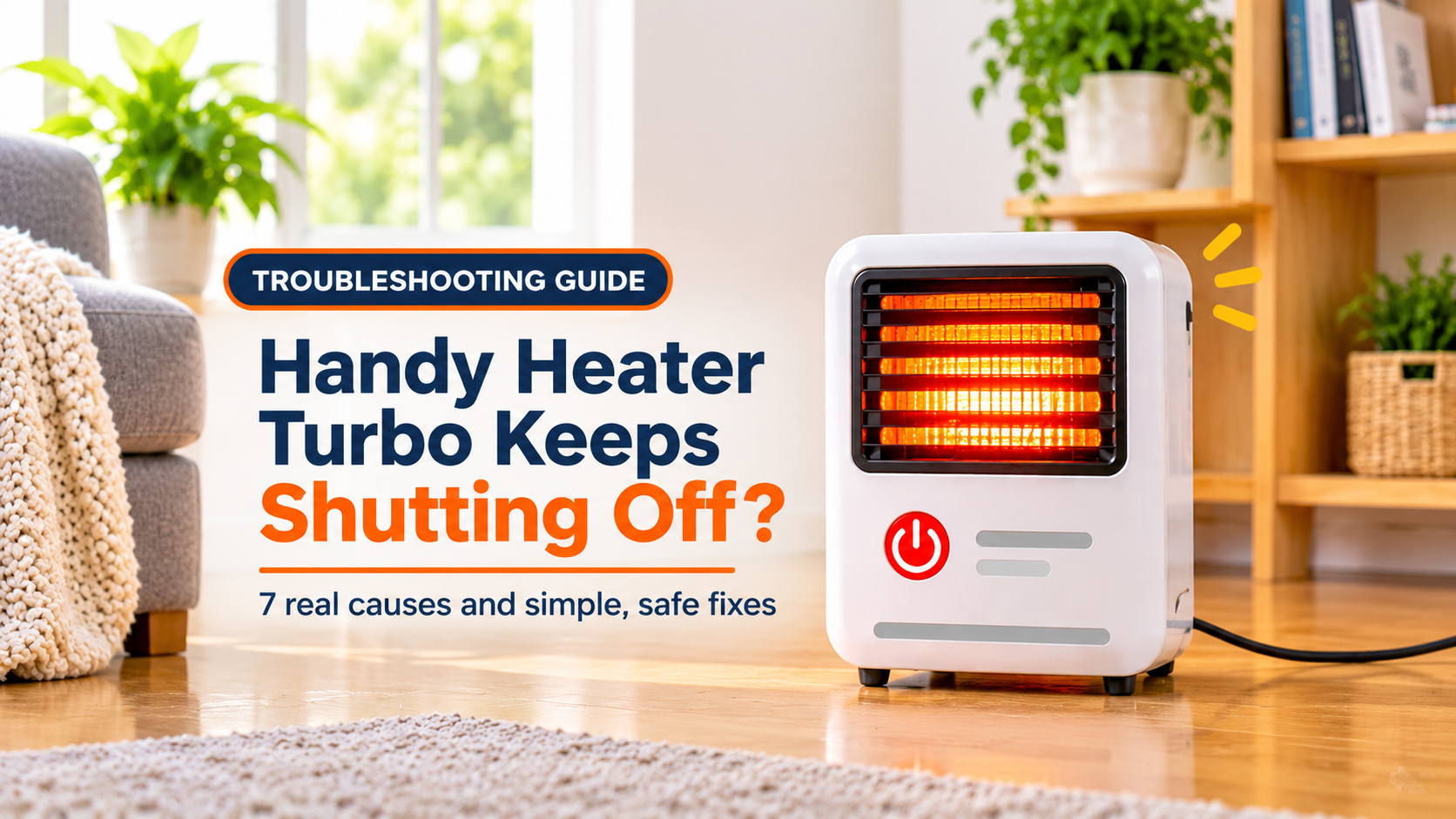
Handy Heater Turbo Keeps Shutting Off? 7 Causes and Safe Fixes
You switch your Handy Heater Turbo on, the room starts to warm up, and then, a few minutes later, it clicks off. You turn it on again and the same thing happens. It is frustrating, especially on a cold evening, and it also makes you wonder whether the heater is broken or unsafe.
The good news is that a portable heater that shuts itself off is usually doing exactly what it was designed to do. Most compact room heaters include built-in protection that cuts the power when something is not right. In this guide you will learn the most common reasons a Handy Heater Turbo keeps shutting off, how to test each one, and when it is time to stop troubleshooting and replace the unit.
- Why portable heaters shut themselves off
- Cause 1: Overheat protection is tripping
- Cause 2: Blocked or dusty air vents and filter
- Cause 3: The tip-over switch is activating
- Cause 4: Extension cord, power strip or weak outlet
- Cause 5: Timer, thermostat or temperature setting
- Cause 6: Damaged cord, plug or internal fault
- Cause 7: Overloaded circuit in your home
- Step-by-step troubleshooting checklist
- When to replace the heater
- How to prevent shut-offs in the future
- Frequently asked questions
Why Portable Heaters Shut Themselves Off
Small electric heaters turn electricity into heat very quickly, and they draw a lot of power to do it. Because of that, manufacturers add safety devices that interrupt the circuit when the heater gets too hot, falls over, or receives power in an unstable way. These devices are the reason modern portable heaters are far safer than older models.
When your heater turns off repeatedly, one of these safety systems is almost always involved. The goal of troubleshooting is to find out which one is being triggered and why. Before you start, remember the basic rule: unplug the heater and let it cool completely before touching, cleaning or moving it.
Cause 1: Overheat Protection Is Tripping
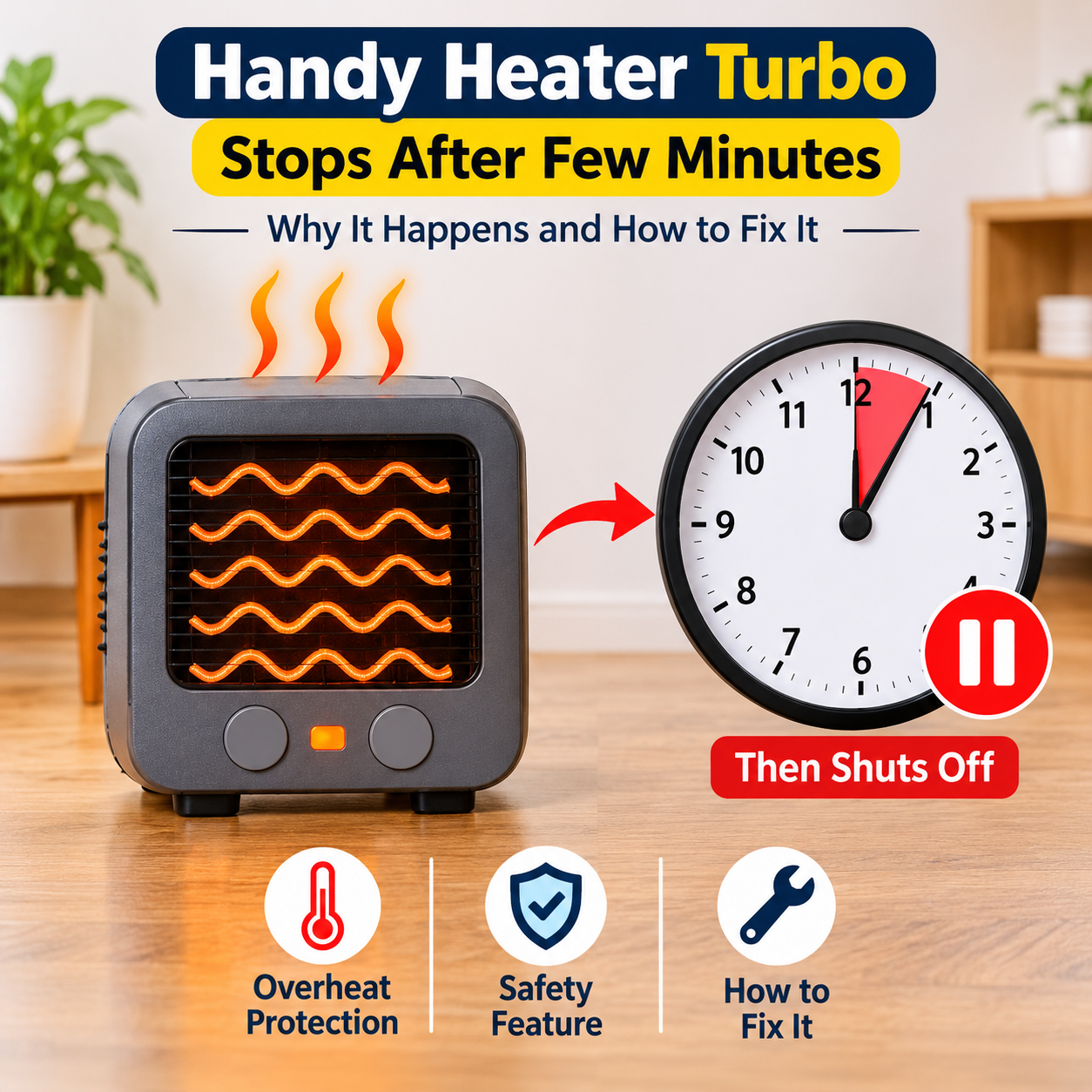
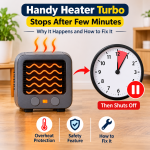
This is the number one reason a Handy Heater Turbo keeps shutting off. Inside the heater there is a thermal sensor or thermal fuse that monitors internal temperature. If the temperature rises above a safe limit, it cuts the power. Once the parts cool down, the heater may turn back on by itself, or you may have to switch it on manually.
Signs this is your problem:
- The heater runs for a few minutes, then stops, and works again after a rest.
- The body or the air coming out feels very hot just before it turns off.
- The shut-offs happen more often in small, closed rooms.
How to fix it: Unplug the unit, let it cool for at least 30 minutes, and then address the airflow issues described in the next section. If overheating continues even with clean vents and good clearance, the sensor or an internal part may be faulty.
Cause 2: Blocked or Dusty Air Vents and Filter
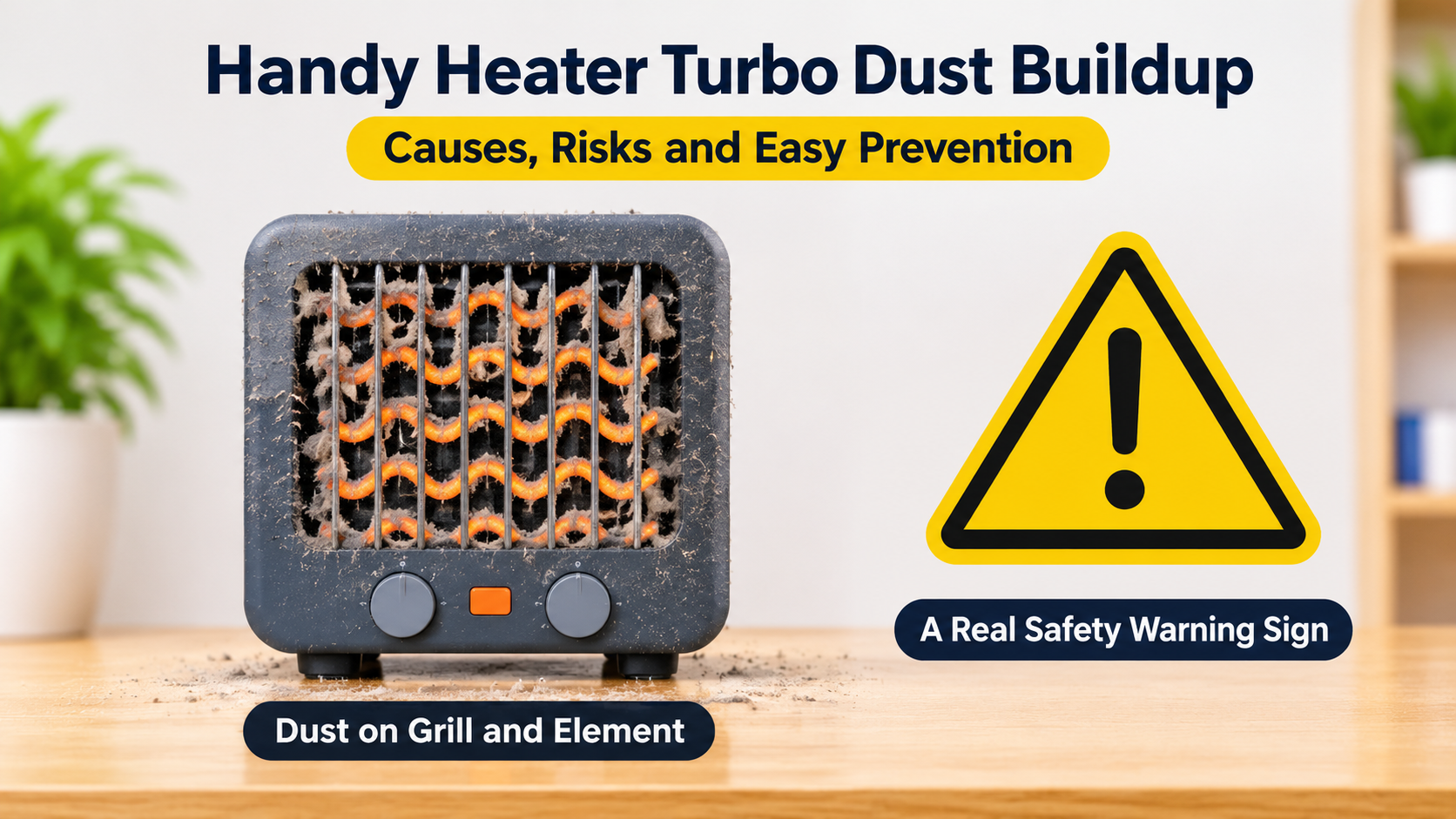
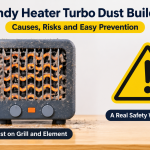
Compact heaters depend on a steady stream of air passing over the heating element. Dust, pet hair and lint collect on the intake grille and filter over time. When airflow drops, heat stays trapped inside the unit and the overheat protection steps in. This is especially common if the heater has been stored in a closet or used in a dusty room.
What to do:
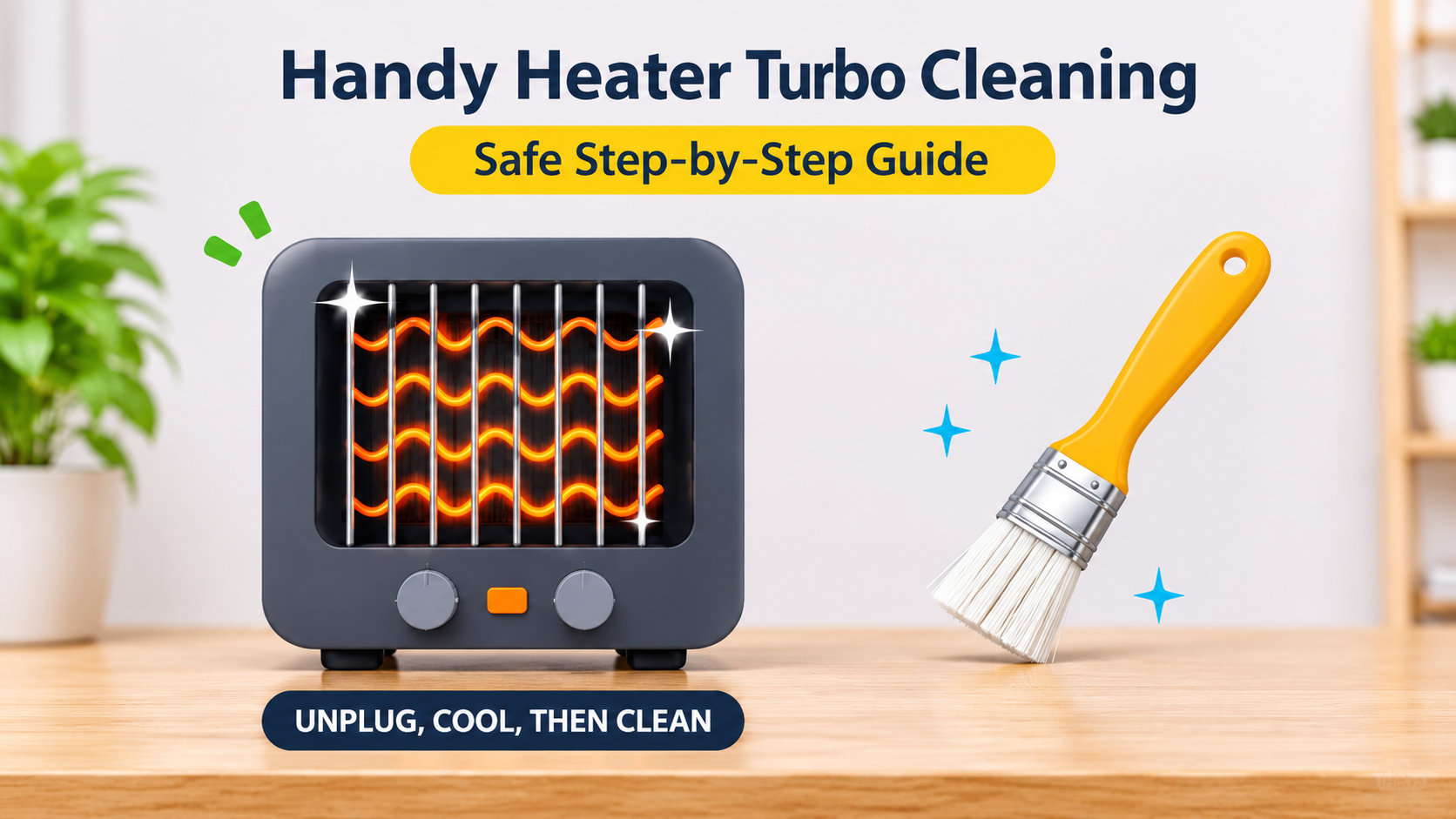
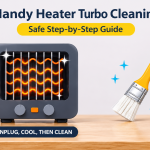
- Unplug the heater and wait until it is completely cool.
- Wipe the outside with a dry or slightly damp cloth. Never let water enter the unit.
- Use a soft brush or a vacuum with a brush attachment to clear the intake and outlet grilles.
- If your model has a removable filter, take it out, clean it according to the manual and let it dry fully before putting it back.
- Plug the heater back in and test it for 20 to 30 minutes.
Quick tip: Cleaning the vents once every two to four weeks during heavy use keeps airflow strong and helps the heater last longer.
Placement matters just as much as cleaning. A heater pushed against a sofa, a curtain, a wall or a bed cannot breathe properly. Keep it on a hard, level surface with generous free space around it.
Cause 3: The Tip-Over Switch Is Activating
Most portable heaters have a tip-over (or tilt) switch that cuts power instantly if the unit falls or leans too far. A very sensitive switch can also trigger when the heater sits on a soft or uneven surface such as carpet, a rug, a cushion or a wobbly table.
How to check:
- Place the heater on a hard, flat, stable floor and see if the problem disappears.
- Look for even a slight tilt. A folded rug edge or a thick carpet can be enough.
- Avoid placing the heater on beds, sofas or high furniture.
If the heater shuts off the moment you nudge it, even on a level surface, the tilt sensor may be worn or stuck. That is not a repair you should attempt at home.
Cause 4: Extension Cord, Power Strip or Weak Outlet
Heaters pull a large amount of current. When you plug one into a thin extension cord or a multi-socket power strip, the voltage can drop, the plug can heat up and the heater may stop working. Some outlets are also worn, and the plug does not make a firm connection, causing power to flicker on and off.
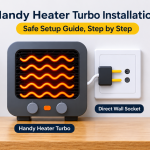
Safety warning: Plug your heater directly into a wall outlet whenever possible. If the plug or the outlet feels hot, unplug the heater immediately and have the outlet checked by a qualified electrician.
What to try:
- Remove any extension cord or power strip.
- Plug the heater directly into a different wall outlet in a different room.
- Make sure the plug is pushed all the way in and fits snugly.
- Check whether other high-power devices share the same outlet.
If the heater works normally in another outlet, the original outlet or its wiring is likely the cause.
Cause 5: Timer, Thermostat or Temperature Setting
Sometimes the heater is not faulty at all. Many models include a timer or an auto shut-off feature, and a thermostat that stops heating once the room reaches the temperature you selected. If the target is low, or the heater is placed close to the sensor’s reading zone, the heating element can switch off quickly and only turn back on when the temperature drops.
- Check whether a timer is active and reset it to continuous operation.
- Increase the thermostat setting by a few degrees and watch what happens.
- Read the manual to see if your unit has an automatic shut-off after a set number of hours.
If the heater clicks off only after the room feels comfortably warm, this is normal thermostat behavior and not a fault.
Cause 6: Damaged Cord, Plug or Internal Fault
Over time, cords can bend, fray or crack, especially near the plug where they are pulled the most. A damaged cord can lose contact and cut the power intermittently. Internally, a failing switch, a worn thermostat, a faulty thermal fuse or a loose connection can also cause random shut-offs.
Warning signs of an internal or cord problem:
- A burning or melting smell.
- Crackling, buzzing or sparking sounds.
- Discolored, soft or warped plug or cord.
- The heater shuts off when you move the cord.
- Flickering light or a dead heater with no pattern.
Stop using the heater if you notice any of these signs. Do not open the casing and do not try to repair it yourself. Contact the seller or manufacturer about a warranty claim or replacement.
Cause 7: Overloaded Circuit in Your Home
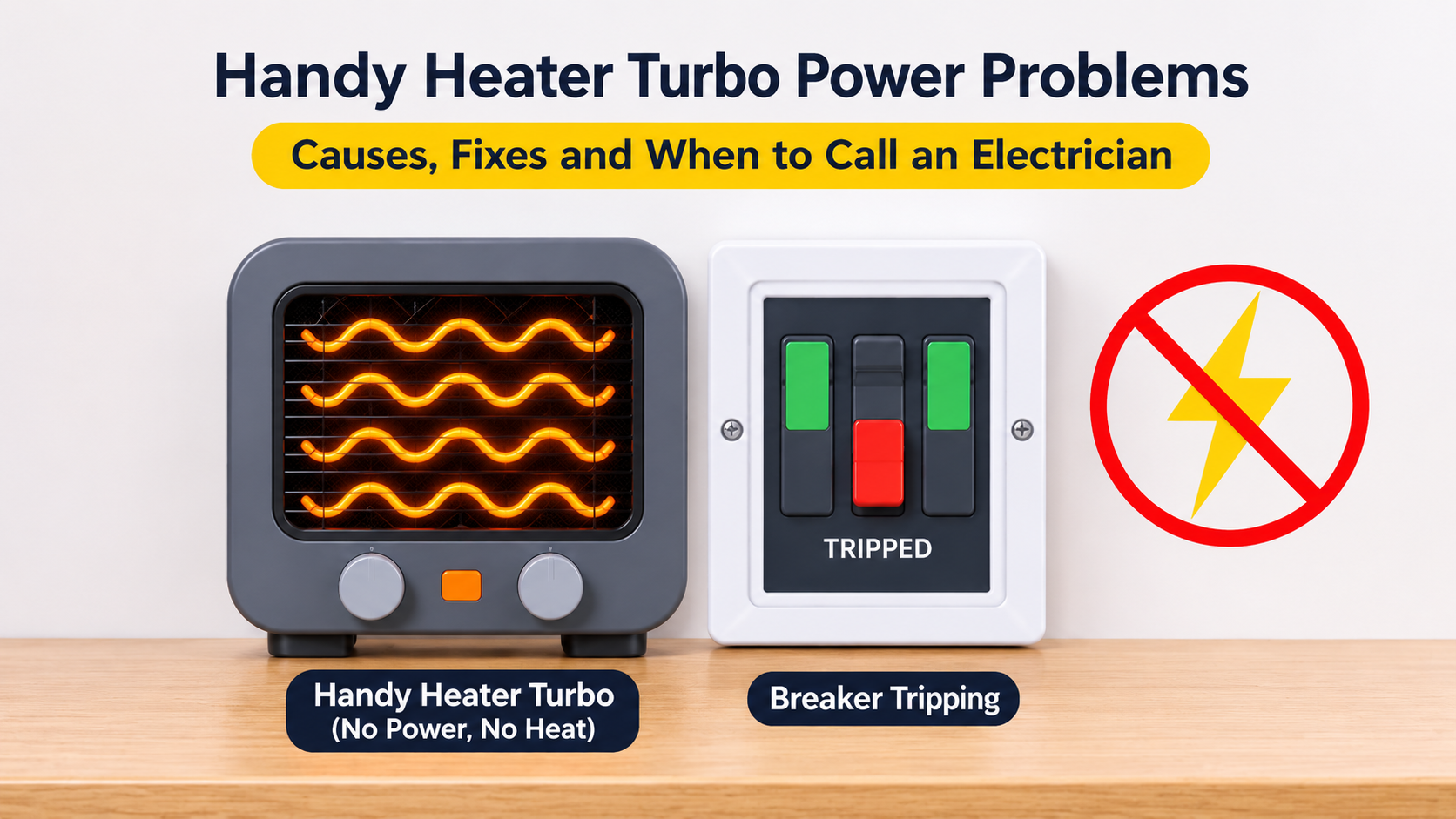
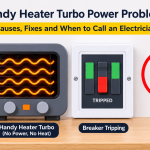
If the heater is not the problem, your home circuit may be. A heater running on the same circuit as an air conditioner, kettle, microwave, hair dryer or washing machine can overload the circuit breaker, which then trips and cuts power to the outlet. In this case the heater turns off, but so might other devices nearby.
What to do:
- Run the heater alone on its outlet and switch off other high-power appliances.
- Check whether the breaker or fuse in your electrical panel is tripping.
- If breakers trip repeatedly, ask a licensed electrician to inspect the circuit.
Step-by-Step Troubleshooting Checklist
Work through the checklist below in order. It starts with the easiest and safest checks and moves toward the more serious ones.
| Symptom | Most likely cause | What to do |
|---|---|---|
| Shuts off after a few minutes, restarts after cooling | Overheat protection | Clean vents, add clearance |
| Shuts off when moved or bumped | Tip-over switch | Use a hard, flat, stable surface |
| Shuts off with extension cord | Voltage drop or poor contact | Plug directly into the wall |
| Turns off once the room is warm | Thermostat or timer | Adjust settings |
| Shuts off when the cord moves | Damaged cord or plug | Stop using, replace the unit |
| Other appliances lose power too | Overloaded circuit | Run alone, call an electrician |
| Burning smell, sparks or melted plug | Serious internal fault | Unplug and stop using immediately |
When to Replace the Heater
Troubleshooting solves most problems, but not all. Consider replacing your heater in these situations:
- It keeps shutting off even after you cleaned it, moved it and tested it on a different outlet.
- The cord, plug or body shows damage, discoloration or a melting smell.
- The unit is several years old and has become less reliable each season.
- The cost of repair is close to the price of a new heater.
- It is still under warranty, in which case you should contact the seller first.
When shopping for a replacement, look for these features:
- Tip-over and overheat protection built in as standard.
- An adjustable thermostat so the heater cycles smoothly instead of cutting out abruptly.
- A power rating that suits your room. A very small heater in a large room runs hard and overheats more often.
- A safety certification mark recognized in your country.
- A removable, washable filter or easy-to-clean grilles.
- A solid warranty and clear customer support.
How to Prevent Shut-Offs in the Future
- Clean the grilles and filter regularly, especially during the heating season.
- Always plug directly into a wall outlet and avoid extension cords.
- Keep the heater on a firm, flat surface with plenty of space around it.
- Do not cover the heater or dry clothes on it.
- Match the heater to the room size and do not run it in tiny, sealed spaces for long hours.
- Never leave a heater running unattended or while you sleep unless the manual clearly allows it.
- Store it in a dry place during warm months and inspect the cord before each season.
Good to know: Portable heaters are only a supplement. For long-term, whole-room comfort, combine good insulation, draft sealing and, where possible, a proper heating system.
Frequently Asked Questions
Why does my Handy Heater Turbo turn off by itself?
The most common reasons are overheat protection caused by blocked vents, a tip-over switch triggered by an uneven surface, an extension cord that cannot carry the load, or a timer or thermostat setting. Work through the checklist above to find the cause.
Is it dangerous if my heater keeps shutting off?
A shut-off by itself usually means the safety system is working. It becomes dangerous if you also notice a burning smell, sparks, a hot plug or a damaged cord. In that case, unplug it and stop using it.
How long should I wait before turning it on again?
Unplug it and allow at least 30 minutes for it to cool. If your manual gives a different time, follow the manual.
Can I use an extension cord with a portable heater?
It is best to avoid it. Heaters draw high current, and many cords and power strips overheat under that load. Use a wall outlet directly.
Can I reset my heater?
Some units have a reset function, while others reset automatically once cool. Unplug it, wait, plug it in again and switch it on. If your model has a reset button, the manual will show you where it is.
Why does the heater shut off only when I use the turbo or high setting?
High mode draws more power and produces more heat. If the airflow is partly blocked, or the outlet or cord is weak, high mode will hit the limits first. Clean the vents, use a direct wall outlet and try again.
How often should I clean my portable heater?
During regular use, a quick cleaning every two to four weeks is a good habit. Do a deeper clean at the start and end of each season.
How long does a portable heater usually last?
With good care, many portable heaters last several seasons. Heavy daily use, dust and poor power conditions shorten their lifespan.
Final Thoughts
A Handy Heater Turbo that keeps shutting off is annoying, but it is rarely a mystery. In most cases the cause is blocked airflow, an uneven surface, a weak power connection or a setting that is easy to change. Cleaning the vents, giving the heater space and plugging it straight into the wall solve the majority of cases in just a few minutes.
If the problem remains after you have checked everything, or if you notice smells, sparks or damage, do not take chances. A reliable replacement with proper safety features is a small price to pay for warmth and peace of mind.
Disclaimer: This article is for general information only. Always follow the manufacturer’s user manual for your specific model and consult a qualified electrician for any electrical issue in your home.