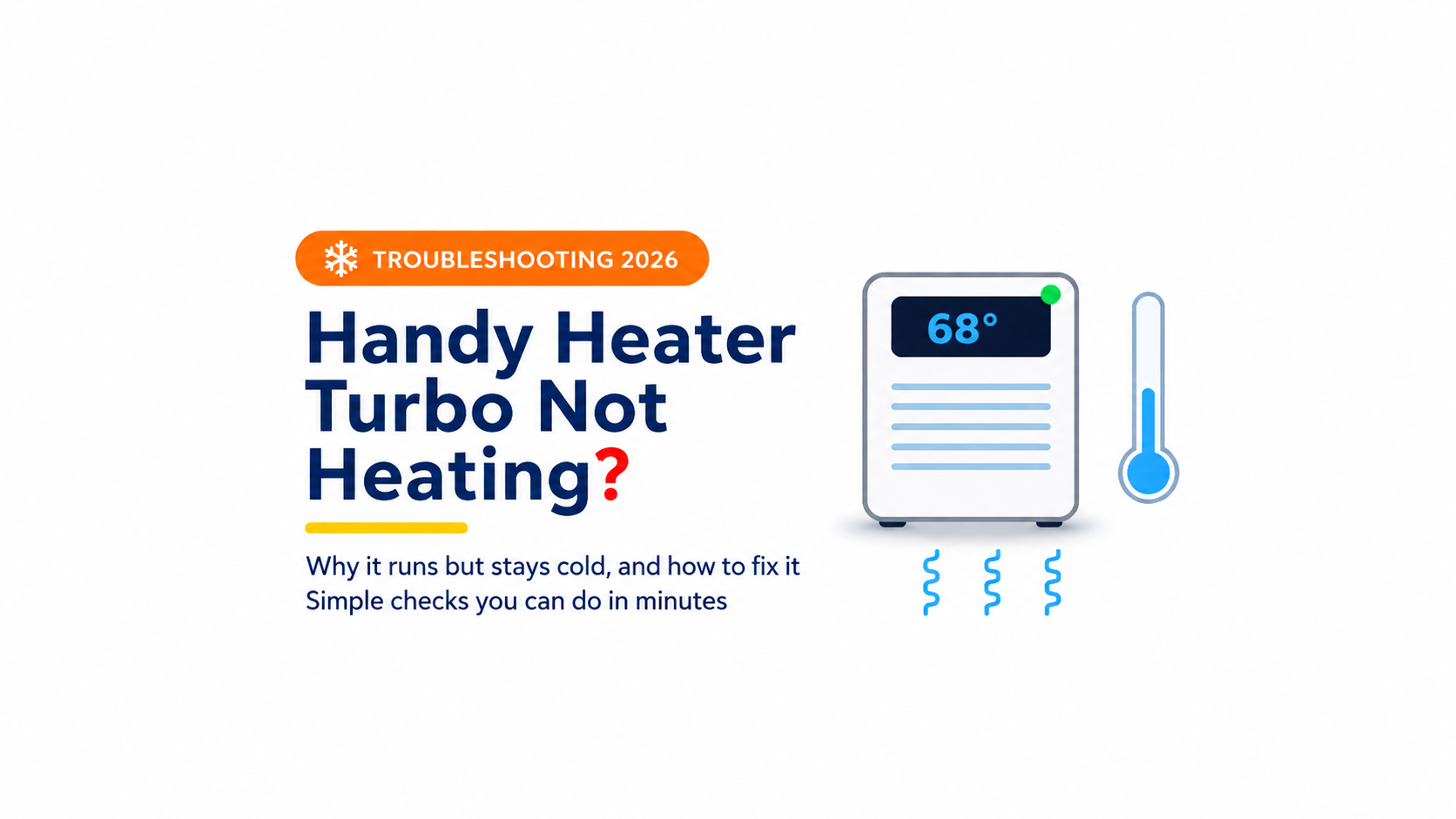
The display lights up, maybe the fan hums, but the air coming out feels cool or barely warm. If your Handy Heater Turbo is not heating, it can be frustrating, especially when the weather is cold and you expected instant warmth. The good news is that in many cases the heater is not broken at all. The cause is often a thermostat setting, an unrealistic expectation for a small heater, blocked airflow or a weak power connection.
This guide is different from a “heater will not turn on” problem. Here your heater does power up, but it does not give enough heat. You will learn the most common reasons, how to test each one safely, how to tell the difference between a normal low-power heater and a faulty one and when to replace the unit.
About the Handy Heater Turbo and What to Expect
The Handy Heater Turbo, commonly sold as the Turbo 800, is a compact plug-in ceramic heater. Retail listings describe it as an 800-watt wall-outlet model for small spaces, with ceramic heating, quiet operation and safety features such as auto shut-off. Specific controls vary between versions and sellers, so check the manual that came with your unit.
That 800-watt figure is important. It matters more than any other number when judging whether your heater is performing properly.
Is Your Heater Actually Too Weak? A Reality Check
Before you assume the heater is faulty, check whether your expectation matches its power. An 800 W heater produces about 2,730 BTU of heat per hour (watts multiplied by 3.412). A common rule of thumb is about 10 watts of heating per square foot, which means 800 W suits roughly 80 square feet, about the size of a small bedroom, bathroom or home office. Retail listings for this heater give similar small-room coverage.
| Room Situation | What to Expect From 800 W |
|---|---|
| Small, closed, insulated room (about 80 sq ft) | Noticeable warming over 15 to 30 minutes |
| Medium room (100 to 150 sq ft) | Mild warmth near the heater, slow room change |
| Large or open-plan room | Little change felt |
| Drafty room, old windows, cold floor | Heat is lost as fast as it is added |
| Garage or workshop | Not suitable as a main heater |
If your room is large, cold or drafty, a heater that works perfectly can still feel like it does nothing. In that case you may need a stronger heater, better insulation or both.
Quick Table: 9 Reasons a Handy Heater Turbo Is Not Heating
| # | Possible Cause | Quick Fix |
|---|---|---|
| 1 | Thermostat set too low | Raise the setting well above room temperature |
| 2 | Wrong mode or low heat setting | Select a heat mode or high setting |
| 3 | Room too large for 800 W | Use in a small closed room or add a stronger heater |
| 4 | Blocked vents or dust | Clean vents and clear space in front |
| 5 | Overheat protection cycling | Unplug to cool, fix airflow, restart |
| 6 | Loose outlet or weak power supply | Try another outlet, remove strips and cords |
| 7 | Draughts and heat loss | Close doors, seal gaps, use curtains |
| 8 | Outlet position and sensor reading | Test in another outlet away from windows and heat sources |
| 9 | Failed heating element or fault | Stop using it and contact the seller |
Step-by-Step Fixes
1. Check the Thermostat Setting
This is the number one reason. A heater only heats when the room temperature is below the thermostat setting. If you set the target to 65 and the room is already 66, the heater will not warm at all, even though the display is on. Raise the setting well above the current room temperature, for example 10 degrees higher, wait a minute or two and feel the air at the vent.
2. Check Mode, Fan Speed and Heat Level
Some versions have several speeds, a heat level selector or modes. If your heater is on a low mode, an eco setting or a fan-only mode, it may not produce much heat. Switch to the highest heat setting and test again. Check the manual for what each mode does on your model.
3. Allow Time and Match the Room
Ceramic heaters warm up fast at the vent, but a whole room takes time to change. A small, closed room may need 15 to 30 minutes for a noticeable difference. Test by holding your hand a few inches in front of the vent. If the air feels clearly warm, the heater works. If the room still feels cold, the room is likely too big or too drafty for 800 W.
4. Clear the Vents and Clean the Heater
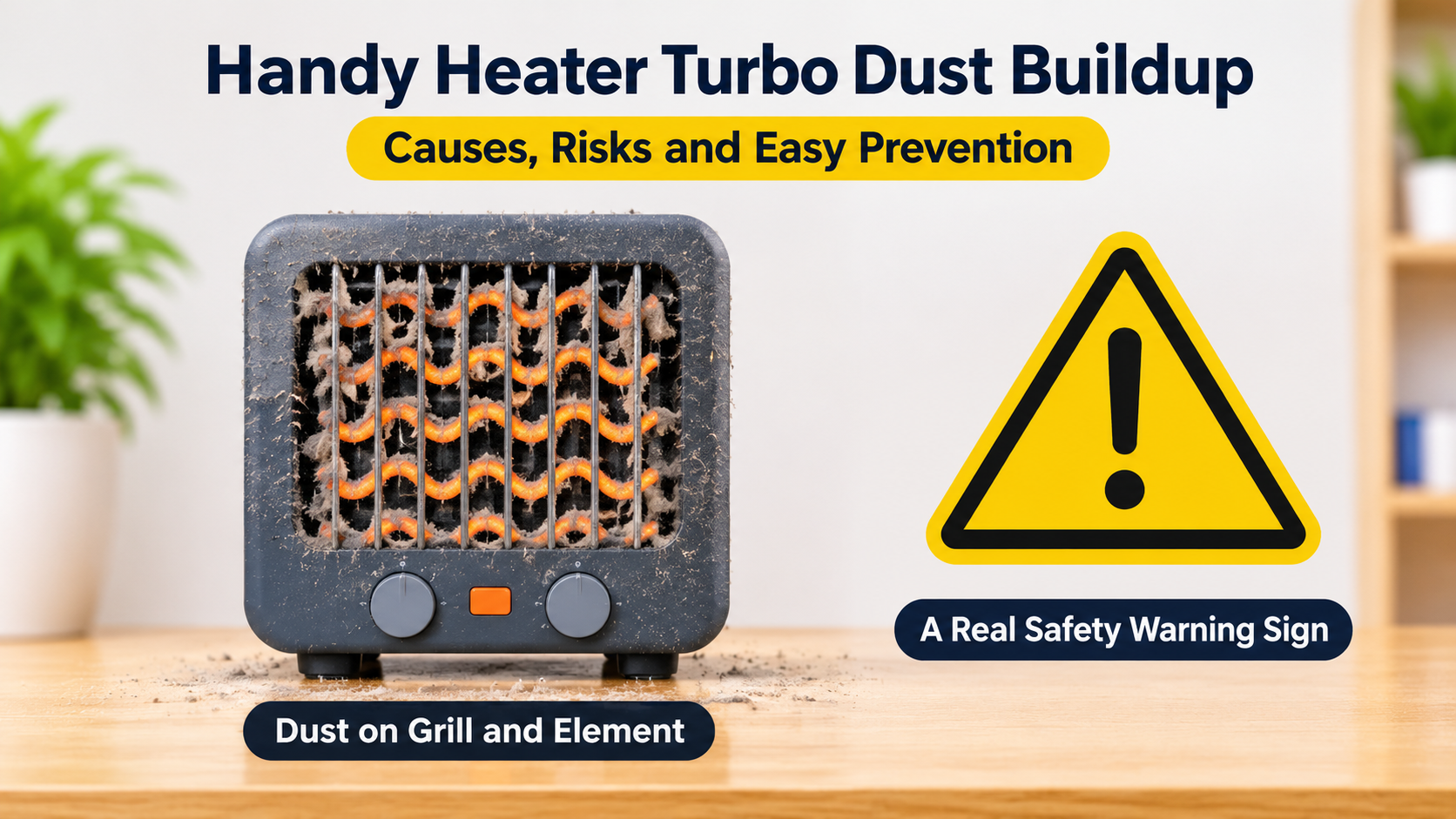
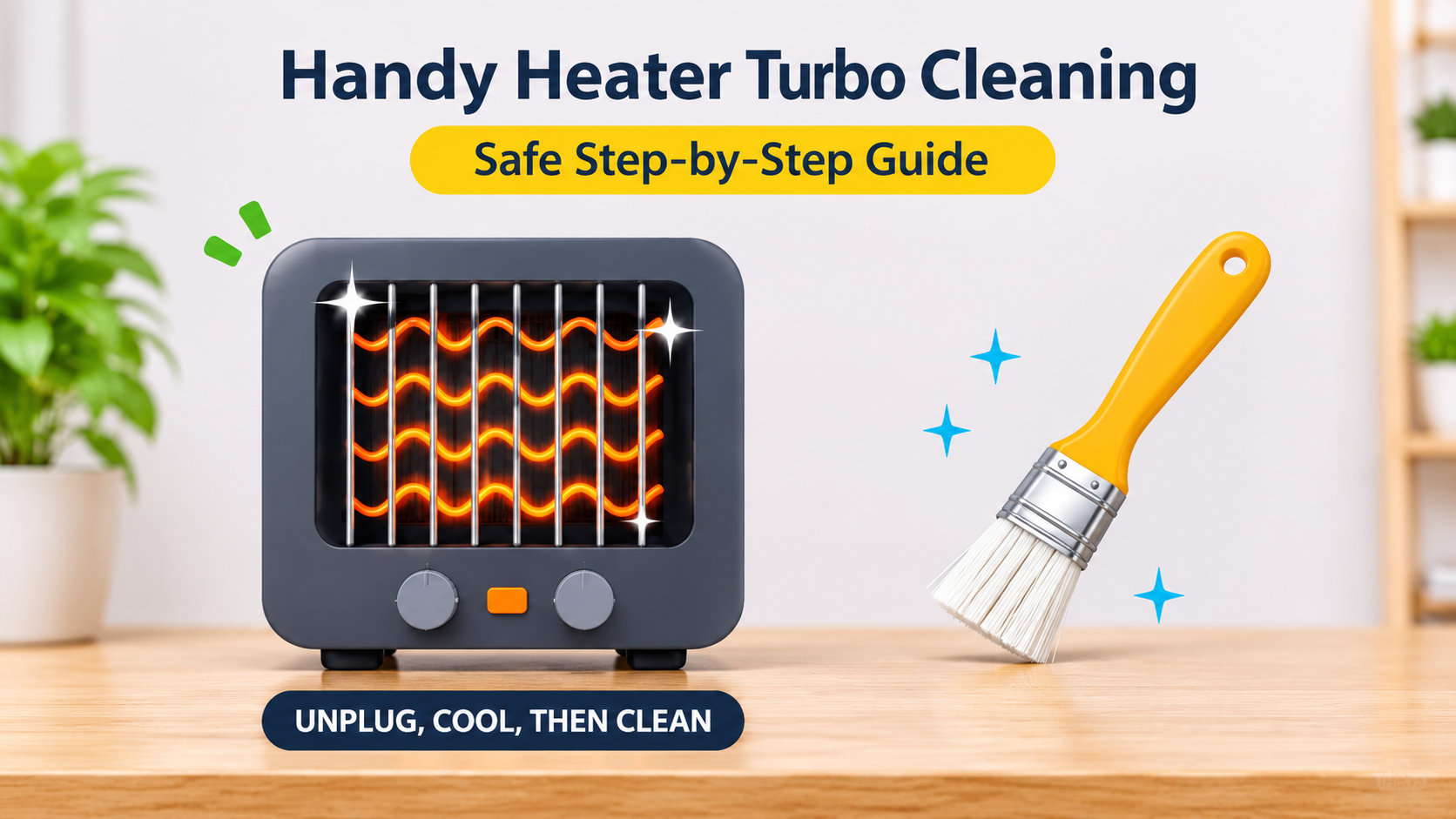
Dust, lint and pet hair block airflow, reduce heat output and can trigger overheat protection. Unplug the heater and let it cool. Then:
- Vacuum the vents gently with a soft brush attachment.
- Wipe the outside with a dry or slightly damp cloth, never dripping wet.
- Make sure nothing covers or sits against the heater, such as curtains, furniture or bedding.
- Keep a clear space in front of the heater, at least three feet (about one metre).
5. Look for Overheat Protection Cycling
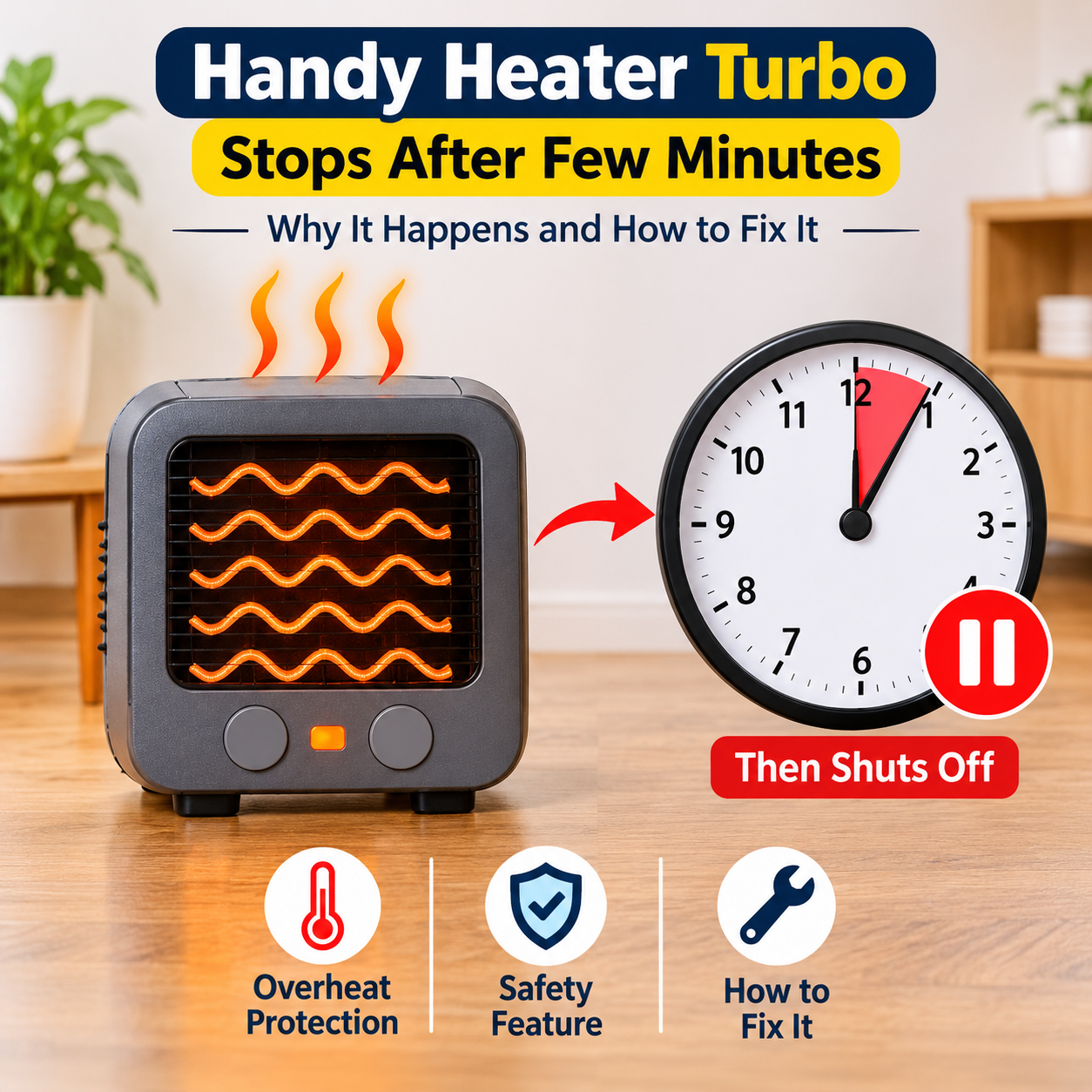
If the heater warms briefly and then goes cold, the safety system may be cutting power. Unplug the heater and let it cool for at least 15 to 30 minutes. Clear the vents, then plug it in again. If it keeps cutting out, stop using it and contact the seller, since repeated shut-offs point to a fault.
6. Check the Outlet and Power Connection
A plug-in heater depends on a firm connection. A worn, loose or overloaded outlet can reduce the power reaching the heater so that it runs weakly or intermittently.
- Plug directly into a wall outlet, never an extension cord or power strip.
- Check that the heater sits flush and firmly in the outlet.
- Try a different outlet on another circuit.
- Unplug other high-power devices on the same circuit.
- If the plug or outlet feels hot, looks discoloured or smells of burning, stop using the heater and have the outlet inspected.
7. Reduce Heat Loss
Even a good heater will struggle if heat leaks out. Close the door, shut windows and block draughts around the door bottom and window frames. Thick curtains and rugs also help.
8. Try Another Location
Plug-in heaters sit low on the wall near the floor, where air is coolest, and they sense temperature close to their own body. If the outlet is near a cold window, an exterior door or a draught, the heater may behave oddly. If it is right next to a heat source, it may think the room is warm. Test in another outlet in a more central area of the room.
9. Do a Soft Reset
- Unplug the heater.
- Wait 10 to 15 minutes.
- Plug it directly into a working wall outlet.
- Set the thermostat high and select the highest heat setting.
Simple Tests to Tell if the Heater Is Faulty
- The hand test: After 2 to 3 minutes on high, hold your hand 4 to 6 inches from the vent. You should feel clearly warm air. Never touch the vent or the heating element area.
- The thermometer test: Place a room thermometer about two to three feet from the heater. A working heater should raise the temperature slightly in a small room over 20 to 30 minutes, depending on the space.
- The second outlet test: If the heater works well in one outlet but not another, the outlet is the problem.
- The cool-down test: If the heater works for a few minutes, stops and works again after cooling, suspect airflow or overheat protection.
Signs You Should Stop Using the Heater
- A burning, melting or strong electrical smell.
- A plug or outlet that is hot, discoloured or scorched.
- Sparks, buzzing or crackling sounds.
- Smoke or visible haze.
- A cracked casing or damaged plug.
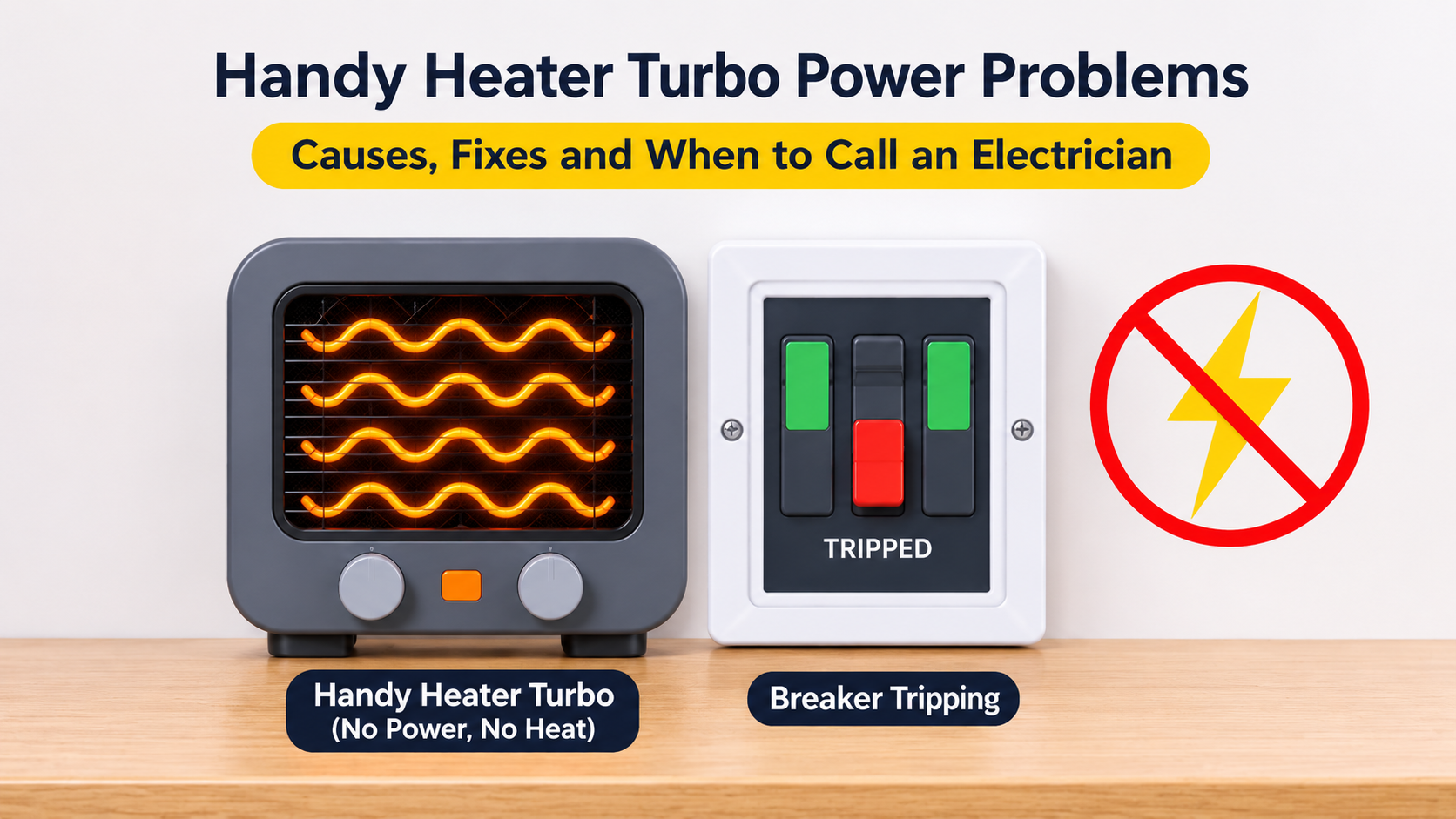
- A breaker that trips each time you use the heater.
If you notice any of these, unplug the heater if it is safe to do so, keep it away from flammable items and do not use it again until it has been checked or replaced. Never open the heater or attempt an internal repair.
Safety Reminders While You Troubleshoot
- Unplug the heater before cleaning or inspecting it.
- Never cover the heater or dry clothes on it.
- Keep at least three feet (about one metre) of clear space in front.
- Plug directly into a wall outlet, never an extension cord or power strip.
- Do not leave it running unattended or while you sleep, unless the maker allows safe use.
- Keep children and pets away from the heater.
What to Do If Your Heater Cannot Keep Up
If the heater works but simply cannot warm your room, there are better options than replacing it with the same model:
- Use it in a smaller space: Move it to a bathroom, small office or bedroom.
- Add a stronger heater: A 1,200 to 1,500 W ceramic heater, oil-filled radiator or panel heater suits larger rooms.
- Use spot heating: An infrared heater warms you directly if you sit in one place.
- Improve insulation: Seal gaps, add thick curtains and put down rugs.
- Combine methods: Warm clothing and blankets plus a small heater are very effective.
When to Contact the Seller or Manufacturer
- The heater is new and never produced warm air.
- You have tried every check and it still blows cool air in a small room.
- The fan runs but there is no heat at all.
- The heater shuts off repeatedly or trips the breaker.
- You see damage, smell burning or notice a hot plug.
Keep your proof of purchase, note the model details and describe what you tested. Ask about the warranty and return policy. Be careful to buy from reputable sellers, since look-alike products without proper safety certification may perform poorly and lack proper protection.
Common Mistakes to Avoid
- Expecting an 800 W plug-in heater to warm a large room.
- Leaving the thermostat lower than the room temperature.
- Judging the heater by feeling the front panel instead of the air.
- Ignoring blocked vents and dust.
- Using an extension cord or power strip.
- Putting furniture or curtains in front of the heater.
- Opening the heater to look for the fault.
- Continuing to use a heater that smells of burning.
Frequently Asked Questions (FAQ)
Why is my Handy Heater Turbo blowing cold air?
The thermostat may be set below room temperature, the heater may be in a fan-only or low mode, or the room may be too large or cold for its power. Raise the temperature, select high heat and test in a small room.
How long does it take to heat a room?
You should feel warm air at the vent within a few minutes. A small closed room may feel noticeably warmer within 15 to 30 minutes. Larger rooms may not change much.
Why does the heater work and then stop heating?
It could be the thermostat reaching its set temperature, or overheat protection cutting in because of blocked vents. Clean the vents, let the heater cool and try again.
Is 800 watts enough to heat a room?
It is enough for a small room of around 80 square feet with good insulation. For larger or colder spaces, you will need more power.
Why does the fan run but there is no heat?
The thermostat may be satisfied, the mode may be fan-only or the heating element may have failed. If it blows cool air on the highest setting for more than ten minutes, contact the seller.
Can a dirty heater stop heating?
Yes. Dust and lint block airflow and can trigger overheat protection. Clean the vents with the heater unplugged and cool.
Does the outlet affect how much heat I get?
A loose or worn outlet can reduce the power delivered and cause weak or inconsistent heating. A hot plug or outlet is a safety issue and needs inspection.
Can I fix a faulty heating element myself?
No. Internal parts carry mains electricity and repairs are unsafe. Contact the seller or manufacturer for a replacement under warranty or buy a new heater.
Final Thoughts
If your Handy Heater Turbo is not heating, start with the simplest checks: raise the thermostat, choose the highest heat setting, clean the vents, plug it directly into a good wall outlet and test it in a small, closed room. Remember that an 800-watt heater is designed for small spaces, so a lack of warmth in a big or drafty room does not always mean it is broken.
If the heater still blows cool air after these steps, shuts off repeatedly or shows signs of heat damage, stop using it and contact the seller or manufacturer. A heater that cannot keep up is a good reason to upgrade to a more suitable model, and a heater that is unsafe is a good reason to stop right away.