






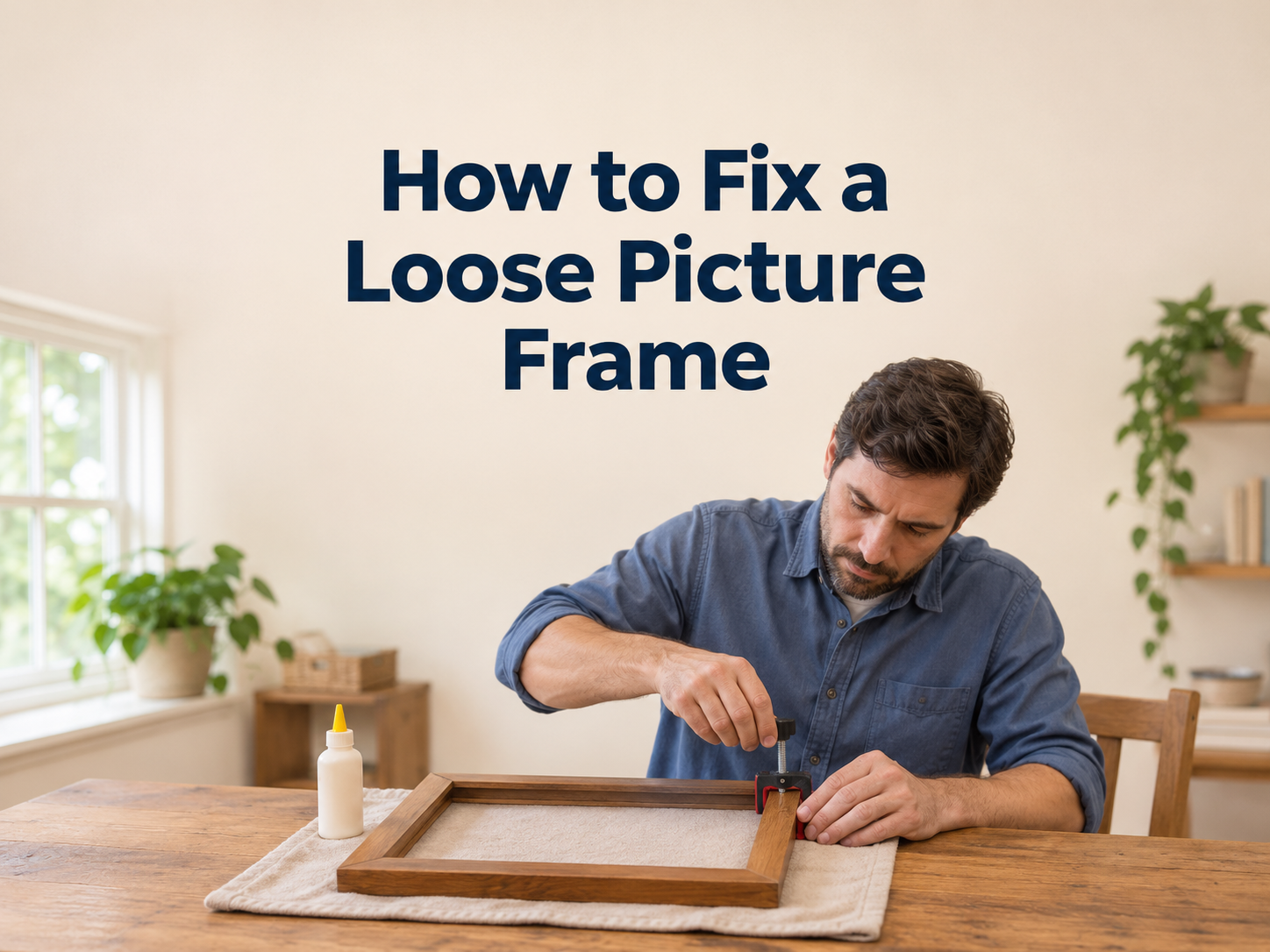
How to Fix a Loose Picture Frame: 8 Easy Repairs That Actually Work
A picture frame that wobbles, rattles or has gaps at the corners does more than look untidy. A loose frame can let dust and moisture reach the artwork, scratch the glass, drop the picture off the wall or even fall apart completely. The good news is that most loose frames can be fixed at home in under an hour, with a few inexpensive tools.
This guide shows you how to fix a loose picture frame step by step. You will learn how to find out exactly what is loose, which repair to use for each problem, which glue works for which frame, and how to stop it from happening again.
Quick Answer
First, find out where the looseness is. For loose corner joints, remove the glass and backing, apply wood glue, clamp the frame square and leave it to cure, then reinforce the back. For rattling contents, add foam spacers or a snug backing board. For a sagging or popping backing, replace the flexible points or turn buttons and seal the edge with tape. For wobbly hanging, replace worn hardware, use two hooks and add adhesive bumpers.
Understanding the Parts of a Picture Frame
Before you repair anything, it helps to know what you are looking at. A typical framed picture is built from several layers held together by the frame and a few small fasteners. When one of them fails, the whole frame can feel loose.
Step One: Find Out What Is Actually Loose
Many people reach for glue too early. Before you do anything, lay the frame face down on a soft towel and gently test each part. Look for gaps at the corners, press on the backing, shake the frame next to your ear to hear any rattle and check the hanging hardware.
Tools and Materials You May Need
Most repairs need only a handful of basic items. You will not need all of them for every job:
- Wood glue (PVA): for wooden frame corners.
- A band clamp or corner clamps: to hold the frame square while the glue sets.
- Small screwdriver and pliers: for turn buttons, screws and bending flexible points.
- Corner braces or V-nails: to reinforce the joints from the back.
- Replacement flexible points or turn buttons: cheap and easy to fit.
- Foam strips, felt or cardboard spacers: to take up gaps and stop rattling.
- Acid-free framing tape: to seal the back edge.
- D-rings, screws and picture wire: to replace weak hanging hardware.
- Adhesive bumpers: soft pads for the bottom corners.
- Clean cloth, gloves and a soft towel: to protect the glass and your hands.
Which Glue or Fastener Is Right for Your Frame?
The frame material decides the repair method. Using the wrong product can leave stains or make the problem worse.
8 Easy Ways to Fix a Loose Picture Frame
1. Repair a Loose Wooden Corner Joint
This is the most common problem, and the fix is simple. Follow these steps:
- Open the frame. Lift out the flexible points or turn buttons, take out the backing and artwork, then carefully remove the glass and set it aside safely.
- Clean the joint. Gently scrape off dried glue and dust from the mitred faces. Dry-fit the corners to confirm they close without gaps.
- Apply wood glue. Spread a thin, even layer on both faces of the joint and press them together.
- Clamp and square. Use a band clamp or corner clamps and check that each corner forms a true right angle. Wipe away any glue that squeezes out with a damp cloth.
- Reinforce and cure. Once the glue has started to hold, add small corner braces or V-nails across the back of the joint. Clamp for the time on the glue label and then leave the frame to cure fully, usually overnight, before you reassemble it.
2. Tighten a Loose Metal Frame
Metal frames are normally held together with corner screws or small bolts. Turn them gently with the correct screwdriver or hex key until the corners close up flush. If the thread is stripped or the corner bracket is cracked, replace the corner hardware with a matching set rather than forcing it.
3. Stop the Glass and Artwork from Rattling
If the contents shift or rattle, the layers are simply too loose inside the frame. Add self-adhesive foam strips or felt along the inside edge of the rebate, or place an extra sheet of acid-free board behind the artwork so everything sits snugly. A properly cut mat also helps hold the artwork in place.
4. Replace Worn Flexible Points or Turn Buttons
When the backing sags or falls out, the small fasteners holding it are usually bent, worn or missing. Replace them with new flexible points pressed in with pliers or a point driver, or fit new turn buttons with fresh screws so they grip firmly when turned. Use enough fasteners to hold the backing evenly on all four sides.
5. Re-Seal the Back with Framing Tape
Run acid-free framing tape or dust-cover paper around the back edge to seal gaps and add stiffness. This keeps out dust, insects and humidity and helps prevent the backing from creeping out over time.
6. Replace Weak Hanging Hardware
Single sawtooth hangers and thin screws are a common source of wobble. For anything beyond a small light frame, replace them with two D-rings and picture wire. Fix the D-rings about one-third of the way down from the top of the frame and use screws that suit the thickness of the frame.
7. Stop the Frame from Tilting or Sliding on the Wall
If a frame keeps drifting crooked, use two wall hooks spaced apart instead of one, which holds it level. Add small adhesive rubber or felt bumpers to the bottom corners so the frame grips the wall and sits slightly off the surface. Check the level with a small spirit level or a level app on your phone.
8. Fix a Loose Easel Back or Stand
For frames that stand on a desk or shelf, a loose easel back is often the culprit. Tighten the screws or rivets that hold the stand, and replace the whole stand if the hinge is worn out. A new stand is inexpensive and takes a minute to fit.
Problem, Cause and Fix at a Glance
| Problem | Common Cause | Fix | Main Tool |
|---|---|---|---|
| Open corner joint | Dried or weak glue | Re-glue, clamp, reinforce | Wood glue, band clamp |
| Metal frame wobbles | Loose corner screws | Tighten or replace corner hardware | Screwdriver or hex key |
| Rattling glass | Loose fit | Add foam or felt spacers | Foam strips |
| Backing falls out | Worn points or buttons | Replace fasteners, tape the edge | Pliers, framing tape |
| Frame hangs crooked | Single hook, loose wire | Two hooks, re-tighten wire | Level, D-rings |
| Frame slides on wall | No grip at the bottom | Add bumpers | Adhesive pads |
| Wobbly easel stand | Loose or worn hinge | Tighten or replace stand | Screwdriver |
How to Stop a Picture Frame from Getting Loose Again
- Use quality frames. Solid wood or well-made metal frames with proper joints stay tight far longer than thin, cheap frames.
- Do not hang frames in damp or steamy rooms. Moisture swells wood and weakens glue over time.
- Match hardware to weight. Heavy frames need heavy-duty D-rings, wire and wall fixings.
- Check fasteners once a year. A quick look at the turn buttons, screws and wire takes less than a minute per frame.
- Handle frames by their sides. Lifting by a corner puts stress on the joint.
- Avoid knocks and vibrations. Keep frames away from heavily used doors, and secure them with bumpers where they might be bumped.
- Keep the room stable. Avoid direct heat sources and big swings in temperature and humidity.
When to Replace a Frame Instead of Fixing It
Repair is not always the best option. Consider replacing the frame if the wood is split or warped, the mitred corners are crumbled or badly gapped, the metal is bent or snapped, or the cost of repair is higher than a new frame. For valuable, antique or sentimental frames, ask a professional framer instead of trying to repair them yourself.
Helpful Products for Fixing a Loose Picture Frame
A small repair kit makes every future fix quick and easy. Here is what to look for when you shop:
- Wood glue and a band clamp set: the core of any corner repair.
- Picture framing tool kit: often includes a point driver, pliers and small fasteners.
- Replacement flexible points and turn buttons: a mixed pack covers most frames.
- Corner braces and V-nails: to strengthen joints from the back.
- D-rings, screws and picture wire: choose a pack rated for your frame weight.
- Adhesive bumpers and felt pads: keep frames level and stop them sliding.
- Acid-free framing tape and foam spacers: to seal the back and stop rattles.
- A small spirit level: to hang everything straight.
Frequently Asked Questions
What is the best glue for a loose picture frame?
For wooden frames, a PVA wood glue gives the strongest and longest-lasting bond. For plastic or resin frames, use a glue that suits the material, such as a two-part epoxy. Avoid instant super glue on wood joints.
How do I fix a picture frame that will not stay together?
Take it apart, clean the old glue from the joints, apply fresh wood glue, clamp the frame square and reinforce the back with corner braces or V-nails. Leave it to cure fully before reassembling.
How can I fix a frame without a clamp?
Use a ratchet strap, a belt or strong rubber bands around the frame, with folded cardboard in the corners. Check it stays square while the glue sets.
How do I stop my picture frame from rattling?
Add foam or felt spacers inside the frame, use a snug backing board and make sure the flexible points or turn buttons hold everything firmly against the glass.
Why does the backing of my frame keep falling out?
The fasteners are usually worn, bent or missing. Replace them with new flexible points or turn buttons and seal the edge with acid-free framing tape.
How do I keep a picture frame from sliding on the wall?
Hang it with two hooks instead of one and add small adhesive bumpers to the bottom corners so it grips the wall and stays level.
How long does wood glue take to dry on a frame?
Most wood glues hold within about an hour of clamping and reach full strength after roughly 24 hours. Always follow the instructions on your product label.
Is it worth repairing a cheap picture frame?
If the frame is only slightly loose, a quick repair costs very little and is worth doing. If the wood is split, badly warped or crumbling, replacing it is usually the better choice.
Final Thoughts
Knowing how to fix a loose picture frame saves you money, protects your artwork and keeps your walls looking neat. The key is to find the exact source of the looseness first, then use the matching repair: glue and clamps for corners, spacers for rattles, new fasteners for a sagging backing and stronger hardware for a wobbly hang.
With a few basic supplies and a little patience, most loose frames can be as good as new in an afternoon, and with a regular check-up they will stay that way for years.