









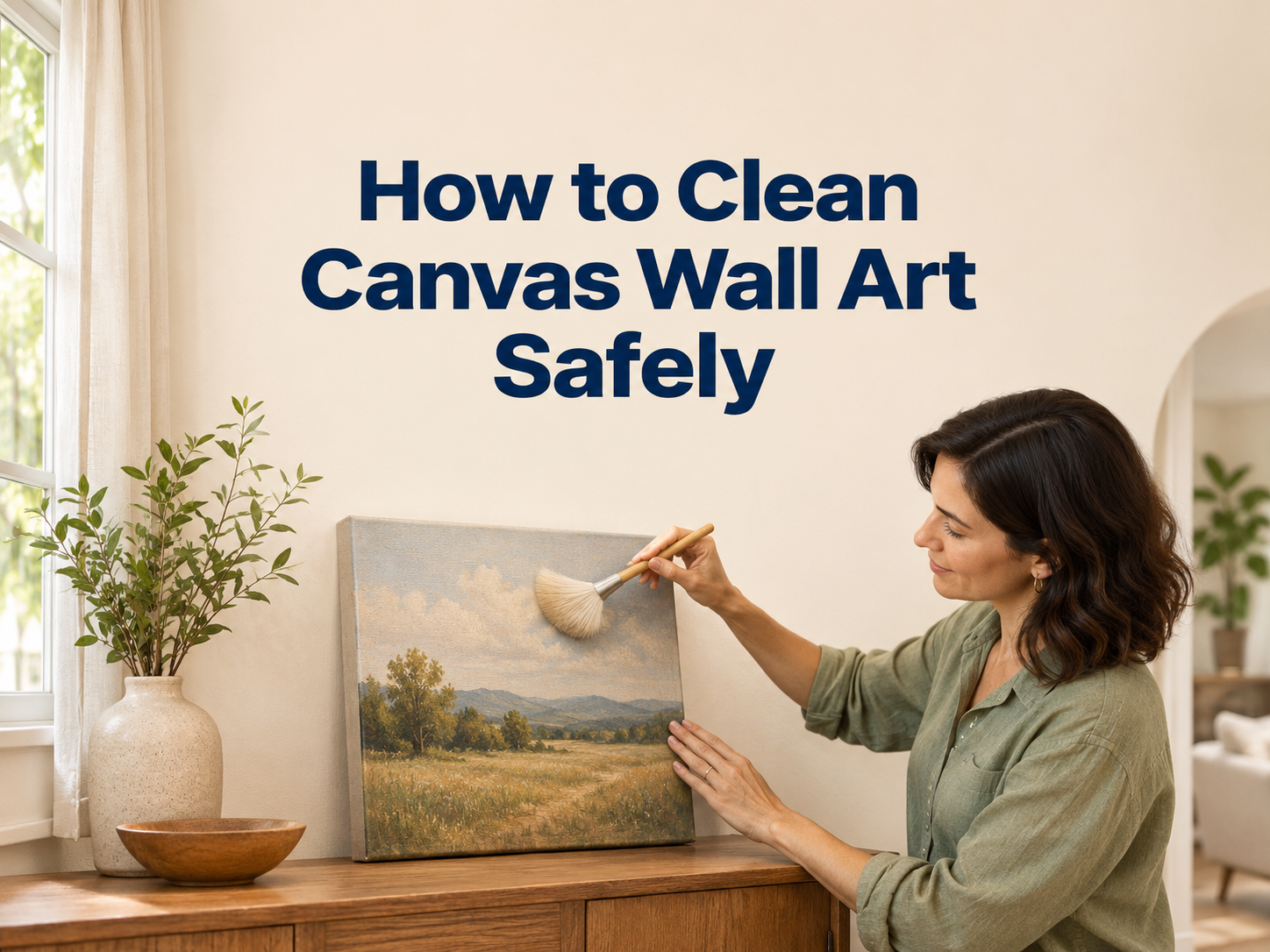
How to Clean Canvas Wall Art: A Safe Step-by-Step Guide for Every Type
Canvas wall art adds warmth and personality to any room, but over time it quietly collects dust, fingerprints, kitchen grease and even pet hair. Because a canvas is made of fabric and is often printed with ink or painted by hand, it cannot be scrubbed like a window or a countertop. The wrong cleaner can fade colors, smear ink or leave permanent water marks.
This guide explains how to clean canvas wall art the right way. You will learn how to identify your canvas type, which supplies to use, how to remove common stains and what to avoid, so your artwork stays bright and fresh for years.
Quick Answer
To clean canvas wall art, start with dry dusting using a soft microfiber cloth or a soft brush. For fingerprints or light marks on a printed canvas, use a barely damp cloth with a drop of mild soap in distilled water, blot gently and dry right away. Always test a hidden spot first, never soak the canvas and never use alcohol, bleach, ammonia or abrasive products. For valuable oil paintings, dust only and consult a conservator.
Know Your Canvas Type Before You Clean
The safest cleaning method depends on what your canvas is made of and how it was finished. Using water on the wrong type is the most common way people damage their wall art.
- Printed canvas (giclée or inkjet): the image is printed onto fabric. Many prints have a protective coating, but some do not, so the ink can lift if it gets too wet.
- Coated or varnished canvas: a clear layer protects the surface and makes gentle damp cleaning safer.
- Acrylic paintings on canvas: acrylic dries into a fairly durable film, but thin areas and unsealed paint can still react to moisture.
- Oil paintings on canvas: the most delicate to clean at home. Water, soap and solvents can damage the paint or old varnish.
Supplies You Need to Clean Canvas Wall Art
You do not need expensive products. A few simple, gentle tools handle almost every situation:
- Soft microfiber cloths: two or three clean, lint-free cloths, one for dusting, one damp and one dry.
- A soft, dry brush: a large makeup brush or a soft artist’s brush reaches into textured paint and canvas weave.
- A vacuum with a soft brush attachment: on the lowest suction setting, held a few centimeters away for dusty edges and frames.
- Distilled water: it leaves no mineral marks the way tap water can.
- Mild dish soap: only one small drop is needed in a cup of water.
- Cotton swabs: for fingerprints and small marks.
- A clean, dry towel: to blot and dry any moisture immediately.
How to Clean Canvas Wall Art Step by Step
Step 1: Take the Canvas Down and Prepare a Clean Surface
Remove the canvas from the wall and lay it face up on a clean, flat, padded surface such as a folded sheet. Cleaning it while it hangs can push the stretcher frame and make the fabric uneven. Wash your hands first so you do not add oils to the surface.
Step 2: Dust the Surface Gently
Dry dusting is the single most important habit. Use a soft brush or a clean, dry microfiber cloth and work in light, even strokes from the top of the canvas down. Do not press. For heavily textured paintings, use a soft brush so you do not snag raised paint. A vacuum with a soft brush attachment on low suction can clear dust from the sides, back edges and frame, but keep it slightly away from the painted face.
Step 3: Do a Spot Test
Before using any moisture, test on a hidden area, such as the back of the folded edge or a corner of the side. Dab a damp cotton swab, wait a minute, then press a clean white cloth against it. If you see color on the cloth, or the surface looks dull or sticky, stop. Your canvas should be dusted only.
Step 4: Wipe With a Barely Damp Cloth
Mix one small drop of mild dish soap into a cup of distilled water. Dip a microfiber cloth, then wring it until it feels almost dry. Blot or glide lightly over the marked area, always in one direction. Then use a second cloth dampened with plain distilled water to remove soap traces, and dry the area immediately with a soft towel.
Step 5: Let It Dry Fully Before Rehanging
Leave the canvas upright or flat in a well-ventilated room, away from direct sunlight, heaters and hair dryers. Allow it to dry completely, usually about an hour for small damp areas, before you hang it again. Rehanging while damp can trap moisture behind the artwork and encourage mildew.
How to Remove Common Marks From Canvas Wall Art
Dust and Pet Hair
Dry brushing and a soft microfiber cloth remove most dust. For pet hair, use a very soft brush in one direction. Avoid sticky lint rollers, as the adhesive can lift ink or leave residue on the weave.
Fingerprints and Smudges
Dab with a cotton swab lightly dampened in the mild soap solution, then blot with a swab of plain distilled water and dry. Work on a tiny area at a time and stop if you see any color transfer.
Kitchen Grease and Cooking Residue
Canvas hung near a kitchen can develop a sticky, yellowish film. Use the same diluted soap solution on a barely damp cloth, working very gently and rinsing with a second damp cloth. If the film is thick or the canvas is uncoated, consider moving it out of the kitchen rather than risking the print.
Smoke or Cigarette Residue
Start with dry dusting, then try a barely damp cloth on a tested area. Smoke residue is deeply embedded in the weave, and heavy buildup often cannot be fully removed from printed canvas without affecting the color.
Water Spots
Blot fresh moisture immediately with a dry cloth, pressing instead of rubbing. Older rings are very hard to reverse. Try a tiny dab of distilled water feathered outward from the edge of the mark, then let it dry naturally.
Mildew or Mold Spots
If you see small fuzzy or dark spots, take the canvas outside, wear a mask and gloves, and gently brush the dry spores away with a soft brush. Then let the canvas dry fully in fresh, dry air. Do not use bleach. If the growth is widespread, smells musty or returns, replace the print or ask a conservator for help on valuable work.
Marker, Ink or Paint Stains
Do not use alcohol or acetone, which dissolve ink and paint layers. Fresh marks are easiest to treat, but because the stain is part of the surface, a professional is the safest option for anything you care about.
Problem, Method and What to Avoid at a Glance
| Problem | Safe Method | Avoid |
|---|---|---|
| Dust | Soft brush or dry microfiber cloth | Feather dusters that scratch, sticky rollers |
| Fingerprints | Cotton swab with diluted mild soap, blot dry | Rubbing, pre-moistened wipes |
| Kitchen grease | Barely damp cloth with soap solution, rinse, dry | Degreaser sprays, hot water |
| Pet hair | Soft brush in one direction | Adhesive lint rollers |
| Water spots | Blot, feather with distilled water | Soaking or scrubbing |
| Mildew | Dry soft brushing outdoors, full air drying | Bleach, vinegar soaks |
| Ink or paint marks | Professional help | Alcohol, acetone, nail polish remover |
What Not to Do When Cleaning Canvas Wall Art
How to Clean the Frame, Sides and Back
Dust collects on the stretcher bars, sides and hanging wire as well. Wipe the wooden frame with a dry or barely damp microfiber cloth and dry it immediately. For canvas with a decorative outer frame, use a soft brush in the corners and a dry cloth on the surface. Check the back for spider webs or signs of dampness, which can warn you of humidity problems on the wall behind the artwork.
How Often Should You Clean Canvas Wall Art?
Light, regular dusting prevents the deep dirt that needs risky cleaning later. A simple schedule keeps your artwork looking new:
Canvas in kitchens, entryways, smoking areas or homes with pets may need more frequent dusting.
How to Keep Canvas Wall Art Cleaner for Longer
- Choose the right location. Avoid hanging canvas directly above a stove, near a frequently opened door or in a bathroom with steam.
- Control humidity. Keep the room moderately dry, roughly between 40 and 60 percent humidity, to discourage mildew.
- Keep it out of direct sunlight. Strong light fades color and dries the fabric.
- Consider a protective finish. A suitable clear spray varnish or print sealant made for canvas adds a wipeable layer. Test it first and apply it outdoors or in a ventilated space following the label.
- Leave a little space. A small gap behind the canvas lets air move and prevents damp patches on the wall.
- Handle by the sides. Hold the canvas by its edges or frame so you do not touch the image.
Helpful Products for Cleaning and Caring for Canvas Art
If you want to build a small canvas care kit, here are the items worth looking for when you shop:
- Premium microfiber cloths: look for lint-free, ultra-soft, edgeless cloths.
- Soft-bristle brushes: large, soft makeup or artist’s brushes for textured surfaces.
- Handheld vacuum with soft brush head: variable suction is ideal.
- Distilled water: an inexpensive staple for safe damp cleaning.
- Protective canvas sealant or UV-resistant clear spray: adds a protective barrier to prints.
- A digital hygrometer: helps you track room humidity.
- Dust covers or storage bags: useful when storing canvas between displays.
- Picture hooks and spacer bumpers: keep the artwork level and let air circulate behind it.
When to Call a Professional
Ask a professional conservator or specialist print cleaner if the canvas is an original oil painting, an antique, a work with sentimental or financial value, or if it shows flaking paint, widespread mildew, deep stains, torn fabric or heavy smoke damage. Home cleaning is best for modern prints and decorative canvas.
Frequently Asked Questions
Can you wash canvas wall art with water?
Only with great care. Use a barely damp cloth with distilled water on coated or sealed canvas after a spot test. Never soak, spray or scrub, and avoid water completely on oil paintings.
What is the best way to clean a printed canvas?
Dust regularly with a dry microfiber cloth or soft brush. For fingerprints or light marks, use a slightly damp cloth with a drop of mild soap, blot gently and dry right away.
Can I use vinegar or baby wipes on canvas art?
It is best to avoid both. Vinegar can affect inks and finishes, and wipes often contain alcohol, fragrance and moisturizers that leave marks or residue.
Can you vacuum canvas wall art?
Yes, but only with a soft brush attachment on the lowest suction and held slightly away from the surface. It is safer for edges and frames than for painted faces.
How do you clean a canvas painting with thick texture?
Use a very soft, dry brush and light strokes. Avoid cloths that can catch on raised paint and never scrub textured areas.
How do I remove yellowing from old canvas?
Yellowing usually comes from age, smoke or old varnish and generally cannot be reversed safely at home. A professional conservator can advise on valuable pieces.
How often should I clean my canvas wall art?
Dust weekly or every two weeks, check monthly for marks and do a gentle full clean about twice a year. Canvas in kitchens or homes with pets may need more frequent care.
Is it safe to use a hair dryer to dry canvas after cleaning?
No. Heat can warp the frame, shrink the fabric and damage the ink or paint. Let the canvas air dry in a ventilated room.
Final Thoughts
Knowing how to clean canvas wall art comes down to three habits: dust often, use as little moisture as possible and always test first. Match your method to the type of canvas, choose gentle tools such as microfiber and soft brushes, and avoid harsh chemicals.
With a light routine and a sensible location, your canvas art will stay vibrant and fresh, and you will avoid the costly mistakes that ruin otherwise beautiful pieces.