
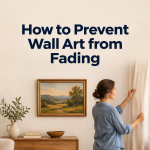
How to Prevent Wall Art from Fading: 12 Proven Ways to Protect Your Colors
You hang a beautiful print, canvas or painting on your wall, and for a few months it looks perfect. Then, slowly, the deep reds turn pink, the blues look gray and the whole piece starts to look tired. Fading is gradual, which makes it easy to miss until the damage is done, and it is usually permanent.
The good news is that fading is largely preventable. This guide explains how to prevent wall art from fading, what really causes it, which types of artwork are most at risk and 12 practical steps you can take today to protect your investment, from smart placement to UV-filtering glass and protective coatings.
Quick Answer
The main cause of fading is ultraviolet (UV) light, mostly from sunlight, followed by bright artificial light, heat, humidity and air pollution. To prevent wall art from fading, keep it out of direct sunlight, use UV-filtering glass or acrylic for framed pieces, apply a UV-protective varnish on canvas, add window film or curtains, choose LED lighting, keep the room cool and moderately humid, and rotate your artwork from time to time.
Why Does Wall Art Fade?
Fading happens when light and other environmental factors break down the pigments or dyes that create color. Over time, the molecules that reflect certain colors change or weaken, so the image loses vibrancy, contrast and detail. Several things speed this up:
- UV light: invisible, high-energy rays from sunlight (and, to a smaller degree, some indoor lights) that break down dyes and pigments faster than anything else.
- Bright visible light: even indoor light contributes, especially strong spotlights shining on one spot for many hours a day.
- Heat: warmth from radiators, fireplaces, sunny windows and hot light bulbs speeds up chemical reactions in inks and paper.
- Humidity swings: damp air encourages mildew and stains, while very dry air makes materials brittle.
- Air pollution: cooking fumes, cigarette smoke and ozone can dull and discolor surfaces.
- Low-quality materials: dye-based inks, acidic paper and cheap mats fade or yellow much faster than archival materials.
Which Types of Wall Art Fade the Fastest?
All artwork can fade, but some types are much more sensitive than others. In general, reds, pinks and yellows are among the first colors to fade, especially in prints made with dye-based inks.
| Type of Wall Art | Fading Sensitivity | Best Protection |
|---|---|---|
| Posters and paper prints | High | UV-filtering glazing, acid-free mat, indirect light |
| Photographs | High | UV glazing, archival mat, low light |
| Watercolors and works on paper | Very high | UV acrylic, low light, never in direct sun |
| Canvas prints (inkjet or giclée) | Medium to high | UV-protective varnish or coating, shaded wall |
| Acrylic paintings | Medium | Isolation coat and UV varnish, moderate light |
| Oil paintings | Medium to low | Stable climate, varnish, no direct sun |
| Fabric art and tapestries | High | Shaded wall, window protection, regular rotation |
12 Proven Ways to Prevent Wall Art from Fading
1. Keep Wall Art Out of Direct Sunlight
This is the single most important rule. Direct sunlight delivers a concentrated dose of UV and heat that can noticeably fade colors in months, not years. Avoid walls directly opposite or beside large windows, and remember that sun angle changes with the seasons, so a wall that seems safe in winter can receive strong sun in summer.
2. Use UV-Filtering Glass or Acrylic for Framed Art
Standard glass blocks only part of the UV spectrum. For prints, photographs and works on paper, choose framing with UV-filtering glass or UV-protective acrylic (often labelled conservation or museum grade), which is designed to block most UV rays. Check the product specification for the percentage of UV blocked.
3. Apply a UV-Protective Varnish to Canvas
Canvas art has no glass, so a clear, UV-resistant varnish or protective spray adds an invisible shield over the surface. It also makes the canvas easier to dust and wipe. Choose a product made for the type of artwork you own (acrylic, print or oil), test on a small hidden area and apply in a well-ventilated space according to the label. Valuable originals should be varnished by the artist or a professional.
4. Add UV-Blocking Window Film
A clear UV-filtering film applied to your windows blocks a large share of incoming UV while keeping the room bright. It protects everything in the room at once, including furniture, floors and fabric, and is one of the most cost-effective ways to protect multiple artworks.
5. Use Curtains, Blinds or Shades
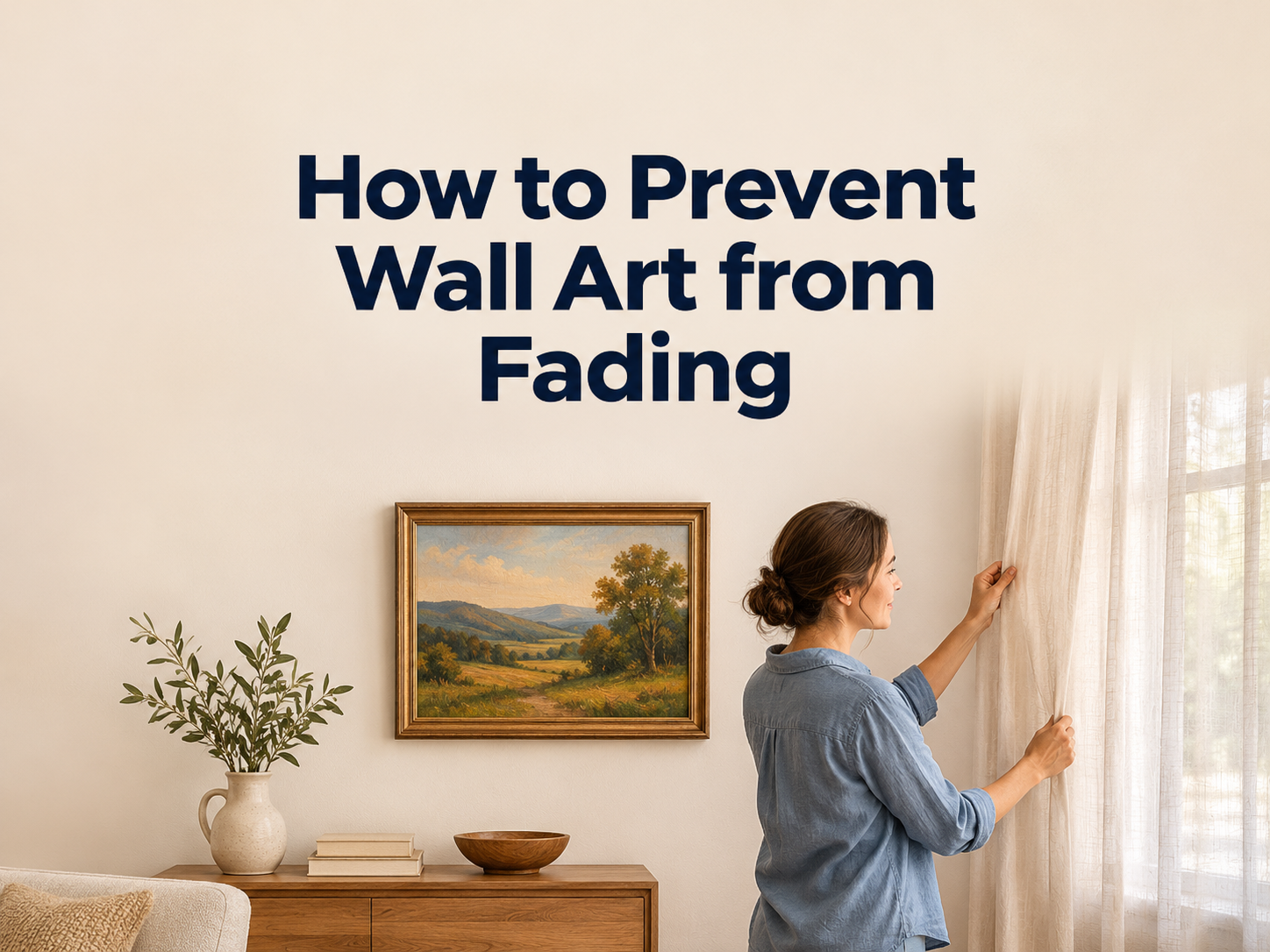
Close blinds or lined curtains during the brightest part of the day, particularly in rooms that you do not use often. Sheer curtains soften light, and blackout or UV-blocking shades offer the most protection while you are away.
6. Choose Cool LED Lighting
If you use lamps or picture lights, pick modern LED bulbs, which produce very little UV and far less heat than halogen or incandescent bulbs. Fluorescent tubes can emit more UV, so avoid them close to artwork unless they are UV-filtered.
7. Avoid Strong Spotlights and Close Picture Lights
A bright, narrow beam on a single area is concentrated light and heat. If you love accent lighting, use a low-brightness LED, keep it at a distance and switch it off when you do not need it. Museums keep their most sensitive works under very dim lighting for exactly this reason.
8. Rotate Your Artwork
Swapping pieces every six to twelve months gives each artwork a rest and spreads light exposure over a longer period. It is also a simple way to refresh your decor without buying anything new. Store the resting pieces flat or upright in a cool, dark, dry place away from damp.
9. Keep Temperature and Humidity Stable
Aim for a steady room temperature of about 18 to 24 degrees Celsius (65 to 75 degrees Fahrenheit) and moderate humidity between 40 and 60 percent. Avoid hanging art above radiators, heaters, fireplaces and in steamy bathrooms. A small digital hygrometer shows you what the room is really like.
10. Use Acid-Free Mats, Backing and Framing Materials
Standard cardboard backing and cheap mats contain acids that migrate into paper and cause yellowing and brown marks, which look like fading. Choose acid-free or archival mat boards and backing, and seal the back with a dust cover to keep out dust and insects.
11. Choose Archival, Pigment-Based Prints
When buying a print, look for lightfast pigment inks and archival-quality paper or canvas. Pigment inks are generally more resistant to fading than dye-based inks, and a seller who mentions lightfastness ratings or archival materials is usually more reliable.
12. Protect Against Smoke, Grease and Pollution
Cooking fumes, candle soot, cigarette smoke and ozone gradually discolor surfaces and make them look dull. Keep valuable art out of kitchens and smoking areas, ventilate your home and dust gently with a soft, dry cloth.
Where to Hang Wall Art to Avoid Fading
Smart placement costs nothing and protects every piece. As a rule, the best walls are those that receive soft, indirect light and stay at a stable temperature.
- Best: walls at right angles to windows, hallways, and rooms with north-facing or shaded windows.
- Acceptable with protection: walls opposite windows when you use UV-filtering glass, film or blinds.
- Avoid: spots in direct sun, above radiators or fireplaces, in kitchens, near steamy bathrooms and in rooms with large unshaded windows.
Can You Fix or Reverse Faded Wall Art?
Unfortunately, fading cannot be undone in most cases. Once pigments or dyes break down, the original color is gone. A few options may help:
- Reprint from the original file: if you still have the digital file of a print, you can order a fresh copy on better materials.
- Scan or photograph early: a good scan of a favorite artwork lets you reprint it in the future.
- Professional conservation: for original paintings and valuable works, a conservator can sometimes stabilize and retouch the artwork.
- Re-mat or reframe: if the damage is yellowing from acidic materials, replacing the mat and backing can stop further harm.
Helpful Products for Protecting Wall Art from Fading
A few inexpensive items can extend the life of your artwork dramatically. Here is what to look for when shopping:
- UV-filtering picture frames: look for frames with glass or acrylic that states a high UV-block percentage.
- UV-protective varnish or spray for canvas: choose a clear, non-yellowing formula that suits your artwork type.
- UV-blocking window film: clear film that keeps the room bright while cutting UV.
- Blackout or UV-blocking curtains and shades: ideal for sunny rooms.
- LED bulbs and low-heat picture lights: pick warm, dimmable options.
- Acid-free mat boards and archival backing: essential for prints, photographs and paper art.
- Digital hygrometer and thermometer: keeps an eye on humidity and temperature.
- Archival storage boxes and sleeves: for resting pieces between rotations.
When to Ask a Professional
If your artwork is an original, an antique, or has sentimental or financial value, ask a professional framer or art conservator for advice on glazing, mounting and lighting. They can recommend museum-grade materials and set up a display plan that protects the piece without hiding it.
Frequently Asked Questions
What causes wall art to fade the most?
Ultraviolet light from sunlight is the biggest cause, followed by bright artificial lighting, heat, humidity, air pollution and low-quality inks or paper.
Does framing under glass prevent fading?
Only partly. Standard glass blocks some UV, but UV-filtering glass or acrylic blocks far more. Placement away from direct sun is still important.
How long does it take for art to fade in sunlight?
It depends on the materials and how strong the sun is. Sensitive prints can show visible change within months in direct sun, while well-protected, archival pieces may last for decades.
Do canvas prints fade?
Yes, especially if they use dye-based inks and hang in bright light. Pigment inks, UV-protective coatings and shaded placement greatly slow fading.
Is LED lighting safe for wall art?
Generally yes. LEDs emit very little UV and produce less heat than halogen or incandescent bulbs, but very bright, close lights can still contribute to fading, so keep them at a modest brightness.
Can UV window film really protect my artwork?
Quality UV window film blocks a large share of UV rays, which reduces fading risk. It works best together with good placement and UV-filtering glazing on framed pieces.
Which colors fade first?
Reds, pinks and yellows are often the first to lose intensity, especially in dye-based prints, which can leave an image looking cooler or bluish.
Should I rotate my wall art?
Yes. Rotating pieces every six to twelve months limits cumulative light exposure and keeps your space fresh.
Final Thoughts
Learning how to prevent wall art from fading comes down to controlling light, heat and materials. Keep artwork out of direct sun, add UV-filtering glass or a protective varnish, choose cool LED lighting, keep the room stable and invest in archival materials. These small decisions add up to years of extra color and vibrancy.
Start with the easy wins: move any artwork that sits in sunlight, close the blinds on sunny afternoons and check your frames. Your wall art will thank you with richer, longer-lasting color.