








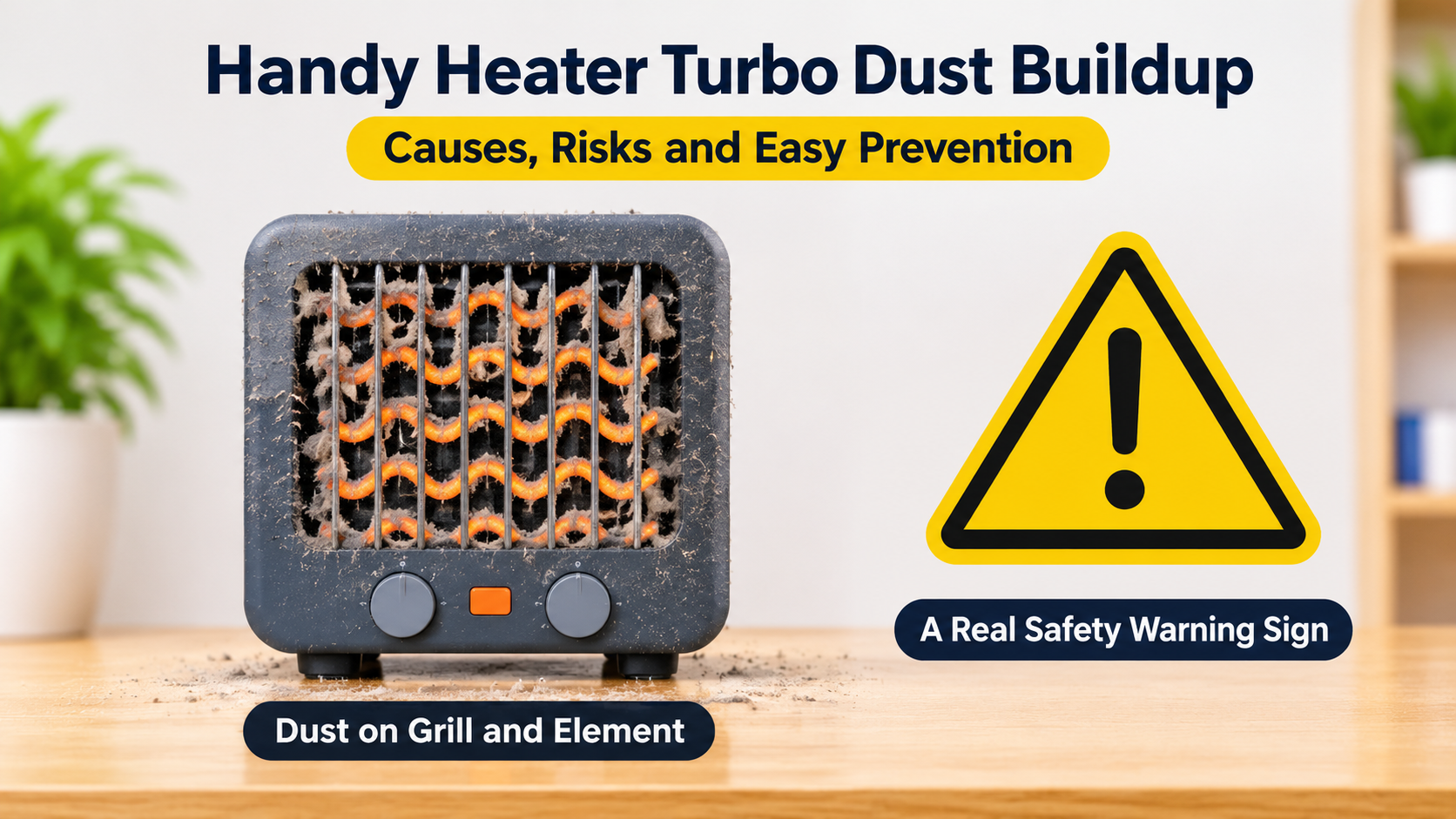
Handy Heater Turbo Dust Buildup: Causes, Risks and How to Prevent It

Every handy heater turbo has a quiet enemy: dust. You may not notice it at first, but day by day the fan pulls room air through the heater, and that air carries fine dust, fibres from carpets, curtains and blankets, pet hair and even tiny particles from cooking and traffic. Some of it escapes back into the room. Some of it stays behind and sticks to the grill, the fan and the hot element.
A thin layer of dust is harmless in the short term. A thick layer is a different story. It blocks airflow, creates smells, makes the heater louder and hotter and, in the worst cases, becomes a fire risk. This guide explains why dust builds up in a handy heater turbo, what problems it causes, how to spot trouble early, and how to prevent it so your heater stays safe and efficient.
Dust builds up in a handy heater turbo because its fan constantly pulls dusty room air through the rear intake and over the hot element. To control it, place the heater on a hard floor away from carpets, beds and pets, do a quick weekly dust-off with a soft brush or vacuum (after unplugging and cooling), and stop using the heater if you notice a strong burning smell, smoke, or repeated overheating shut-offs.
- Why dust collects in a handy heater turbo
- Where dust builds up
- What dust buildup does to your heater
- Warning signs of heavy dust buildup
- The risk ladder: from harmless to dangerous
- What causes dust to build up faster
- How to prevent dust buildup
- Quick removal routine
- When to stop using the heater
- Seasonal care and storage
- Frequently asked questions
- Final summary
Why Dust Collects in a Handy Heater Turbo
A handy heater turbo is basically a hot element and a small fan inside a plastic body. The fan draws air in through openings at the back, pushes it across the heating element, and blows it out through the front grill. That simple design explains the dust problem:
- It moves a lot of air. Over many hours of use, thousands of litres of room air pass through the heater, and dust travels with it.
- Heat dries and sticks dust. Warm surfaces and a slight static charge on plastic parts help dust cling to the fan blades and grill.
- The intake sits low. Many compact heaters stand on the floor, which is where most household dust, lint and pet hair settles.
- Dust meets heat. Dust that reaches the glowing element can scorch, giving the familiar burnt smell.
Where Dust Builds Up
The diagram below follows the air through a typical heater and marks the places where dust gathers first.
What Dust Buildup Does to Your Heater
| Effect | What happens | What you notice |
|---|---|---|
| Reduced airflow | Dust clogs the intake and grill, so the fan moves less air | Weaker warm air, slower room heating |
| Overheating | Heat cannot be carried away, so internal parts run hotter | Hot body, safety cut-off switching the heater off |
| Burnt-dust smell | Dust and lint scorch on the hot element | Smell of burning when it warms up |
| Louder fan | Uneven dust on blades unbalances the fan | Rattling, humming or whining |
| Shorter lifespan | Extra heat and strain wear out the fan motor and parts | Heater fails sooner than expected |
| Poorer air quality | Burnt dust and loose particles blow into the room | Dry throat, sneezing, irritated eyes for sensitive people |
| Fire risk | Thick lint near a very hot part can smoulder or ignite in extreme cases | Smoke, strong acrid smell, visible sparks or flames |
Warning Signs of Heavy Dust Buildup
Catch the problem early by watching for these signs:
- A visible grey layer or fluffy lint on the grill or rear intake
- A burnt-dust smell that appears each time you switch on
- Noticeably weaker airflow than at the start of winter
- New noises such as rattling, buzzing or scraping from the fan
- The outer body or grill feels hotter than usual
- The heater switches itself off, then back on, or does not stay on
- Dark marks or discolouration on the plastic near the vents
The Risk Ladder: From Harmless to Dangerous
Dust buildup does not go from nothing to disaster overnight. It moves through stages. Knowing which stage you are at tells you how urgently to act.
If you see smoke, sparks or flames, or smell a strong acrid burning odour, switch the heater off and unplug it only if it is safe to do so. Do not keep using it. If there is a fire, follow your local emergency procedure and leave the area.
What Causes Dust to Build Up Faster
Some homes and habits clog a heater far faster than others. Check whether any of these apply to you:
- Carpets and rugs: Fibres lift into the air and into the low intake of a floor heater.
- Pets: Fur, dander and hair are among the biggest causes of heavy build-up.
- Beds and blankets nearby: Bedding sheds lint continuously, especially when you move or make the bed.
- Curtains and fabric furniture: They shed fibres and sit close to heaters.
- Construction, sanding or road dust: Fine particles are pulled in by the fan.
- Smoking, cooking or incense: Greasy, sticky particles make dust cling harder.
- Long daily running hours: More hours means more air, and more dust, through the heater.
- Storage without a cover: A heater left in a dusty corner or store room collects a layer even when it is off.
How to Prevent Dust Buildup
You cannot stop dust completely, but you can slow it dramatically with a few simple habits.
- Place the heater on a hard, clean floor. Avoid thick carpets and rugs if you can, and keep it a safe distance from beds, curtains and sofas.
- Raise the intake if it is safe and stable. A sturdy, heat-safe, flat surface can reduce how much floor dust is pulled in, but only if the heater stays stable, upright and clear of anything flammable. Never use a surface that could tip or burn.
- Keep the room clean. Regular sweeping, vacuuming and dusting means less dust in the air for the heater to pull in.
- Brush pets regularly and keep them out of the heater’s clear zone.
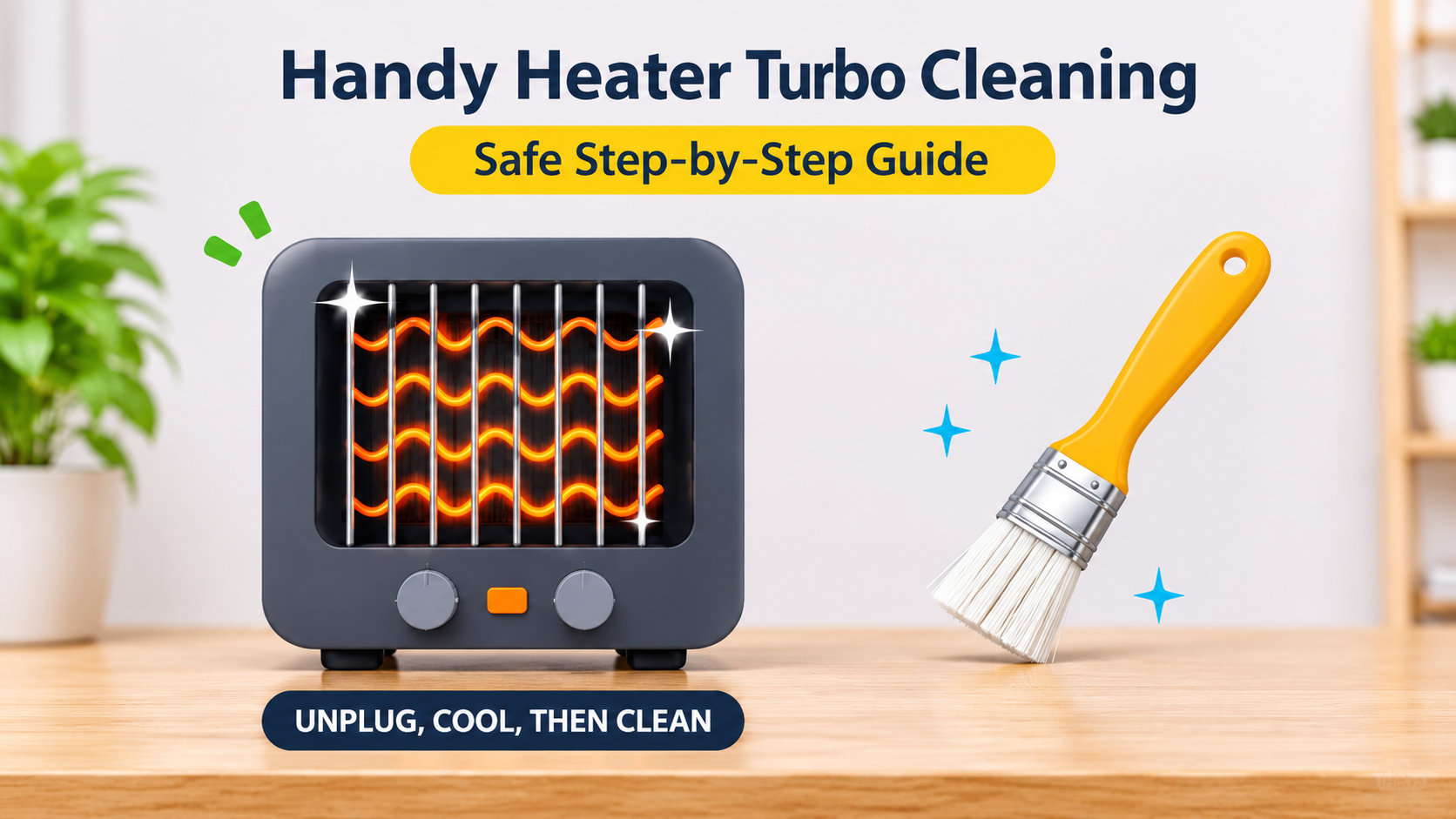
- Do a quick weekly dust-off. Unplug, let the heater cool completely, then go over the rear intake and front grill with a soft brush or a vacuum with a brush attachment.
- Do a fuller clean every few weeks of heavy use, as described in the manual for your model.
- Do not run the heater during sweeping, bed-making or dusty work. Switch it off and unplug it, then let the dust settle first.
- Do not dry clothes on or near it. Wet fabric and lint raise the risk of fire and increase fibre fall.
- Keep the original box or a cover for storage. A clean cover keeps dust out during the off season.
Pick a fixed day, for example every Sunday evening, for a one-minute dust-off. A tiny regular habit beats a big rescue clean once a season.
Quick Removal Routine
If you already have visible dust, here is the short version of a safe removal routine:
- Switch the heater off, unplug it and wait at least 30 minutes for it to cool.
- Gently brush the front grill and rear intake with a soft brush to loosen dust and lint.
- Vacuum the loosened dust, holding the brush or crevice attachment just above the surface without pushing into the element or fan.
- Wipe the outer body with a slightly damp, well-wrung cloth, then dry it with a clean cloth. Keep water away from the vents, switches and plug.
- Let it dry completely before plugging in.
- Run a short supervised test on the lowest setting. A very faint smell from tiny leftover dust is normal and should fade fast.
Do not open the casing unless your manual allows it. If you suspect heavy dust inside, take it to a qualified technician.
When to Stop Using the Heater
Cleaning solves most dust problems, but some signs mean the heater should be checked or replaced:
| Warning sign | What to do |
|---|---|
| Smoke, sparks or flames | Switch off and unplug if safe, stop using, and do not restart |
| Strong, sharp burning smell that returns after cleaning | Stop using and have it inspected by a technician |
| Heater keeps overheating and cutting out | Clean intake and grill again; if it continues, stop using it |
| Melted, warped or blackened plastic | Stop using and replace the heater |
| Hot, discoloured or damaged plug or cord | Stop using and replace or repair the part before use |
| Fan rubbing, scraping or not turning | Stop using and get the heater checked |
Seasonal Care and Storage
- Before winter: Take the heater out, check the cord and plug, dust it thoroughly and run a short test on low.
- During winter: Do a weekly dust-off and a fuller clean every few weeks of regular use.
- After winter: Clean and dry the heater fully, loosely wrap the cord and store it in its box or under a clean cover in a cool, dry place.
Frequently Asked Questions
Why does my handy heater turbo smell like burning dust?
Dust and lint on the element or inside the vents burn off when the heater warms up. A light smell at the start of the season is common. Cleaning the grill and intake usually fixes it. If the smell is strong, smoky or keeps returning, stop using it and get it checked.
Can dust buildup in a heater cause a fire?
In extreme cases, yes. Thick lint close to a very hot part can smoulder or ignite. That is why regular dusting, safe placement and stopping use when you notice smoke or a strong burning smell are so important.
How often should I remove dust from my heater?
A quick dust-off once a week during regular use, and a fuller clean every few weeks, works for most homes. Homes with pets, carpets or high dust levels may need it more often.
Why does my heater keep turning itself off?
Dust can block airflow and cause internal overheating, which triggers the safety cut-off. Unplug the heater, let it cool, clean the intake and grill, and clear the space around it. If it keeps happening, stop using it and get it inspected.
Does dust make my heater use more electricity?
It can reduce performance. With weak airflow, the room warms more slowly and the heater may run longer to reach a comfortable temperature, which increases the units you use.
Is it safe to use a heater with some dust on the grill?
A very light layer is usually not a problem, but it is best to remove it. Thick dust, lint or hair should be cleaned before you use the heater again.
Should I open the heater to remove dust inside?
Only if your manual says it is safe. Opening the casing can expose live parts and may void the warranty. If you think there is heavy dust inside, ask a qualified technician.
Can I use the heater in a very dusty room?
You can, but expect faster buildup and clean it more often. If the dust is heavy, for example during renovation, avoid running the heater until the dust has settled.
Final Summary
Dust buildup is the most common and most preventable problem with a handy heater turbo. A little dust is normal, but a thick layer weakens performance, creates smells and noise, and can become a real safety hazard. Remember these key points:
- Know why it happens: the fan pulls dusty room air across a very hot element.
- Watch the warning signs: smell, weak airflow, noise, heat and repeated shut-offs.
- Place it smartly: hard floor, away from carpets, beds, curtains and pets.
- Dust it weekly: unplug, cool, brush and vacuum the intake and grill.
- Stop if it is dangerous: smoke, sparks or a strong burning smell mean the heater should not be used.
- Store it clean and covered: so it is ready for the next winter.
A few minutes of care each week keeps your handy heater turbo warmer, quieter, safer and longer-lasting.