








How to Clean Fabric Storage Bins: Step-by-Step Guide That Works
Fabric storage bins are one of the most popular ways to organize closets, kids’ rooms, shelves, and laundry areas. They look soft and tidy, but they also collect dust, pet hair, crumbs, spills, and odors much faster than most people expect. Because the fabric is porous, dirt does not just sit on the surface; it settles deep into the weave.
The good news is that cleaning fabric storage bins is simple once you know your bin type and the right method. This complete guide walks you through everything: what you need, how to clean each style of bin, how to remove stains and smells, how to dry them safely, and how to keep them looking fresh.
Why You Should Clean Fabric Storage Bins Regularly
- Dust and allergens: fabric traps dust mites, pollen, and pet dander, which can affect people with allergies.
- Stains and spills: juice, makeup, food, and ink marks set permanently if ignored.
- Musty odors: trapped moisture and dirt create a stale smell that transfers to your stored items.
- Longer life: clean bins keep their shape and color and do not wear out as fast.
- Cleaner stored items: blankets, toys, and clothes stay fresh instead of absorbing odor from a dirty bin.
What You Will Need
Step 1: Check the Care Label First
Before you wet anything, look for the care tag sewn inside the bin or on the removable liner. It tells you whether the fabric can be machine washed, hand washed, or only spot cleaned. If there is no label, treat the bin as spot-clean only to be safe.
Also identify the bin type, because that decides your cleaning method:
Step 2: Empty the Bin and Remove Loose Dirt
- Take everything out and check for hidden crumbs, lost items, or damp spots.
- Turn the bin upside down outdoors and shake out dust and debris.
- Use a vacuum brush attachment on the inside, outside, and corners. A lint roller works well for pet hair.
This step matters more than it seems. Washing a bin full of loose dirt just turns it into mud on the fabric.
Step 3: Treat Stains Before Washing
Spot treating first gives stains the best chance of disappearing completely.
- General stains and food spills: mix a few drops of mild detergent in warm water, dab with a cloth, and blot. Do not rub, as rubbing pushes stains deeper.
- Grease or oil: sprinkle baking soda, let it sit for 15 to 20 minutes to absorb the oil, brush it off, then treat with diluted dish soap.
- Ink or marker: dab with a cloth dampened with rubbing alcohol, working from the outside of the mark inward. Test on a hidden spot first.
- Juice, wine, or coffee: blot right away, then dab with equal parts white vinegar and water.
- Mildew spots: apply diluted white vinegar, let it sit for 10 minutes, brush gently, and wipe clean.
Step 4: Wash the Bin
Method A: Machine Washing Removable Liners and Soft Bins
- Remove any cardboard, plastic, or foam inserts.
- Place the fabric in a mesh laundry bag to protect seams and handles.
- Wash on a gentle cycle with cold or lukewarm water and mild detergent.
- Skip bleach and fabric softener, which can fade color and leave residue.
Method B: Hand Washing
- Fill a tub or sink with lukewarm water and a small amount of mild detergent.
- Submerge the bin and gently press and swirl it for a few minutes.
- Rinse thoroughly until the water runs clear and no suds remain.
- Press out water with a towel. Do not wring or twist, which can warp the shape.
Method C: Spot Cleaning Structured Bins
- Mix a cup of warm water with a teaspoon of mild detergent.
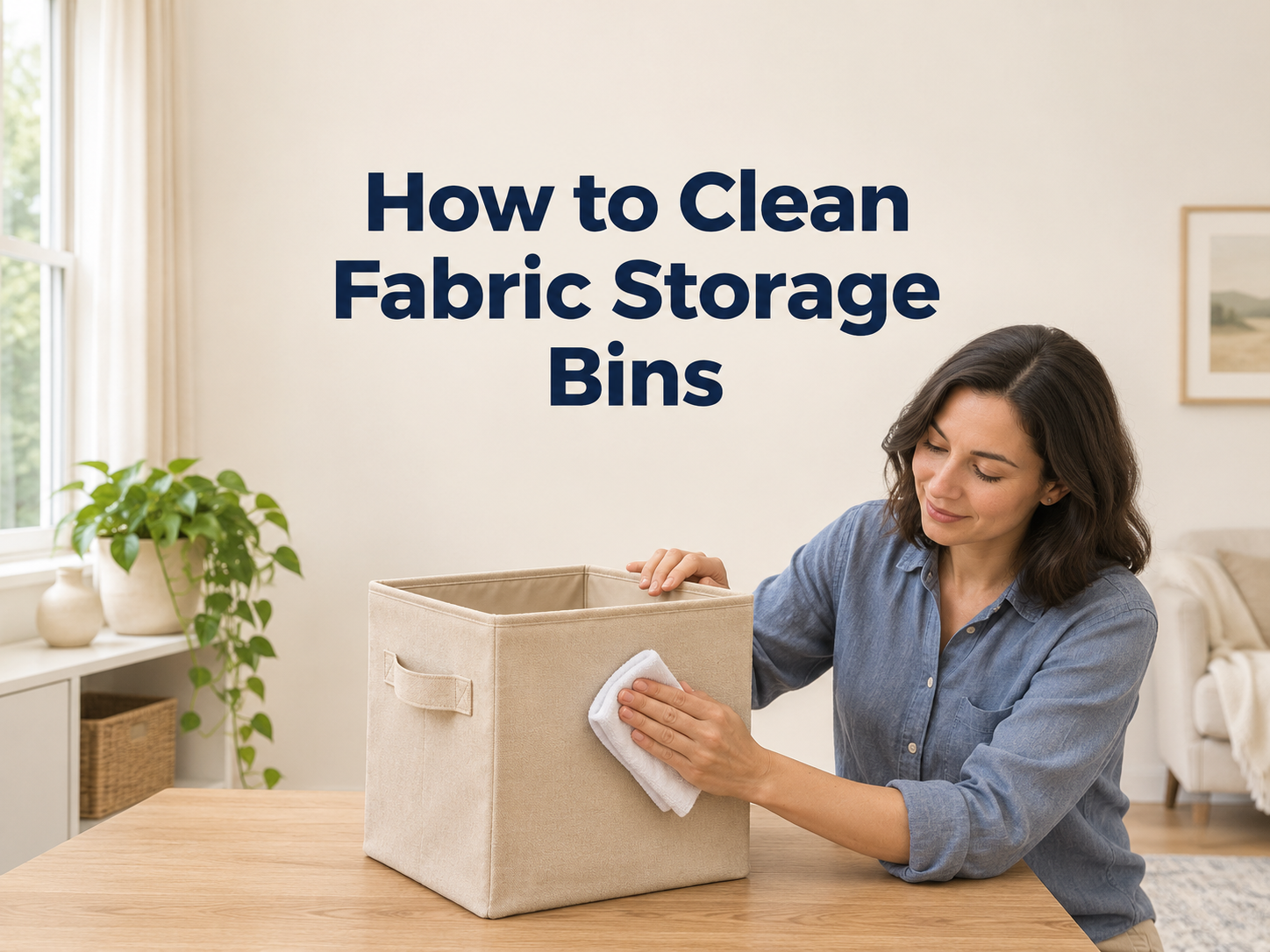
- Dampen a clean cloth, wring it out well, and wipe the fabric in small sections.
- Go over the area again with a cloth dampened with plain water to remove soap.
- Blot with a dry towel to pull out as much moisture as possible.
Important: never soak a bin with a cardboard or fiberboard base. Soaked cardboard warps, weakens, and grows mold from the inside.
Step 5: Dry Completely
Drying is the step that makes or breaks your result. A bin that is even slightly damp will develop a musty smell within a day or two.
- Air dry in a well-ventilated area, ideally with a fan pointed toward the bin.
- Reshape the bin while it is damp so corners and sides keep their form.
- Place it in indirect sunlight if possible. Sun helps dry fibers and freshens the fabric, but long exposure can fade dark colors.
- Avoid high heat dryers unless the label allows it, as heat can shrink fabric and melt glues.
- Do not refill the bin until it feels completely dry inside and out, including seams and the bottom.
Step 6: Deodorize and Refresh
If the bin still smells stale after drying, sprinkle baking soda inside, leave it for several hours or overnight, and vacuum it out. You can also lightly mist the fabric with a mix of equal parts water and white vinegar, then air it out until the vinegar smell fades. For ongoing freshness, keep a small pouch of activated charcoal or a silica gel packet inside.
How Often Should You Clean Fabric Storage Bins?
- Every 1 to 2 weeks: quick vacuum or lint roll for bins holding toys, pet items, or laundry.
- Every 1 to 3 months: wipe or spot clean the inside and outside.
- Every 6 months: full wash or deep clean for removable liners and soft bins.
- Immediately: any spill, leak, or damp item that touches the fabric.
Common Mistakes to Avoid
- Soaking structured bins with cardboard or foam bases.
- Using bleach or harsh chemicals on colored fabric.
- Rubbing stains instead of blotting them.
- Putting bins back in use while still damp.
- Skipping the care label and washing in hot water.
- Storing damp towels, gym clothes, or swimwear inside fabric bins.
How to Keep Fabric Storage Bins Clean Longer
Frequently Asked Questions
Can you put fabric storage bins in the washing machine?
Many soft or collapsible bins and removable liners can be machine washed on a gentle cycle in cold water. Structured bins with cardboard or foam inserts should be spot cleaned instead. Always check the care label first.
How do you clean fabric bins that cannot be washed?
Vacuum them, then wipe the surface with a cloth dampened with a mild detergent solution. Follow with a plain damp cloth to remove soap, blot dry, and let the bin air dry fully with a fan.
How do you remove a musty smell from fabric storage bins?
Clean the fabric, dry it completely, then use baking soda overnight and a light vinegar-water mist. Sunlight and airflow also help. If the smell keeps returning, the bin or its base is probably still holding moisture.
Can I use bleach on fabric storage bins?
It is best to avoid bleach. It can weaken fibers and cause fading or yellowing. Mild detergent and white vinegar are safer and effective for most cleaning needs.
Why did my fabric bin lose its shape after washing?
Soaking, wringing, or high heat can warp the inner board or loosen the structure. Reshape the bin while damp and let it dry naturally to help it keep its form.
Final Thoughts
Learning how to clean fabric storage bins takes only a few minutes of effort and makes a big difference in how your home looks and smells. Check the care label, remove loose dirt, treat stains early, use the right wash method for your bin type, and always dry completely before reuse. With these simple habits, your fabric storage bins will stay fresh, sturdy, and ready to keep your space organized for years.