







How to Prevent Clutter in Living Room: 15 Simple Habits That Work
The living room is the most used space in most homes. It is where families relax, kids play, guests gather, mail lands, and remote controls disappear. That constant traffic is exactly why clutter builds up here faster than in any other room.
The real challenge is not cleaning clutter once. It is stopping it from coming back. This guide explains why living room clutter happens, and gives you a complete system of habits, storage ideas, and routines to prevent it long term.
Why Does the Living Room Get Cluttered So Easily?
- It is a shared space: everyone in the home leaves things behind.
- Items have no “home”: when something has no fixed place, it ends up on the nearest surface.
- Too many belongings: more items than storage space means overflow onto tables and floors.
- Entry point for the house: mail, bags, shoes, and keys often stop here first.
- Surfaces invite piling: coffee tables, sofa arms, and shelves attract random objects.
- Daily activities happen here: TV time, hobbies, homework, and play all create small messes.
Step 1: Declutter Once Before You Try to Prevent It
Prevention only works on a clear space. Start with a one-time reset so you are not fighting old clutter and new clutter together.
- Sort into four groups: keep, relocate to another room, donate or sell, and throw away.
- Start with surfaces: clear the coffee table, TV stand, and side tables first for a quick visual win.
- Handle shelves and storage: remove items you have not used or admired in a year.
- Be honest about duplicates: multiple remotes, extra throw pillows, and old magazines add up quickly.
Step 2: Give Every Item a Permanent Home
This is the single most effective rule for preventing clutter. If an item does not have an assigned spot, it will never be put away. A fixed home means “putting it away” takes five seconds instead of a decision.
- Remotes in a small tray or basket on the coffee table.
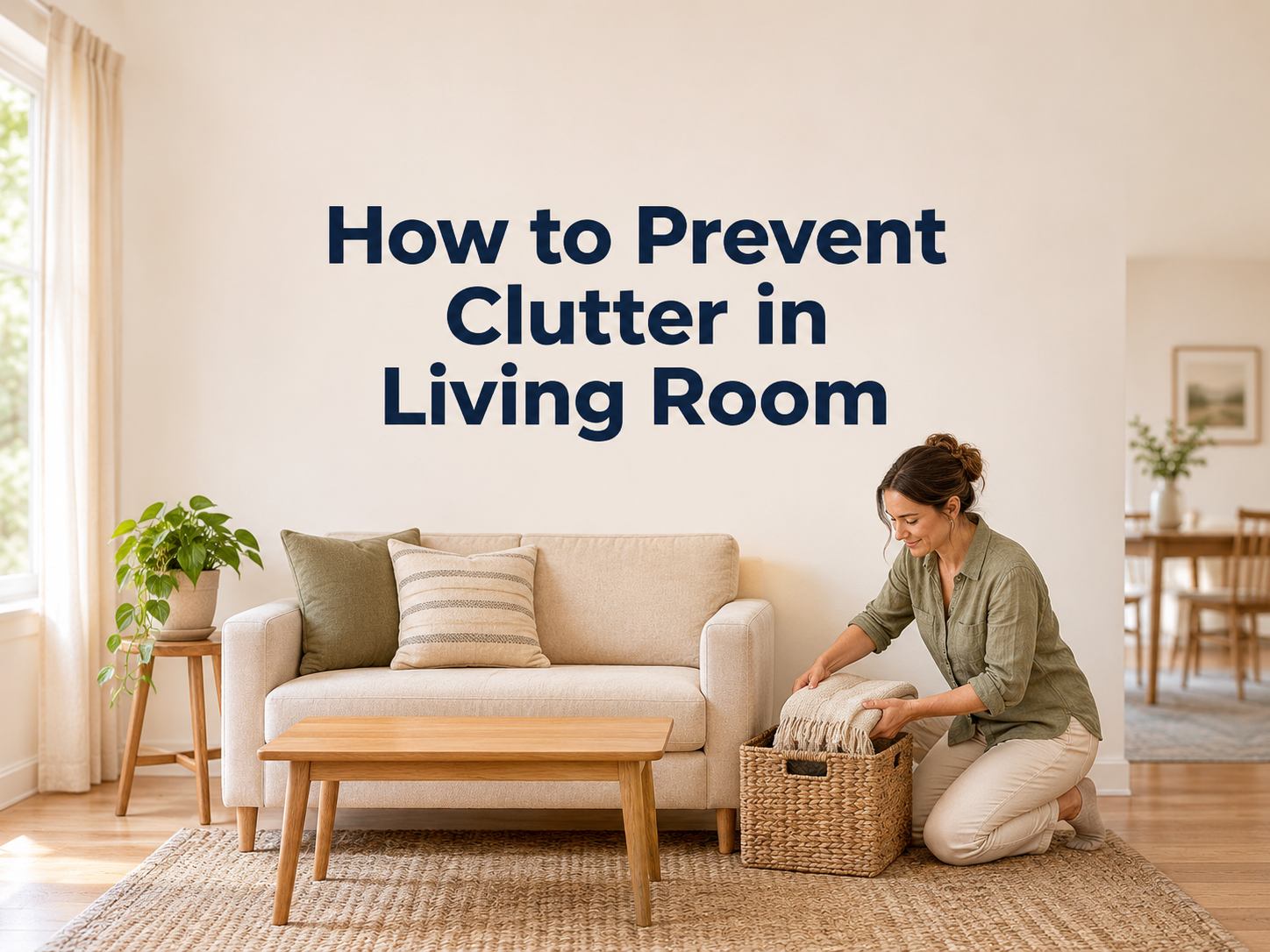
- Throw blankets in a decorative basket or draped over one designated chair.
- Chargers and devices in a charging station on a shelf, not scattered around outlets.
- Books and magazines on one shelf or in a single magazine holder, with a limit.
Step 3: Use Smart Storage That Hides and Contains
- Storage ottomans and benches: double as seating and hide blankets, toys, and games.
- Coffee tables with shelves or drawers: keep daily items off the surface.
- Baskets with lids: perfect for toys, remotes, and throws, and easy to move around.
- Wall shelves and floating shelves: use vertical space and free up the floor.
- Cable organizers: clips and cord boxes tame the tangle behind the TV.
- Closed cabinets: hide mixed items so the room looks calm even when full.
Step 4: Build Simple Daily Habits
Clutter is rarely caused by one big mess. It builds through small, ignored moments. These habits stop it at the source.
- The 5-minute evening reset: before bed, spend five minutes returning every item to its home.
- One-touch rule: put things away the first time you touch them instead of setting them down “for later.”
- Handle mail immediately: sort it at the door and keep only what needs action.
- Do not leave cups and plates: carry dishes to the kitchen when you leave the room.
- Keep surfaces mostly clear: set a rule of no more than two or three items per surface.
Step 5: Create Zones in the Living Room
Zones give the room clear purposes, and clear purposes make it obvious where things belong.
Step 6: Control What Comes Into the Room
- One in, one out: when something new arrives, something old leaves.
- Limit decor: a few meaningful pieces look better than crowded shelves.
- Rotate, do not accumulate: store seasonal items elsewhere and swap them in as needed.
- Go digital: replace piles of paper, magazines, and DVDs with digital versions where possible.
- Pause before buying: ask where it will live before bringing it home.
Step 7: Make Tidying Easy for Everyone
- Label bins and baskets: especially helpful for kids and shared households.
- Use open bins for children: toss-in storage is easier to maintain than neat shelving.
- Set household rules: for example, shoes at the door and devices on the charging shelf.
- Keep storage at easy reach: the harder it is to put something away, the less likely it will happen.
- Do a weekly 10-minute family reset: everyone returns their own items.
Quick Prevention Checklist
Common Mistakes That Bring Clutter Back
- Buying more storage before removing excess items.
- Using open shelves for everything, which shows every item at once.
- Keeping “someday” items that never get used.
- Skipping the daily reset and waiting for a big weekend clean-up.
- Giving items no fixed home.
- Decorating every surface until there is no breathing space.
Frequently Asked Questions
How do I keep my living room tidy every day?
Give every item a home, follow the one-touch rule, and do a five-minute reset each evening. Small, consistent actions work better than occasional deep cleans.
What causes clutter to build up in a living room?
The main causes are items without a designated spot, too many belongings, shared use by many people, and the room acting as a drop zone for mail, bags, and devices.
How can I reduce clutter in a small living room?
Use multifunctional furniture such as storage ottomans, choose closed storage, use wall space with shelves, and keep surfaces mostly clear. Fewer, well-chosen items make a small room feel larger.
How do I stop my family from leaving things around?
Make it easy: label baskets, add hooks and trays near the entrance, set simple house rules, and hold a short weekly family reset.
How often should I declutter my living room?
A quick daily reset, a weekly surface check, and a deeper declutter every three to six months keeps most living rooms under control.
Final Thoughts
Knowing how to prevent clutter in the living room comes down to a few repeatable ideas: reduce what you own, give everything a home, use storage that hides and contains, divide the room into zones, and build tiny daily habits. Start with one or two changes this week, and your living room will stay calm, open, and welcoming for years.