
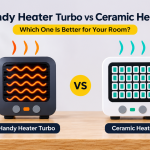
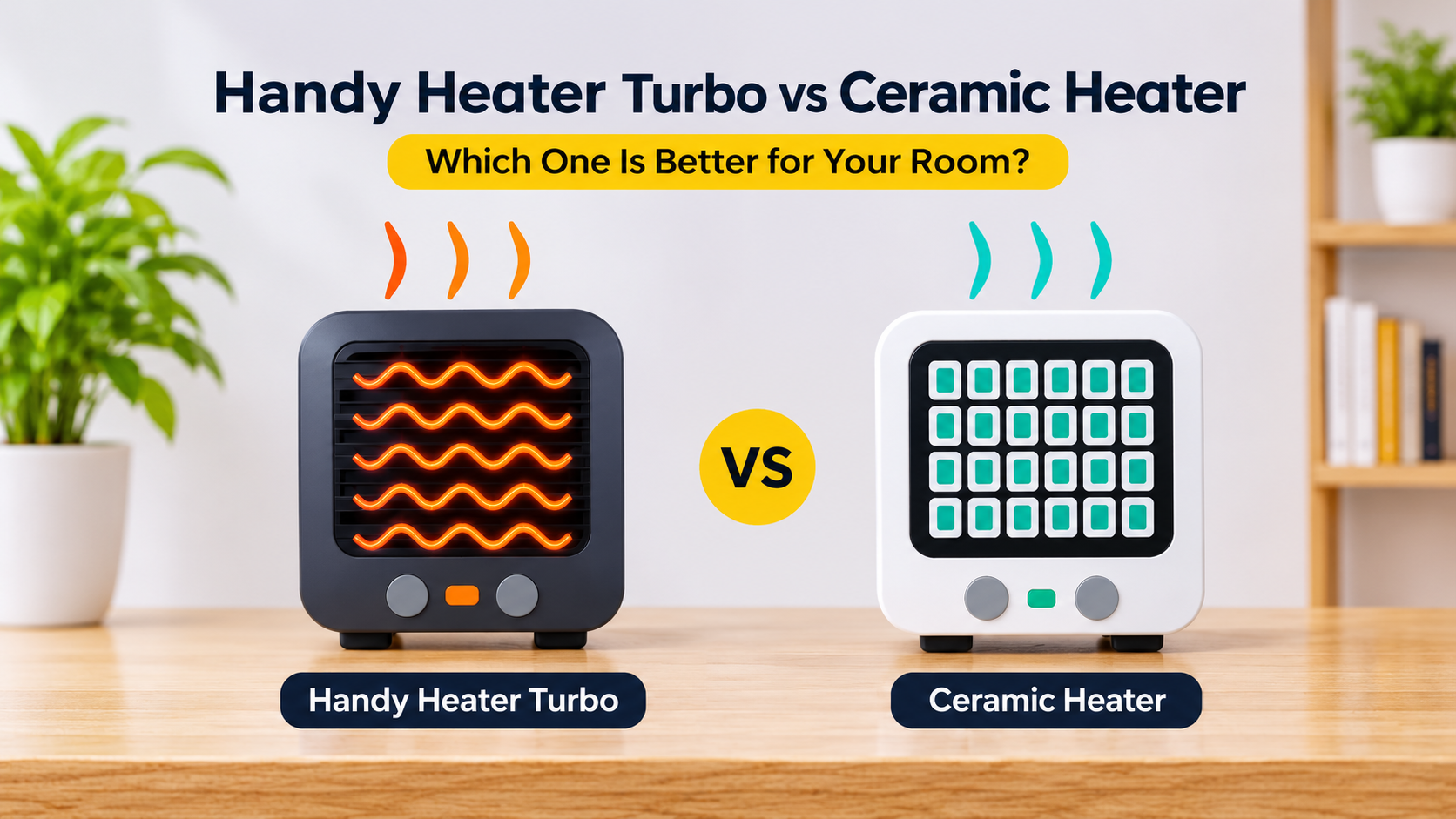
Handy Heater Turbo vs Ceramic Heater: Which One Is Better for Your Room?

When the temperature drops, a small room heater suddenly becomes the most useful thing in the house. But walk into any shop or browse any online store and you will quickly meet the same dilemma: should you buy a handy heater turbo, the compact and budget-friendly fan heater that is popular in many homes, or a ceramic heater, which usually costs a little more and promises safer, steadier warmth?
Both types turn electricity into heat and blow it into your room. Yet they behave differently in heating speed, safety, noise, comfort, durability and running cost. In this guide we compare them in plain language so you can pick the right one for your bedroom, study room, office or living area, without wasting money.
Choose a handy heater turbo if you want a low-priced, lightweight heater that warms a small space quickly for short periods. Choose a ceramic heater if you will use it for hours, run it in a bedroom, or have children or pets at home, because its self-regulating heating element and better safety features make it the more comfortable and secure long-term choice.
- What is a handy heater turbo?
- What is a ceramic heater?
- How the two heaters work
- Side-by-side comparison table
- Heating speed and comfort
- Electricity use and running cost
- Safety: the biggest difference
- Noise, air quality and durability
- Which heater suits which room?
- Pros and cons at a glance
- Buying checklist
- Safe-use tips for any room heater
- Frequently asked questions
- Final verdict
What Is a Handy Heater Turbo?
A handy heater turbo is a small, portable fan heater designed to be carried from room to room. Inside the grill there is a metal heating element, usually a coil of resistance wire. When you switch it on, electricity passes through the coil, the coil glows hot, and a built-in fan pushes the warm air out into the room. Many models offer a simple switch with a fan-only mode and one or two heat levels, which is where the “turbo” name comes from.
People like this type of heater for three reasons: it is cheap, it is light enough to move with one hand, and it starts blowing warm air almost the moment you turn it on. The trade-off is that the heating element runs very hot, the body can get hot too, and basic models often have a very simple thermostat or none at all. Features and build quality also vary a lot from one brand and model to another, so it pays to look closely at what a specific unit offers.
What Is a Ceramic Heater?
A ceramic heater uses ceramic plates or stones, commonly called PTC elements (Positive Temperature Coefficient), as its heat source. The special property of these elements is that their electrical resistance rises as they get hotter. In everyday terms, the element naturally limits how hot it can become, so it settles at a stable temperature instead of climbing endlessly.
A small fan blows air across the hot ceramic surface and into the room. Because the element regulates itself, most ceramic heaters feel more even and gentle. Many models also add a thermostat, an oscillation function, a remote control, a timer and a tip-over switch. They are usually a bit heavier and more expensive than a basic coil fan heater, but the extra features are exactly what people want for regular, longer use.
How the Two Heaters Work
The diagram below shows the basic path of heat in each type. The big difference sits in the middle: a glowing metal coil on one side, and a self-regulating ceramic element on the other.
Side-by-Side Comparison Table
Here is the whole picture in one place. These descriptions apply to typical models. Always check the actual specifications of the product you are considering.
| Feature | Handy Heater Turbo | Ceramic Heater |
|---|---|---|
| Heating element | Metal resistance coil | Ceramic PTC plates or stones |
| Warm-up speed | Very fast, near instant | Fast, a few seconds slower |
| Heat feel | Strong, sometimes dry and harsh | Even and gentle |
| Thermostat | Basic or missing on many models | Common, often adjustable |
| Overheat self-limiting | No, relies on a cut-off device | Yes, built into the element |
| Tip-over protection | Varies by model | Common on most models |
| Typical noise | Louder fan, may hum or click | Usually quieter |
| Weight and size | Very light and compact | Slightly heavier |
| Extra features | Few: simple switches | Timer, remote, oscillation on many |
| Price | Lower | Medium to higher |
| Best for | Short, quick warm-ups on a budget | Regular use and long hours |
Heating Speed and Comfort
If speed is the only thing you care about, the handy heater turbo is hard to beat. The exposed coil heats up in moments, so you can feel warm air right after switching on. That makes it perfect for a quick warm-up before getting out of bed, drying your hands in the kitchen, or taking the chill off a small bathroom or study corner.
Ceramic heaters take slightly longer to reach full output, but once they do, the warmth is steadier. Because of the thermostat found on many models, a ceramic heater can cycle the heat on and off to hold a set temperature, so the room does not swing between too hot and too cold. Many people also find ceramic warmth less dry and less harsh on the throat and skin, which matters when the heater runs through the night.
In dry winter air, any electric heater can make the room feel drier. Keeping a bowl of water in the room or opening a window slightly for a few minutes can help, whichever heater you choose.
Electricity Use and Running Cost
This is the part where most buyers get confused, so let us be clear: both types turn almost all of the electricity they use into heat. A 1000-watt coil heater and a 1000-watt ceramic heater both consume about 1 kWh of electricity after one hour of running at full power. The wattage printed on the label, not the heating technology, is what mostly decides the electricity bill.
The real difference is how you use them. A heater with a good thermostat switches itself off when the room reaches the temperature you set, then switches back on when it cools. That cycling can reduce total running time and therefore save energy. Many ceramic heaters have this feature, while basic coil models often run at full power until you switch them off.
You can estimate your own cost with this simple formula:
Heater wattage ÷ 1000 × hours used × your price per unit (kWh) = estimated cost.
Example: a 1500 W heater running for 4 hours uses 1.5 × 4 = 6 units (kWh). Multiply by your own electricity rate to see the cost.
Lower-wattage settings are useful for small rooms. If your handy heater turbo or ceramic heater has a low-power mode, using it once the room is already warm is one of the easiest ways to cut your bill.
Safety: The Biggest Difference
Safety is where the two types separate most clearly, and it is why many families end up choosing ceramic.
Why ceramic is generally safer
The PTC element in a ceramic heater limits its own temperature as resistance rises, so it is less likely to reach the extreme heat of an open coil. Many models also come with tip-over switches, overheat cut-offs and cooler outer casings. For rooms where children or pets move around, or where the heater may run while you sleep, these built-in layers matter.
What to watch with a handy heater turbo
The glowing coil sits just behind the grill, and the body can become hot to the touch. Cheap models may skip a proper thermostat, tip-over switch or overheat protection. That does not mean every unit is unsafe, but it means you must check the product carefully and use it with more attention.
- Keep it at least 1 metre (3 feet) away from curtains, bedding, sofas and anything flammable.
- Place it on a flat, hard, stable floor surface, never on a bed or soft carpet pile.
- Plug it directly into a wall socket. Avoid long or thin extension cords and multi-plugs.
- Never cover the heater or use it to dry clothes.
- Do not leave it running when you leave home or fall asleep unless it has proper auto shut-off protection.
- Stop using it immediately if you notice a burning smell, sparks, a damaged cord or a hot plug.
Noise, Air Quality and Durability
Noise
Both heaters use a fan, so both make some sound. Budget coil heaters tend to have a louder, higher-pitched fan and may click or hum as the element heats and cools. Ceramic models generally run quieter, which is a big plus in a bedroom or a quiet office.
Smell and air quality
A new heater of any kind may give off a mild smell for the first few uses as manufacturing residue burns off. Coil heaters can also scorch dust that settles on the element, which creates a burnt-dust smell. Cleaning the grill and fan intake regularly helps a lot. Remember that electric heaters do not burn oxygen, but they do dry the air and circulate dust.
Lifespan
Coil elements can wear out or become brittle after heavy use, and the switches and fans in low-cost models often fail first. Ceramic elements are generally durable because they run at a controlled temperature, though fans and electronics can still wear out. Build quality of the specific brand counts as much as the heater type.
Which Heater Suits Which Room?
The chart below gives a quick, general rating of each heater on five points that matter to most buyers. The scores are our editorial estimates for typical models, not lab measurements, so a premium handy heater turbo or a poor ceramic model can behave differently.
Bedroom
Choose ceramic. You want quiet operation, even warmth, a thermostat and ideally a timer or auto shut-off, since the heater may run while you sleep.
Small study room or home office
Either can work. A ceramic heater is quieter for calls and concentration, while a handy heater turbo is fine if you only need a quick top-up of warmth for short sessions.
Bathroom or entry area (short use)
A handy heater turbo can do the job for a quick warm-up, provided it is used only in a dry area, never near water, and that you stay in the room while it runs.
Living room or shared family space
Ceramic is the safer pick if kids or pets are around. Choose a model with oscillation so the warmth spreads more evenly across the seating area.
Rented room or student accommodation
If your budget is tight and you only need occasional heat, a handy heater turbo is a sensible starter. If you will use it daily all winter, spending a bit more on ceramic usually pays back in comfort and peace of mind.
Pros and Cons at a Glance
Handy Heater Turbo
Pros
- Low purchase price
- Very quick warm-up
- Light, compact and easy to carry
- Simple controls that anyone can use
Cons
- Exposed hot element and hot body
- Basic thermostat or none on many models
- Louder fan and sometimes a dry-air feel
- Fewer extras and quality varies widely
Ceramic Heater
Pros
- Self-regulating element and extra safety features
- Steady, even warmth with a thermostat
- Usually quieter
- Timer, remote and oscillation on many models
Cons
- Higher price than basic coil heaters
- Slightly slower to reach full warmth
- Usually a bit heavier and larger
- Still gets hot, so it needs care and space
Buying Checklist
Whichever type you lean toward, run through this checklist before paying:
- Wattage: Small rooms usually do well with roughly 1000 W to 1500 W. Very small spaces can manage with less, while larger rooms need more power or a longer warm-up time.
- Adjustable thermostat: This helps control temperature and can reduce wasted electricity.
- Tip-over switch: It should shut the heater off automatically if it falls.
- Overheat protection: A thermal cut-off is a must-have safety layer.
- Heat settings: At least two power levels plus a fan-only mode give you flexibility.
- Cord and plug quality: Look for a thick, firm cord and a solid plug.
- Safety marks and warranty: Prefer products with recognised safety markings, a clear warranty and genuine after-sales support.
- Cleanable design: A removable or accessible grill makes dust cleaning easier.
Safe-Use Tips for Any Room Heater
- Clean the grill and air intake gently once a month during heavy use. Always unplug first and let it cool.
- Give the room some fresh air for a few minutes each day.
- Use the thermostat or a lower setting once the room is comfortable.
- Start with the heater at a distance, then adjust placement so it never points straight at your bed, sofa or curtains.
- Turn it off and unplug it when you leave the room for a long time.
Frequently Asked Questions
Is a ceramic heater better than a handy heater turbo?
For regular and long-hour use, usually yes, because of its self-regulating element, quieter operation and extra safety features. For short, occasional use on a tight budget, a handy heater turbo can be a practical choice.
Which heater uses less electricity?
At the same wattage, both use about the same amount of electricity. Savings come from a good thermostat, low-power settings and sensible use, not from the heating technology alone.
Can I use a ceramic heater or handy heater turbo all night?
It is best not to run any room heater unattended through the night unless it has proper auto shut-off, tip-over protection and thermostat control, and you have placed it safely away from bedding. If in doubt, use a timer or turn it off before sleeping.
Which one heats a room faster?
A handy heater turbo usually feels faster in the first minute because its coil heats up almost at once. Ceramic heaters are only a little behind and then hold the temperature more steadily.
Is a ceramic heater safe for kids and pets?
It is generally safer than a basic coil heater, but the body and grill can still become hot. Keep it out of reach, choose a model with a tip-over switch, and never let children or pets play near it.
Do these heaters dry out the air?
Electric fan heaters do not remove moisture, but warming the air lowers its relative humidity, so the room can feel drier. Ventilating the room and keeping some water in it can help.
What size room can a handy heater turbo or ceramic heater warm?
Most compact models suit small to medium rooms such as bedrooms, study rooms and home offices. Larger or draughty spaces will take longer to warm and may need a higher-wattage model.
Final Verdict
There is no single winner for everyone, but there is a clear winner for each type of buyer.
- Pick the handy heater turbo if you want a cheap, light heater for quick warm-ups and occasional use, and you are willing to follow safety rules carefully.
- Pick a ceramic heater if you will use it daily, in a bedroom or shared space, or you have kids or pets. The steadier heat, quieter fan and stronger safety features are worth the extra cost.
Whichever you choose, remember that wattage sets the electricity use, features set the safety, and smart placement sets how comfortable and safe your winter will be. Read the specifications, check the safety features, and buy from a seller who offers a proper warranty.