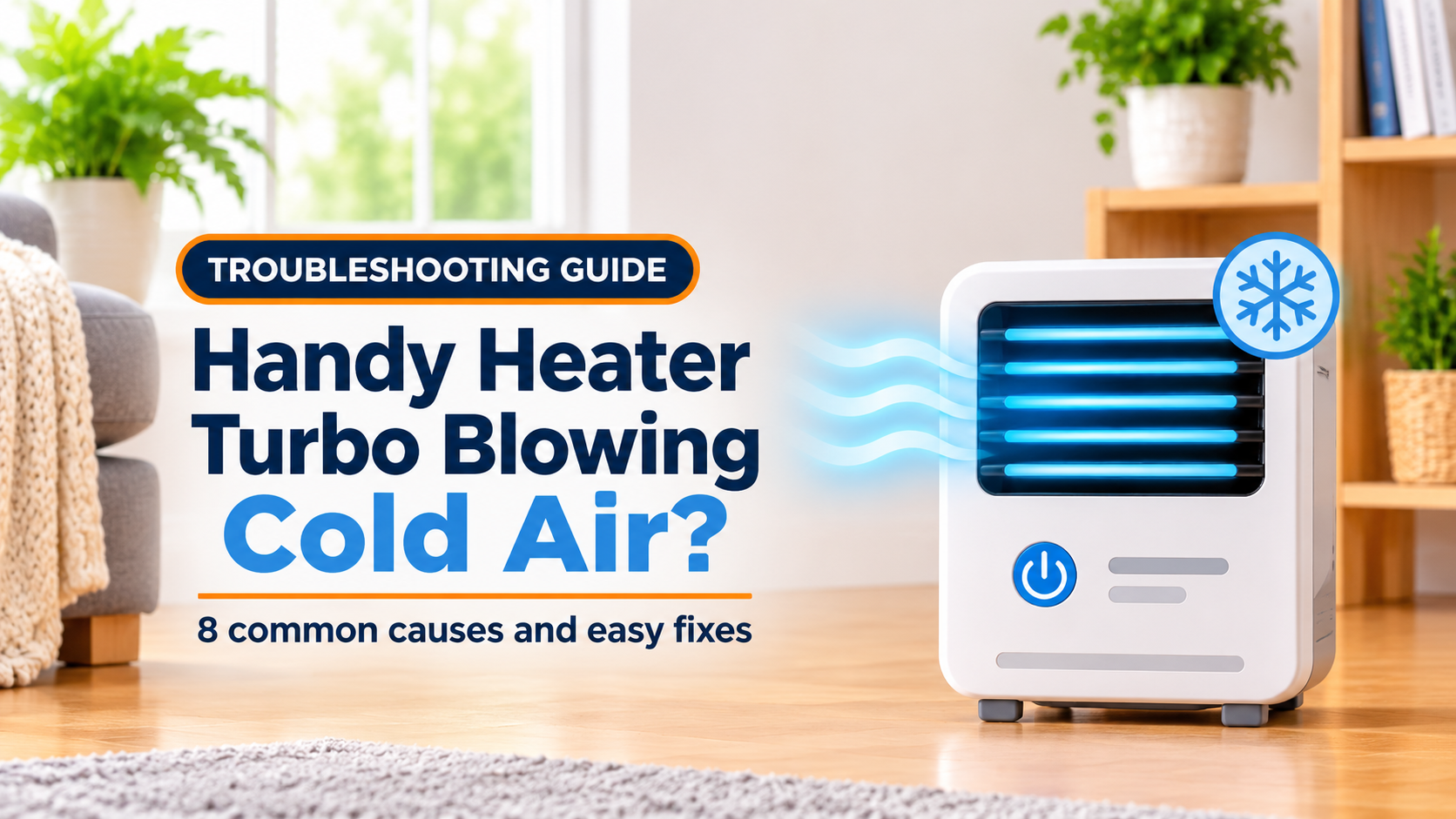
Handy Heater Turbo Blowing Cold Air? 8 Causes and Easy Fixes
You switch on your Handy Heater Turbo, expecting a wave of warmth, and all you get is a stream of cool air. Maybe it blew warm air last week, or maybe it never seemed to heat properly at all. Either way, a heater that only moves cold air around is not much use on a chilly day.
Before you assume the unit is broken, know this: in many cases, a portable heater blowing cold air is caused by a setting, a short warm-up delay, a power problem or a blocked vent. Only a smaller share of cases come from a failed heating part. In this guide you will find the most common reasons a Handy Heater Turbo blows cold air, how to check each one safely, and when it makes sense to replace the heater.
- How a portable heater makes warm air
- Cause 1: The heater is still warming up
- Cause 2: Wrong mode or heat level
- Cause 3: The thermostat has been reached
- Cause 4: Overheat protection has tripped
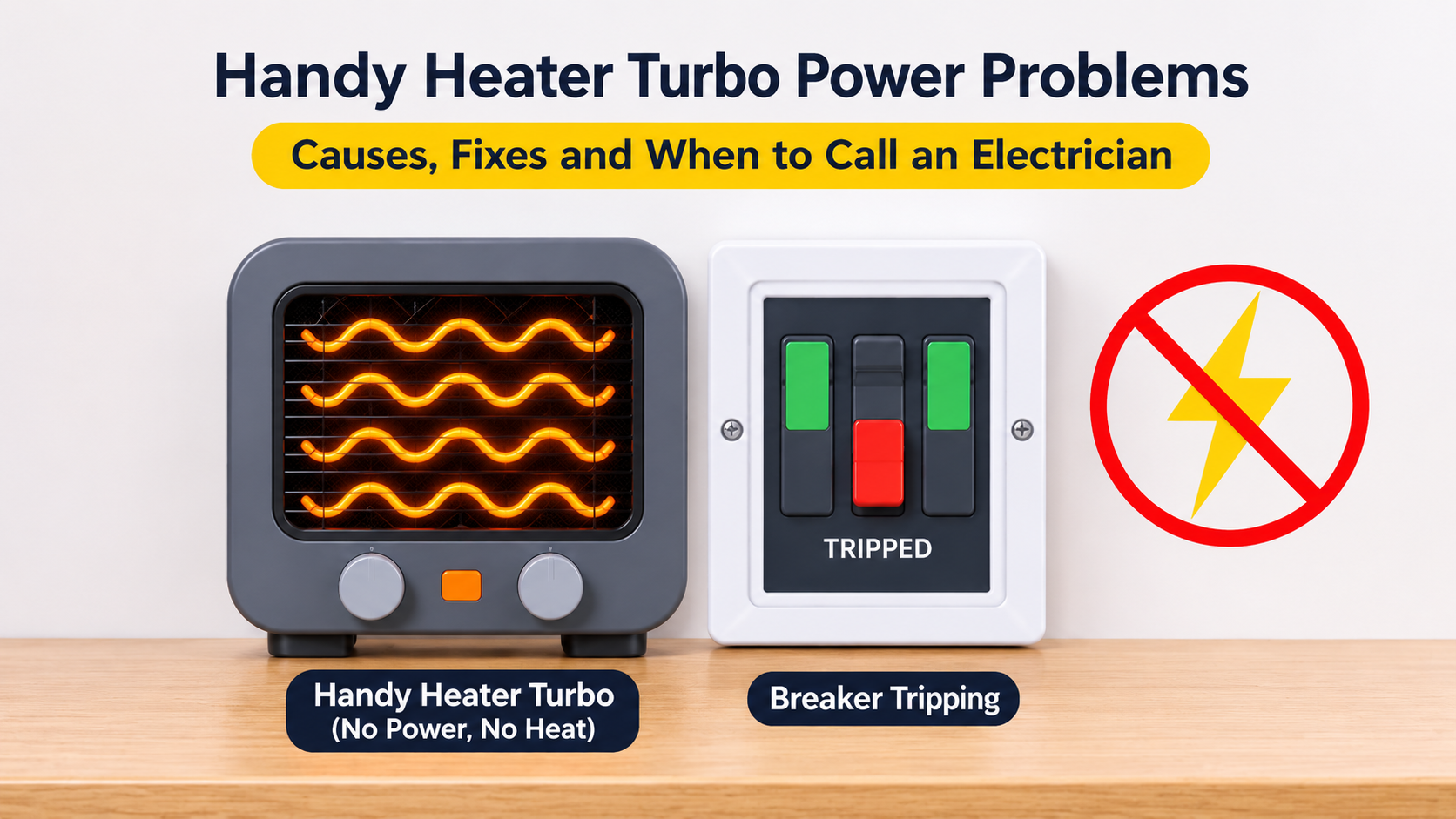
- Cause 5: Weak power from the outlet or extension cord
- Cause 6: Blocked vents or a dirty filter
- Cause 7: A failed heating element or thermal fuse
- Cause 8: Your room is simply too big or too drafty
- Normal behavior vs. a real problem
- Step-by-step troubleshooting checklist
- When to replace the heater
- Frequently asked questions
How a Portable Heater Makes Warm Air
To understand why cold air comes out, it helps to know what is happening inside. A compact room heater has two main working parts. The first is a fan, which pulls room air in and pushes it out. The second is a heating element, usually a ceramic or metal part that becomes hot when electricity passes through it. The fan moves air across the hot element, and the air leaves the heater warmer than it entered.
Here is the key point: the fan and the heating element can work independently of each other. The fan can run perfectly while the element stays off. When that happens, the heater simply blows room-temperature air, and it feels cold against your skin.
Cause 1: The Heater Is Still Warming Up
Many portable heaters start the fan the instant you press the power button, while the heating element needs a short time to reach its working temperature. During that first stretch, the air coming out can feel cool or only slightly warm. This is especially noticeable in a cold room or on a freezing morning.
What to do: Give the heater two to three minutes after switching it on before you judge it. If the air gradually becomes warm, nothing is wrong.
Cause 2: Wrong Mode or Heat Level
Some heaters offer a fan-only (cool) mode, an eco mode, and one or more heat levels. If the heater is set to fan only, it will blow cold air by design. An eco or low setting can also produce air that feels barely warm, especially from a few feet away.
How to check:
- Look at the control panel, dial or display and confirm that a heat mode is selected.
- Switch to the highest heat level and wait a couple of minutes.
- If your heater has a remote control, check that it is not sending a different mode command.
- Read the manual to see what each symbol or mode means on your specific model.
Cause 3: The Thermostat Has Been Reached
A thermostat measures the air near the heater and switches the heating element off once the room reaches your chosen temperature. Meanwhile, the fan may keep running. The result: cool air blowing from the heater even though it is working perfectly. Soon after, when the room cools slightly, the element switches back on.
How to check: Raise the temperature setting well above the current room temperature. If warm air returns right away, the thermostat was simply satisfied. Also make sure the heater is not placed in a spot where the sensor reads a false temperature, such as right next to a warm appliance or in direct sunlight.
Quick tip: If the heater cycles between warm and cold air every few minutes while the room still feels cold, try placing it a little farther from walls and corners and increasing the thermostat setting.
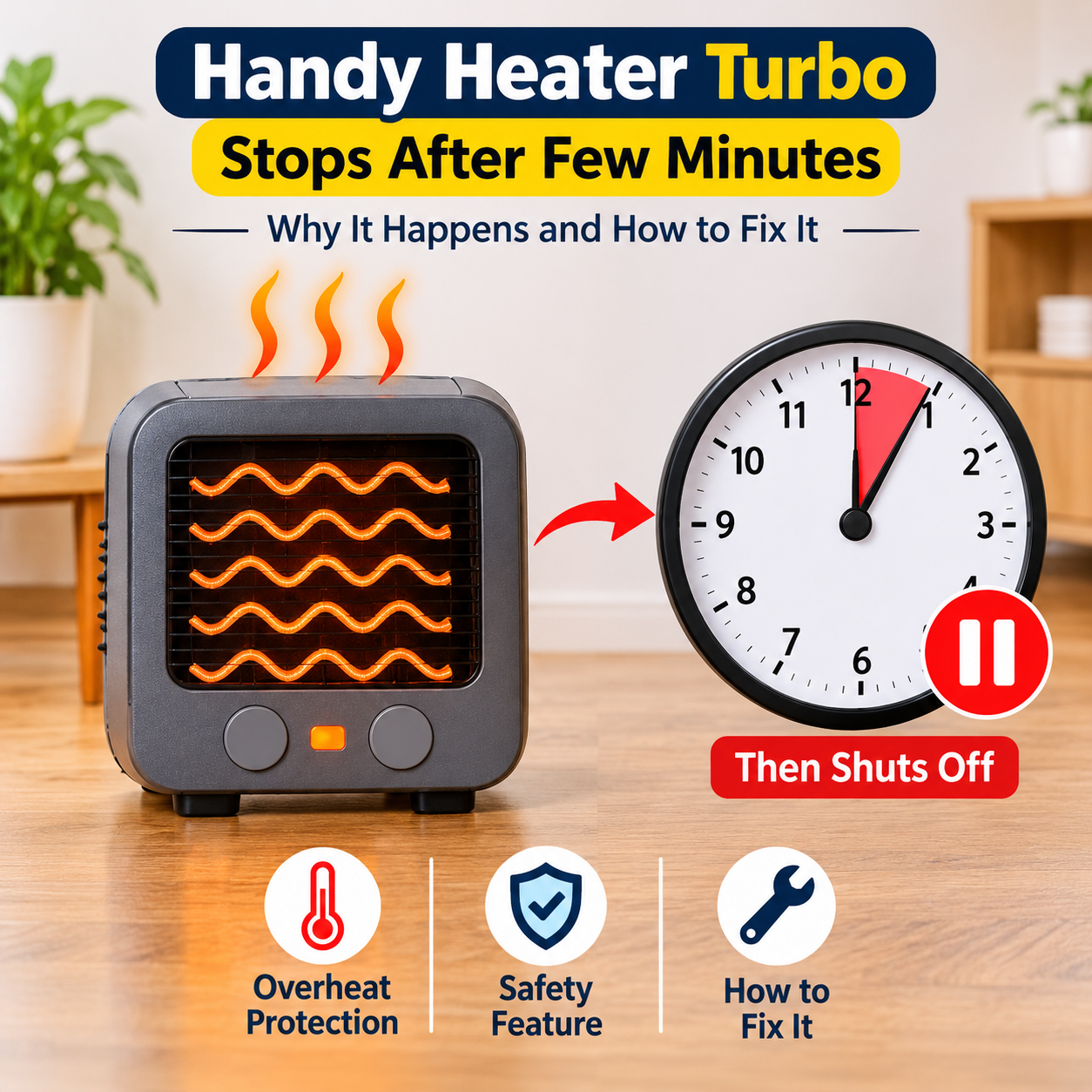
Cause 4: Overheat Protection Has Tripped
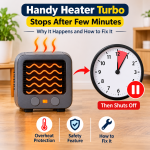
Portable heaters carry safety devices that cut power to the heating element if the internal temperature rises too high. In some models, the fan continues to run after the element shuts off in order to cool the unit down. You may feel this as a sudden switch from warm air to cold air.
Signs this is happening:
- The heater was blowing warm air, then suddenly turned cold without you touching anything.
- Heat returns after the heater has rested for a while.
- Air vents are dusty or blocked.
What to do: Unplug the heater, let it cool for at least 30 minutes, clean the vents (see Cause 6) and make sure there is plenty of free space around it. Then restart it on a hard, flat surface.
Cause 5: Weak Power From the Outlet or Extension Cord
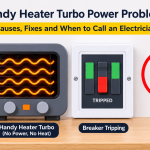
A heating element needs a strong and steady supply of electricity. If the heater is plugged into a thin extension cord, a power strip, or a worn outlet, the voltage reaching it may be too low. The fan, which needs far less power, keeps spinning, but the element does not get enough energy to heat properly. The outcome is lukewarm or cold air.
Safety warning: Plug your heater directly into a wall outlet. If the plug, cord or outlet feels hot or smells like burning, unplug the heater immediately and have the outlet inspected by a qualified electrician.
What to try:
- Remove any extension cord or power strip.
- Plug the heater straight into a wall outlet.
- Try a different outlet, ideally one that is not shared with other high-power devices.
- Make sure the plug fits firmly in the socket.
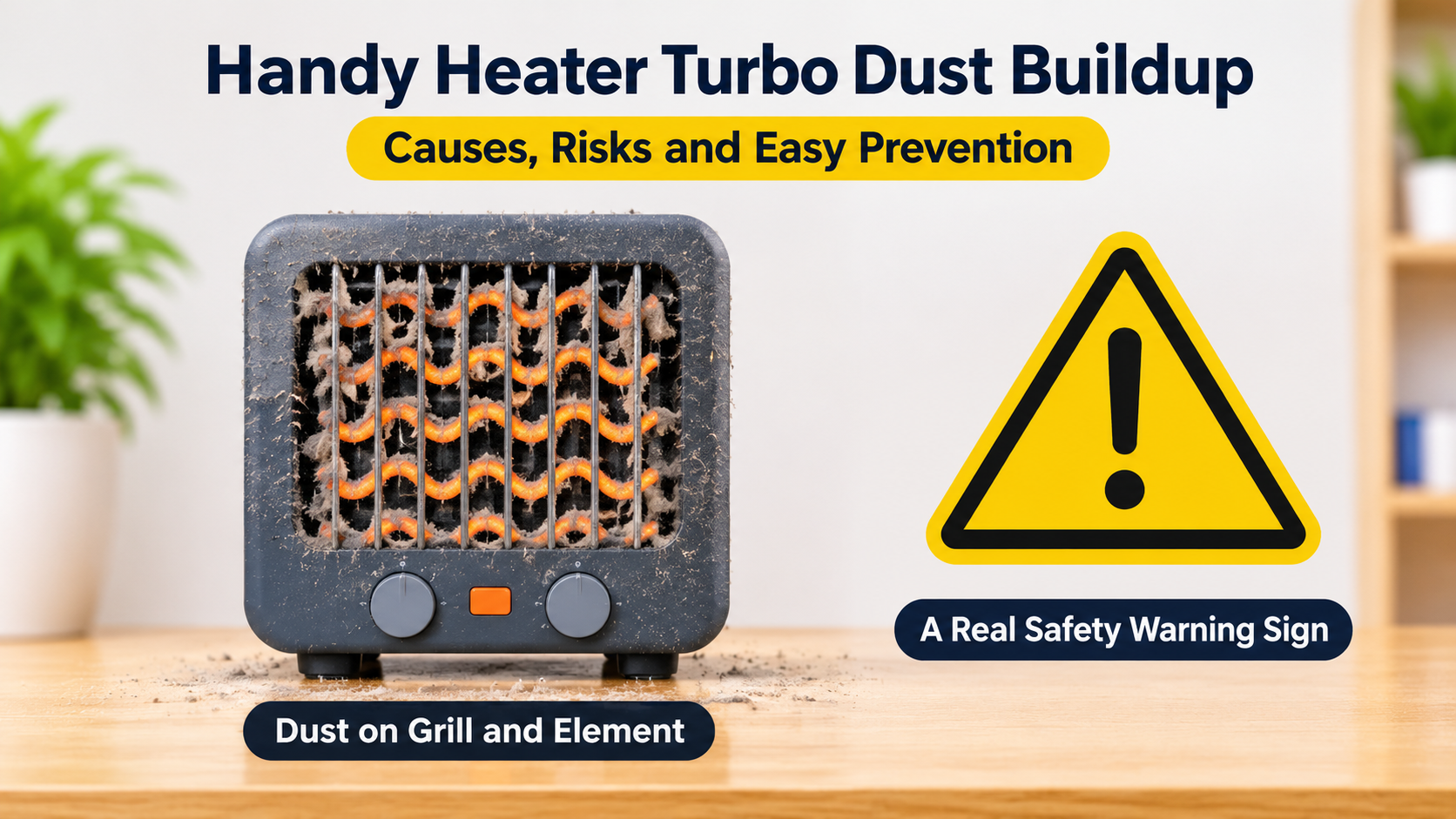
Cause 6: Blocked Vents or a Dirty Filter
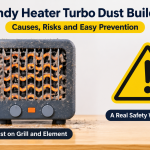
When dust, lint or pet hair builds up on the intake grille or filter, the airflow weakens. Less air passes over the element, the temperature inside the heater rises, and the overheat protection reduces or stops the heating. Even if the safety device does not trip, weak airflow can make the output feel less warm.
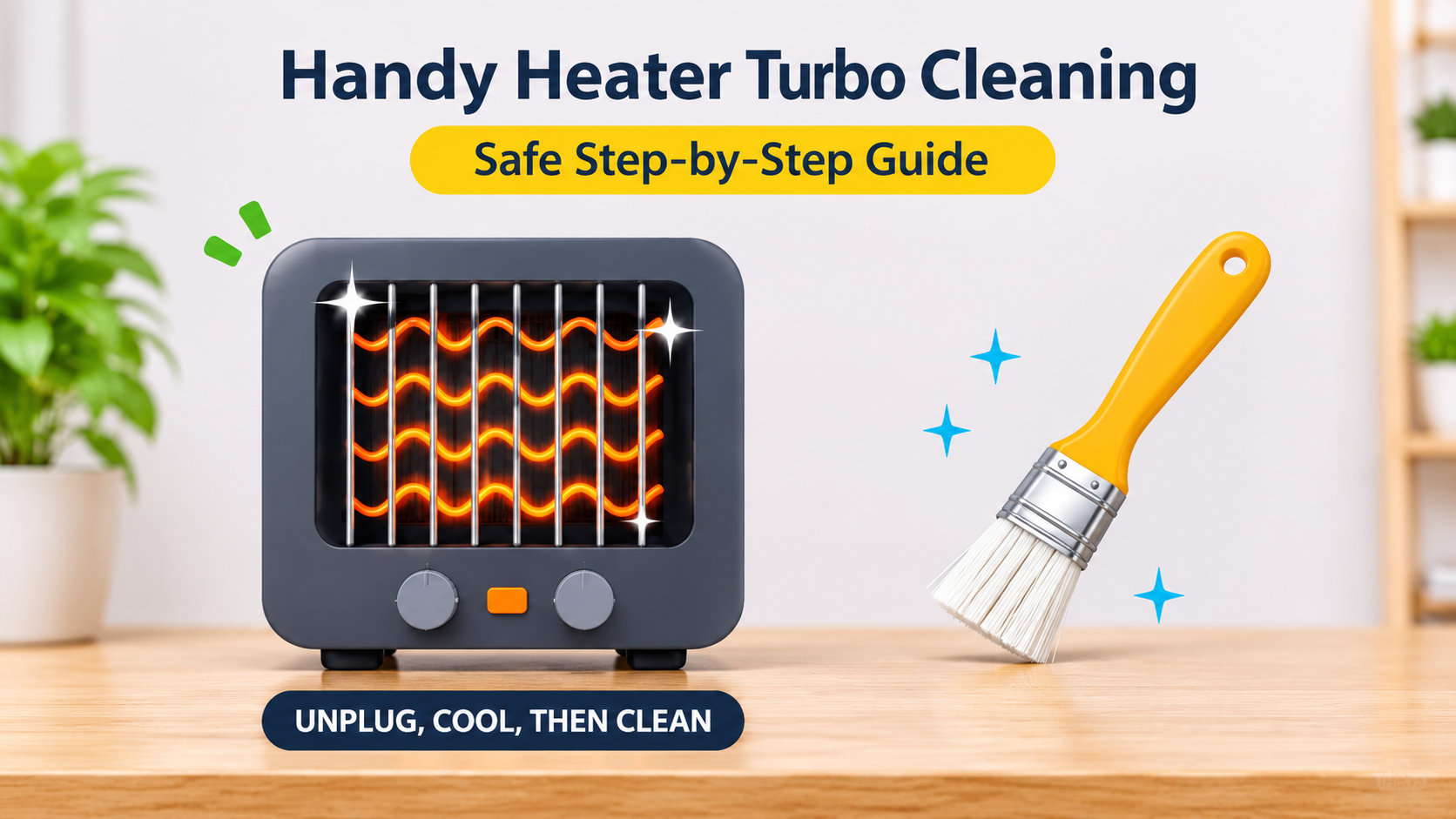
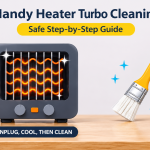
How to clean it safely:
- Unplug the heater and wait until it is fully cool.
- Use a soft brush or a vacuum with a brush attachment to remove dust from the front and rear grilles.
- If your model has a removable filter, clean it as the manual describes and let it dry completely.
- Wipe the outside with a dry or barely damp cloth. Never let water get inside.
- Reconnect the heater and test it for 10 to 15 minutes.
Cause 7: A Failed Heating Element or Thermal Fuse
If you have checked the settings, power supply and airflow and the heater still only blows cold air, an internal part may have failed. The heating element can wear out over time, a thermal fuse can blow permanently after an overheat event, or a control board or switch can fail. In these cases the fan runs normally, but the heater never warms up.
Warning signs of an internal fault:
- Cold air at every setting, even after waiting 10 minutes.
- A burning or plastic smell when the heater is on.
- Clicking, buzzing or crackling noises.
- Discolored plug, melted plastic or a hot cord.
Do not open the casing or try to fix internal parts yourself. Heaters carry mains voltage and high-temperature components. If you suspect an internal fault, stop using the unit and contact the seller or manufacturer for a warranty claim or replacement.
Cause 8: Your Room Is Too Big or Too Drafty
Sometimes the heater is working properly, but the room simply swallows the warmth. A small portable heater is designed to warm the area close to it, not an entire large space. In a big, open or drafty room, the warm air mixes with cold air quickly, and you feel little difference unless you are close to the unit.
- Use the heater in a smaller room, or close the door to keep heat in.
- Seal gaps around doors and windows, and draw thick curtains at night.
- Place the heater a few feet from where you sit, pointed toward you, but never closer than the manual allows.
- Remember that a portable heater is an addition to your home heating, not a full replacement.
Step-by-Step Troubleshooting Checklist
Follow these steps in order. They start with the easy, risk-free checks and move toward the more serious ones.
| Symptom | Most likely cause | What to do |
|---|---|---|
| Cool air for the first minute or two | Normal warm-up | Wait two to three minutes |
| Fan blows but no heat on any setting | Fan-only mode, or failed element | Check mode, then test on a wall outlet |
| Air turns cool once the room is warm | Thermostat satisfied | Raise the temperature setting |
| Warm air suddenly turns cold | Overheat protection | Unplug, cool down, clean vents |
| Only lukewarm, heater plugged into a strip | Low voltage supply | Plug directly into the wall |
| Weak airflow and weak heat | Clogged grille or filter | Clean the vents and filter |
| Cold air plus burning smell or noise | Internal fault | Unplug and stop using it |
When to Replace the Heater
Replacement is the sensible choice when:
- The heater still blows cold air after every check in this guide.
- You notice a burning smell, sparks, melted plastic or a hot plug.
- The cord or plug is damaged.
- The heater is several years old and getting less reliable each season.
- It is still under warranty. In that case, contact the seller before trying anything else.
When you choose a new heater, keep these points in mind:
- Power rating: Match the heater to your room size. A very small unit in a large room will always feel weak.
- Adjustable thermostat and clear heat settings so you can see exactly what mode it is in.
- Built-in safety features such as tip-over and overheat protection.
- A recognized safety certification for your country.
- An easy-to-clean filter or grille.
- A clear warranty and responsive support.
Good to know: A portable heater works best as a spot heater for the area you are using. For whole-home comfort, pair it with good insulation, draft sealing and your main heating system.
Frequently Asked Questions
Why is my Handy Heater Turbo blowing cold air?
The usual reasons are a warm-up delay, fan-only or eco mode, a satisfied thermostat, tripped overheat protection, weak power from an extension cord, a clogged vent, or a failed heating element.
Is it normal for a portable heater to blow cool air at first?
Yes. The fan often starts immediately, while the heating element needs a short time to reach working temperature. Wait two to three minutes.
Why does my heater blow warm air and then cold air?
Most often the thermostat is switching the element on and off, or the overheat protection is tripping because of poor airflow. Raise the temperature setting and clean the vents.
Can an extension cord make a heater blow cold air?
Yes. A thin cord or power strip can reduce the power reaching the heating element, so the fan runs while the element barely heats. It is also a safety risk, so plug straight into the wall.
Can a dirty filter cause a heater to blow cold air?
It can. Poor airflow causes the unit to overheat, and the safety system may reduce or cut the heat. Cleaning the grilles and filter often fixes it.
How do I know if the heating element is broken?
If the fan runs but you get no heat on any setting, even after waiting, with correct settings, a direct wall outlet and clean vents, a failed element or fuse is likely. Stop using the heater and contact the seller or manufacturer.
Can I repair the heating element myself?
No. Heaters contain mains-voltage and high-temperature parts. Leave repairs to the manufacturer or a qualified technician, or replace the unit.
Is a heater that blows cold air dangerous?
Cold air by itself is not dangerous. But if it comes with a burning smell, sparks, unusual noises or a hot plug, unplug the heater immediately and stop using it.
Final Thoughts
A Handy Heater Turbo blowing cold air feels like a defective product, but the cause is often something you can fix in minutes: the wrong mode, a thermostat that is already satisfied, a short warm-up delay, a weak power connection or dusty vents. Work through the checklist in order and you will probably find the problem quickly.
If the heater still refuses to warm up after every check, treat it as a hardware fault. Stop using it, check your warranty and move on to a reliable replacement with proper safety features. A heater should keep you warm and safe, not leave you guessing.
Disclaimer: This article is for general information only. Features differ between models, so always follow the manufacturer’s user manual for your specific heater and consult a qualified electrician for any electrical problem in your home.