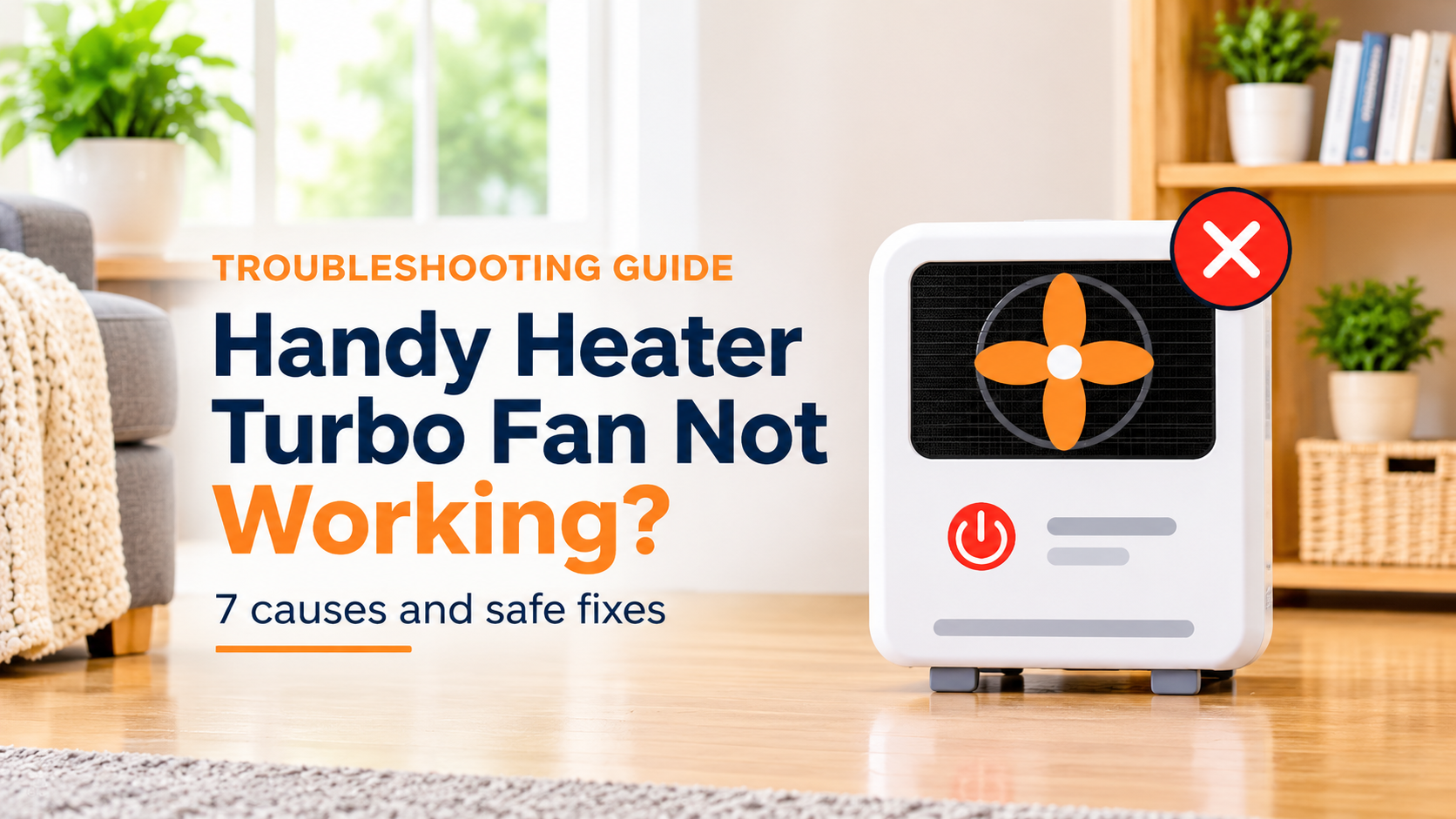
Handy Heater Turbo Fan Not Working? 7 Causes and Safe Fixes
You switch on your Handy Heater Turbo and something is clearly wrong. The power light may come on, but the fan stays silent and no air moves. Or the fan spins for a moment and then stops. Or it turns so slowly that hardly any warm air reaches you. Whatever the pattern, a heater without a working fan is frustrating, and it is also something you should take seriously.
The good news is that a portable heater fan that is not working often has a straightforward cause such as a power issue, a setting, a safety switch or a layer of dust. In this guide you will learn the most common reasons a Handy Heater Turbo fan stops working, how to check each one safely, and when it is time to stop and replace the unit.
Important safety note: If the heater smells hot, glows or feels very hot while the fan is not turning, unplug it right away. A heating element running without airflow can overheat quickly. Do not use the heater again until the cause is found.
- How the fan and heater work together
- Cause 1: No power reaching the heater
- Cause 2: Wrong mode, timer or remote problem
- Cause 3: The tip-over switch is engaged
- Cause 4: Overheat protection has tripped
- Cause 5: Dust or debris is jamming the fan
- Cause 6: Damaged cord, plug or loose connection
- Cause 7: A failed fan motor or control board
- Which symptom do you have?
- Step-by-step troubleshooting checklist
- When to replace the heater
- How to keep the fan working longer
- Frequently asked questions
How the Fan and Heater Work Together
A compact room heater is built around two key parts: a heating element and a fan. The element produces heat, and the fan pushes room air across it and out into the space. The fan also protects the heater, because moving air carries heat away from the element and keeps the internal temperature in a safe range.
For the fan to run, electricity has to travel through a chain of components: the wall outlet, the cord and plug, the control switch or panel, the safety sensors, and finally the fan motor itself. If any link in that chain is broken or interrupted, the fan will not turn. That is why troubleshooting works best when you start with the easiest link, the power source, and move step by step toward the motor.
Cause 1: No Power Reaching the Heater
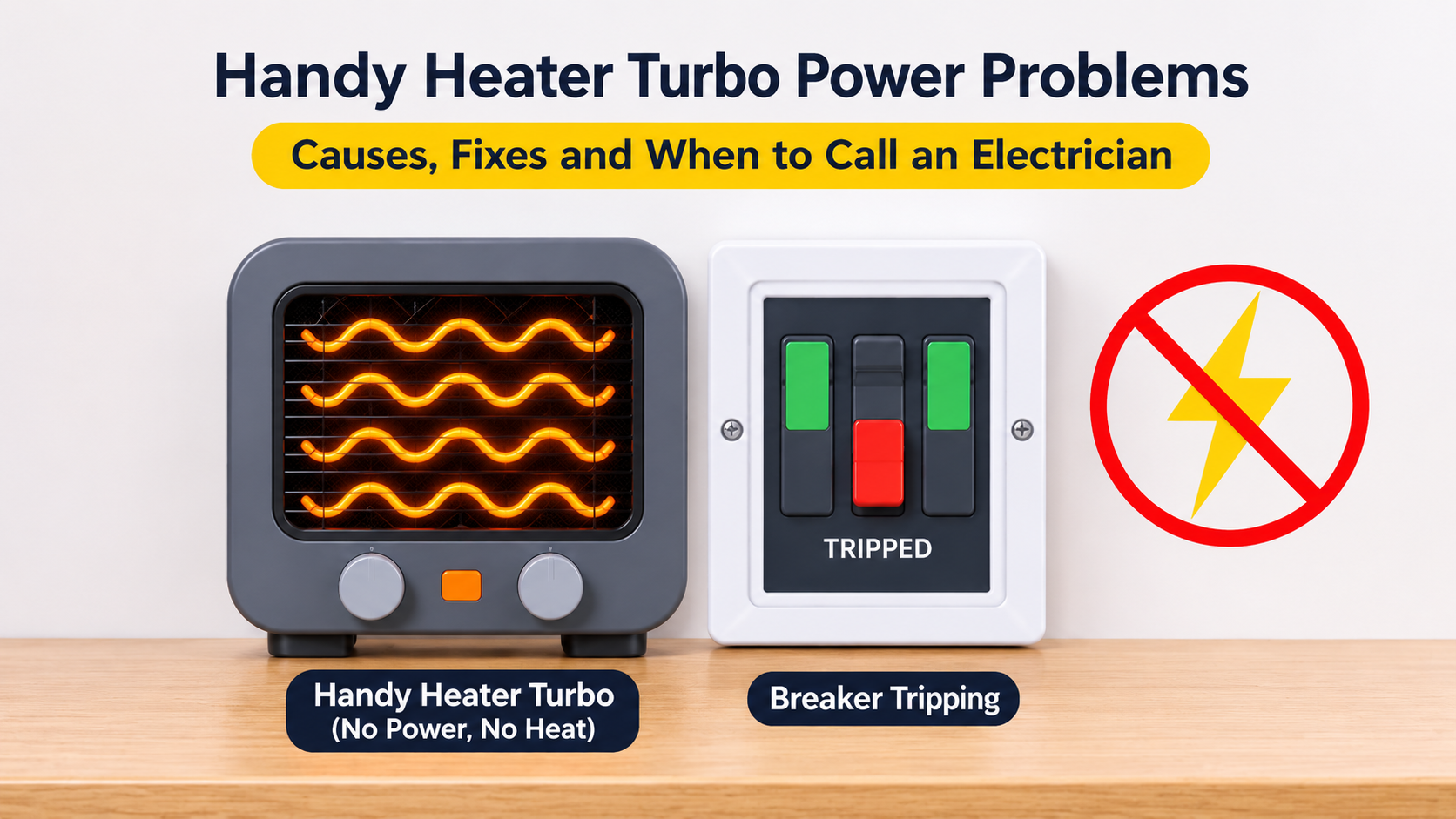
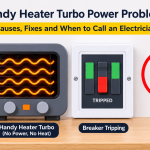
This is the simplest cause and the first one to rule out. If there is no power at the plug, nothing inside the heater can work, including the fan. A wall outlet can fail, a breaker can trip, or a loose plug can lose contact.
How to check:
- Look at the heater’s display or indicator light. If everything is dark, power is probably not arriving.
- Plug the heater directly into a different wall outlet, ideally in another room.
- Test the original outlet with a small device such as a phone charger or a lamp.
- Check your electrical panel for a tripped breaker or blown fuse.
- Press any outlet reset button if the socket has one.
Avoid extension cords: Heaters draw a lot of current. Thin extension cords and power strips can overheat, so always plug into a wall outlet if you can.
Cause 2: Wrong Mode, Timer or Remote Problem
Sometimes the fan is not broken at all. Many heaters have several modes, fan speeds, a timer and a remote control. A timer that has run out, a mode that does not use the fan, or a remote with dead batteries can make the heater look faulty.
- Press the power button on the heater itself instead of the remote to rule out remote problems.
- Change the batteries in the remote control.
- Cancel any timer and select a heat or fan mode with a clear speed setting.
- Check the manual for any lock or standby function on your model.
Cause 3: The Tip-Over Switch Is Engaged
Portable heaters include a tip-over (tilt) switch that cuts power the instant the unit leans or falls. If the heater sits on carpet, a rug, a cushion or an uneven floor, the switch can engage and stop the fan along with the rest of the heater.
What to do: Unplug the heater, move it to a hard, flat, stable surface, and plug it in again. Make sure nothing is leaning on it or lifting one side. If the heater refuses to start even on a level floor, the switch itself may be stuck or worn, which is not a home repair.
Cause 4: Overheat Protection Has Tripped
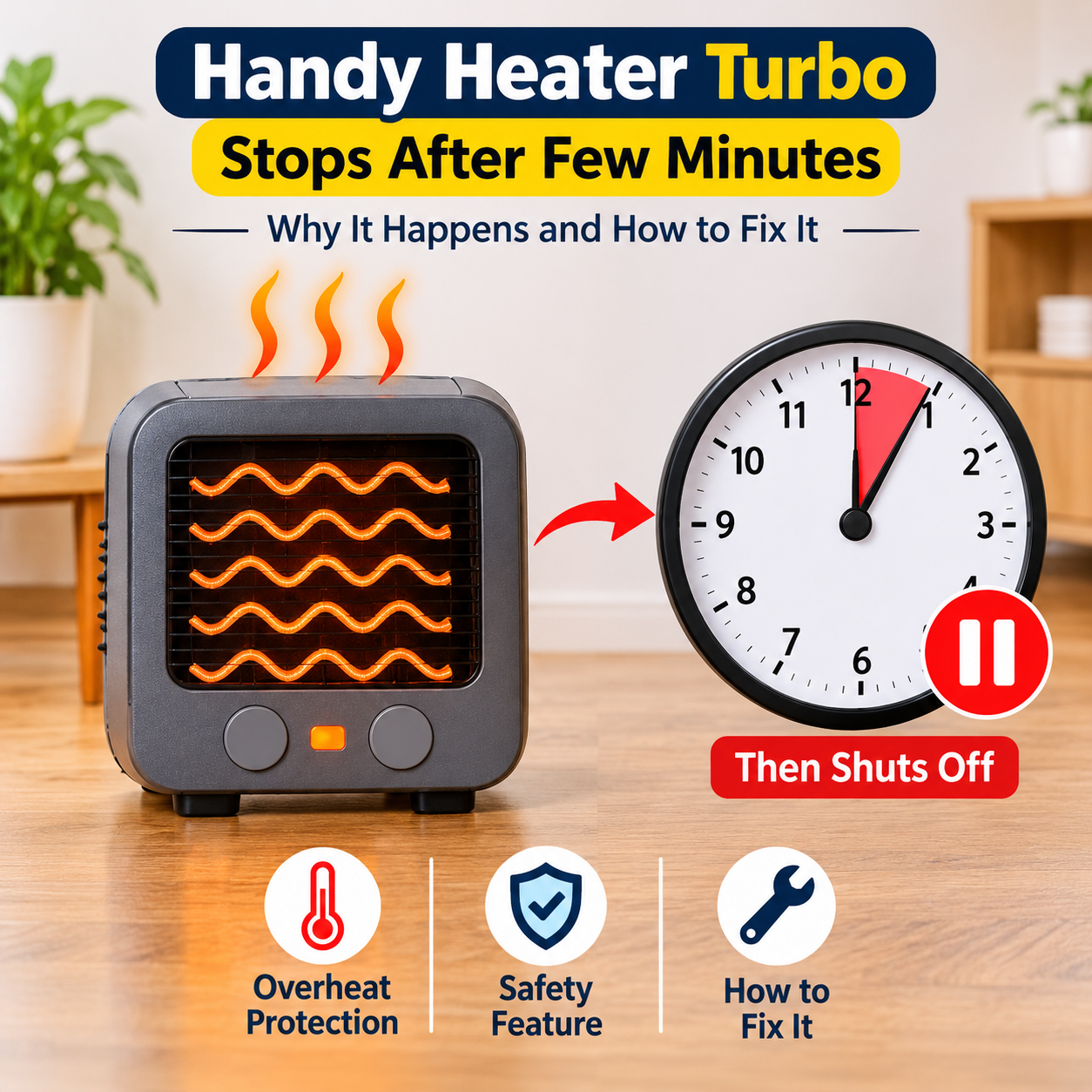
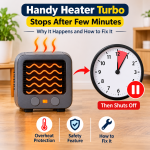
When the inside of the heater gets too hot, a thermal safety device cuts the power. Depending on the design, this can shut off the heater completely, fan included, until it cools down. Blocked vents and a dirty filter are the most common reasons the heater overheats in the first place.
Signs of this cause:
- The fan worked earlier and stopped after the heater ran for a while.
- The unit feels hot and works again after a long rest.
- The air grilles are covered in dust or placed too close to a wall, furniture or curtains.
What to do: Unplug the heater, wait at least 30 minutes, clear the vents, and give the unit plenty of free space. Then plug it in and test it again.
Cause 5: Dust or Debris Is Jamming the Fan
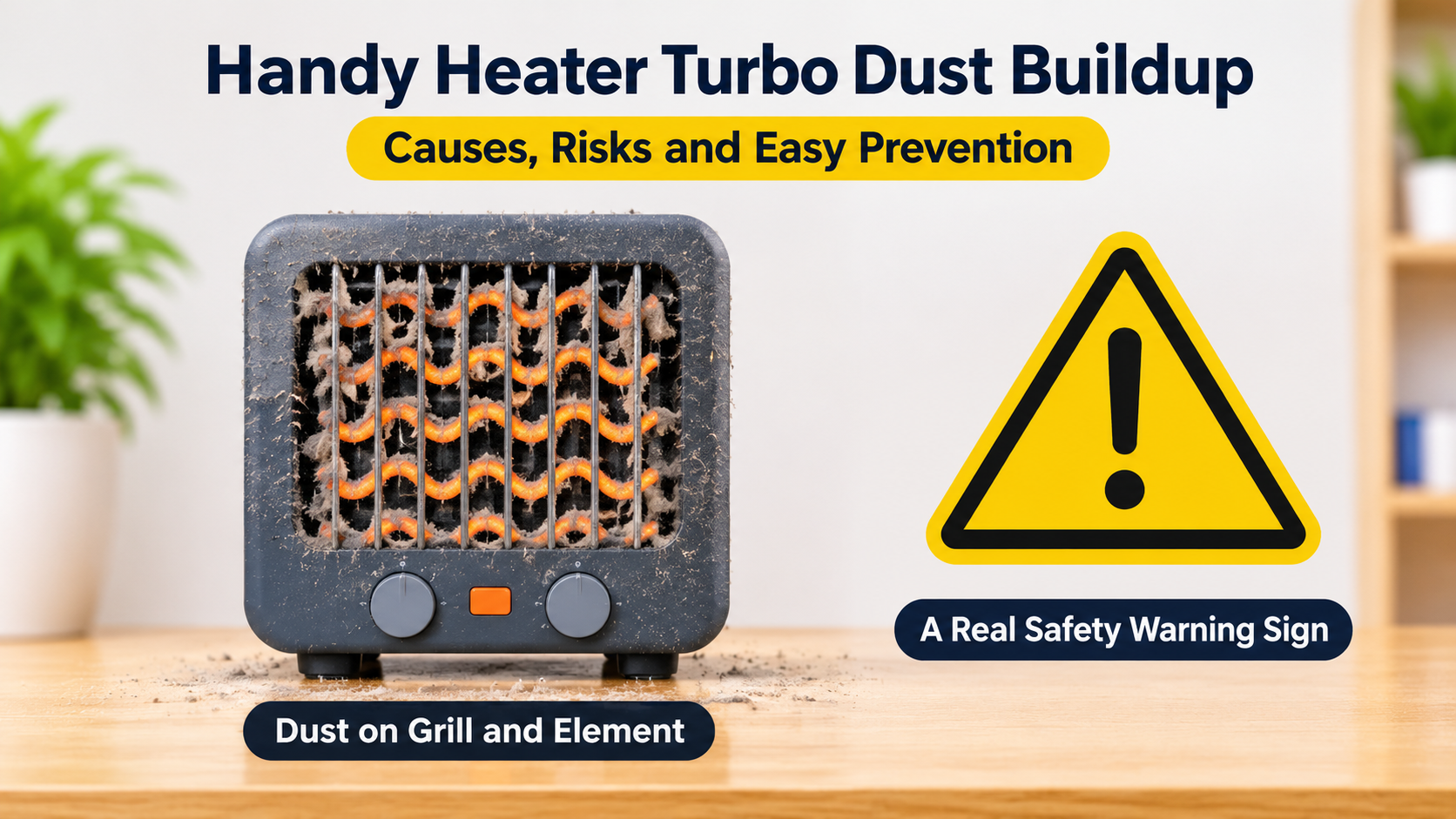
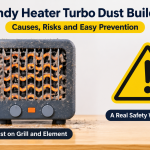
Fans in portable heaters pull in air constantly, and they also pull in dust, lint, pet hair and small debris. Over time this builds up on the blades and around the motor. The fan then spins slowly, makes a rattling or scraping sound, or stops completely. In a few cases, a small object that slipped in through the grille can block the blades.
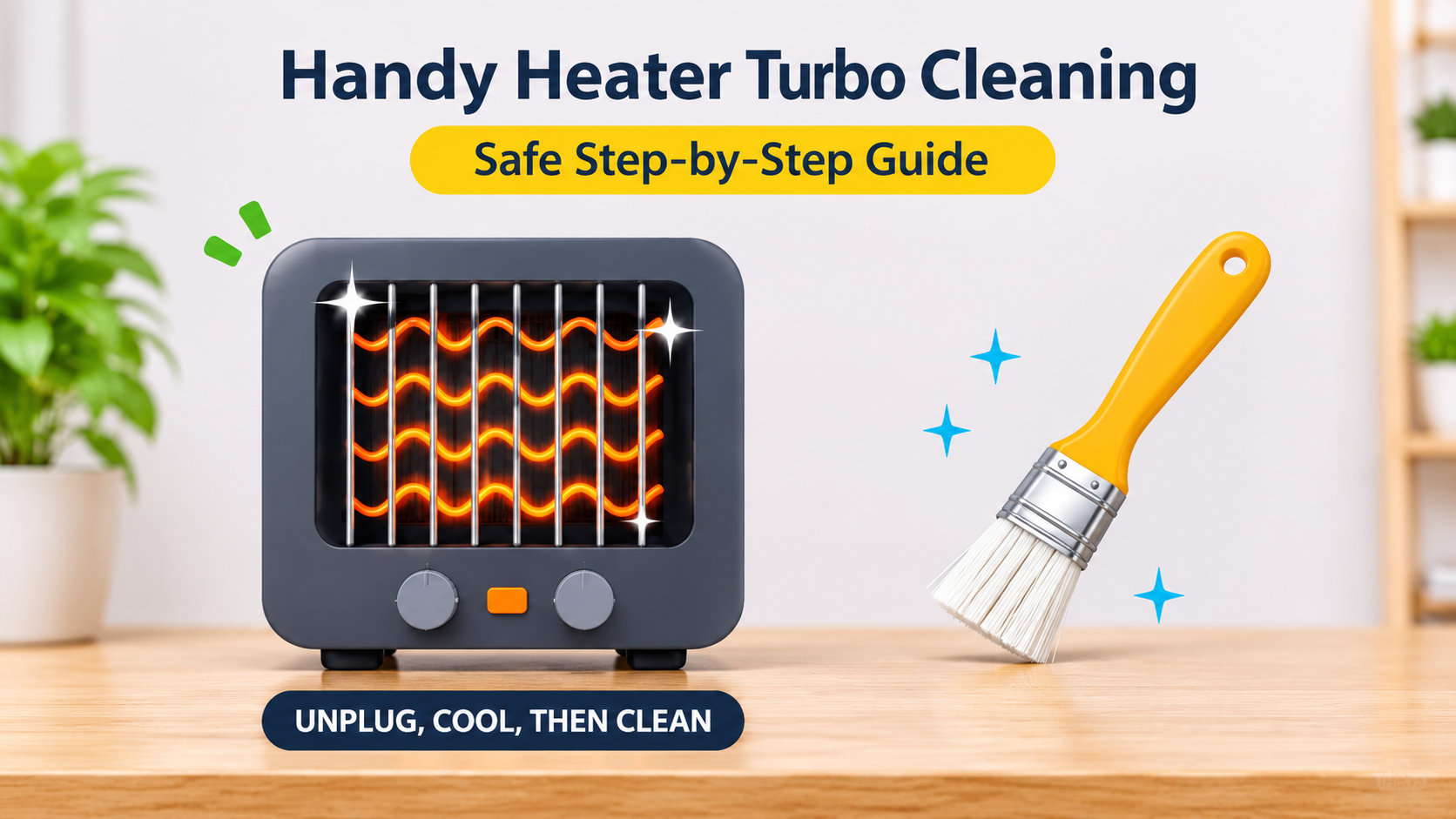
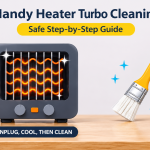
How to clean it safely:
- Unplug the heater and let it cool down completely.
- Use a soft brush or a vacuum with a brush attachment to clean the front and rear grilles.
- If your model has a removable filter, take it out, clean it according to the manual and let it dry fully.
- Look through the grille with a flashlight to see whether anything is blocking the blades.
- Never push metal objects through the grille, and never open the casing unless the manual allows it.
Quick tip: A short cleaning every two to four weeks during the heating season prevents most dust-related fan problems.
Cause 6: Damaged Cord, Plug or Loose Connection
Cords wear out where they bend most, especially close to the plug and at the heater body. A damaged cord or plug can lose contact, and a loose internal connection can cut power to the fan while other parts seem fine. If the fan works only when you hold or wiggle the cord, this is a strong sign.
Warning signs:
- A warm or discolored plug or outlet.
- A cord that is cracked, frayed, flattened or kinked.
- Crackling, buzzing or sparking sounds.
- A burning smell.
Stop using the heater if you notice any of these signs. A damaged cord is a fire and shock risk. Contact the seller or manufacturer for a warranty claim or replacement.
Cause 7: A Failed Fan Motor or Control Board
If power is good, settings are correct, the heater is level, the vents are clean and the fan still will not turn, the fan motor or the control board may have failed. Motors can wear out after long use, bearings can dry out and seize, and electronic boards can fail after a power surge or heat damage.
Signs of a failed motor or board:
- The display lights up, but the fan never starts.
- The fan hums, or buzzes without turning.
- The fan turns only if something spins it by hand, which you should never try on a powered unit.
- Grinding or squealing noises before the fan stopped for good.
Do not open the heater or attempt a repair. Heaters contain mains-voltage and very hot parts. If you suspect a failed motor or board, stop using the unit and contact the seller or manufacturer about a warranty claim or replacement.
Step-by-Step Troubleshooting Checklist
Work through these steps in order. They begin with the safest, easiest checks.
| Symptom | Most likely cause | What to do |
|---|---|---|
| No lights, no sound, no air | No power at the plug | Try another wall outlet, check the breaker |
| Lights on, fan silent | Mode, timer or remote | Use the heater’s own buttons, reset settings |
| Stops when moved or tilted | Tip-over switch | Place on a hard, flat floor |
| Stops after running a while | Overheat protection | Cool down, clean vents, add clearance |
| Fan slow, scraping or rattling | Dust or debris on blades | Unplug and clean the grilles |
| Works only when the cord is moved | Damaged cord or plug | Stop using, replace the unit |
| Hums but does not spin | Failed motor or board | Stop using, claim warranty or replace |
When to Replace the Heater
Replacement is the safer and often cheaper choice in these situations:
- The fan does not run after you have worked through every step in this guide.
- The heater smells of burning, makes sparking sounds or has a hot or discolored plug.
- The cord, plug or casing is cracked or melted.
- The heater is several seasons old and has become unreliable.
- It is still under warranty, in which case you should contact the seller first.
When choosing a replacement, look for these features:
- Tip-over and overheat protection built in.
- A recognized safety certification for your country.
- A power rating that matches your room size.
- An easy-to-clean grille or filter, so dust never builds up.
- A quiet, sturdy fan and a cord with a firm plug.
- A clear warranty and helpful customer support.
How to Keep the Fan Working Longer
- Clean the grilles and filter every few weeks during use.
- Always plug directly into a wall outlet.
- Keep the heater on a hard, flat surface with free space around it.
- Never cover the heater or dry clothes on it.
- Do not move or carry the heater while it is running.
- Store it in a dry, dust-free place when it is not in season, and inspect the cord before using it again.
- Do not leave it running unattended or while you sleep unless the manual clearly allows it.
Good to know: A portable heater works best as a spot heater. For whole-home comfort, combine it with draft sealing, good insulation and your main heating system.
Frequently Asked Questions
Why is the fan on my Handy Heater Turbo not working?
The most common reasons are no power at the outlet, a wrong mode or timer setting, an engaged tip-over switch, tripped overheat protection, dust jamming the blades, a damaged cord, or a failed motor or control board.
Is it safe to use a heater if the fan is not working?
No. The fan keeps the heating element from overheating. If the heater is hot but the fan is not turning, unplug it and do not use it until the cause is fixed.
Why does the fan work and then stop after a few minutes?
This is often overheat protection caused by blocked vents or dust. It can also be a weak outlet or an extension cord that cannot supply enough power. Clean the vents and plug directly into the wall.
Why does my heater light up but the fan will not spin?
Check the mode, timer and remote first. If those are correct and the vents are clean, the fan motor or control board may have failed.
My heater fan is making a rattling noise. What should I do?
Unplug it, let it cool and check the grilles for dust or small objects. If the noise remains after cleaning, stop using the heater, because a worn or damaged fan can fail completely.
Can I replace the fan motor myself?
It is not recommended. Heaters contain mains-voltage and high-temperature parts, and opening the casing can void the warranty and create a safety risk. Contact the seller or manufacturer.
Does a dirty filter stop the fan?
A dirty filter usually reduces airflow and causes overheating, which can trigger a safety cutoff. Heavy dust on the blades can also slow or jam the fan.
How long should a portable heater fan last?
With regular cleaning and normal use, a fan can last several seasons. Dust, heavy daily use and unstable power shorten its life.
Final Thoughts
A Handy Heater Turbo whose fan is not working looks alarming, but the cause is often simple: no power at the outlet, a setting that needs changing, a tilted surface, a safety cutoff or a layer of dust. Working through the checks in order usually reveals the problem within minutes.
If the fan still will not run after you have tried everything here, treat it as a hardware fault. Stop using the heater, check your warranty and replace it with a unit that has proper safety features. A heater without a working fan is never worth the risk.
Disclaimer: This article is for general information only. Features and designs differ between models, so always follow the manufacturer’s user manual for your specific heater and consult a qualified electrician for any electrical problem in your home.