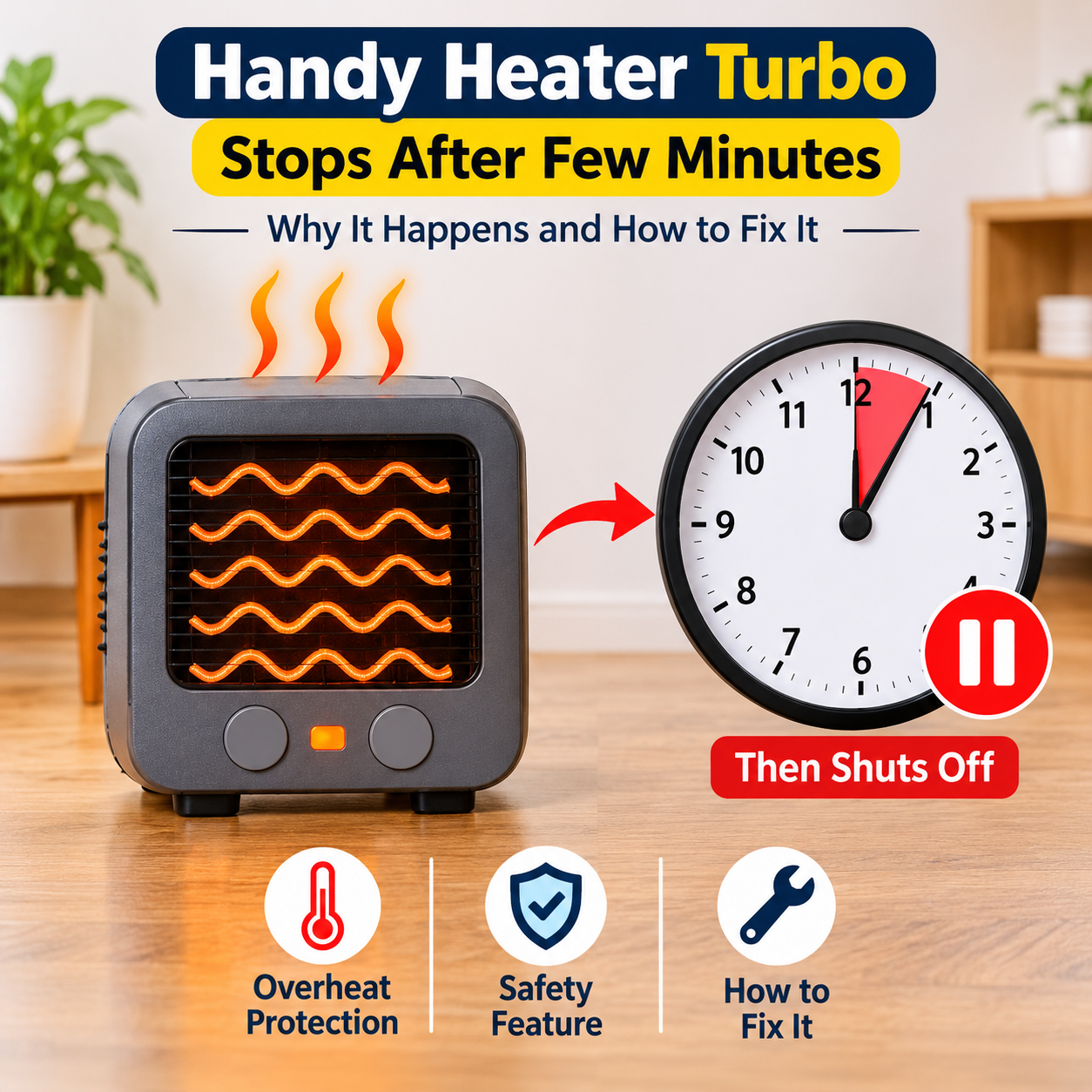
Handy Heater Turbo Stops After a Few Minutes: Why It Happens and How to Fix It

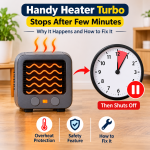
You switch on your handy heater turbo, the coil glows, warm air starts flowing, and everything seems fine. Then, five or ten minutes later, it clicks off. Sometimes it switches back on after a while. Sometimes it stays dead until you unplug it. This is one of the most frustrating heater problems because the heater clearly can work, yet it will not keep working.
The good news is that a heater that stops after a few minutes usually has a simple, explainable cause, and many of these causes are easy to fix. In some cases the heater is not even faulty: it is doing exactly what it was designed to do. This guide explains every common reason, how to work out which one applies to you, how to fix the safe ones, and when to stop and get help.
A handy heater turbo that stops after a few minutes is usually switching off for one of these reasons: the overheat protection is activating (dust, blocked vents, poor placement or a weak fan), the thermostat has reached its set temperature, the tip-over switch senses the heater is not level, the plug, socket or cord has a loose or poor connection, the circuit or supply voltage is overloaded or weak, or an internal part such as a switch, thermal fuse or fan motor is failing. Clean the vents, place the heater on a flat floor with clear space, plug it directly into a healthy wall socket, and stop using it if the problem continues.
- First, is this normal?
- Safety first
- Find your cause: a quick flow
- Cause 1: Overheat protection
- Cause 2: Thermostat reached its set point
- Cause 3: Tip-over switch
- Cause 4: Timer or auto shut-off
- Cause 5: Loose plug, socket or cord
- Cause 6: Overloaded circuit or low voltage
- Cause 7: Failing internal parts
- Symptom and cause table
- Step-by-step fix routine
- What not to do
- How to prevent it
- When to stop using the heater
- Frequently asked questions
- Final summary
First, Is This Normal?
Before you worry, ask yourself two questions.
- Does the fan keep running or does everything go quiet? If the heating element switches off but the fan keeps blowing, the thermostat is probably just cycling the heat on and off to hold a temperature. That is normal.
- Is the room small and already warm? A turbo setting can warm a small room very quickly. Once the room reaches the thermostat setting, the heater pauses. That is the heater doing its job, not a fault.
If the whole heater, fan and all, shuts down completely and will not restart for a long time, or if it happens even when the room is cold and the thermostat is turned to maximum, you should treat it as a problem and work through the causes below.
Safety First
- Switch off and unplug the heater, and let it cool for at least 30 minutes before touching it.
- Never handle the plug or socket with wet hands.
- Do not open the heater’s casing. Internal repairs are for qualified technicians only.
- Never tape down, bypass or remove a safety switch or thermal protection. They exist to prevent fires.
- If the plug, cord or socket is hot, discoloured or smells of burning, or you see smoke or sparks, stop using the heater immediately.
Find Your Cause: A Quick Flow
This flow helps you narrow down the most likely cause based on how the heater behaves.
Cause 1: Overheat Protection
This is the most common reason of all. Almost every modern heater contains a thermal cut-out, a safety device that switches the heater off if internal temperature rises too high. It is there to prevent melting and fires. When it trips, the heater goes quiet after a few minutes of use. On many models it resets automatically after the heater cools down, which is why the heater often works again after a short rest.
What makes the heater overheat
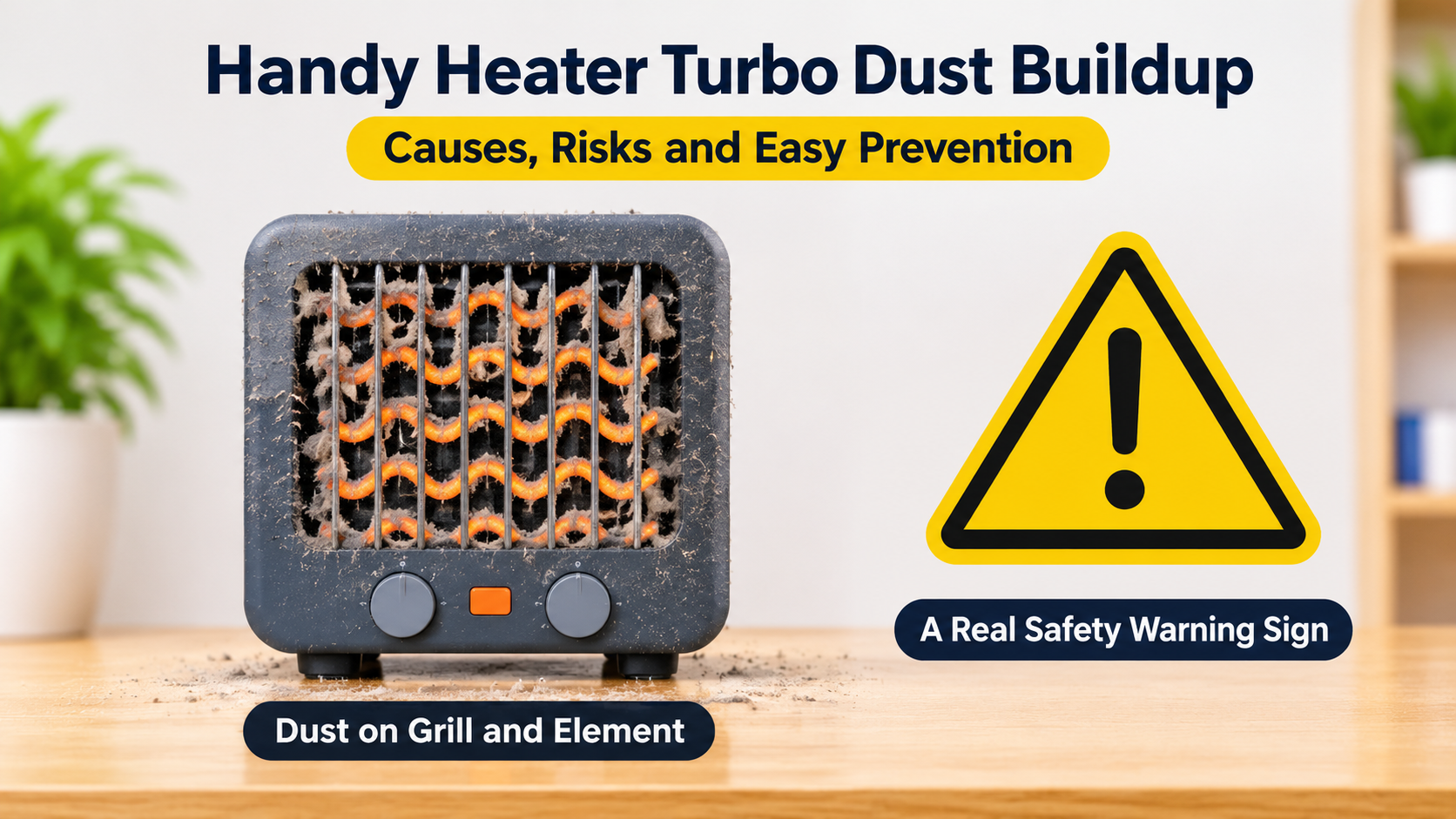
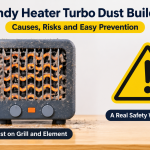
- Dust and lint clogging the rear intake, the fan or the front grill
- Blocked vents because the heater is too close to a wall, sofa, curtains or bedding
- A weak or slow fan, caused by dust on the blades or a failing fan motor
- Something covering the heater, such as clothes or a cloth
- Using it on a very high setting in a tiny, enclosed space where hot air has nowhere to go
- High room temperature or direct sunlight that adds to the heat load
How to fix it
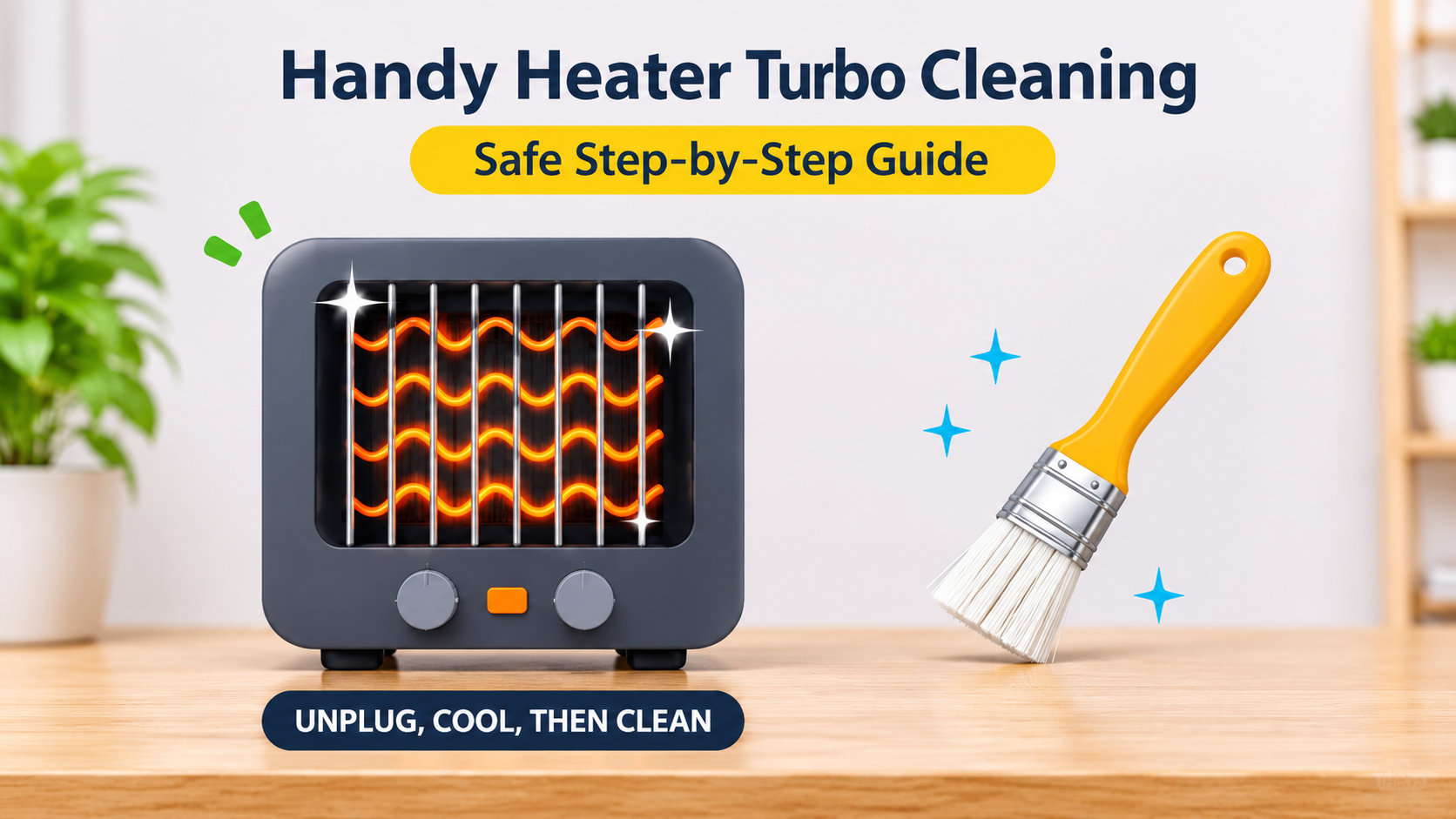
- Unplug the heater and let it cool for at least 30 minutes.
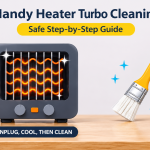
- Gently brush and vacuum dust from the front grill, the rear intake and any visible fan area. Use a soft brush or a vacuum with a brush attachment.
- Move the heater so that it has at least 1 metre (3 feet) of clear space around it, with nothing against the intake or grill.
- Make sure nothing is covering it or resting on it.
- Place it on a flat, hard floor, then run it on a medium setting first and see if it keeps running.
If it keeps cutting out even after cleaning and good spacing, the fan may be weak or the thermal part may be faulty, and the heater should be checked by a technician.
Cause 2: Thermostat Reached Its Set Point
If your handy heater turbo has a thermostat knob, it measures the air near the heater and switches the element off when that air reaches the temperature you set. When the air cools slightly, it switches back on. In a small room, on the turbo setting, this can happen within a few minutes.
It is easy to mistake this for a fault. How to tell the difference:
- The fan keeps running while the heat pauses, or the heater clicks back on after a short wait.
- The room already feels comfortable or warm.
- Turning the thermostat higher makes the heater run longer.
If that matches, nothing is wrong. If you want longer heating, turn the thermostat higher, or move the heater farther from where you sit, since the thermostat measures the air right around the heater itself.
Cause 3: Tip-Over Switch
Many heaters have a tip-over (tilt) switch that cuts power if the heater leans or falls. If the heater sits on a slightly uneven floor, a thick rug or a soft surface, the switch may trigger after the heater settles or vibrates a little. This can make it stop a few minutes after starting.
- Place it on a flat, hard, level surface.
- Avoid carpets with thick pile, beds, sofas and wobbly surfaces.
- Check that the feet or base are not broken or uneven.
Do not tape or hold down the switch. If the heater is level and the switch still trips, the switch may be faulty.
Cause 4: Timer or Auto Shut-Off
Some models include a timer or an auto shut-off feature. If the timer knob is set to a short time, the heater will stop when the time ends. Check the timer setting and your user manual. If the model has no timer, you can skip this cause.
Cause 5: Loose Plug, Socket or Cord
A poor electrical connection can cut power for a moment or until the part cools. Warm parts expand slightly, so a connection that works when cold can break after a few minutes of heavy current. This often shows up as the heater stopping and then restarting after a pause.
- Worn or loose socket: the plug wobbles or falls out easily.
- Damaged or loose plug: bent pins, burn marks or a plug body that moves.
- Damaged cord: a hidden break inside the insulation, often near the plug or where the cord enters the heater.
- Extension cord or multi-plug: adds extra joints and resistance, and may overheat or trip its own protection.
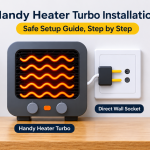
Safe checks: unplug the heater and look at the plug and cord. Check the socket for discolouration and fit. Plug the heater directly into a different healthy wall socket, not through an extension cord. If the plug or socket is hot, discoloured or smells of burning, stop and have it checked.
A hot plug or socket is a fire risk. Do not keep using it. Replace damaged plugs and cords, and have worn sockets replaced by a qualified electrician.
Cause 6: Overloaded Circuit or Low Voltage
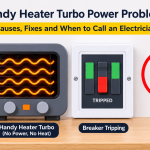
A heater draws a lot of current. If it shares a circuit with other heavy appliances such as an air conditioner, geyser, iron or kettle, the circuit protection may trip, or the voltage may sag until the heater or its protection shuts down. Weak supply voltage can also make the heater struggle.
- Turn off other heavy appliances on the same line and try the heater alone.
- Plug it directly into a wall socket, not an extension cord.
- Watch whether lights dim, other appliances slow down or the breaker trips.
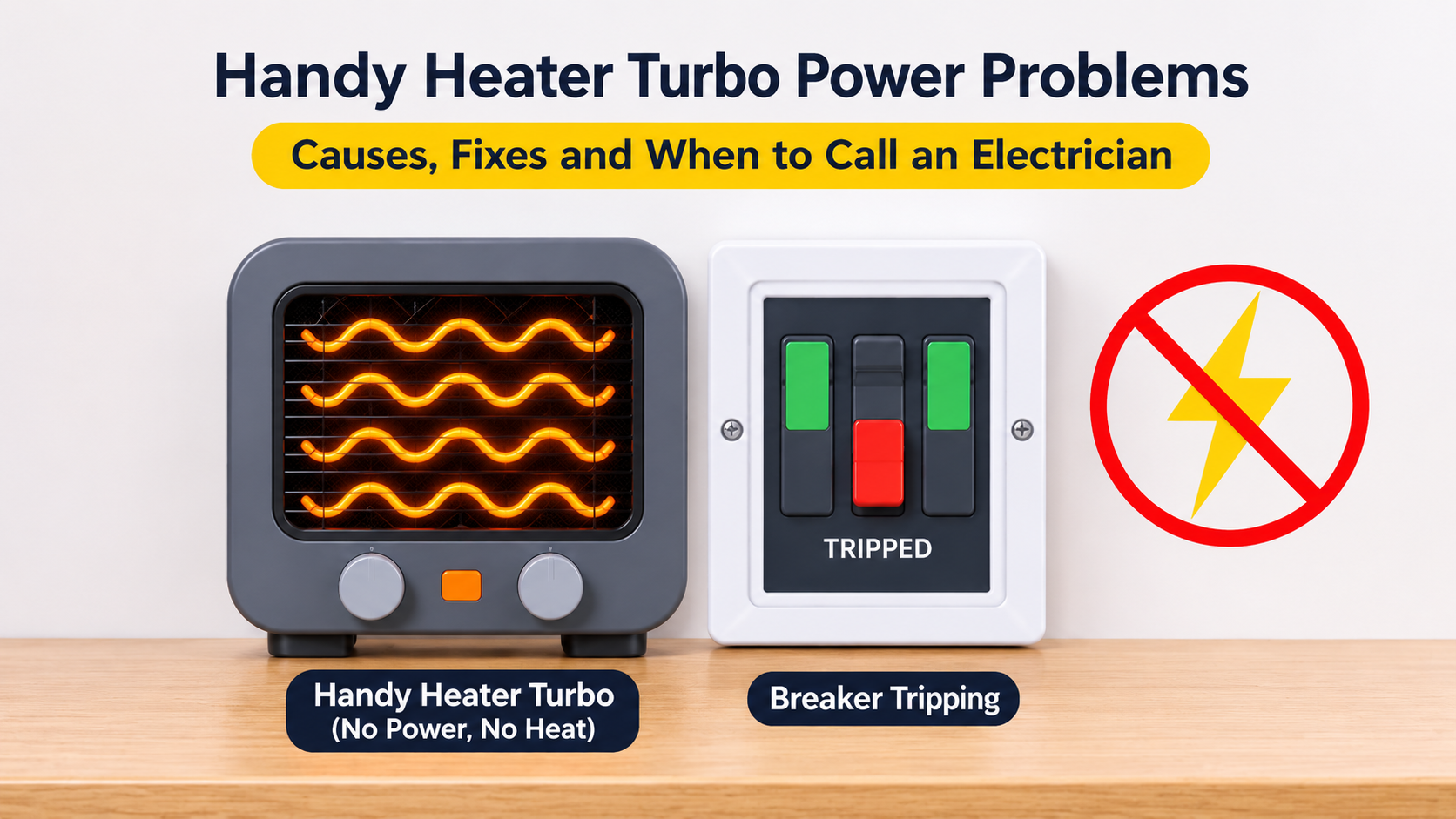
If the breaker trips repeatedly or the lights flicker, stop using the heater and ask a qualified electrician to check the wiring and supply. Never replace a breaker or fuse with a higher-rated one to avoid tripping.
Cause 7: Failing Internal Parts
If none of the above explains it, a part inside the heater may be wearing out. Common ones are:
- Selector or on/off switch with worn contacts that lose connection as they warm up
- Thermal fuse or thermal cut-out that is faulty or too sensitive
- Fan motor that slows or stops when hot, causing overheating and shutdown
- Heating element or its connections that are damaged or loose
- Internal wiring with a poor joint
These are not parts you should try to repair at home. Do not open the casing. Contact the seller if the heater is under warranty, or a qualified technician. For an inexpensive, older heater, replacing it is often the safest and most economical choice.
Symptom and Cause Table
| What you notice | Most likely cause | Safe first step |
|---|---|---|
| Stops after 3 to 10 minutes, restarts after cooling | Overheat protection from dust, blocked vents or poor spacing | Unplug, cool, clean vents, add clear space |
| Heat pauses but fan keeps running, then heat returns | Thermostat cycling | Raise thermostat, check if room is already warm |
| Stops when the heater is nudged or on a rug | Tip-over switch | Place on a flat, hard, level surface |
| Stops when the timer ends | Timer or auto shut-off | Check timer setting and manual |
| Stops or flickers when the cord or plug is moved | Damaged cord, plug or loose socket | Stop using and replace the damaged part or fix the socket |
| Plug or socket warm or hot | Poor connection or overload | Stop, unplug and get the socket and plug checked |
| Lights dim or breaker trips when it runs | Overloaded circuit or weak supply | Run it alone, avoid extension cords, call an electrician |
| Stops with no pattern, even on a clean, flat floor with a good socket | Faulty switch, thermal part or fan motor | Stop using, do not open, contact seller or technician |
Step-by-Step Fix Routine
- Unplug and cool. Wait at least 30 minutes.
- Inspect the cord and plug. Look for cuts, kinks, burn marks and loose fit. Stop if you find damage.
- Clean the vents. Brush and vacuum the grill and the rear intake.
- Move it to a good spot. Flat, hard floor, at least 1 metre of clear space, nothing against the vents.
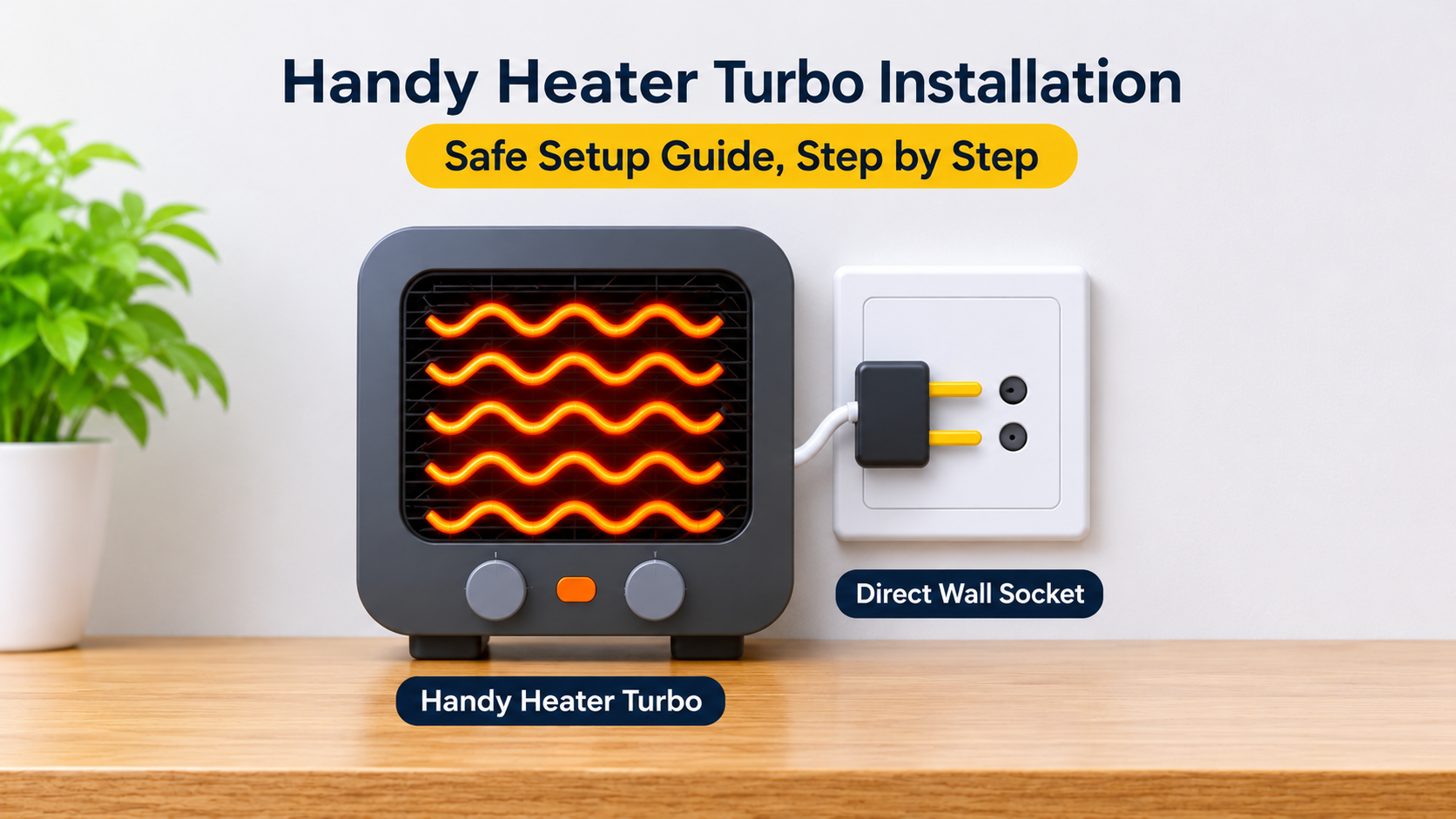
- Plug directly into a healthy wall socket. No extension cord or multi-plug.
- Check the settings. Raise the thermostat, check the timer, and choose a medium setting for the test.
- Run it and watch. Stay in the room for 15 to 20 minutes and note when and how it stops.
- Use the symptom table above to narrow down the cause, and stop using the heater if the problem continues.
What Not to Do
Avoid these mistakes
- Keep pressing the switch or restarting it again and again
- Tape down or bypass the tip-over or thermal protection
- Open the heater to fix it yourself
- Use an extension cord to reach a farther socket
- Cover or block the heater to “keep the heat in”
- Ignore a hot plug or a burning smell
Do this instead
- Find the cause using the flow and table above
- Fix the cause: clean, level, spacing, better socket
- Contact the seller or a qualified technician
- Ask an electrician to add a socket where you need it
- Keep the clear zone around the heater free
- Stop using the heater and get it checked
How to Prevent It
- Dust the heater weekly (unplugged and cool) with a soft brush or vacuum.
- Keep 1 metre of clear space on the front and sides, and never cover it.
- Use a flat, hard surface so the tip-over switch stays happy.
- Plug directly into the wall and keep the cord straight and undamaged.
- Do not share the circuit with other heavy appliances while the heater runs.
- Use a suitable setting. Use turbo to warm up, then a lower setting.
- Replace worn sockets and damaged cords without delay.
- Buy quality. Choose a heater with a proper thermostat, solid plug, thick cord and a warranty.
When to Stop Using the Heater
| Sign | What to do |
|---|---|
| Smoke, sparks or a strong burning smell | Switch off and unplug if safe, do not use again until checked |
| Plug, cord or socket too hot to touch comfortably | Stop using, replace the part or get the socket repaired |
| Melted, warped or blackened plastic | Stop using and replace the heater |
| Keeps stopping after cleaning, spacing and a good socket | Stop using, contact the seller or a technician |
| Breaker trips repeatedly | Stop and have an electrician check the circuit and heater |
| Fan noisy, slow, rubbing or stopped | Stop using and get it repaired or replaced |
Frequently Asked Questions
Why does my handy heater turbo stop after a few minutes?
The most common reasons are the overheat protection activating because of dust or blocked vents, the thermostat reaching its set temperature, the tip-over switch triggering, a loose plug or socket, or an overloaded circuit. Use the flow chart in this article to find your cause.
Is it normal for a heater to turn itself off?
It can be. A thermostat will switch the heating on and off to hold a temperature, and a timer will switch it off when set. But if the whole heater, fan included, stops often while the room is cold, it is a problem that needs checking.
Why does it start working again after I leave it for a while?
That usually means a safety cut-out reset after cooling, or a connection that works again once it cools. It points to overheating or a loose connection, so clean the vents, check the spacing and inspect the plug and socket.
Can dust make my heater stop?
Yes. Dust blocks airflow and causes internal overheating, which triggers the safety cut-out. Cleaning the intake and grill often solves the problem.
Can an extension cord cause this problem?
Yes. Extension cords and multi-plugs add resistance and weak joints, and they can overheat or lose connection under a heavy heater load. Plug the heater straight into a wall socket.
Does a tip-over switch make the heater stop?
If the heater is not level, or sits on a soft or uneven surface, the tip-over switch can switch it off. Put it on a flat, hard surface and try again.
Should I keep restarting the heater when it stops?
No. Repeated restarts do not fix the cause and may stress the parts. Unplug the heater, let it cool, find the cause and fix it before using it again.
When should I replace the heater instead of repairing it?
Replace it if the cord, plug or body is damaged, plastic is melted or blackened, it smokes or sparks, or repair would cost nearly as much as a new heater. A low-cost heater with an internal fault is usually better replaced.
Final Summary
A handy heater turbo that stops after a few minutes is rarely a mystery. Most of the time the cause is simple: dust or blocked vents causing overheat protection, a thermostat doing its job, an uneven surface, or a poor plug, socket or circuit. Remember these key points:
- Check if it is normal first: thermostat cycling with the fan still running is not a fault.
- Clean the vents and give it space: this solves most overheat cut-outs.
- Use a flat floor and a direct wall socket: avoid extension cords and shared circuits.
- Never bypass safety devices or open the heater.
- Stop at once if you notice a hot plug, smoke, sparks or a strong burning smell.
- Replace or repair damaged cords, worn sockets and faulty heaters.
Follow the steps in this guide and you will usually find the cause quickly, keep your handy heater turbo running steadily and stay safe all winter.