







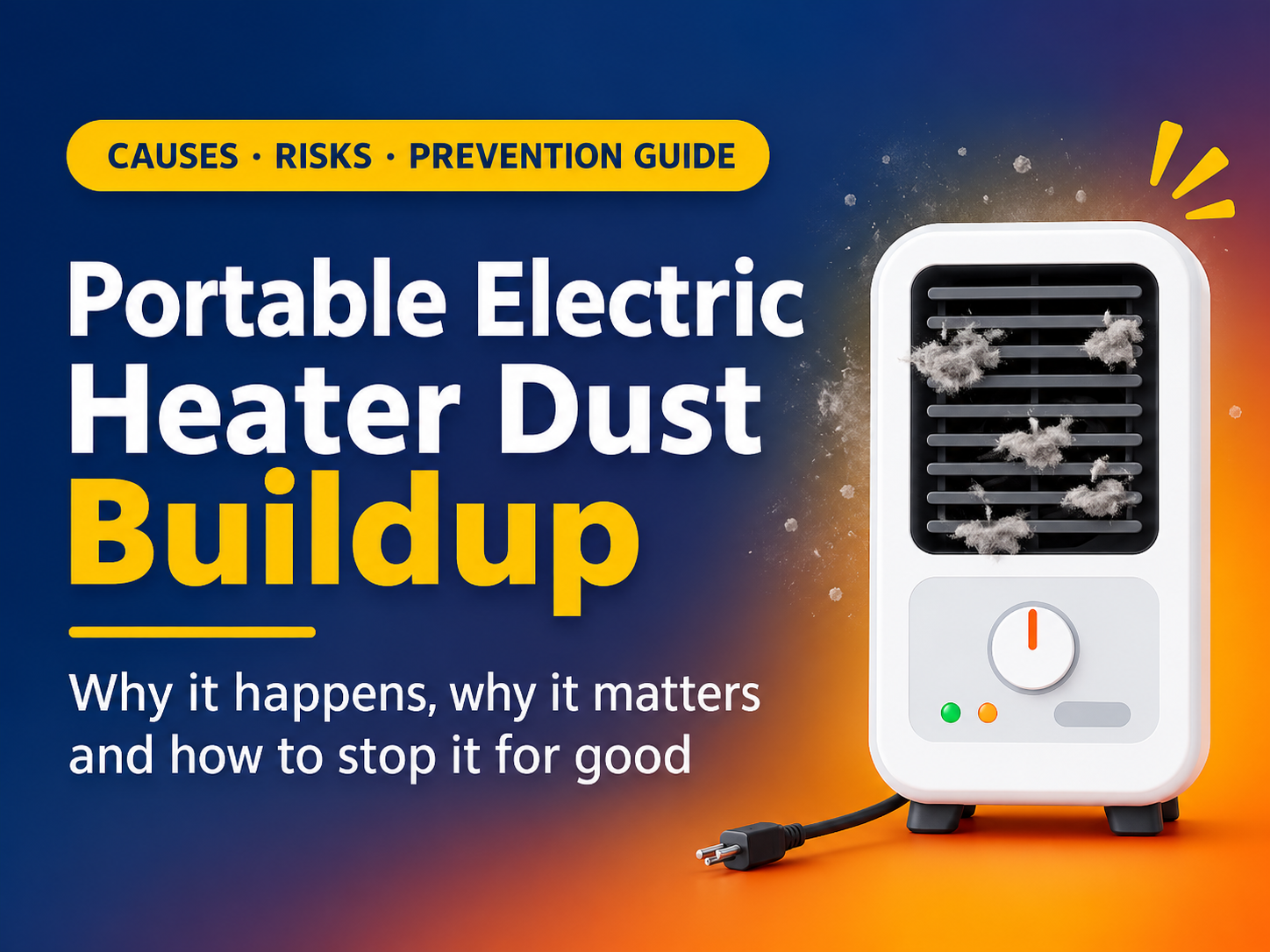

You switch on your portable electric heater for the first cold evening of the season and within a minute there is a strange, toasted smell in the room. Maybe the heat feels weaker than last year, or the heater clicks off by itself. In most cases, the culprit is the same: dust buildup.
Portable electric heater dust buildup is one of the most common and most overlooked problems with space heaters. It affects how well your heater warms the room, how your air smells, how long the appliance lasts and, at its worst, how safe it is to use. This guide explains why dust collects, where it hides, which warning signs to watch for, what the real risks are, and the simple habits that keep your heater clean and safe all winter.
Quick Summary
- Heaters pull in room air, so they also pull in dust, lint and pet hair.
- Dust bakes onto the hot element, which causes burning smells and reduces airflow.
- Heavy buildup can trigger overheating shut-offs and increases fire risk.
- A weekly dust-off, a monthly deep clean and smart placement prevent most problems.
- If you smell smoke or melting plastic, unplug the heater and stop using it.
What Is Dust Buildup in a Portable Electric Heater?
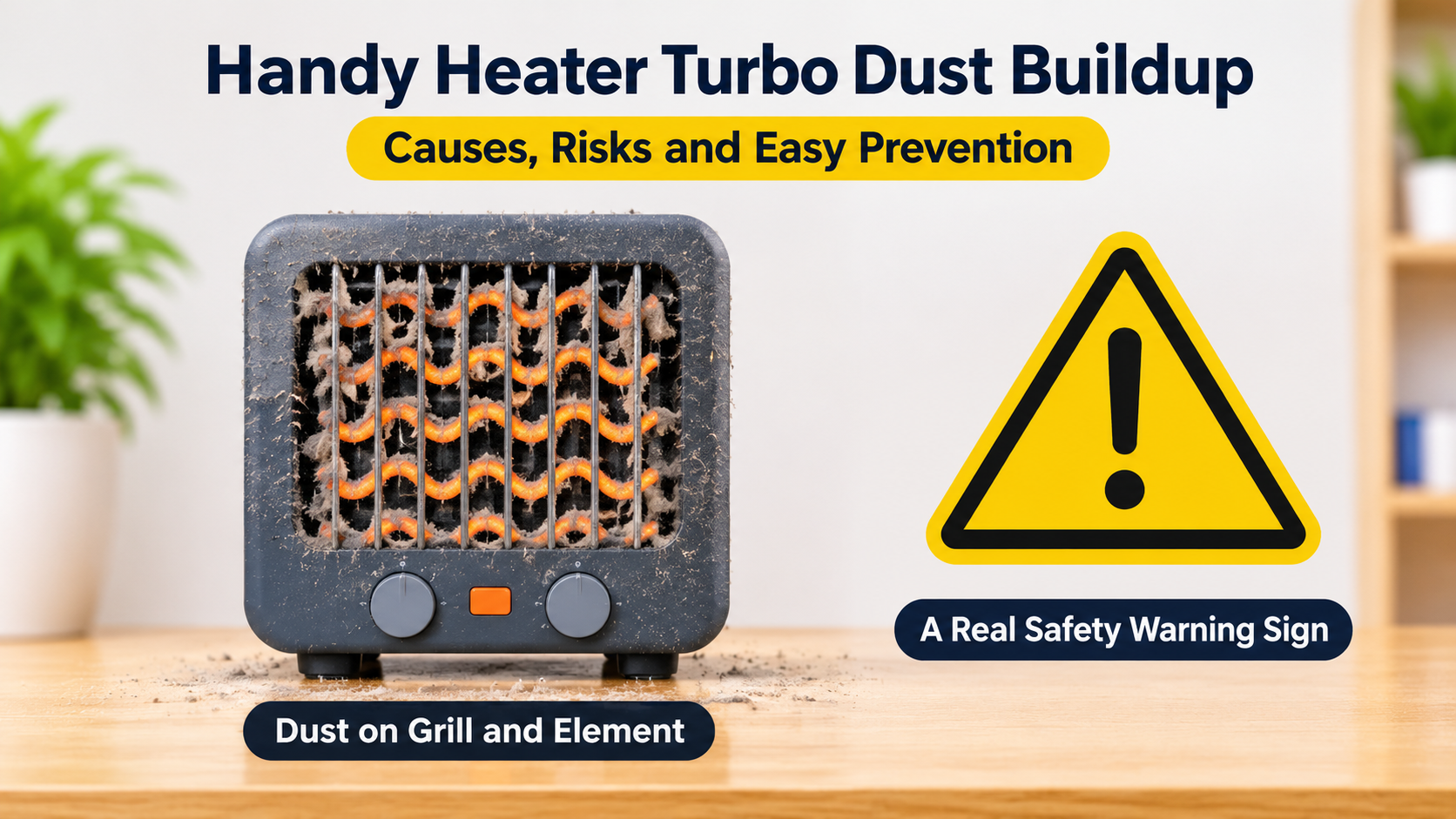
Dust buildup is the gradual layer of dust, lint, pet hair, skin particles and tiny fibers that collects on and inside your heater. It usually starts at the air intake and the grille, then works its way deeper to the fan, the filter (if there is one) and the heating element itself. Because heaters run warm for hours, this layer does not simply sit there. It dries out, becomes brittle and can be heated repeatedly, which makes it harder to remove and more likely to smell or smoke.
Why Do Portable Heaters Collect So Much Dust?
Several factors combine to make heaters natural dust magnets:
- Constant airflow: Fan-forced and ceramic heaters move a large volume of air every hour, so they filter more of your room’s dust than you would expect.
- Static electricity: Plastic housings, fans and grilles attract fine particles, particularly in dry winter air.
- Low placement: Heaters sit on the floor, exactly where the heaviest dust, lint and pet hair settle.
- Carpets, rugs and bedding: Soft furnishings constantly release fibers into the air.
- Pets: Fur and dander are lightweight and travel easily into vents.
- Long storage: A heater stored uncovered for months collects a full layer before you even plug it in.
- Home projects: Sanding, painting and renovation create fine dust that spreads quickly.
How Dust Builds Up Step by Step

The process is simple but relentless. First, the air in your room carries dust, lint and hair. Second, the heater pulls that air in through its intake vents. Third, particles settle on the fan blades, the filter and around the heating element. Finally, the heat bakes the dust onto surfaces, which is why you notice the smell and why airflow gradually falls. Each cycle adds a little more, so a heater that is never cleaned only gets worse.
Where Dust Collects Most

Knowing the hotspots tells you exactly where to look and clean:
- Rear and side intake vents: The first stop for incoming air, and usually the dirtiest area.
- Fan blades: Dust makes the blades heavier and unbalanced, which causes noise and strain on the motor.
- Heating element and surrounding area: Dust here causes most burning smells.
- Front grille: Visible fuzz in the slots is a clear sign that it is time to clean.
- Controls and base: Dust collects around dials, buttons and the feet, and can interfere with the tip-over switch.
Warning Signs of Dust Buildup
You do not have to open the heater to know when dust is a problem. Watch for these signs:
| Sign | What It Usually Means | Urgency |
|---|---|---|
| Brief dusty or toasted smell at start-up | Light dust burning off the element | Low. Clean soon. |
| Visible fuzz or lint in the grille | Dust is already restricting airflow | Medium. Clean this week. |
| Weaker heat or slower warm-up | Blocked vents or filter | Medium. Clean before next use. |
| Rattling, humming or louder fan | Dust on the fan blades or loose debris | Medium. Clean carefully. |
| Heater turns itself off repeatedly | Overheat protection triggered by blocked airflow | High. Stop and clean. |
| Strong burning smell, smoke or melting-plastic odor | Overheating or a possible fault | Critical. Unplug immediately. |
The Real Risks of Heater Dust Buildup

1. Burning Smell
The classic “burning dust” smell is the most visible symptom. A faint smell at the beginning of the season is common, but a smell that appears every time you use the heater means dust is still collecting where it should not.
2. Reduced Heating Performance
A blocked intake or filter reduces the amount of air passing the element. The heater has to work harder to warm the room, which can increase your running time and your electricity use for the same comfort.
3. Overheating and Frequent Shut-Offs
Modern portable heaters include overheat protection that switches them off when internal temperatures climb too high. Dust-restricted airflow is a major reason this protection activates. If your heater keeps cutting out, do not keep restarting it. Let it cool completely, unplug it and clean it.
4. Fire Hazard
Dust, lint and hair are flammable. When a thick layer collects close to a very hot element, it can smoke and, in extreme cases, ignite. Heating equipment is a recognized cause of home fires, which is why manufacturers and fire-safety organizations stress regular cleaning and proper clearance around every heater.
5. Poorer Indoor Air Quality
A dusty heater blows fine particles back into the room. For people with allergies, asthma or sensitive airways, this can mean sneezing, coughing or irritated eyes every time the heater runs.
6. Shorter Heater Lifespan
Fan motors, switches and sensors wear faster when they operate under constant strain from dust. Regular cleaning is one of the cheapest ways to get more years from the same heater.
Dusty vs. Clean Heater: The Difference

The contrast is clear. A clean heater moves air freely, heats the room efficiently and gives off no unpleasant odor. A dusty heater struggles, smells, runs hotter internally and creates more risk. The gap between the two is usually no more than a few minutes of cleaning each week.
Is It Dust or a Different Problem?
Not every smell or shutdown is caused by dust. Keep these points in mind:
- Dusty or toasted smell, short-lived: Typically dust. Clean the vents and element area.
- Chemical or new-plastic smell on a brand-new heater: Often protective coatings burning off during the first few uses. It should fade quickly.
- Sharp, fishy or electrical smell, or visible smoke: May indicate an electrical fault or overheated wiring. Unplug immediately.
- Heater not turning on: Check the power outlet, tip-over switch and thermostat setting before assuming dust is the cause.
If the problem remains after a careful cleaning, stop using the heater and contact the manufacturer or a qualified technician.
How Dust Affects Different Heater Types
- Ceramic and fan heaters: Most affected, because the fan draws large amounts of air and the narrow vents trap lint quickly.
- Oil-filled radiators: Collect dust on the exterior fins, but have no internal fan or intake, so dust is mainly a surface problem that is easy to wipe off.
- Infrared and quartz heaters: Dust on the reflector and guard can burn and cause odor, and reduces the radiant output over time.
- Convection panel heaters: Dust collects in the top and bottom slots and can restrict natural air movement.
How to Remove Heater Dust Safely
Whenever you clean, safety comes first. Follow this short routine:
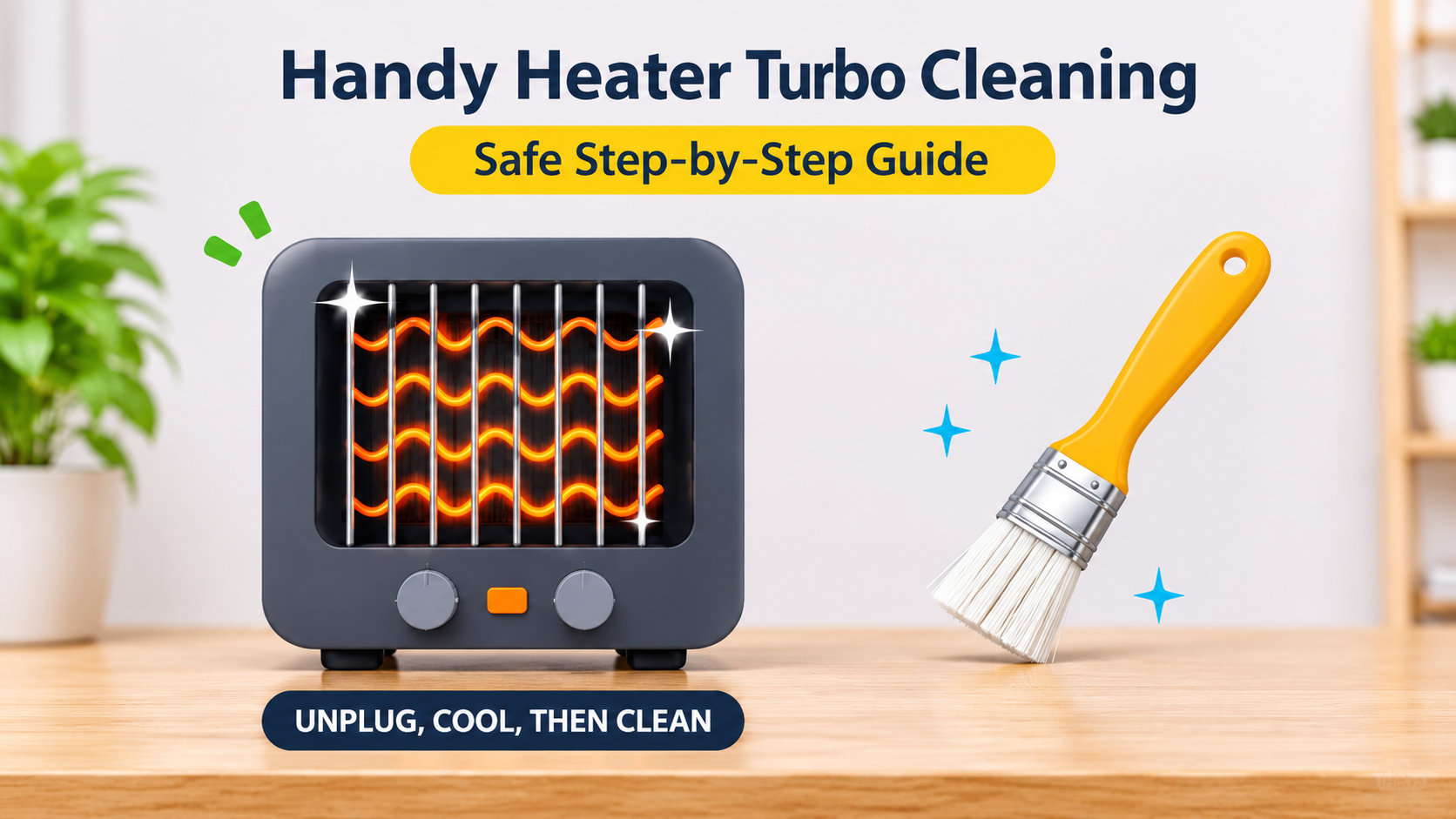
- Turn the heater off, unplug it and let it cool for at least 30 minutes.
- Vacuum the grille and vents with a soft brush attachment, working slowly across the slots.
- Loosen packed dust with a dry paintbrush or an old soft toothbrush, then vacuum it up.
- Use short bursts of compressed air from a distance if the manual allows, keeping the can upright.
- Clean or replace the filter if your model has one. Wash only if the manual says it is washable, and dry it completely before reinstalling.
- Wipe the exterior with a barely damp microfiber cloth, then dry it with a clean cloth.
- Check the cord and plug for damage and dust, and wipe them dry.
- Let everything dry fully, then plug the heater straight into a wall outlet and run it on low for a few minutes to test.
Never spray liquid into the vents, submerge the heater, clean it while it is plugged in or still warm, or poke sharp objects into the grille. Do not open sealed housings unless the manual specifically allows it.
How to Prevent Dust Buildup in the First Place

Keep a Clear Zone Around the Heater
Most manufacturers and fire-safety organizations recommend keeping at least 3 feet (about 1 metre) of free space around a portable heater. This keeps curtains, bedding, clothes and furniture away from the hot surfaces and reduces the amount of fabric lint pulled into the intake.
Choose the Right Surface
Place your heater on a hard, flat, level floor whenever possible. Carpets and rugs release more fibers, and a soft surface can also block the base vents or interfere with the tip-over switch.
Dust and Vacuum the Room Regularly
The cleaner your room, the cleaner your heater stays. Regular vacuuming, washing bedding and damp-dusting nearby surfaces reduce how much dust the heater can pull in.
Do a Weekly Dust-Off
A two-minute pass over the grille and vents with a vacuum brush attachment once a week during heavy use prevents most heavy buildup.
Deep Clean Monthly
Once a month, clean the filter, rear vents and exterior thoroughly. If you have pets or live in a dusty area, do it every two weeks.
Consider an Air Purifier
If you often battle heavy dust, running an air purifier in the same room reduces the particles available to settle in your heater. It is not essential, but it helps in dusty homes and in homes with pets.
Store the Heater Properly
Before putting the heater away for summer, give it a full clean, let it dry completely and store it in its original box or a large bag in a cool, dry place. This avoids the heavy dust layer that forms in an uncovered heater over months.
Cleaning Schedule at a Glance
| When | What to Do |
|---|---|
| Weekly (in daily use) | Vacuum grille and vents, dry-wipe the body, check the cord |
| Monthly | Clean the filter, brush out the rear vents, damp-wipe the exterior |
| Start of season | Inspect for dust and damage before first use, clean if needed |
| End of season | Full deep clean, dry completely, store covered |
| After dusty events | Clean straight away following renovation, sanding or heavy pet shedding |
Choosing a Heater That Resists Dust
If you are shopping for a new heater, a few features make dust easier to manage:
- Removable, washable filter: Catches dust before it reaches the fan and element.
- Easy-access grille and vents: Wider slots and a simple surface are quicker to vacuum.
- Oil-filled design: No fan or intake, so dust stays on the outside where it is easy to wipe.
- Overheat and tip-over protection: Safety features that add a margin of protection if dust does build up.
- Smooth, simple body: Fewer crevices mean less dust collects.
- Clear maintenance instructions: The manual should show which parts you can safely clean.
When to Stop Using Your Heater
Dust is manageable, but some situations call for immediate action. Unplug the heater and do not use it again until it has been inspected if you notice:
- Visible smoke or sparks
- A strong smell of burning plastic or electrical burning
- A damaged, discolored or hot cord or plug
- Melted or warped plastic on the housing
- Repeated shutdowns even after cleaning
- Any damage after being tipped over or dropped
Frequently Asked Questions
Is it normal for a heater to smell like burning dust?
A faint, short-lived smell at the start of the season is common as dust burns off the element. If it happens regularly, lasts more than a couple of minutes or is strong, clean the heater. If it smells like melting plastic or you see smoke, unplug it immediately.
Can dust in a space heater cause a fire?
Heavy dust and lint near a very hot element can smoke or ignite. Regular cleaning, correct clearance from flammable items and never leaving the heater unattended in a way that conflicts with the manual greatly reduce the risk.
How often should I clean my portable heater?
Vacuum the grille weekly while the heater is in daily use and do a deeper clean monthly. Add a thorough clean at the end of the season and after any dusty home project.
Do oil-filled heaters get dusty?
Yes, but only on the outside. They have no fan or air intake, so dust sits on the fins and body and can be wiped away with a damp cloth once the heater is unplugged and cool.
Can I use a hair dryer or a blower to remove the dust?
It is better to use a vacuum with a brush attachment. Blowing hard air can push dust deeper into the heater. Compressed air in short bursts followed by vacuuming is a safer approach.
Does dust buildup increase my electricity bill?
It can. Restricted airflow means the heater may take longer to warm the room or cycle on and off more often, which can mean higher running time for the same comfort.
Should I get an air purifier to reduce dust buildup?
It is optional, but an air purifier can reduce the dust in the room and therefore the amount reaching your heater. It does not replace regular cleaning.
Final Thoughts
Portable electric heater dust buildup is almost always preventable. Understanding why dust collects, where it hides and what warning signs to watch for lets you stay one step ahead. A weekly vacuum of the grille, a monthly deep clean, a clear zone around the heater and smart storage at the end of winter keep your heater safer, quieter and more efficient.
Spend a few minutes on maintenance now and you will enjoy dependable, odor-free warmth all season long.
Disclaimer: This guide offers general information. Always follow the instructions and safety warnings in your heater’s user manual, and contact the manufacturer or a qualified technician if you notice damage, smoke or unusual behavior.