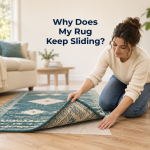

You step onto your rug and it glides away like a tiny magic carpet. Or you notice the rug has crept a few inches every week, leaving a crooked edge and a gap on the floor. Besides looking messy, a sliding rug is a real trip and fall hazard, especially for kids, pets, and older adults.
So why does your rug keep sliding, and what actually stops it for good? In this guide you will learn the real causes, how to diagnose your own situation, and the best fixes for every floor type, from hardwood to tile to carpet.
Quick Answer: Why Do Rugs Slide?
A rug slides when there is not enough friction between its backing and the floor. This usually happens because of a smooth floor surface, a missing or worn-out rug pad, a rug that is too light or too small, or constant traffic pushing it in one direction. The most reliable fix is a properly sized, floor-appropriate rug pad.
The 9 Most Common Reasons Your Rug Keeps Sliding
1. Smooth, Slick Floors
Polished hardwood, tile, vinyl, laminate, and stone have very low friction. Add a bit of floor polish or dust and the surface becomes even slicker.
2. No Rug Pad at All
Many people skip the pad to save money, but without it the rug backing is the only thing touching the floor. Most rug backings are designed to look good, not to grip.
3. The Wrong Type of Rug Pad
A thin felt-only pad on a hardwood floor offers cushioning but very little grip. A rubber pad that is too thin or too stiff may not hold either. The pad must match both the floor and the rug.
4. A Worn-Out or Dirty Pad
Pads lose grip as the rubber dries, compresses, or collects dust. If your once-reliable pad now slips, age and dirt are likely culprits.
5. Rug Backing That Is Smooth or Worn
Smooth polyester, cotton flatweave, and older rugs with worn latex backing slide more easily than dense, textured ones.
6. A Rug That Is Too Light or Too Small
Lightweight, thin rugs have less weight to hold them down. A rug that does not extend under furniture legs also lacks anchor points.
7. Heavy or One-Directional Foot Traffic
Walking through a doorway or hallway in the same direction every day slowly pushes the rug forward. Pets running across it make the problem worse.
8. Vacuuming and Cleaning Habits
Strong vacuum suction and the pushing motion of a vacuum head can move rugs several inches. Mopping the floor under the rug can leave a slippery film as well.
9. Humidity and Temperature Changes
Moisture and warmth can soften some adhesives and rubber compounds, reducing grip. Changes in humidity can also cause rugs to expand and shift.
How to Diagnose Why Your Rug Is Sliding
Before you buy anything, spend five minutes figuring out the cause.
- Do the push test: push the rug gently with your foot. If it moves with little effort, the grip is poor.
- Lift a corner: look at the backing and any existing pad. Is it dusty, cracked, or shiny?
- Check the floor: run a damp cloth over a small area. A sticky or waxy residue will reduce grip.
- Measure the rug and pad: a pad that is much smaller or larger than the rug can cause problems.
- Note the pattern: if the rug always creeps in one direction, traffic flow is a major factor.
How a Rug Pad Actually Stops Sliding
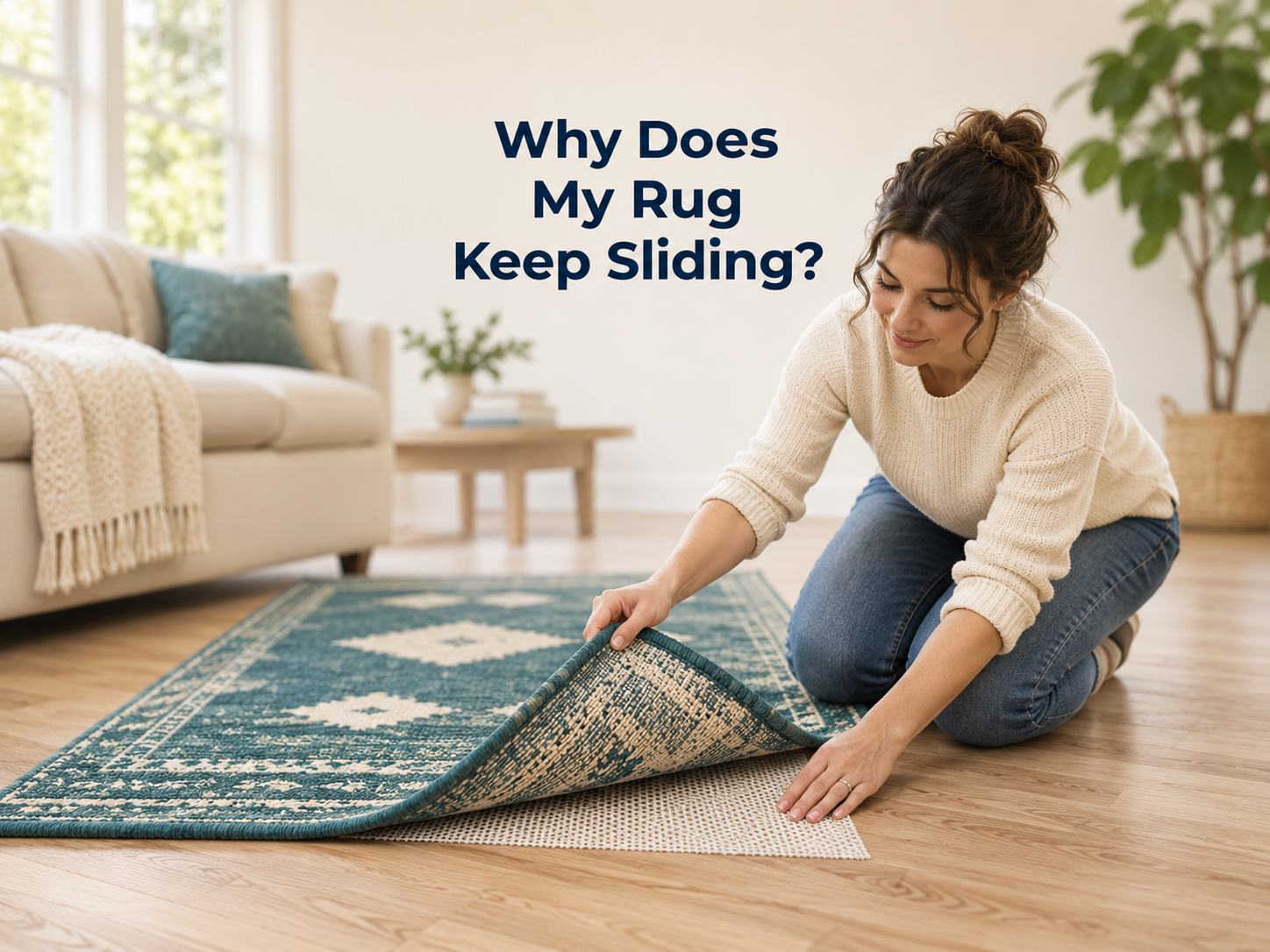
A good rug pad works on both sides at once. The top surface grips the rug fibers, and the bottom surface grips the floor.
The Best Fixes for a Sliding Rug
Fix 1: Use a Quality Rug Pad (Best Solution)
This is the gold standard. Choose a pad that is about one inch smaller than the rug on every side so it stays hidden and the edges do not curl. The right material depends on your floor.
| Floor Type | Best Pad Type | Notes |
|---|---|---|
| Hardwood | Natural rubber or felt and rubber blend | Choose PVC-free to avoid discoloring the finish |
| Tile / stone | Thin rubber or mesh pad | Keeps rug flat without raising the edge |
| Vinyl / laminate | Non-staining, PVC-free pad | Some rubber compounds can stain vinyl over time |
| Low-pile carpet | Thick felt or felt and rubber | Prevents the rug from walking across carpet |
| Concrete | Rubber or open-weave mesh | Allows airflow and helps reduce moisture build-up |
| Stairs / runners | Individual non-slip treads or strips | Always secure stair rugs firmly for safety |
Fix 2: Add Rug Gripper Tape or Corner Grips
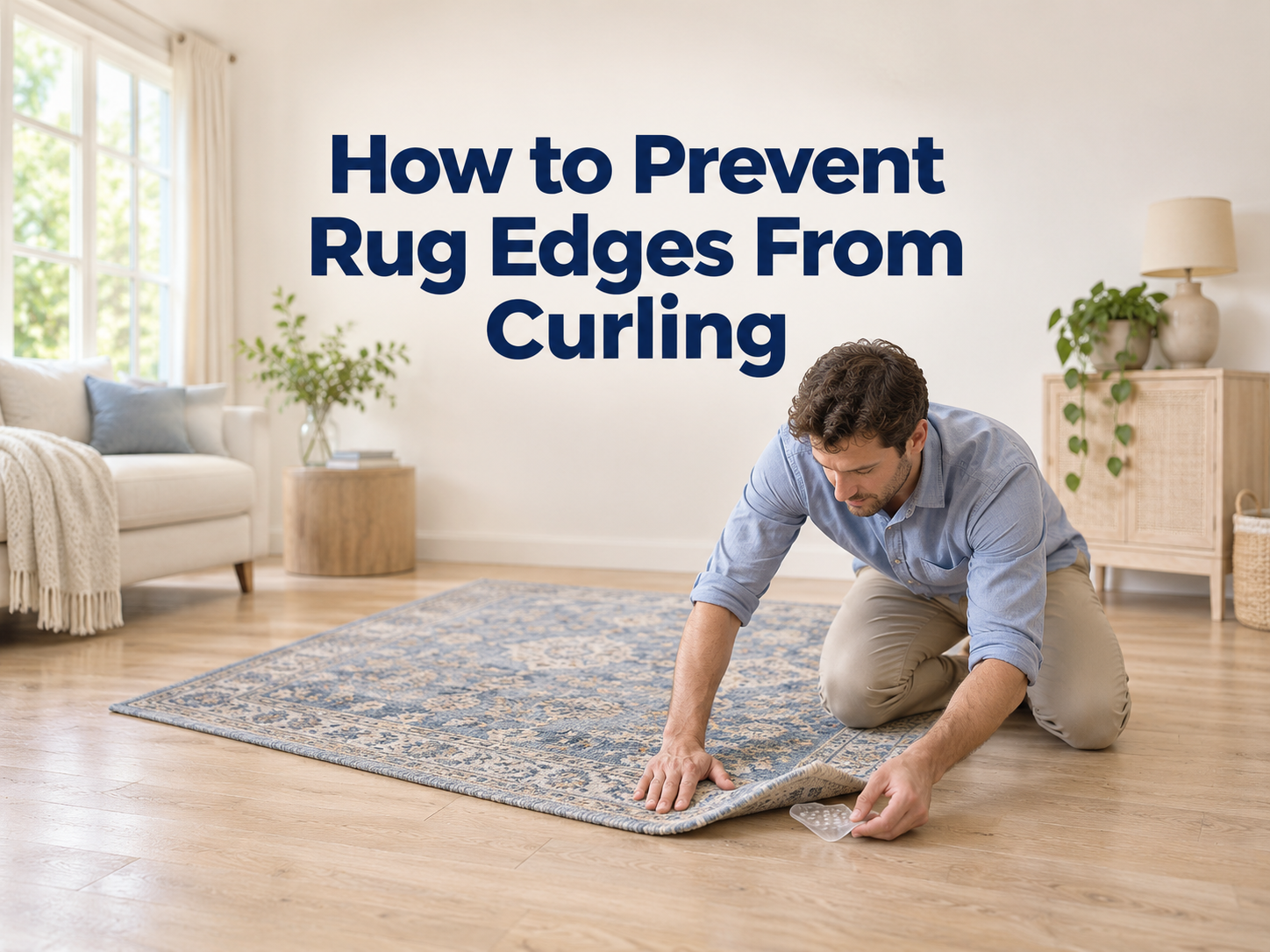
Gripper strips and corner grips are inexpensive and ideal for small rugs, runners, and doormats. Apply them to the clean, dry back of the rug along the edges and corners. Look for removable options that will not damage the floor.
Fix 3: Use a Non-Slip Mesh Pad for Light Rugs
Open-weave mesh pads are thin, affordable, and grip well on hard floors. They are a smart choice for low-profile rugs where you do not want any extra height.
Fix 4: Anchor the Rug With Furniture
Place at least the front legs of sofas and chairs on the rug. In a living room, an area rug that extends under the furniture will stay put far better than one floating in the middle of the room.
Fix 5: Choose a Larger or Heavier Rug
If your rug is too small for the space, it will always be difficult to keep stable. A larger, denser rug with a heavier backing stays in place more naturally.
Fix 6: Use Rug-to-Carpet Grippers
For rugs on top of wall-to-wall carpet, use special grippers designed to grab both layers, or a thick felt pad. Plain rubber pads do not work well on carpet.
Fix 7: Clean the Floor and the Backing
Dust, pet hair, and floor polish all reduce grip. Wash or vacuum the rug backing, clean the floor with a residue-free cleaner, and let both dry completely before putting the rug back.
Fix 8: Re-Treat Worn Backing
Old rugs with a dried-out backing can be improved with a liquid non-slip coating made for rugs. Follow the product directions carefully and test a small spot first.
Never use double-sided tape that is not made for rugs on finished wood floors. It can pull off the finish or leave a sticky residue that is hard to remove.
Common Mistakes That Make Sliding Worse
- Choosing a pad that is too big: edges stick out and create a trip hazard.
- Using the wrong pad on the wrong floor: some rubber compounds can stain vinyl or damage finishes.
- Skipping floor cleaning: a dusty floor makes even a good pad slip.
- Buying the cheapest pad: low-quality pads lose their grip within months.
- Ignoring corner curling: curled corners catch feet and drag the whole rug.
- Using the vacuum beater bar on a loose rug: it pulls the rug along the floor.
How to Keep Your Rug From Sliding Long Term
- Replace rug pads every two to three years, or sooner if grip fades.
- Rotate the rug a few times a year so wear and traffic are even.
- Lift the rug when vacuuming, or use a suction setting without a beater bar.
- Reposition the rug when it shifts instead of letting it creep far out of place.
- Keep the floor clean and avoid waxy or oily polishes under the rug.
- Check the rug and pad for damage and moisture every few months.
Helpful Products Worth Considering
You do not need to spend much to solve the problem. These are the types of items that are worth looking for:
- Dual-surface rug pad: felt on top and natural rubber below for cushion and grip.
- Non-slip mesh rug pad: a thin, cuttable option that works on hard floors.
- Removable rug gripper tape: good for runners, hallway rugs, and small rugs.
- Corner grips: stop curling edges on lightweight rugs.
- Floor-safe cleaner: removes residue so the pad can grip properly.
- Stair tread grips: a safer way to secure stair runners and bath mats.
When to Replace the Rug or Call a Professional
If your rug has a severely worn backing, ripped edges, or constant curling that no pad solves, it may be time to replace it. For valuable or antique rugs, ask a professional rug specialist to recommend a safe pad instead of experimenting yourself.
Frequently Asked Questions
Why does my rug slide even with a rug pad?
The pad may be the wrong type, too small, dirty, or worn out. Also check for a dusty floor or a residue left by cleaning products.
What can I put under a rug to keep it from slipping?
A felt and rubber rug pad is best for most rooms. Mesh pads, gripper tape, and corner grips also work well for smaller rugs.
Can a rug pad damage my hardwood floor?
Low-quality pads with PVC or harsh adhesives can discolor or damage finishes. Choose a natural rubber or felt pad labeled safe for hardwood.
How do I stop a rug from sliding on carpet?
Use a thick felt pad or a carpet-to-rug gripper. Rubber pads alone do not grip carpet fibers well.
How big should a rug pad be?
About one inch shorter than the rug on every side. This keeps the pad hidden and prevents the rug edges from curling.
Does furniture on a rug stop it from moving?
It helps, especially when at least the front legs of heavy furniture sit on the rug. For best results, combine furniture placement with a good rug pad.
How often should I replace my rug pad?
Typically every two to three years, depending on traffic, quality, and floor type. Replace it sooner if the rug begins to slide.
Final Thoughts
A sliding rug is almost always a friction problem, and it is almost always fixable. Start by checking your floor, your rug backing, and your pad, then choose a high-quality rug pad that suits your floor and is cut slightly smaller than the rug. Add grippers or furniture anchors where needed, keep everything clean, and your rug will stay flat, safe, and exactly where you placed it.