


You unroll a beautiful new area rug, and instead of lying flat, it looks like a small mountain range. Sound familiar? Wrinkles, ripples, and stubborn creases are one of the most common complaints rug owners have, and the good news is that nearly all of them can be fixed at home without special skills or expensive tools.
In this complete guide, you will learn how to remove wrinkles from area rugs using seven proven methods, how to choose the right one for your rug material, which mistakes to avoid, and how to keep your rug flat for years.
Quick Answer: What Is the Fastest Way to Flatten a Rug?
For most rugs, the best approach is a combination: reverse roll the rug, then lay it flat with a little gentle warmth or steam, and finish with a non-slip rug pad underneath. Light wrinkles often disappear within hours, while deep folds from shipping can take two to three days.
Why Do Area Rugs Wrinkle?
Understanding the cause helps you choose the right fix and prevent the problem from returning.
- Shipping and storage: Rugs are usually rolled or folded for weeks. The fibers and backing remember that shape.
- Foot traffic and furniture: Walking, vacuuming, and moving chairs push a rug and create bunching over time.
- Humidity: Natural fibers such as wool, cotton, and jute absorb moisture and expand unevenly.
- Missing rug pad: Without grip, the rug slides on hardwood, tile, or laminate and gathers into ripples.
Before You Start: Check Your Rug Type
Not every method suits every rug. Check the care tag first and test any heat or moisture on a hidden corner.
| Rug Material | Best Methods | Avoid |
|---|---|---|
| Wool | Reverse roll, weights, light steam | Direct high heat, soaking wet |
| Cotton / flatweave | Reverse roll, steam, low-heat iron with cloth | Excess moisture that can shrink fibers |
| Polypropylene / synthetic | Reverse roll, sunlight, hair dryer on low | Hot iron directly on fibers (they can melt) |
| Jute / sisal | Reverse roll, weights, dry warmth | Steam and water (can stain and weaken fibers) |
| Shag / high pile | Reverse roll, weights, gentle brushing | Ironing and heavy steam |
| Silk / antique / handmade | Professional advice, light weights | Almost all DIY heat methods |
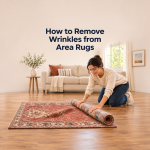
Method 1: Reverse Roll the Rug (Best Overall)
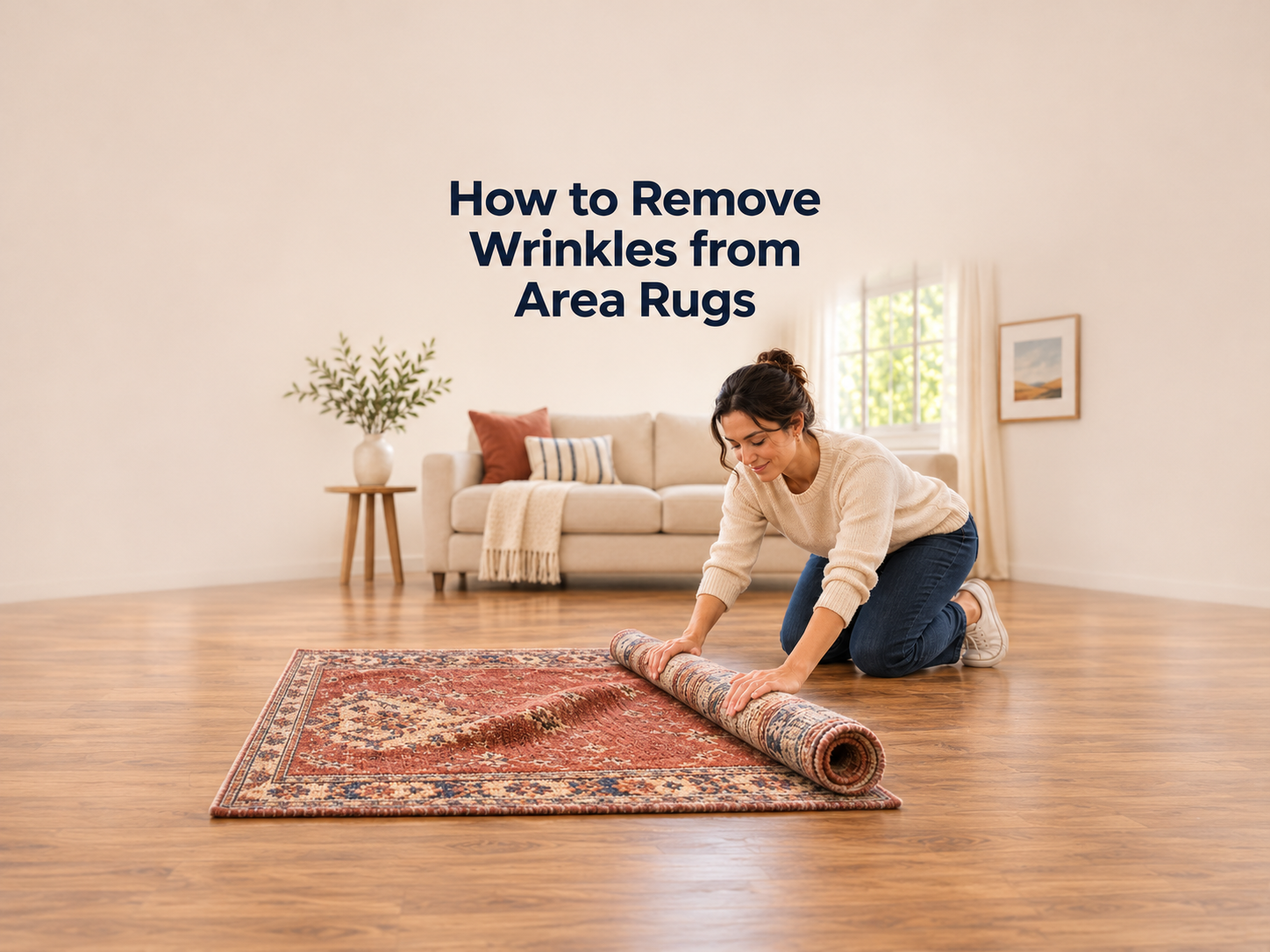
This is the single most effective trick, especially for rugs that arrived rolled or folded.
- Lay the rug face down on a clean, flat floor.
- Roll it up in the opposite direction to the way it was shipped, with the pile on the outside.
- Secure it loosely with soft ties or tape on the backing only.
- Leave it for 24 to 48 hours, then unroll and let it rest flat.
If the rug was folded rather than rolled, reverse each crease by folding it the other way and applying gentle pressure along the fold line.
Method 2: Use Heavy Weights and Time
Patience is a powerful tool. Spread the rug flat and place heavy, clean items on the corners and across the wrinkles, such as stacks of books, furniture, or storage boxes. Put a clean towel or cardboard between the weight and the rug to protect the surface. Leave in place for one to three days.
Method 3: Let Sunlight Warm the Fibers
Gentle warmth relaxes fibers and makes them more flexible. Place the rug flat in a warm, sunny room (or outdoors on a clean surface) for two to four hours. Then smooth with your hands from the center outward.
Long exposure to strong sun can fade colors, especially on wool and natural dyes. Limit sun time and flip the rug halfway through.
Method 4: Steam the Wrinkles Out
A handheld garment steamer or steam iron held above the rug works well on many materials.
- Lay the rug flat and vacuum it first so dust does not become damp dirt.
- Hold the steamer a few inches above the surface; never press it into the fibers.
- Move slowly along the wrinkle for 10 to 30 seconds per area.
- Smooth the fibers by hand while still warm, then place a weight on the area as it cools.
- Allow the rug to dry completely before furniture goes back on it.
Method 5: Use a Hair Dryer on Low Heat
For small creases or corners, a hair dryer is a quick fix. Keep it on the lowest heat setting, a few inches from the rug, and move constantly. Press the warmed area flat with your hand or a heavy book as it cools. This is ideal for synthetic and flatweave rugs.
Method 6: Iron With a Protective Cloth (Flatweave Only)
For thin cotton or flatweave rugs, you can use an iron on a low setting with no steam, working from the back of the rug through a damp cotton cloth. Never iron directly on pile, synthetic fibers, or rugs with latex backing. If you are unsure, skip this method.
Method 7: Add a Quality Rug Pad
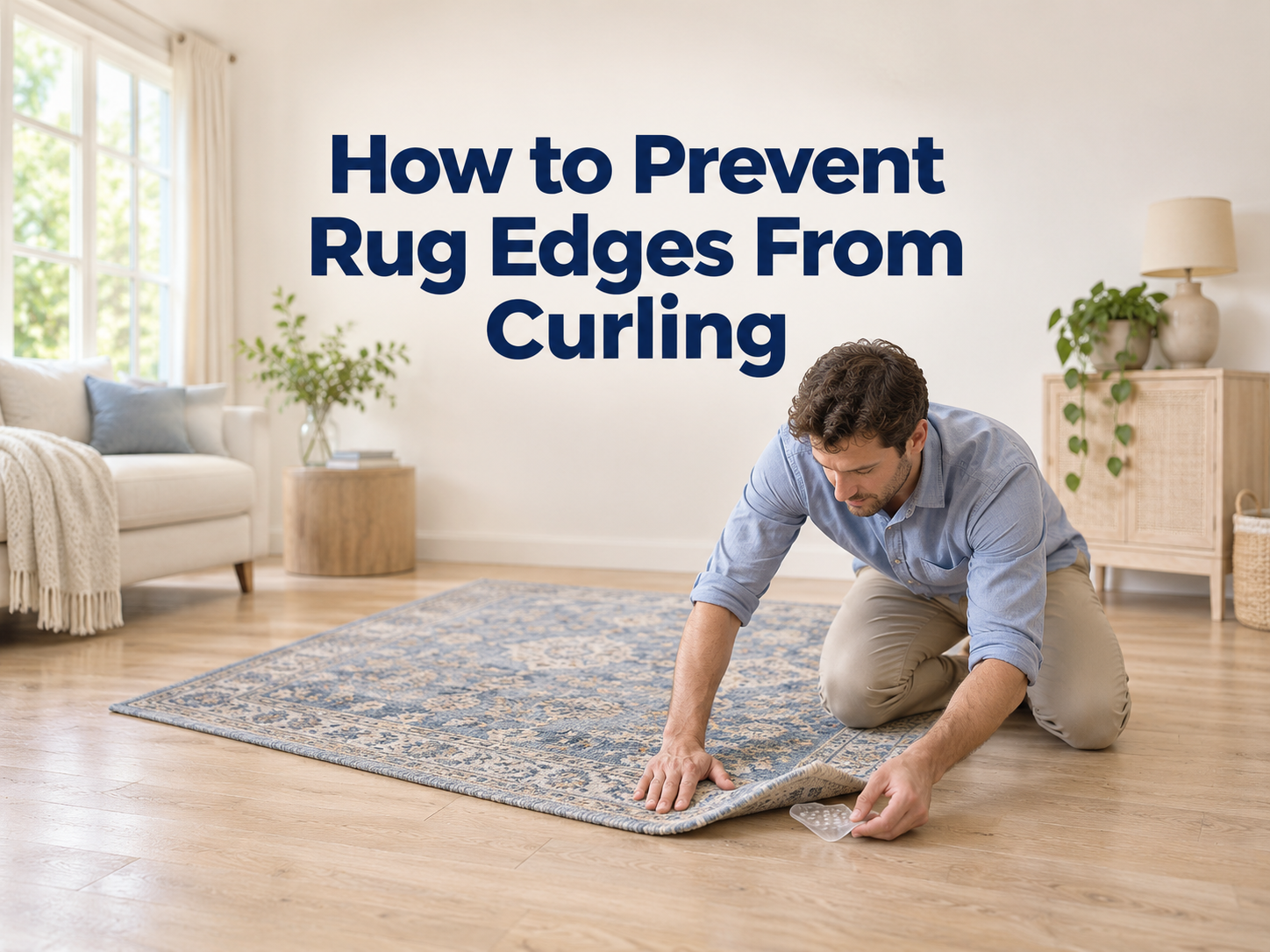
A rug pad will not remove existing wrinkles, but it keeps them from coming back. Choose a pad that is slightly smaller than the rug, and match the type to your floor.
| Pad Type | Best For | Benefit |
|---|---|---|
| Felt and rubber | Hardwood, tile, laminate | Grip plus cushioning |
| Natural rubber | Hard floors, high-traffic rooms | Strong non-slip hold, thin profile |
| Thick felt | Carpet (rug over carpet) | Extra support to reduce bunching |
| Gripper tape or corner grips | Small rugs, runners | Keeps edges from curling |
Which Method Should You Choose?
If you are in a hurry, steam or a hair dryer will give quick results for light wrinkles. For deep folds and brand-new rugs, plan ahead and combine reverse rolling with weights. When in doubt, the slower and gentler method is the safer one.
Common Mistakes to Avoid
- Using high heat: Synthetic fibers can melt and wool can felt.
- Soaking the rug: Excess water can cause mildew, color bleeding, and shrinking.
- Skipping the spot test: Always test a hidden corner first.
- Pulling hard on the rug: This can stretch the backing and create permanent distortion.
- Putting furniture on a damp rug: Moisture can leave marks and dents.
How to Prevent Rug Wrinkles in the Future
- Use a non-slip rug pad under every rug on a hard floor.
- Rotate the rug every three to six months for even wear.
- Keep humidity in your home around 40 to 50 percent.
- Vacuum gently, and avoid beater bars on delicate or flatweave rugs.
- When storing, roll the rug pile-side out instead of folding it.
- Fix curling corners early with grippers before they become permanent.
Helpful Tools Worth Having
You do not need much, but a few inexpensive items make the job easier and safer:
- Handheld garment steamer: look for adjustable steam and a large water tank.
- Non-slip rug pad: choose one rated for your floor type and slightly smaller than the rug.
- Rug gripper tape or corner grips: great for runners and small rugs.
- Soft-bristle rug brush: helps smooth and lift fibers after steaming.
- Furniture sliders or risers: reduce pulling and bunching when rooms are rearranged.
When to Call a Professional
If your rug is silk, antique, hand-knotted, or very valuable, or if wrinkles do not respond after several attempts, contact a professional rug cleaner. Persistent waves can sometimes indicate a backing or construction issue that only an expert should handle.
Frequently Asked Questions
How long does it take for rug wrinkles to go away naturally?
Light wrinkles often relax in 24 to 72 hours when the rug is laid flat. Deep creases may take a week, especially in cool or humid rooms.
Can I use an iron to flatten a rug?
Only on thin, heat-safe flatweave or cotton rugs, on a low setting, with a protective cloth. Never iron synthetic pile or rugs with latex backing.
Is it safe to steam a wool rug?
Yes, if you use light steam held above the surface and let it dry fully. Do not soak the fibers or press the steamer into the pile.
Why does my rug keep wrinkling even after I flatten it?
Usually it is a missing or low-quality rug pad, high humidity, or constant sliding on a smooth floor. Adding a proper pad fixes most repeat wrinkling.
Do rug pads really help prevent wrinkles?
Yes. A pad provides grip and cushioning so the rug cannot creep and bunch up under foot traffic.
Can I flatten a rug that was folded for years?
Often yes, but it takes patience. Combine reverse folding, weights, and gentle warmth over several days, and expect some faint lines to remain on old creases.
Final Thoughts
Wrinkled rugs are frustrating, but they are rarely permanent. Start with the gentlest option, reverse rolling plus weights, and escalate to steam or a hair dryer only if needed. Finish with a good rug pad, and your area rug will lie flat, look beautiful, and last longer.