




How to Remove Candle Wax From Table Decor
Candles make a table feel warm and special, but they also leave drips, splatters and sticky rings on the things you love. Wax can land on a wooden table, a glass vase, a brass candlestick, a linen runner or a ceramic centerpiece. Left alone, it hardens and looks messy, and if you pull it off the wrong way, it can scratch, stain or damage the surface.
The good news is that wax is easier to remove than most people think. In this complete guide you will learn the three main methods, the best approach for each type of surface, how to deal with leftover residue and color stains, and how to prevent drips in the first place.
Table of Contents
- Understand what you are dealing with
- What you need
- The three safe methods
- Best method for each surface
- Fabric table runners and napkins
- Removing leftover residue and color stains
- Cleaning candle holders and jars
- Mistakes to avoid
- Flowchart: choose your method
- How to prevent wax drips
- Frequently asked questions
- Final thoughts
1. Understand What You Are Dealing With
Candle wax melts at a fairly low temperature and hardens as it cools. The type of wax and the amount make a difference in how you remove it.
- Paraffin wax: the most common. It hardens firmly and often leaves an oily film.
- Soy and plant waxes: softer and easier to wipe away, but can stay slightly greasy.
- Beeswax: sticky and slightly harder to clean, and it leaves a golden tint.
- Gel wax: a clear, jelly-like wax that sticks to glass.
- Scented and colored wax: dyes and fragrance oils can leave a faint stain behind.
Most removal methods work on all of them, but colored and scented wax need an extra cleaning step.
2. What You Need
- A plastic card, old gift card or plastic spatula
- A wooden stick or silicone scraper (optional)
- Ice cubes in a zipper bag, or access to a freezer
- A hair dryer
- Paper towels and clean soft cloths
- Mild dish soap and warm water
- Rubbing alcohol (isopropyl) for stubborn residue on safe surfaces
- An iron and brown paper bag or plain paper towels, for fabric
3. The Three Safe Methods
Method 1: Freeze the wax
Cold makes wax hard and brittle, so it cracks off in clean pieces instead of smearing.
- Place the whole item in the freezer for one to two hours. If it is too big or cannot be moved, put an ice pack or a bag of ice on the wax for 10 to 15 minutes.
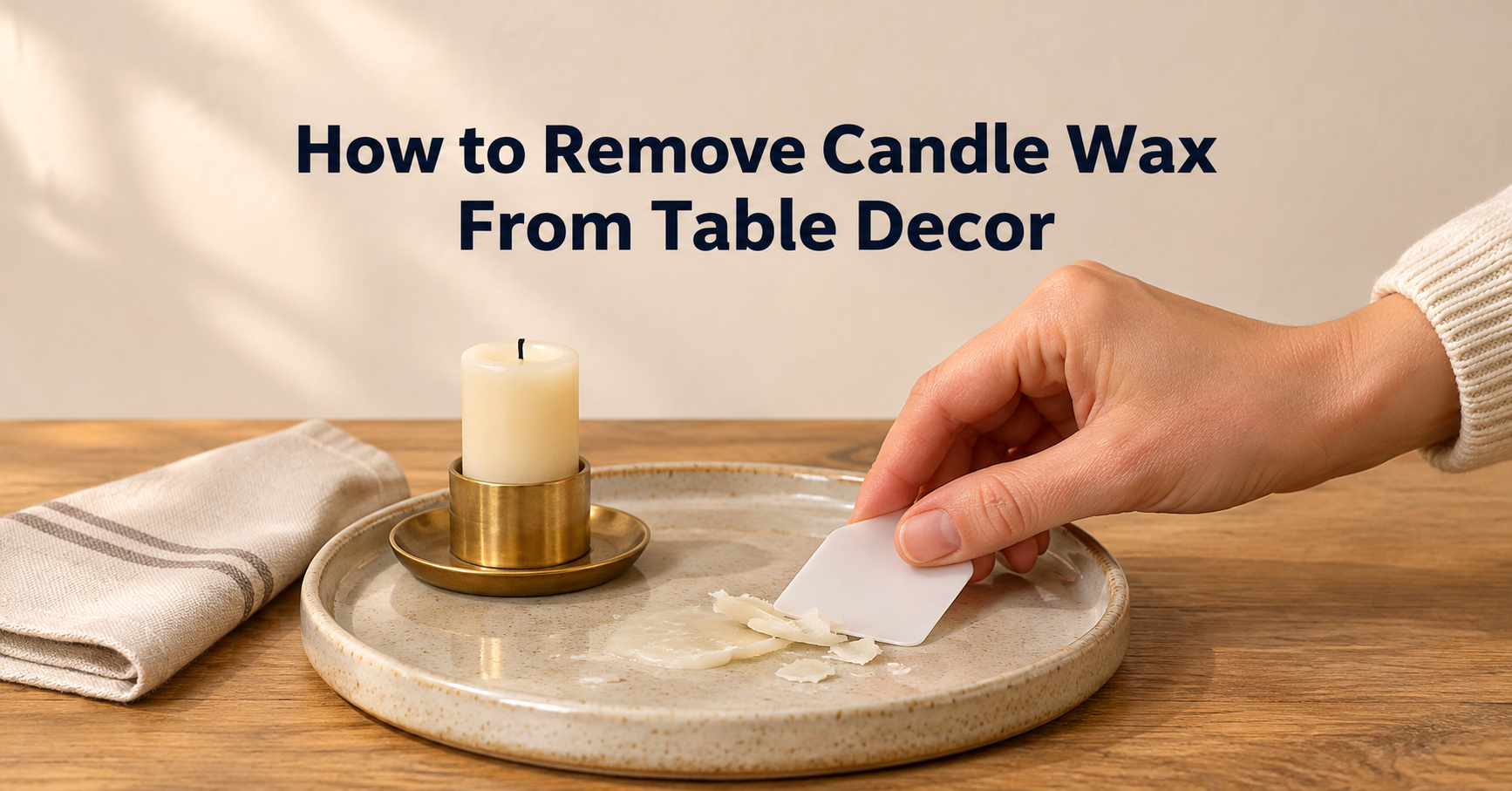
- Lightly tap the wax with the edge of a plastic card to crack it.
- Lift the pieces off gently.
- Wipe the area with a soft cloth to remove tiny crumbs.
Method 2: Warm and blot the wax
Gentle heat turns the wax soft, so you can soak it up with paper towels.
- Set a hair dryer to a low or medium heat setting.
- Hold it 10 to 15 cm (4 to 6 inches) from the wax and warm it for 20 to 30 seconds.
- Press a paper towel on the softened wax to absorb it.
- Repeat with fresh paper towels until no more wax comes up.
Method 3: Scrape gently
Scraping is the finishing step for both methods above. Use a plastic card or wooden tool at a low angle, and push the wax away from the surface rather than digging into it.
4. Best Method for Each Surface
Finished wooden tables
Warm the wax with a hair dryer on low until it softens, then lift the bulk with a plastic card. Wipe the area with a cloth dampened with warm, soapy water, and dry right away. Finish with a little furniture polish if the wood looks dull. Avoid soaking the wood.
Unfinished or waxed wood
Unfinished wood can absorb melted wax, so freezing is safer. Use ice to harden the wax and scrape gently. Avoid solvents, and consider a professional if the wax has soaked deep.
Glass vases and candle holders
Freeze the item, then flex or tap the wax so it pops out. For stuck residue, pour hot (not boiling) water into a glass holder so the wax floats up, let it harden on the surface, and lift it out. Wash with warm soapy water. Do not pour boiling water into thin or cracked glass.
Ceramic and porcelain
Use the freezer method and scrape with a plastic tool. Wash normally with mild soap. Be careful with antique or hand-painted pieces because heat and scraping may damage the glaze or paint.
Brass, silver and metal
Warm the wax gently with a hair dryer and blot it off with paper towels. Wash with mild soap and warm water, then dry and polish with a soft cloth. Do not use abrasive pads on polished metal.
Stone and marble
These surfaces are porous and sensitive. Use ice, then a plastic scraper. Avoid acidic cleaners like vinegar and lemon on marble. If wax leaves a stain, a stone-safe cleaner or a professional is the safest choice.
Plastic and resin decor
Heat can warp plastic, so use the freeze method only. Rub away light residue with a soft cloth and mild soap.
Wicker, rattan and woven items
Wax gets trapped in the weave. Freeze the piece if possible, crack the wax and pick it out with a soft brush. Avoid soaking natural fibers.
5. Fabric Table Runners and Napkins
Wax on fabric needs a bit more care, but it comes out well with the right steps.
- Harden the wax with ice or the freezer.
- Crack and pick off as much wax as you can with a dull edge. Do not cut the fabric.
- Place paper towels or a plain brown paper bag above and below the stain.
- Press with a warm iron set to low or medium, with no steam. The wax melts and moves into the paper.
- Replace the paper with a clean section and repeat until no more wax transfers.
- Wash the fabric as usual, following the care label. If an oily mark remains, treat it with a little dish soap before washing.
Do not iron directly on the wax, and always check the care label because some fabrics such as silk, rayon and synthetics need lower heat or professional cleaning.
6. Removing Leftover Residue and Color Stains
Greasy film
After the wax is gone, a thin, oily film often remains. Wipe with a cloth dipped in warm water and a few drops of dish soap, then rinse with a clean damp cloth and dry.
Sticky residue
Dab a soft cloth with a little rubbing alcohol and rub gently on safe, hard surfaces like glass, ceramic and sealed metal. Do not use alcohol on varnished wood, painted decor, plastics or delicate finishes without testing first.
Dye stains from colored wax
Colored wax can leave a tint. On washable fabric, use a stain remover and wash in the warmest water the label allows. On hard surfaces, repeated gentle cleaning with soapy water usually fades it. For stubborn marks on delicate items, ask a professional cleaner.
7. Cleaning Candle Holders and Jars
You can reuse candle holders by removing old wax properly:
- Freezer method: freeze the jar for a few hours, then use a butter knife handle or spoon to pop out the wax.
- Warm water method: fill the jar with hot water, let the wax melt and float, wait for it to harden, then lift it out. Throw the wax away. Never pour wax or wax water down the drain.
- Wash: clean the jar with hot soapy water and dry it completely.
8. Mistakes to Avoid
- Using knives or metal scrapers: they scratch wood, glass and metal.
- Using too much heat: it can burn finishes, crack glass and warp plastic.
- Rubbing wax while it is soft: this smears it deeper into the surface.
- Skipping the test spot: cleaners can lift paint or finish.
- Using harsh solvents: acetone and strong chemicals can ruin varnish and plastic.
- Letting wax sit for months: old wax can soak in and be harder to remove.
- Pouring wax into the sink: it hardens and can block pipes.
9. Flowchart: Choose Your Method
10. How to Prevent Wax Drips
- Use drip-catching holders. Choose candle holders with a wide base or a bobeche (a small collar) that catches wax.
- Trim the wick. Keep it about 6 mm (a quarter inch) long to reduce flickering and dripping.
- Avoid drafts. Wind makes candles burn unevenly and drip.
- Use a tray or coaster. A glass tray, mirror or plate under the candle protects the table.
- Choose dripless candles or candles in jars for dining tables.
- Burn candles on a flat surface and never leave burning candles unattended.
- Let wax harden before moving candles or holders.
11. Frequently Asked Questions
What is the easiest way to remove candle wax from a table?
For most tables, warm the wax with a hair dryer on low, lift the bulk with a plastic card and blot the rest with a paper towel. Then wipe with mild soapy water.
Does freezing really work for candle wax?
Yes. Cold makes wax hard and brittle, so it cracks and lifts away in pieces. It works especially well for glass, ceramic, metal and fabric.
Can I use vinegar to remove candle wax?
Warm water with a little vinegar can help clean glass and some hard surfaces, but it is not a wax remover on its own. Avoid vinegar on marble, stone and some wood finishes.
How do I get wax out of a wooden table without damaging the finish?
Use low heat, a plastic scraper and a soapy cloth. Do not use metal tools, strong solvents or too much water, and always test in a hidden area first.
Will candle wax stain my table?
Plain wax usually does not stain, but colored or scented wax and oils can leave marks, especially on unfinished wood or fabric. Remove wax as soon as it hardens.
What if the wax has soaked into wood or fabric?
For fabric, use the iron and paper method repeatedly. For unfinished wood, repeated gentle warming and blotting may help. For valuable or antique items, ask a professional.
Is it safe to use a hair dryer to melt wax?
Yes, on a low or medium setting, held a few inches away and kept moving. Avoid high heat and avoid heat on plastic, thin glass or delicate finishes.
12. Final Thoughts
Candle wax looks stubborn, but it is easy to remove when you use the right method for the surface. Harden it with cold or soften it with gentle warmth, lift it with a plastic tool and finish with a mild soap wipe. Take your time, avoid sharp tools and test first.
With a few simple habits and the right candle holders, you can enjoy a beautifully lit table without worrying about drips and spills.