
Disclosure: This site may earn a small commission from qualifying purchases at no extra cost to you. Product types mentioned are general suggestions, not endorsements of specific brands.
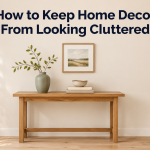
You love your home, your collections, and the things that make it yours. But somehow, the space feels busy, crowded, or never quite finished. The good news is that a cluttered look rarely means you own too much decor. It usually comes from how items are arranged, grouped, and stored. This guide shows how to keep home decor from looking cluttered while keeping warmth and personality in every room.
- Why decor looks cluttered
- Edit first: keep what you love
- Use the rule of three and odd numbers
- Create breathing room
- Stick to a color palette
- Group items on trays and in zones
- Hidden storage
- Shelves, tables, and walls
- Room-by-room tips
- Daily habits
- Mistakes to avoid
- FAQ
1. Why Decor Looks Cluttered
Clutter is visual noise. It happens when there is too much competing for attention and nothing has room to breathe. Common causes include:
- Too many small items scattered across surfaces
- No clear focal point in the room
- Mixed colors, patterns, and styles with no connecting theme
- Everyday items like mail, chargers, and remotes left in sight
- Furniture that is too big or too numerous for the space
- Open shelving without any structure
2. Edit First: Keep What You Love
Before rearranging, remove. Take everything off one surface and put back only what you love or use. Ask yourself: Does this have meaning? Does it fit the room? Is it in good condition? Items that do not pass can be stored, gifted, donated, or rotated in later.
- Start with one shelf or table, not the whole house.
- Use a box for items you are unsure about. If you do not miss them in a month, let them go.
- Display fewer, larger pieces instead of many tiny ones.
3. Use the Rule of Three and Odd Numbers
Designers often group items in threes or fives because odd numbers look natural and balanced. Try a vase, a small plant, and a candle together, rather than a scattered row of many objects. Vary the height, shape, and texture within the group so it looks intentional.
4. Create Breathing Room
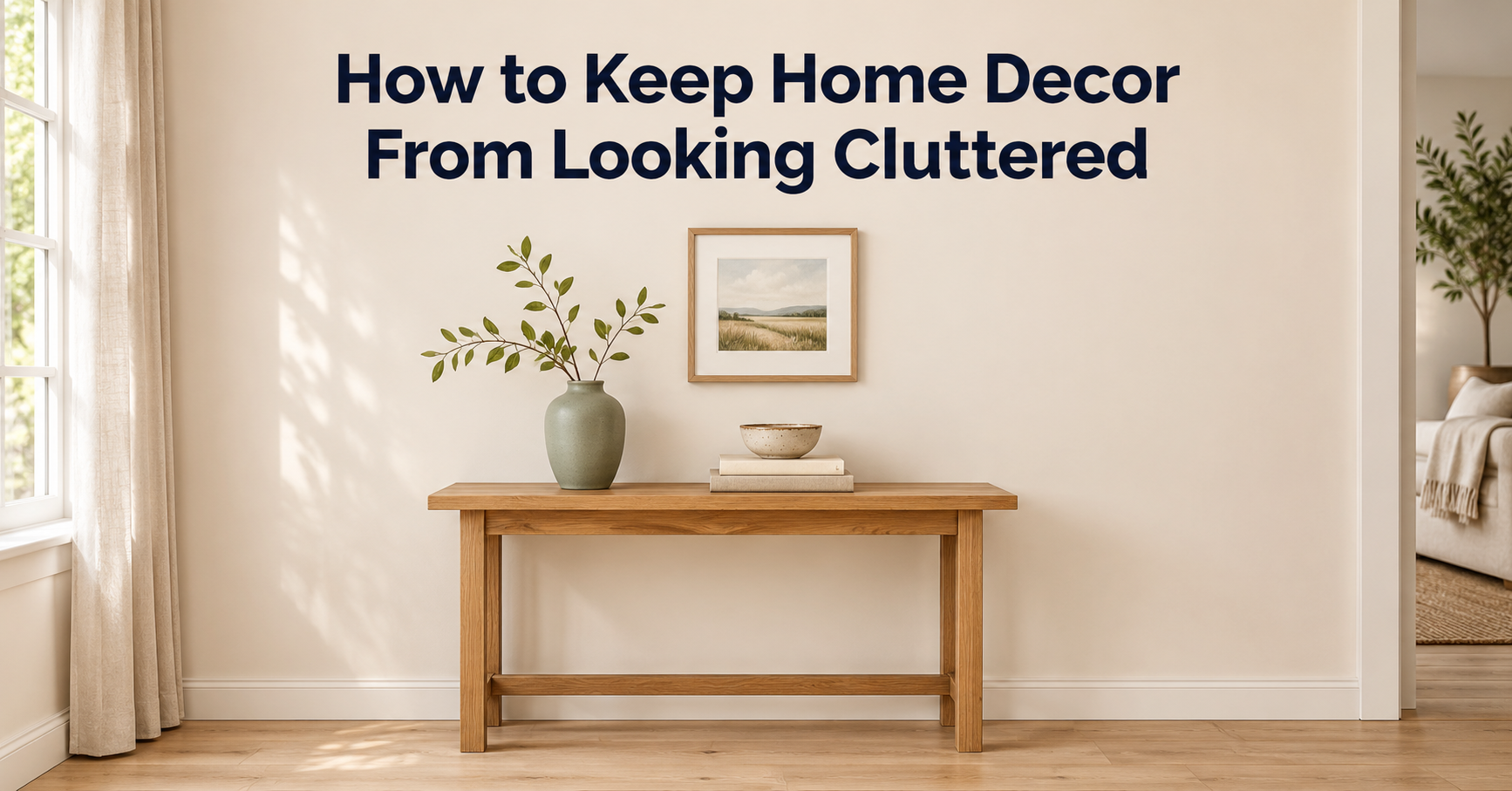
Negative space, the empty area around objects, is what makes a display look styled. Leave roughly a third of a shelf, mantel, or table surface empty. A single bold piece with space around it has more impact than ten items crowded together.
5. Stick to a Color Palette
Too many colors make a room feel busy. Choose a base palette of two or three main colors, plus one or two accents, and repeat them across the room.
| Palette Style | How It Looks | Good For |
|---|---|---|
| Neutral and warm | Whites, creams, wood tones | Calm, timeless rooms |
| Earthy and natural | Greens, clay, linen | Cozy, organic spaces |
| Monochrome | Shades of one color | Modern, minimal rooms |
| Neutral with one bold accent | Mostly calm with a pop of color | Adding personality safely |
6. Group Items on Trays and in Zones
- Use trays: A tray on a coffee table or dresser turns loose items into one tidy display.
- Create zones: Give each area one purpose, such as a reading nook or a coffee station.
- Use baskets and bowls: They contain small things like keys, remotes, or toys while looking decorative.
- Keep like with like: Group books, candles, or plants together rather than spreading them around.
7. Hidden Storage
Even a beautifully styled room looks messy if everyday items have nowhere to go. Add closed storage so that most things disappear from view:
- Ottomans, benches, and coffee tables with built-in storage
- Cabinets or sideboards with doors instead of open shelves
- Lidded baskets and boxes for blankets, toys, and papers
- Under-bed storage containers
- Wall hooks and wall-mounted organizers to free up floor and surface space
- Cord covers and charging stations to hide wires
8. Shelves, Tables, and Walls
Shelves
Mix books, decor, and empty space. Stack some books horizontally, lean others vertically, and add one or two objects per section. Avoid filling every inch.
Coffee and side tables
Keep it to a tray, a small plant or flowers, and one or two books. Leave space for drinks and remotes.
Walls
Use fewer, larger frames or a tidy gallery arrangement with consistent spacing and matching frame colors. Avoid scattering small pictures at random heights.
Floors and corners
Keep walkways clear. One large rug looks calmer than many small ones, and furniture should leave enough room to move around.
9. Room-by-Room Tips
| Room | Clutter Trigger | Easy Fix |
|---|---|---|
| Living room | Crowded coffee table and open shelves | Use a tray, closed storage, and a single focal point |
| Kitchen | Crowded countertops | Keep only daily items out, store the rest in cabinets |
| Bedroom | Piles on nightstands and dressers | Limit to a lamp, a book, and one decor item |
| Entryway | Shoes, mail, and bags | Add hooks, a shoe rack, and a small catch-all bowl |
| Bathroom | Products on every surface | Use trays, drawer organizers, and a single decorative item |
| Home office | Papers and cables | Use a desk organizer, file box, and cord management |
10. Daily Habits That Keep It Calm
- Follow the one-in, one-out rule: when something new comes in, something old goes.
- Take two minutes each evening to reset surfaces.
- Rotate seasonal decor instead of displaying everything at once.
- Give every item a home so it is easy to put away.
- Do a quick monthly edit of shelves, tables, and counters.
11. Mistakes to Avoid
- Buying decor to fill every empty spot
- Using too many small items and not enough larger ones
- Mixing too many colors, patterns, or finishes
- Keeping broken or unloved items out of guilt
- Ignoring storage and relying only on open shelves
- Pushing all furniture against the walls without a plan
Bottom Line
Keeping decor from looking cluttered is about editing, grouping, and giving things room. Choose a simple palette, display fewer and more meaningful pieces, add hidden storage, and tidy a little each day. Your home can still feel personal and warm, just calmer and more intentional.
Frequently Asked Questions
How much decor is too much?
If surfaces feel crowded, items hide each other, or you cannot dust easily, it is likely too much. Aim to leave visible empty space on most surfaces.
Can I keep sentimental items without clutter?
Yes. Display your favorites together in one meaningful spot, and store the rest in a labeled box to rotate in.
Is minimalism the only way to avoid clutter?
No. Cozy and eclectic styles can look tidy when items are grouped, colors are repeated, and surfaces have breathing room.
How do I style open shelves without them looking messy?
Mix books and objects, leave some empty space, group items in threes, and keep to a consistent color palette.
How often should I rearrange decor?
Refresh seasonally or whenever a space feels off. Small changes, like swapping a tray or a vase, can make a big difference.