



Why Floating Shelves Sag (and How to Fix Them)
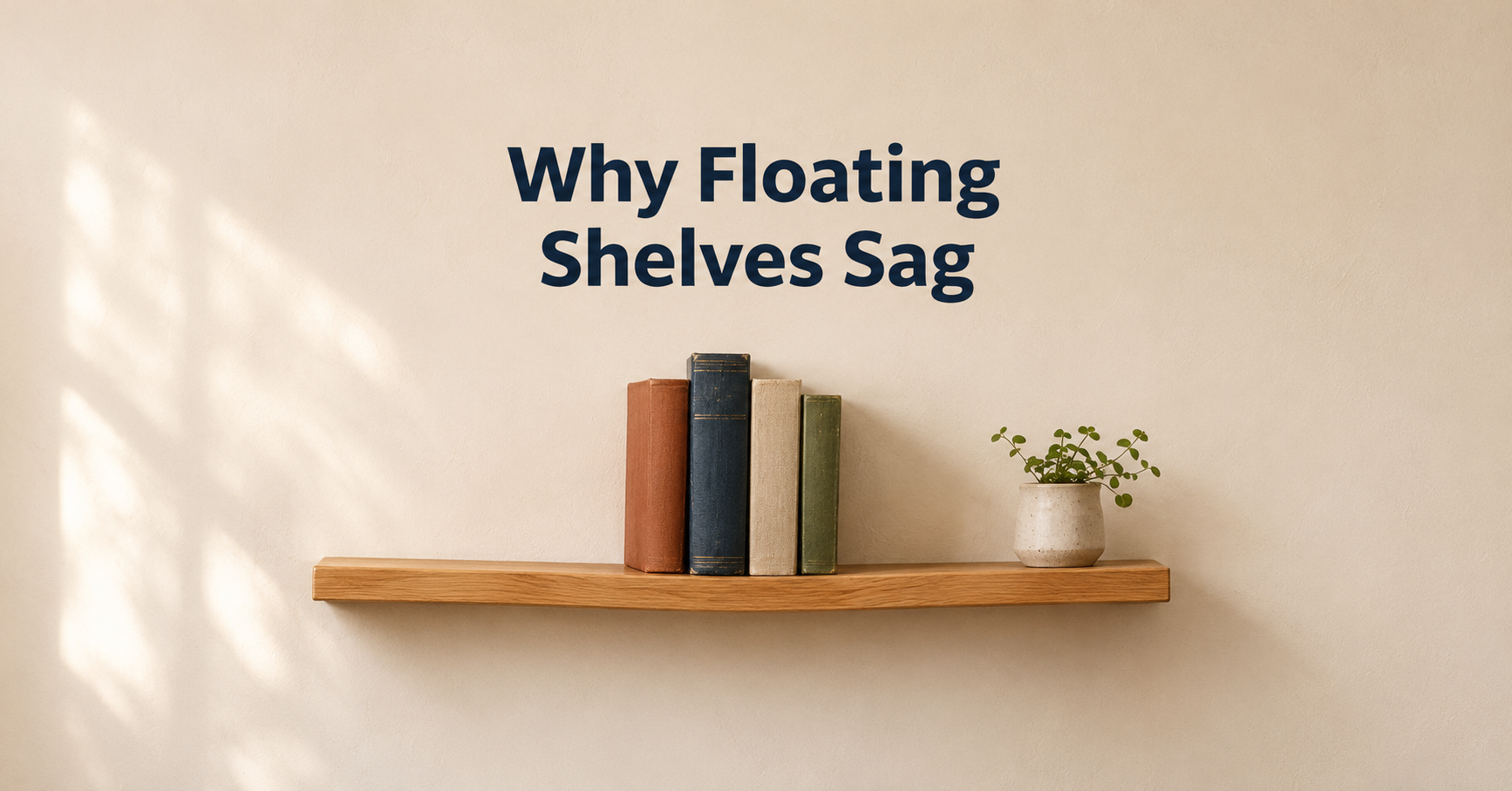
Floating shelves look clean, modern and simple. There are no visible brackets, so books, plants and decor appear to rest on thin air. But that clean look hides a hard truth: every floating shelf is working against gravity. Over time, many of them start to droop at the front, tilt downward or pull away from the wall.
If your floating shelf is sagging, do not panic. In most cases the cause is easy to find, and the fix is straightforward. In this guide you will learn how floating shelves actually work, the seven most common reasons they sag, how to fix a shelf that is already bending and how to install new ones so they stay level for years.
Table of Contents
- How a floating shelf really works
- The 7 most common reasons floating shelves sag
- Wall type and fixings
- Shelf length, thickness and load
- How to diagnose your sagging shelf
- How to fix a sagging floating shelf
- How to install a floating shelf that will not sag
- Choosing materials and brackets
- What to put on a floating shelf (and what to avoid)
- Troubleshooting flowchart
- Frequently asked questions
- Final thoughts
1. How a Floating Shelf Really Works
A floating shelf is not actually floating. Behind the smooth surface is a hidden support, usually a metal bracket with steel rods or a wooden cleat that slides into the shelf. The support is fixed to the wall, and the shelf slides over it like a glove on a hand.
This design creates leverage. The farther the shelf sticks out from the wall, and the heavier the load at the front, the more force pulls the top screws away from the wall and pushes the bottom of the support into it. If any part of the system is weak, the shelf will start to drop at the front.
2. The 7 Most Common Reasons Floating Shelves Sag
1. Not fixed into a wall stud
This is the biggest cause. Drywall alone is soft and cannot support the pulling force from a loaded shelf. When the bracket is attached only to drywall with small plastic anchors, it slowly tears out and the shelf tilts down.
2. Weak wall anchors or short screws
Even when you use anchors, they must match the wall and the load. Small, cheap anchors or screws that do not go deep enough give way over time. The shelf may feel solid when you install it but loosen after a few weeks.
3. Bracket or rod too short or thin
The hidden support should reach most of the way into the shelf. Short, thin or bendy rods act like diving boards. They flex under weight and let the shelf droop. A rod that does not fill the hole properly also lets the shelf wobble and slowly rotate downward.
4. Shelf too long without extra support
A long shelf with only two brackets has a large unsupported span. The middle and ends bend under the load. Long shelves need more fixing points, not just wider spacing.
5. Too much weight
Books, heavy ceramics, plants with wet soil and kitchen appliances add up very quickly. A shelf that seems fine with decor can sag in weeks once it is filled with a full row of books.
6. Thin, soft or hollow shelf board
Hollow-core shelves, thin MDF or soft pine bend more easily than thick hardwood or plywood. If the board is not strong enough, it bows even when the bracket is perfect.
7. Warping and age
Wood moves with humidity. In damp bathrooms and kitchens, or in rooms with strong temperature changes, boards can warp and loosen from the bracket. Over time, the holes in the shelf can wear and let the shelf rotate.
3. Wall Type and Fixings
Your wall decides how strong a shelf can be. Always check what is behind the paint before you pick screws and anchors.
- Drywall with studs: the best choice. Use a stud finder, mark the studs and drive long screws directly into the wood. Most studs are about 16 inches (40 cm) apart, but spacing varies, so always check.
- Hollow drywall with no stud: use heavy-duty toggle or strap anchors rated well above your load. Keep the shelf light and short.
- Brick or concrete: use a hammer drill, a masonry bit and proper masonry anchors or sleeve anchors.
- Plaster and lath: older walls can be brittle. Find the studs, drill pilot holes slowly and avoid hammering.
4. Shelf Length, Thickness and Load
Three details strongly affect sagging: how long the shelf is, how thick it is and how much weight it carries.
- Depth: the deeper the shelf, the more leverage the load has. A deep shelf needs longer rods and stronger fixing.
- Length: long shelves should be fixed to several studs, or use extra brackets or hidden supports.
- Thickness: thicker boards resist bending far better. Even a small increase in thickness makes a big difference in stiffness.
- Material: solid hardwood or good plywood beats thin MDF or hollow boards.
5. How to Diagnose Your Sagging Shelf
- Remove everything from the shelf so it is unloaded.
- Check the level. Place a spirit level on top. Is it level, or does it tilt down at the front?
- Look at the gap between the shelf and the wall. A gap at the top means the bracket is pulling away.
- Push gently up and down at the front edge. Movement means the bracket is loose in the wall or the shelf is loose on the rods.
- Look at the board. Is it bowed in the middle? Then the board itself is too weak or has warped.
- Inspect the holes. If holes in the wall are enlarged or crumbling, the anchors have failed.
6. How to Fix a Sagging Floating Shelf
Fix 1: Re-anchor into studs
Take the shelf off the wall. Use a stud finder to locate the studs and move the bracket so at least two screws go straight into the wood. Use longer, high-quality screws that go deep into the stud. If the old holes are damaged, fill them or position the bracket slightly to the side.
Fix 2: Upgrade the wall anchors
If you cannot reach a stud, replace small plastic anchors with heavy-duty toggle anchors, strap anchors or metal wall anchors. Choose anchors rated well above the shelf load, and keep the load lighter.
Fix 3: Replace the bracket
Choose a thicker, longer bracket with several rods. The rods should fit snugly in the shelf holes and reach most of the shelf depth. A bracket with a metal plate and multiple rods is far stronger than a single short pin.
Fix 4: Tighten or glue the shelf to the bracket
If the shelf rotates or wobbles on the rods, fill the gap with a wood-safe adhesive or follow the bracket’s tightening method, such as set screws under the shelf. This stops the front edge from dropping.
Fix 5: Add a hidden support
For long shelves, add an extra bracket or a hidden support in the middle. A small L-bracket or a hidden wooden cleat can prevent sagging without changing the floating look much.
Fix 6: Reduce the load or shorten the shelf
If the structure is fine but the load is too heavy, move heavy items to a stronger shelf or the floor. Spread items out, and place heavy items close to the wall instead of at the front edge.
Fix 7: Replace a warped or weak board
If the board is bowed, there is little point in re-fixing it. Replace it with a thicker board made of solid wood or good plywood and fit it to the same bracket if the size allows.
7. How to Install a Floating Shelf That Will Not Sag
- Plan the position. Mark the height and use a stud finder to locate studs.
- Choose the right bracket. Pick one rated for more weight than you plan to use.
- Drill pilot holes into studs, matching the screw size.
- Mount the bracket. Use a spirit level and tighten screws securely without overtightening.
- Prepare the shelf. Make sure the holes or cavity fit the rods snugly. Sand rough edges.
- Slide the shelf on and secure it with the bracket’s locking screws or adhesive.
- Test gradually. Add weight in stages and check that the shelf stays level.
8. Choosing Materials and Brackets
Shelf boards
- Solid hardwood (oak, maple, walnut): strong and attractive, but heavier and more costly.
- Plywood: stable and strong, very good value for shelves.
- Solid pine: affordable, but softer, so it may bend if thin.
- MDF and hollow-core boards: light and smooth, but weaker. Best for lighter decor only.
Brackets
- Choose steel brackets with thick, long rods and a solid back plate.
- Check the rated load and the maximum shelf depth.
- Look for brackets with several screw holes so you can fix into multiple studs.
- Avoid very thin, hollow or bendy brackets for anything heavy.
9. What to Put on a Floating Shelf (and What to Avoid)
Good choices: small plants, light frames, candles, small decor pieces, a short row of paperbacks.
Use with care: hardback books, large ceramics, glass items and anything heavy. Keep them near the wall and spread the weight along the shelf.
Avoid: heavy appliances, large water-filled vases, big stacks of books, and anything that could cause injury if it fell.
Also avoid placing shelves directly over beds, couches or desks if they carry heavy things.
10. Troubleshooting Flowchart
11. Frequently Asked Questions
Why is my floating shelf tilting down at the front?
The most common reasons are weak anchoring in the wall, a bracket that is too short or flexible, or too much weight on the front edge. Check the wall fixing first.
How much weight can a floating shelf hold?
It depends on the bracket, the wall, the screws and the shelf depth. Stud-mounted shelves with strong brackets hold much more than drywall-only ones. Always follow the manufacturer’s rating and stay well under it.
Can I fix a sagging floating shelf without removing it?
Sometimes. If the shelf is just loose on the rods, tightening set screws or adding adhesive may work. If the bracket is loose in the wall, you usually need to remove the shelf and re-anchor.
Do floating shelves need to go into studs?
For anything holding real weight, yes, mounting into studs is the best method. For very light decor, strong anchors can work, but the shelf must stay light.
How can I stop a long floating shelf from bowing in the middle?
Use a thicker, stiffer board, add more fixing points into several studs and consider a hidden support in the middle.
Will humidity make a floating shelf sag?
It can. Humidity can warp wood and loosen fittings. Seal or paint the shelf properly and use water-resistant materials in bathrooms and kitchens.
Should I buy a hollow or solid floating shelf?
Solid wood or plywood is better for heavy items. Hollow shelves are lighter and look neat, but they suit light decor only.
12. Final Thoughts
A sagging floating shelf is annoying, but it is rarely a mystery. In nearly every case the cause is one of a few things: weak wall anchoring, a weak bracket, a shelf that is too long or thin, or too much weight. Find the cause, fix the weak point and match your load to your support.
With studs, a strong bracket, a thick board and sensible loading, a floating shelf can stay straight for many years and keep that clean, modern look you wanted from the start.