





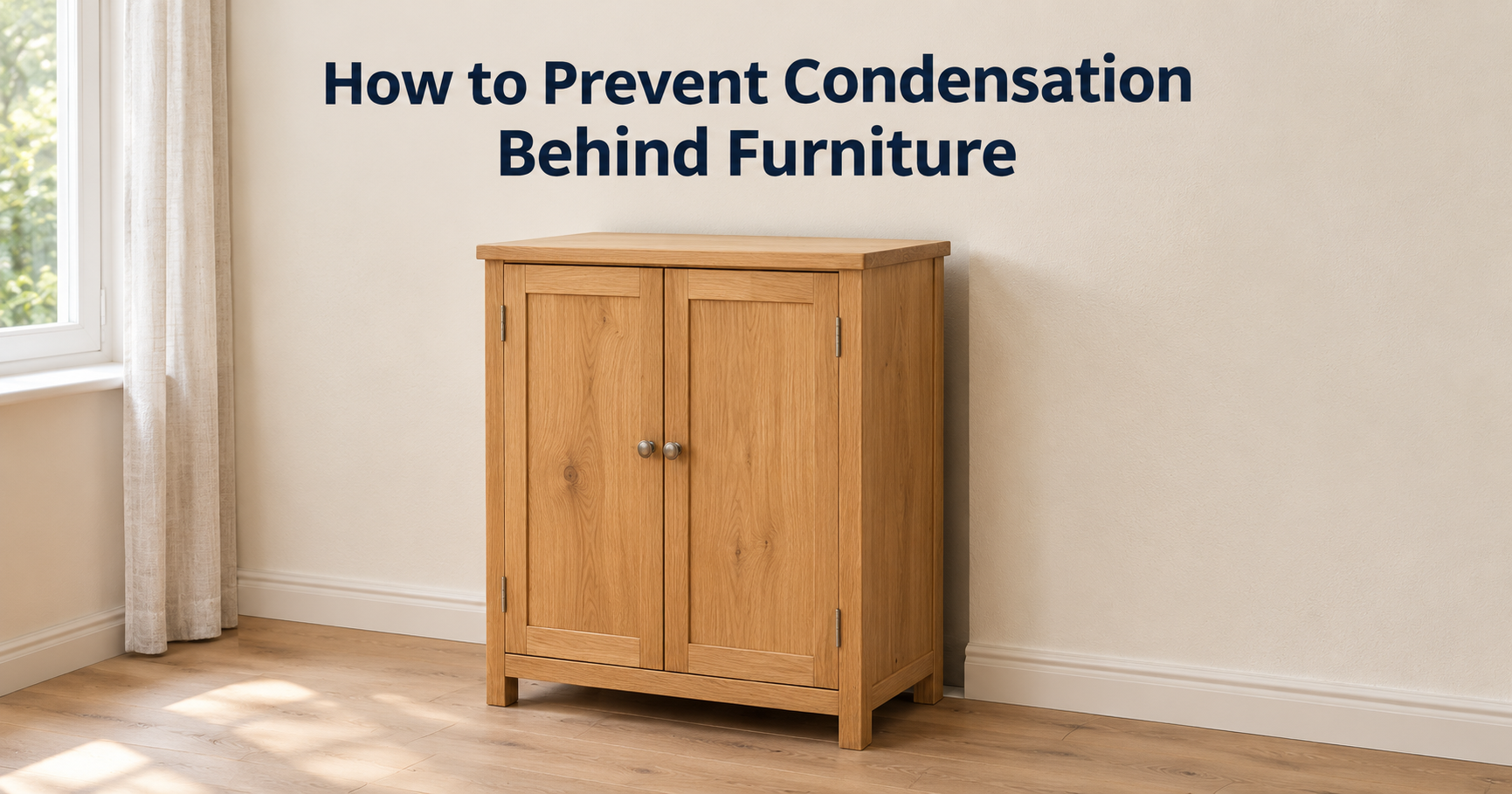

How to Prevent Condensation Behind Furniture
You move a wardrobe or sofa to clean, and you find a cold, damp wall with water beads, dark spots or a musty smell. This is one of the most common hidden problems in homes. Condensation behind furniture often goes unnoticed for months, until mold, peeling paint or damaged wood make it impossible to ignore.
The good news is that it is easy to prevent. In this guide you will learn why condensation forms behind furniture, how to spot the early warning signs, and the practical steps that keep your walls and belongings dry all year round.
Table of Contents
- What is condensation and why it forms behind furniture
- Warning signs to look for
- Why it matters: the risks
- Best ways to prevent condensation
- Room-by-room tips
- How to clean existing damp and mold
- Troubleshooting flowchart
- Frequently asked questions
- Final thoughts
1. What Is Condensation and Why Does It Form Behind Furniture?
Air always holds some water vapor. Warm air can hold much more than cold air. When warm, moist air touches a cold surface, it cools down quickly and can no longer hold all of its moisture. The extra moisture turns into tiny water droplets. This is condensation, the same thing you see on a cold glass of water on a hot day.
Furniture makes this worse. When a wardrobe, bed, sofa or bookcase sits tight against an outside wall, it blocks the warm room air from reaching the wall. The wall behind it becomes even colder, and the small amount of trapped air has nowhere to go. Moisture settles and stays, because there is no airflow to dry it out.
2. Warning Signs of Condensation Behind Furniture
Catch the problem early by watching for these signs:
- Musty or damp smell in the room, especially near large furniture.
- Black, green or gray spots on the wall, often in corners.
- Peeling paint or bubbling wallpaper.
- Cold, clammy feel when you touch the wall.
- Water beads or damp patches on the wall or the back of the furniture.
- Warped, stained or moldy furniture backs, especially in wooden pieces.
- Streaming windows in the same room, which show humidity is too high.
3. Why It Matters: The Risks
- Mold growth: mold can start within 24 to 48 hours of constant damp and may affect air quality.
- Damaged furniture: wood swells, glue weakens and fabric develops stains.
- Wall damage: plaster crumbles, paint peels and repair costs add up.
- Health concerns: mold spores can trigger coughing, sneezing and breathing discomfort in sensitive people.
- Higher energy bills: damp walls feel colder and make a room harder to heat.
4. Best Ways to Prevent Condensation Behind Furniture
Leave a gap between furniture and the wall
This is the simplest and most effective fix. Pull large furniture 5 to 10 cm (2 to 4 inches) away from outside walls. This lets room air flow behind it and keeps the wall surface warmer and drier. If space is tight, tilt the furniture slightly or place small spacers or felt pads on the wall side to keep a steady gap.
Control indoor humidity
The ideal indoor relative humidity is between 40% and 60%. Use a small digital hygrometer (a humidity meter) to check it. A good meter costs little and shows you a real number instead of guessing.
- Run a dehumidifier in rooms that stay above 60%.
- Use moisture absorbers in closets and small spaces.
- Keep house plants in moderation in bedrooms, since they release moisture.
Ventilate every day
Open windows for 10 to 15 minutes each morning to swap damp indoor air for fresh air. Use extractor fans or open a window when you cook, shower or run the dishwasher. Keep interior doors open when possible so air can move through the whole home.
Dry laundry outdoors or in a ventilated space
Drying clothes indoors can release liters of water into the air. If you must dry laundry inside, do it in a room with a window open or a dehumidifier running, and keep the door closed to avoid spreading moisture to other rooms.
Keep the room at a steady, gentle temperature
Cold walls are the main trigger. Avoid letting rooms drop sharply in temperature, especially at night. Low, steady heating is better than short bursts of high heat. Warm walls are far less likely to attract condensation.
Insulate cold walls
If a particular wall is always cold, the cause may be poor insulation. Options include insulating wall paint, thermal wall boards, or professional wall insulation. Even a thin layer can raise the surface temperature enough to reduce condensation.
Choose the right furniture and placement
- Pick furniture with raised legs so air passes underneath.
- Avoid putting wardrobes and beds on outside walls when you can place them on interior walls.
- Do not overfill wardrobes. Packed clothes block airflow and trap moisture.
- Leave open space on top of tall furniture too.
Fix leaks and moisture sources
Sometimes the dampness is not condensation but a leak from a pipe, roof, gutter or window seal. Check the outside wall for cracks and make sure gutters drain away from the house. Repair leaks quickly so the wall can dry.
5. Room-by-Room Tips
Bedroom
People breathe out moisture all night, so bedrooms often get condensation. Keep the bed head away from outside walls, crack a window slightly while sleeping when weather allows, and air the room every morning.
Living room
Leave a gap behind sofas and shelves on cold walls. Use a hygrometer on a shelf to monitor humidity and open windows after having guests.
Kitchen
Always use the extractor fan while cooking. Keep lids on pots and wipe wet surfaces. Move cabinets slightly forward from cold walls if possible.
Bathroom
Run the fan during showers and for 20 minutes afterward. Wipe down walls and keep towels and storage furniture away from the wall.
Closets and wardrobes
Leave the doors slightly open from time to time, use moisture absorbers, and never push the back of the wardrobe tight against the wall.
6. How to Clean Existing Damp and Mold
If you already found damp or mold, act quickly but safely:
- Move the furniture away and let the wall and furniture air out.
- Wear gloves and a mask to avoid breathing in spores.
- Wipe small areas of surface mold with a cloth and a mild detergent solution or a mold-removing cleaner made for walls.
- Dry the area completely with a clean cloth and good airflow or a fan.
- Treat the cause (humidity, cold wall or leak) so it does not return.
- Do not mix cleaning chemicals, and keep the room ventilated while working.
7. Troubleshooting Flowchart
Follow this simple path when you notice dampness behind a piece of furniture.
8. Frequently Asked Questions
How far should furniture be from the wall to prevent condensation?
A gap of 5 to 10 cm (2 to 4 inches) is usually enough to let air circulate. On very cold outside walls, aim for the larger end of that range.
Why is there condensation only behind my furniture?
Furniture blocks warm room air from reaching the wall, so that area is colder, and trapped moisture cannot dry out. The rest of the wall stays warmer and gets more airflow.
Can a dehumidifier stop condensation?
It helps a lot by lowering indoor humidity, but it works best together with ventilation, a gap behind furniture and steady heating.
What humidity level should I aim for?
Aim for 40% to 60%. Condensation and mold risk rise quickly above 60%.
Is condensation behind furniture dangerous?
The water itself is not dangerous, but constant damp leads to mold, which can affect air quality and damage your home and belongings. Treat it early.
Does it happen in summer too?
Yes, though it is more common in cold weather. In humid climates or air-conditioned rooms, cold surfaces can also gather moisture in summer.
9. Final Thoughts
Condensation behind furniture is a quiet problem, but it is also one of the easiest to prevent. Leave a small gap, keep humidity under control, ventilate daily and keep your walls warm. A little attention each week saves you from mold, repairs and ruined furniture.
Check behind your largest pieces of furniture every month or two, especially during cold or rainy seasons. Early action keeps your home fresh, healthy and dry.