






Wool rugs are beautiful, durable, and naturally resistant to dirt, but they are not maintenance-free. Spills, pet accidents, muddy shoes, and everyday dust build up in the fibers, and the wrong cleaning method can cause shrinking, color bleeding, or a rough, matted texture.
The good news is that you can clean most wool area rugs at home with gentle products and a little patience. This complete guide explains how to clean a wool area rug at home, from routine care to deep cleaning, stain removal, drying, and prevention.
Quick Answer: How Do You Clean a Wool Rug at Home?
Vacuum both sides without a beater bar, test a hidden spot, then clean with cool water and a mild, wool-safe detergent. Blot instead of rubbing, rinse with cool water, press out moisture with towels, and dry the rug flat with good airflow. Avoid hot water, bleach, harsh scrubbing, and long soaking.
Why Wool Needs Special Care
Wool is a natural protein fiber. It has a protective outer layer that helps repel dirt and liquid, which is why it is easier to clean than many people expect. However, wool reacts poorly to certain conditions:
- Heat: hot water can shrink or felt the fibers.
- Alkaline cleaners: harsh detergents and bleach can damage the fibers and strip color.
- Friction: aggressive scrubbing roughens the surface and distorts the pile.
- Excess moisture: long wet periods can cause odor, mildew, and dye transfer.
Before You Begin: Check the Care Label and Rug Type
Look for a care tag on the back. If it says dry clean only or professional cleaning only, or if the rug is antique, silk-blend, or hand-knotted and valuable, consult a professional cleaner. For most machine-made and tufted wool rugs, home cleaning is safe when done gently.
| Rug Type | Home Cleaning? | Notes |
|---|---|---|
| Machine-made wool | Yes | Spot cleaning and gentle full cleaning are usually safe |
| Hand-tufted wool | Yes, with care | Avoid soaking, because the latex backing can weaken |
| Hand-knotted wool | Spot clean only | Full washing is best left to a professional |
| Wool and silk blend | Spot test only | Silk is very sensitive to moisture and rubbing |
| Shag / high-pile wool | Yes, gentle | Needs longer drying and careful brushing |
| Antique / vintage | Professional | Dyes and foundation may be fragile |
What You Need
- A vacuum with suction only (no beater bar) or a carpet sweeper
- A mild, pH-neutral, wool-safe detergent
- Clean white towels or microfiber cloths
- A soft-bristle brush or sponge
- Baking soda for odor control
- Cool or lukewarm water and a spray bottle
- A fan or dehumidifier to speed drying
The 5-Step Process to Deep Clean a Wool Rug
Step 1: Remove Loose Dirt
Take the rug outside if possible and shake it out. Then vacuum both sides thoroughly with suction only. Dry dirt acts like sandpaper on fibers, so removing it first makes cleaning safer and more effective. Vacuum in the direction of the pile.
Step 2: Do a Colorfastness Test
Mix a small amount of detergent with cool water. Dab a hidden corner with a white cloth, wait a minute or two, and check for color transfer. If any dye appears on the cloth, stop and consult a professional.
Step 3: Clean With a Gentle Solution
Mix about a teaspoon of wool-safe detergent into a quart of cool water. Work in small sections, dampen a sponge or cloth with the solution, and gently blot or lightly press the surface. Brush softly in the direction of the pile if needed. Do not saturate the rug.
Use as little liquid as possible. Wool holds moisture, and over-wetting is the most common mistake that leads to odor and dye bleeding.
Step 4: Rinse Thoroughly
Detergent left behind attracts dirt and leaves the fibers sticky. Use a cloth dampened with clean, cool water to blot the area until no suds remain. Then press a dry towel firmly on the surface to absorb moisture.
Step 5: Dry Flat and With Airflow
Lay the rug flat on a clean, dry surface, ideally raised slightly so air reaches the back. Run a fan or dehumidifier in the room. Flip the rug after several hours and allow it to dry completely, usually 24 to 48 hours. Never place it on a damp floor, and avoid direct, intense sunlight that can fade the colors.
Do’s and Don’ts for Wool Rugs
How to Remove Common Stains From a Wool Rug
Always act quickly, blot from the outside in, and test any solution on a hidden spot first.
| Stain | What to Do |
|---|---|
| Red wine / juice | Blot excess, dab with cool water and a drop of wool-safe detergent, then blot dry. Avoid rubbing. |
| Coffee / tea | Blot, then sponge with cool water and mild detergent solution. Rinse and blot dry. |
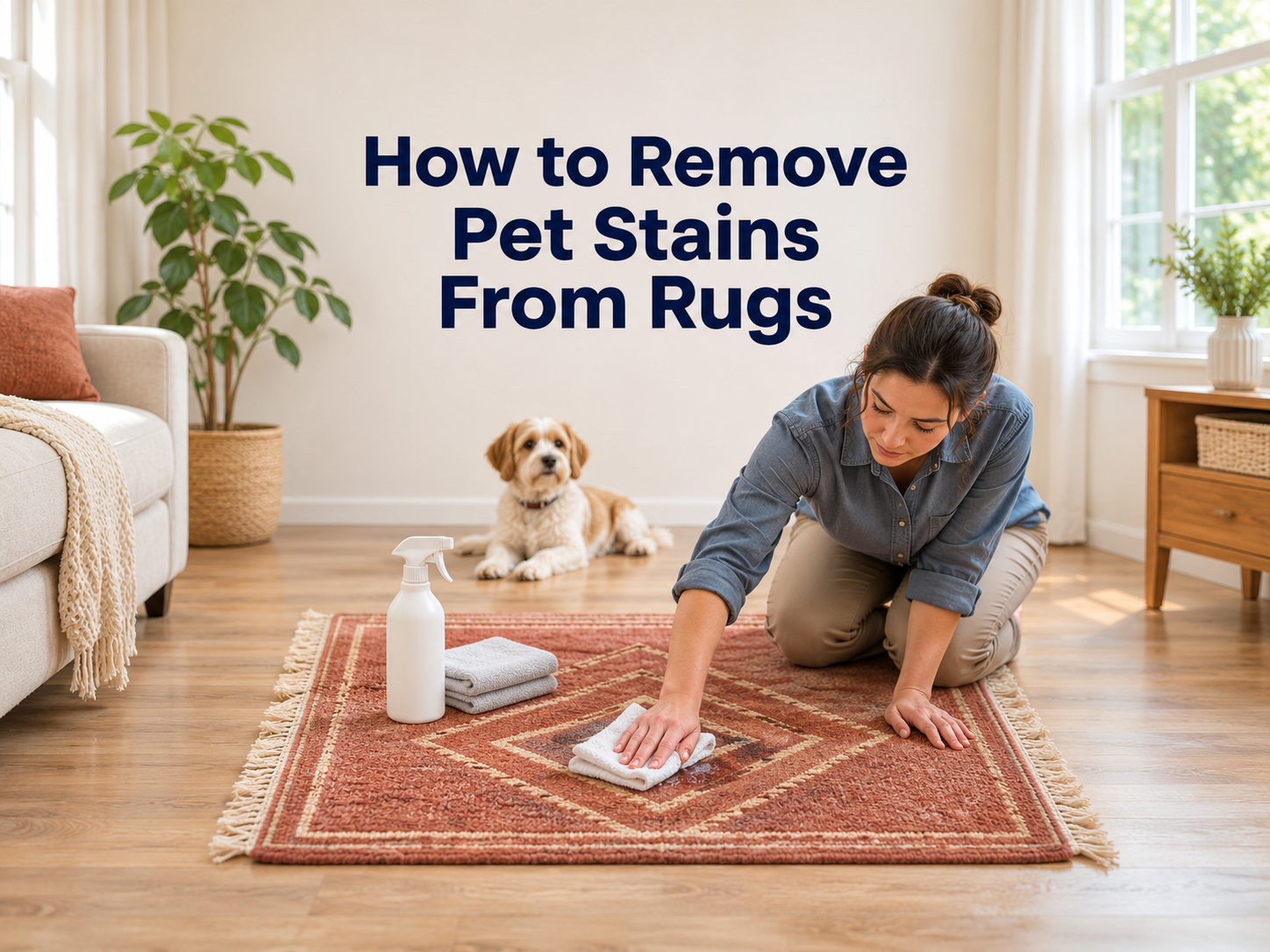
| Pet urine | Blot well, rinse with cool water, then use a wool-safe enzyme cleaner. Dry completely to avoid odor. |
| Mud / dirt | Let it dry fully, then vacuum or brush the dried soil away before treating any leftover mark. |
| Grease / oil | Sprinkle cornstarch or baking soda, let it sit for several hours, then vacuum. Treat any residue lightly. |
| Food spills | Scoop solids with a spoon, blot the area, then clean with mild detergent solution. |
| Ink / marker | Test and dab gently with a cloth dampened with rubbing alcohol. If it spreads, stop and call a professional. |
| Candle wax | Harden with an ice pack, break off the wax, and vacuum the pieces. Consult a professional for any remaining stain. |
How to Deodorize a Wool Rug Naturally
Sprinkle a thin layer of baking soda over the dry rug, let it sit for several hours or overnight, and vacuum it up. For persistent odors, repeat the process or use a wool-safe deodorizing product. Airing the rug outdoors in the shade also helps.
How Often Should You Clean a Wool Rug?
| Task | Frequency |
|---|---|
| Vacuum (suction only) | Once or twice a week; more in high-traffic areas |
| Spot clean spills | Immediately |
| Rotate the rug | Every 3 to 6 months |
| Deep clean | Every 12 to 18 months, or as needed |
| Professional cleaning | Every 2 to 3 years for valuable rugs |
Common Mistakes to Avoid
- Using hot water: it can shrink and felt wool fibers.
- Using bleach or strong detergents: they can discolor and weaken the fibers.
- Scrubbing hard: it damages the pile and spreads the stain.
- Over-wetting: trapped moisture leads to mildew and odor.
- Using a beater bar: it pulls and fuzzes the fibers.
- Skipping the spot test: dyes can bleed even on high-quality rugs.
- Drying in direct sun or with a hair dryer: heat can cause shrinking and fading.
Wool Rug Shedding: Is It Normal?
Yes. New wool rugs shed loose fibers for the first few months. This is not a sign of poor quality. Regular gentle vacuuming reduces shedding over time. Do not pull loose threads or snip tufts that stick out; trim them level with scissors if needed.
How to Keep a Wool Rug Clean Longer
- Place a rug pad under the rug to reduce wear and keep it from shifting.
- Remove shoes at the door, or use an entry mat.
- Rotate the rug regularly so wear and sunlight exposure are even.
- Limit direct sun with curtains or blinds to prevent fading.
- Use furniture coasters or cups under heavy legs to prevent crushing.
- Treat spills right away; fresh spills are far easier to remove.
Helpful Products Worth Considering
- Wool-safe rug shampoo or detergent: pH-neutral and free of bleach or optical brighteners.
- Suction-only vacuum or carpet sweeper: gentle on the pile.
- Enzyme cleaner for pet stains: check that it is labeled safe for wool.
- Soft rug brush: helps lift fibers and work in cleaner safely.
- Non-slip rug pad: protects the backing and prevents shifting.
- Microfiber towels: absorbent and non-linting for blotting.
When to Call a Professional
Choose professional cleaning if the rug is antique or handmade, has strong dye bleeding, covers a large urine stain, shows mold, or if you are unsure about the fiber content. A reputable cleaner will often wash a wool rug more thoroughly and dry it more safely than home methods can.
Frequently Asked Questions
Can you wash a wool rug with water?
Yes, most wool rugs tolerate cool water and mild detergent, as long as you do not soak them and dry them promptly.
Can I use vinegar on a wool rug?
A small amount of diluted white vinegar can help with some stains, but test a hidden spot first and rinse well. Many wool-safe detergents are a gentler first choice.
Can I use a steam cleaner on a wool rug?
It is best avoided. Heat and high moisture can shrink fibers and loosen dyes. Low-moisture or dry cleaning methods are safer.
How long does a wool rug take to dry?
Usually 24 to 48 hours with good airflow. Thick or high-pile rugs may take longer.
How do I get rid of the wet-wool smell?
Ensure the rug dries fully, use a fan or dehumidifier, and sprinkle baking soda afterward. The smell fades as the fibers dry.
Is baking soda safe for wool rugs?
Yes, a dry sprinkle left for a few hours is safe and works well for odors. Vacuum it up thoroughly afterward.
Should I use a beater bar on my wool rug?
No. A rotating brush can pull and fuzz the fibers. Use suction only or a low setting.
Final Thoughts
Cleaning a wool area rug at home does not need harsh chemicals or expensive equipment. Vacuum gently, blot spills fast, use cool water and a wool-safe detergent, and let the rug dry flat with plenty of airflow. With these simple habits, your wool rug will stay soft, colorful, and beautiful for many years.