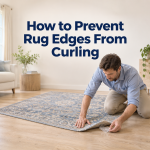

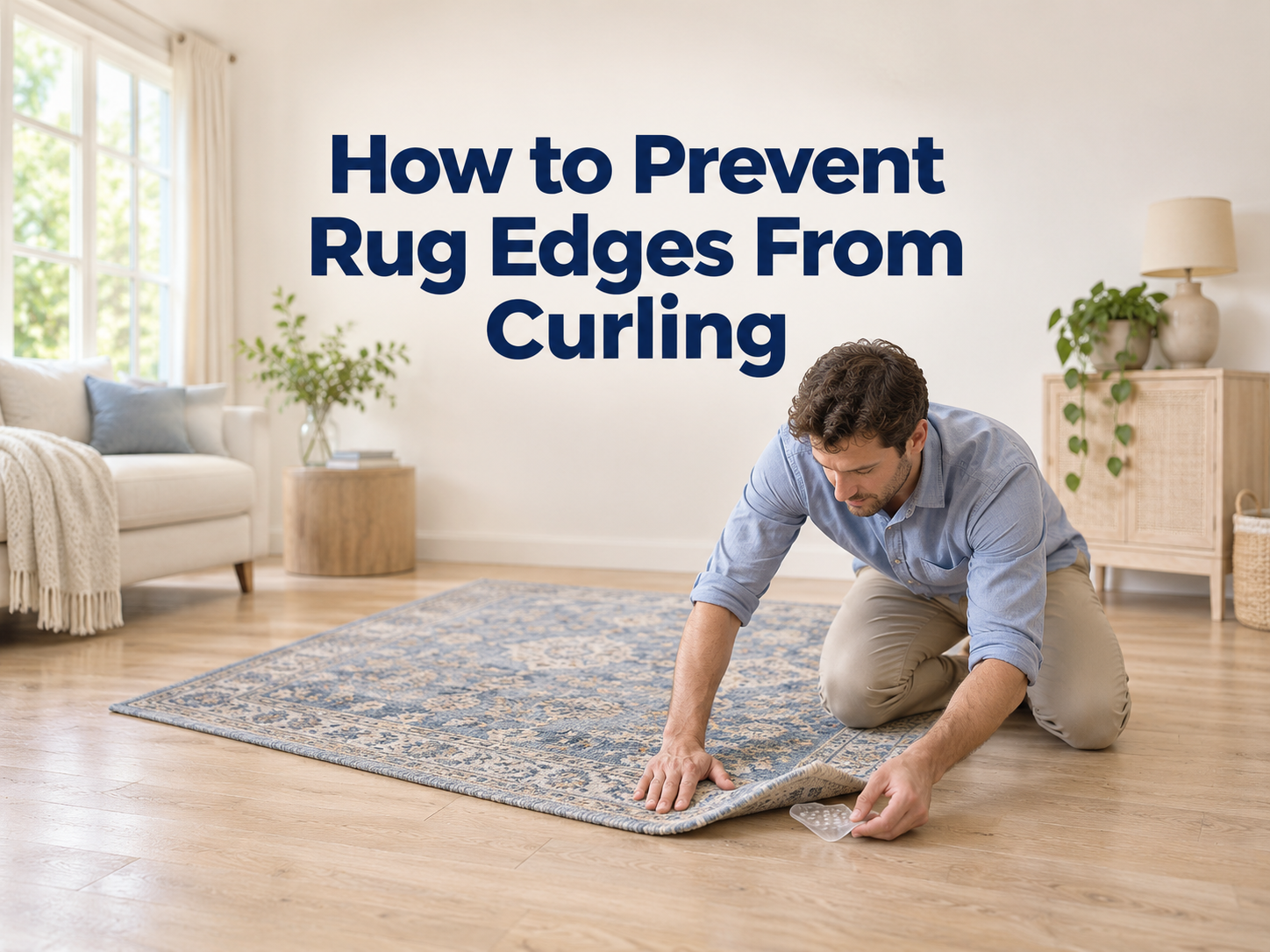

How to Prevent Rug Edges From Curling
A curling rug edge is more than an eyesore. It is a trip hazard, it catches on shoes and vacuum cleaners, and it makes even a beautiful rug look tired. If your corners keep turning up no matter how often you flatten them, the problem usually has a clear cause and a practical fix.
This guide explains why rug edges curl, how to flatten a rug that has already started to curl, and the best long-term ways to keep rug edges down. You will also find advice for different floors and rug types, so you can pick the solution that suits your home.
Rug edges curl because of storage creases, moisture, slipping, thin backing and daily wear. To fix them, reverse roll and weigh down the rug, then secure it with a good rug pad, double-sided rug tape or corner grips. Prevent future curling by storing rugs rolled with the pile facing out and keeping them dry.
Why Do Rug Edges Curl?
Before choosing a fix, it helps to understand what is lifting the edges in the first place. Most curling comes down to a handful of causes.

1. The Rug Was Stored Rolled or Folded
New rugs often arrive tightly rolled, and rugs that have been in storage or folded develop a memory. The fibres and backing remember the shape they were kept in, and the edges try to return to it. This is the most common reason a brand-new rug curls.
2. Humidity and Moisture
Fibres and backings can absorb moisture and expand unevenly. A damp room, a spill that did not dry properly or cleaning with too much water can cause the edges to ripple or curl as the rug dries.
3. No Rug Pad or the Wrong One
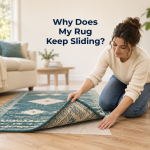
A rug that slides around bunches up at the edges. A pad that is too thin, too small or does not grip the floor can allow the rug to shift, which encourages the edges to lift.
4. Foot Traffic
Walking over the edges, especially in doorways and hallways, constantly pushes and pulls them. Over time, this can lift or distort the edge, particularly on lightweight rugs.
5. Thin or Low-Quality Backing
Lightweight rugs with thin or stiff backing do not have enough weight to stay flat. Some latex backings can dry out and harden with age, losing their flexibility.
6. Vacuums, Pets and Furniture
Vacuum beater bars can catch the edges and flip them up. Pets may dig at corners, and moving furniture can drag rugs out of position and crease the edges.

How to Flatten a Rug That Is Already Curling
If the edges have already started to curl, try these steps before adding any hardware. They work especially well for new rugs and rugs that were stored rolled.

Step 1: Unroll in a Warm Room
Lay the rug flat on a clean floor in a room at normal indoor temperature. Fibres and backing relax more easily when they are not cold. Avoid leaving the rug in direct sunlight for long periods, since this can fade the colours.
Step 2: Reverse Roll
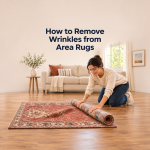
Roll the rug up in the opposite direction to the curl, with the pile facing outward. Leave it rolled for several hours, or overnight, so the fibres get used to the opposite bend.
Step 3: Weigh It Down
Unroll the rug and lay it flat. Place heavy, flat items such as large books or furniture legs on the corners and edges. Use a clean cloth or board between the weights and the rug to protect the fibres. Leave it for 24 to 72 hours. Stubborn rugs may need longer.
Step 4: Check and Repeat
Remove the weights and see how the edges look. If they lift again, repeat the process. Rugs that have been curled for a long time may need several rounds.
Step 5: Secure the Rug
Once flat, add a rug pad, tape or grips (see below) so the edges stay put.
7 Ways to Keep Rug Edges Flat
1. Use a Good Rug Pad
A rug pad is the most effective long-term solution for most rugs. It stops the rug from sliding, adds weight and cushioning and helps the rug sit flat. Choose a pad that suits your floor type and rug. For the best fit, the pad should be about an inch smaller than the rug on every side, so that it stays hidden but still supports the edges.
2. Apply Double-Sided Rug Tape
Rug tape sticks the rug to the floor along the edges and corners. It works well on tile, vinyl and many sealed floors. Check that the tape is suitable for your flooring, because strong adhesives can damage finishes on some hardwood floors. Always follow the product instructions for application and removal.
3. Add Rug Corner Grippers
These small triangular or flat grips are placed under the corners and hold them down. They are useful for small to medium rugs and are easy to remove or replace.
4. Use Non-Slip Grip Strips
Grip strips or gripper tape provide a grippy surface along the underside of the rug, keeping the edges anchored without a full pad. They are a good option for rugs on hard floors.
5. Use Hook-and-Loop Grippers
Some grippers work like hook-and-loop fasteners: one side attaches to the rug and the other to the floor or a carpet. They are especially helpful for rugs placed over carpet.
6. Place Furniture on the Edges
Resting the legs of a sofa, bed or table on the rug’s edges adds weight and helps keep it flat. Make sure the legs sit evenly so the rug is not pulled out of shape.
7. Add Corner Weights or Re-Bind Edges
For persistent curling, a seamstress or rug repair shop can sew small weights into the corners or re-bind the edges. This is a more permanent fix for rugs you want to keep for years.
Which Method Is Best?
| Method | Best for | Things to consider |
|---|---|---|
| Rug pad | Most rugs on hard floors | Choose the right size and floor-safe material |
| Double-sided rug tape | Tile, vinyl and sealed floors | May damage some floor finishes or leave residue |
| Corner grippers | Small to medium rugs | Only holds the corners, not the whole edge |
| Grip strips | Lightweight rugs | May need replacing over time |
| Hook-and-loop grippers | Rugs on carpet | Needs a compatible surface |
| Furniture weight | Larger area rugs | Only works where furniture sits |
| Corner weights or re-binding | Valued rugs with stubborn curling | Needs a professional repair |
Choosing the Right Solution for Your Floor
- Hardwood: Use a pad labelled safe for hardwood. Some rubber and PVC pads can stain or discolour finishes. Be careful with strong adhesives.
- Tile and stone: Most pads and tapes work well. Choose a pad with cushioning for comfort.
- Vinyl and laminate: Some materials can react with rubber or plastic backing. Check the manufacturer’s advice.
- Carpet: Use a rug-to-carpet gripper, or a hook-and-loop product designed for the purpose. Standard pads can sink into the carpet.
Rug Types and Curling
- Flatweave and cotton rugs: Lightweight and prone to curling. A pad or grip strips usually works well.
- Jute and sisal rugs: Can curl with humidity. Keep them dry and use a breathable pad.
- Shag and high-pile rugs: Curling can be harder to see, but pads still help the rug lie evenly.
- Wool rugs: Usually heavier and stay flat once relaxed, but may curl after storage.
- Synthetic rugs: Often lightweight and cheaper, so a pad and tape are the most helpful.
- Runners: Corners and ends catch on feet. Use grippers on every corner and a long pad.
How to Prevent Curling in the Future
- Store rugs correctly: Roll them with the pile facing outward and store flat or standing on end in a dry place. Do not fold them.
- Keep the area dry: Use a dehumidifier in damp rooms and dry any spills quickly.
- Vacuum carefully: Turn off or raise the beater bar near edges, or use an attachment.
- Rotate the rug: Turn it every few months so wear and pressure are evenly spread.
- Buy the right size: A rug that is too small for the space tends to slide and curl.
- Choose quality: Heavier rugs with good backing stay flat more easily.
Frequently Asked Questions
Why do the corners of my new rug curl up?
Most new rugs arrive rolled up, so the edges remember that shape. Reverse rolling the rug and weighing it down for a few days usually helps, and a rug pad keeps it flat afterwards.
How long does it take for a rug to lie flat?
Many rugs relax in a few days, but some take a couple of weeks. Weighing down the edges and reverse rolling can speed it up.
Will a rug pad stop curling?
A good pad helps a great deal, but it may not fix a rug with a very stiff or damaged backing. Combine a pad with weights or grippers for stubborn corners.
Can I use double-sided tape on hardwood floors?
It depends on the tape and the finish. Some adhesives can damage the finish or leave residue. Choose a tape designed for hardwood, test in a hidden spot and follow the instructions.
Can a curled rug be fixed permanently?
Often yes. If the rug is flat after reverse rolling and has a pad or grippers, curling may not return. For rugs with damaged backing, a professional repair is the best long-term solution.
Final Thoughts
Curling rug edges are annoying, but they are rarely permanent. Start by working out why the rug is curling, flatten it with reverse rolling and weights, and then lock it in place with the right pad, tape or grippers for your floor. A few small steps now will keep your rug looking neat, protect it from damage and keep your home safer.
Disclaimer: This article is for general information only. Always follow the care label and manufacturer’s instructions for your rug, pad, tape and flooring, and test on a hidden area first.