
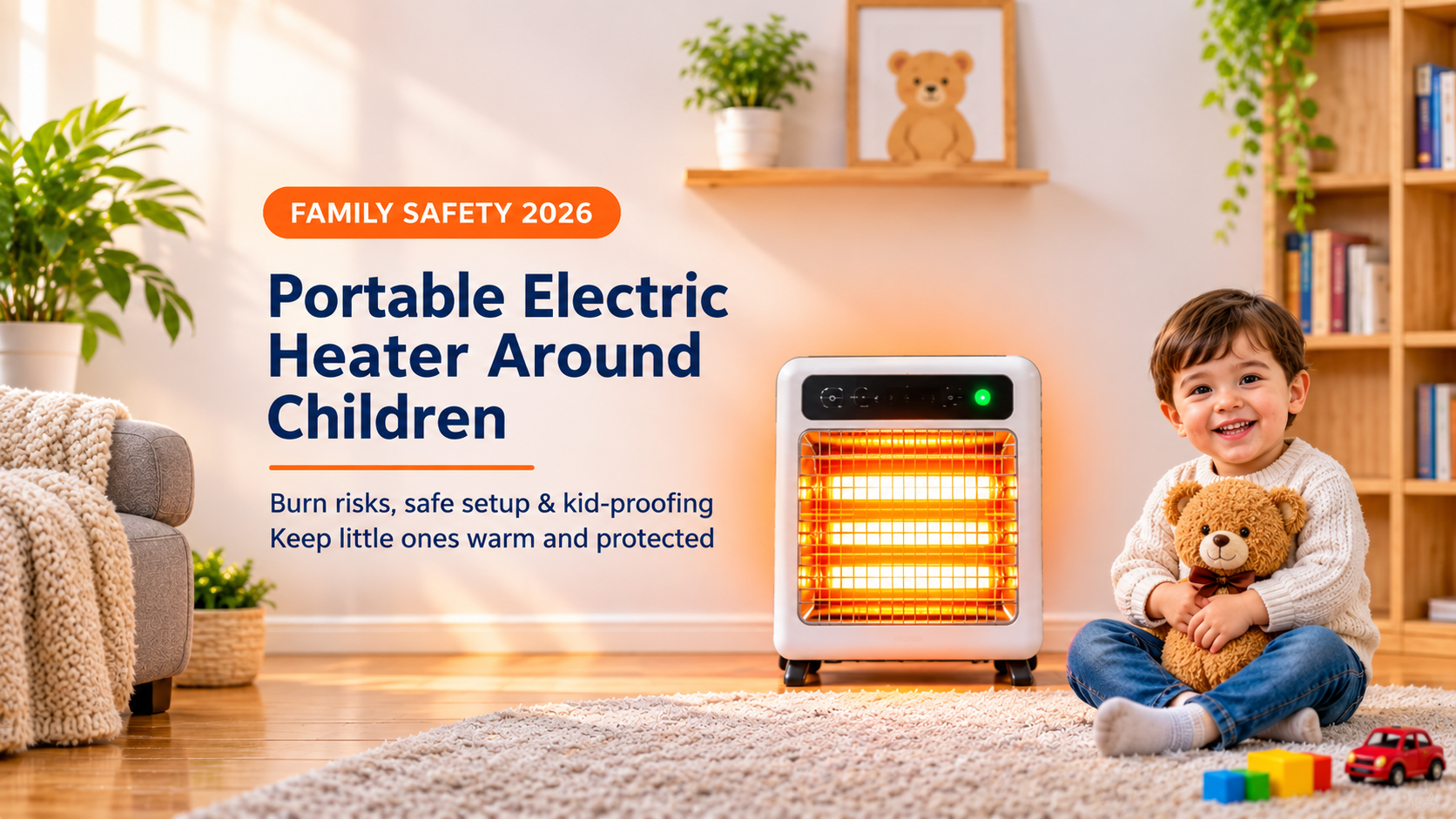
When the temperature drops, keeping kids warm becomes a daily priority. A portable heater is a quick, affordable way to warm a bedroom, playroom or nursery. But children are curious, fast and unaware of danger, which makes using a portable electric heater around children a topic that needs real attention. A hot surface that an adult would avoid can look like a fascinating object to a toddler.
The good news is that you can heat your home safely with children around. In this complete guide you will learn the main risks, which heater features protect kids, how to arrange a room, what to do in different age groups and how to respond if something goes wrong.
Is It Safe to Use a Portable Heater Around Children?
It can be, but only with strict precautions. Safety organisations generally advise that portable heaters should be placed out of children’s reach, kept away from anything flammable and never left running unattended. Many experts also recommend turning heaters off in a child’s room while they sleep. The most important rule is simple: a child should never be able to touch, push over or play with a heater.
Electric heaters do not give off carbon monoxide, which makes them a better choice than fuel-burning heaters in family homes. But they still create real risks, especially for babies, toddlers and young children.
The Main Risks for Children
1. Contact Burns
Children have thinner skin than adults, so they burn faster and more deeply. A hot grille, panel or radiator surface can cause a serious burn in a very short time. Small hands naturally reach out to touch new objects, and toddlers often fall or lean against things when they lose balance.
2. Tip-Over Accidents
A running child can bump into a heater, or a toddler can pull on it. A falling heater can burn the child or ignite nearby fabric. A tip-over switch helps, but it is a backup, not a replacement for good placement.
3. Fire Hazards
Toys, blankets, clothing and curtains are often scattered around kids’ rooms. These can sit too close to a heater and catch fire. Children can also drop or push items onto a heater without realising.
4. Cord Dangers
Cords can be tripped over, pulled, chewed or wrapped around small limbs. A pulled cord can drag a heater down, and a damaged cord can cause electric shock or fire.
5. Overheating in Babies
Babies cannot regulate their body temperature as well as adults. An overheated nursery or too many layers can make a baby uncomfortable and, in the case of sleeping infants, is a concern raised by safe-sleep guidelines. Keep the room at a comfortable, moderate temperature and avoid pointing heat at a cot.
6. Playing With Controls
Buttons, dials and remotes attract little fingers. Children can turn a heater to full power, switch it on without an adult or cover it.
7. Dry Air
Heaters can dry the air, which may irritate noses, throats and skin, especially in children with asthma, eczema or allergies. Ventilation and humidity matter.
Child-Safe Heater Features to Look For
No heater is completely child-proof, but these features add important layers of protection:
- Cool-touch exterior: A lower surface temperature reduces the chance of serious burns.
- Tip-over protection: Cuts power instantly if the heater is knocked over.
- Overheat protection: Shuts the unit off before it gets dangerously hot.
- Child lock or control lock: Prevents little fingers from changing settings.
- Narrow-spaced protective grille: Keeps fingers and small objects away from hot elements.
- Wide, stable base or heavy body: Harder to push or pull over.
- Thermostat: Keeps the room at a steady temperature without constantly running at full power.
- Timer and auto shut-off: Limits how long the heater runs.
- Short, thick cord with a secure plug: Fewer tripping and pulling hazards.
- Recognised safety certification: Look for markings showing proper testing.
Best Heater Types for Homes With Kids
Wall-Mounted or Panel Heaters
Fixed high on a wall, these heaters are out of reach and cannot be tipped over. Many have cool-touch surfaces. When installed according to the maker’s instructions, they are among the safest options for children’s rooms.
Oil-Filled Radiators
They are heavy and stable, with no exposed glowing parts and gentle heat. The surface can still get hot enough to burn, so keep children away or place a barrier around them.
Ceramic Heaters With Safety Features
Many models offer cool-touch bodies, tip-over protection and thermostats. Choose a model with a control lock and keep it in a place children cannot reach.
Infrared Heaters: Use With Care
These radiate strong heat from the front, which can be uncomfortable or unsafe at close range. They suit adult-only areas more than playrooms.
Types to Avoid in Family Homes
- Exposed-element heaters: Very dangerous if touched.
- Small, light, unstable heaters: Easy to knock over.
- Heaters without tip-over or overheat protection.
- Fuel-burning heaters: Open flames and fumes are a serious danger around children.
How to Set Up a Heater Safely Around Children
- Read the manual: Follow every rule on distance, flooring and use.
- Choose a spot out of reach: Place the heater where children cannot touch it, or mount it on the wall.
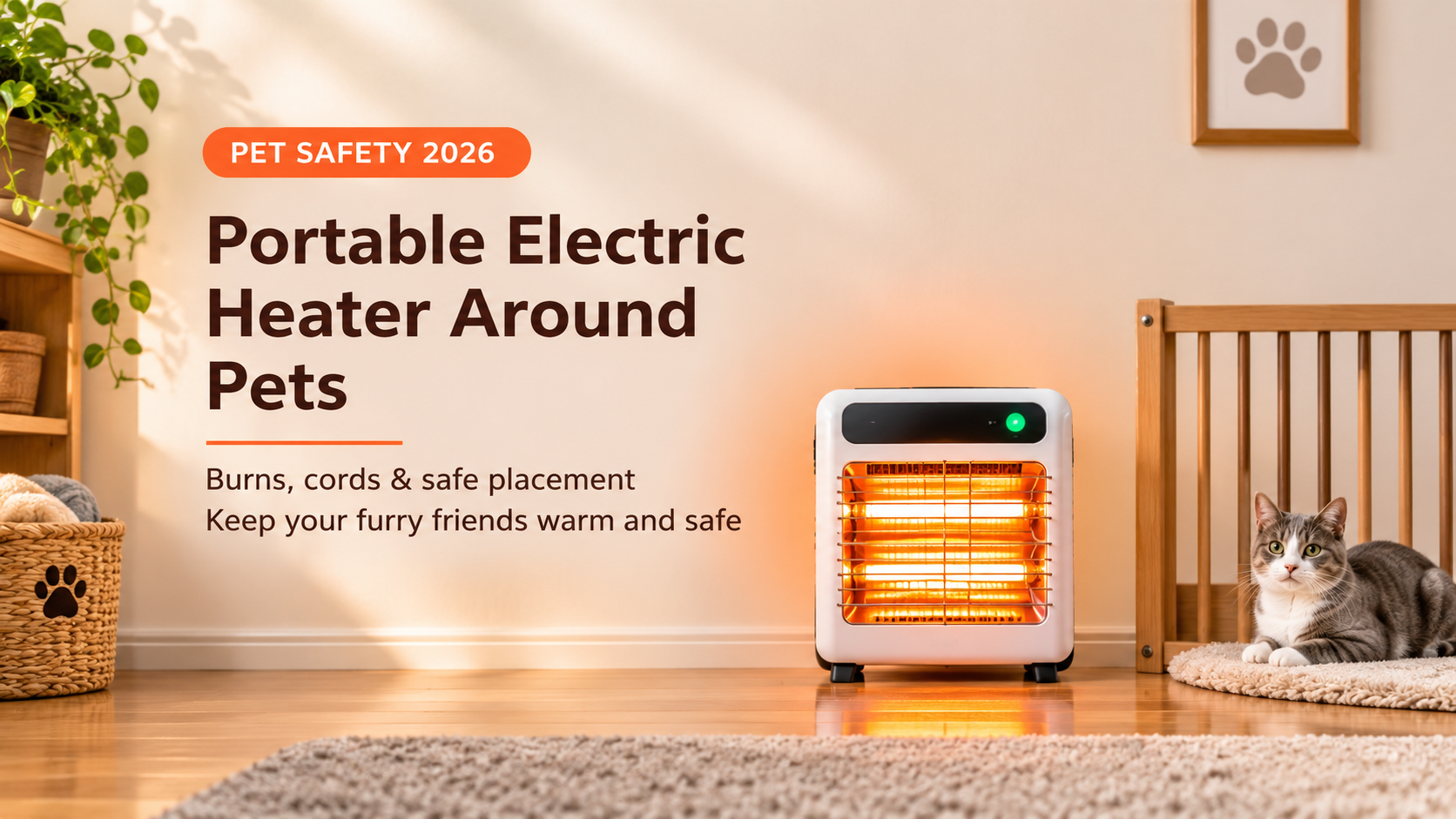
- Create a kid-free zone: Keep a clear area of at least three feet (about one metre) around the heater, and use a sturdy safety gate or guard to enforce it.
- Use a flat, hard, stable floor: Avoid rugs, carpets and uneven surfaces.
- Keep flammables away: Move toys, blankets, curtains, clothes and furniture well clear.
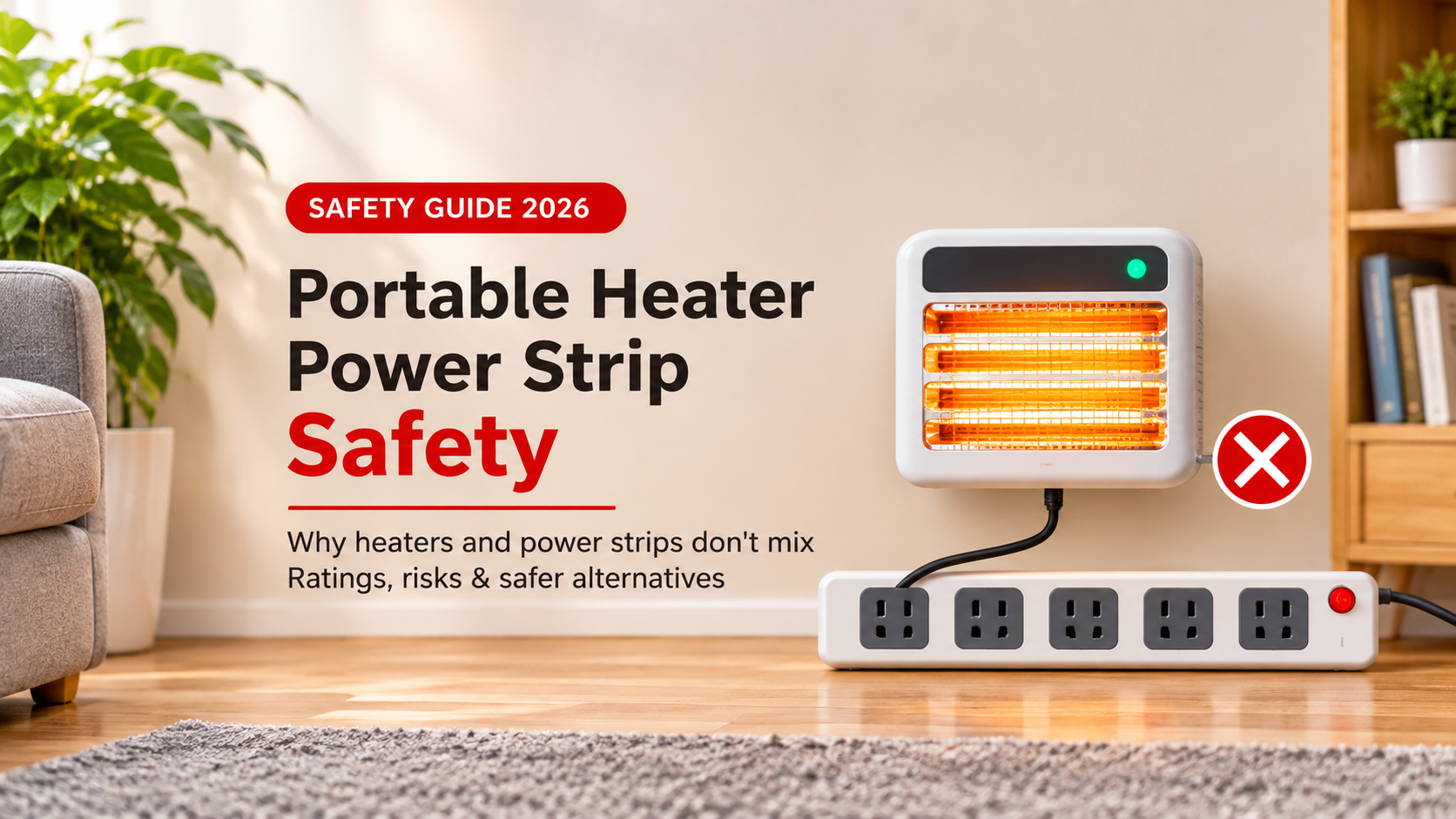
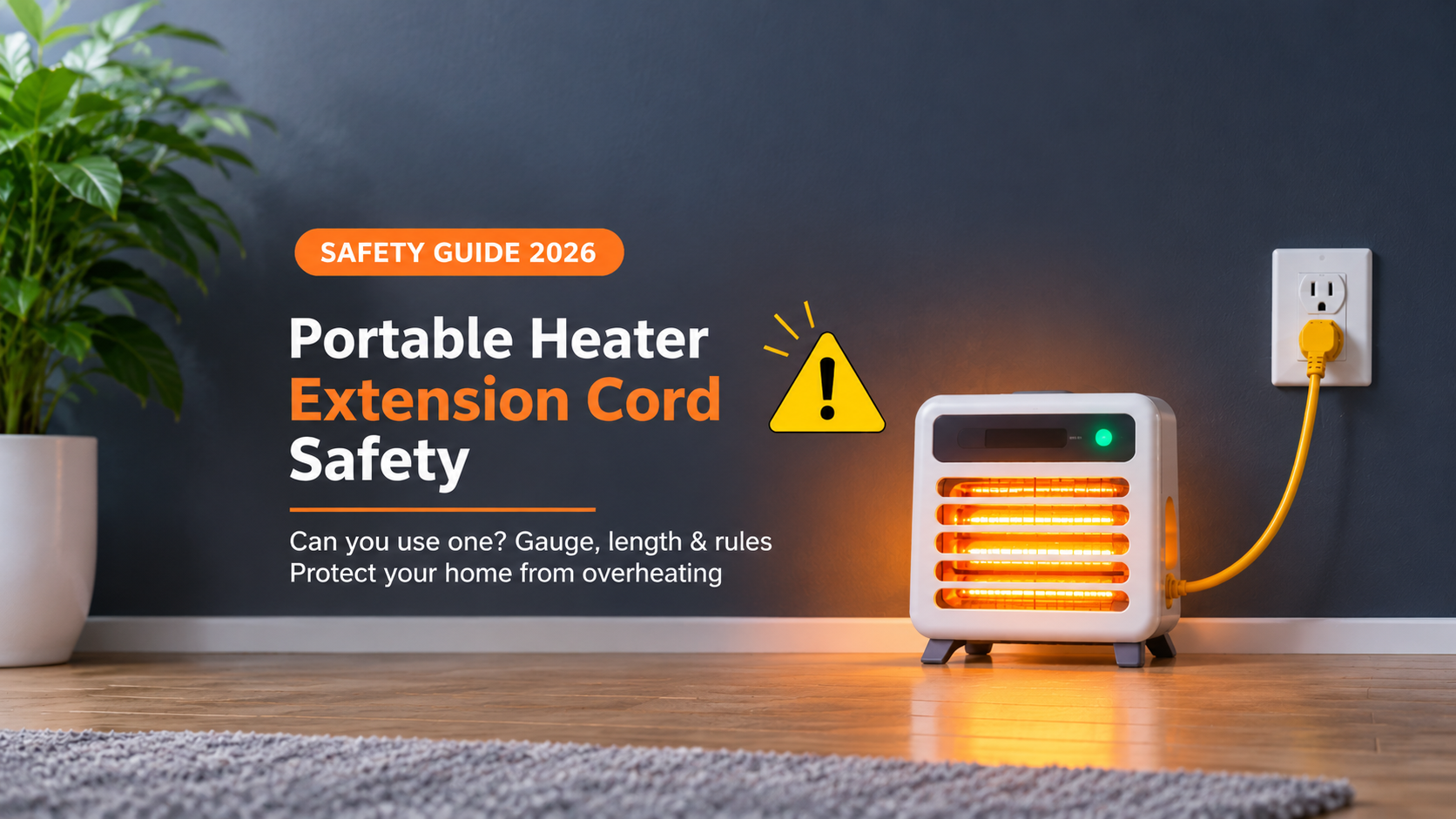
- Manage the cord: Run it along a wall, out of sight and reach. Do not use extension cords or power strips.
- Use a control lock: Activate it every time if your heater has one.
- Never leave children alone with a running heater: Switch it off when you leave the room.
- Avoid using one in a cot or crib area: Keep heat well away from cots, cribs and baby beds.
- Do not dry clothes on it: Wet clothes and towels can block vents and start fires.
- Install and test smoke alarms: Make sure they work in every sleeping area.
- Have an escape plan: Practise it with your children.
Safety Tips by Age Group
Babies and Newborns
Babies cannot tell you when they are too hot or too cold. Aim for a comfortable, moderate room temperature, often cited as roughly 16 to 20 degrees Celsius (61 to 68 degrees Fahrenheit) for sleeping, and dress the baby in suitable layers. Keep the heater far from the cot, never point it at the baby and consider pre-heating the room and turning the heater off before sleep. Follow your paediatrician’s guidance.
Toddlers (1 to 3 Years)
This is the highest-risk age. Toddlers walk, climb, grab and fall, and they do not understand danger. Use a gate or place the heater in a room toddlers cannot enter. Wall-mounted units are ideal.
Preschoolers (3 to 5 Years)
Children this age can start to learn simple rules, such as “hot means stay away”. Still, supervision and physical barriers matter more than instructions, because kids forget quickly when excited.
School-Age Children
Teach older kids not to touch, move or cover heaters, never to drape clothes over them and to tell an adult if something smells or looks wrong. Remind them to keep toys and school items away from the unit.
Teenagers
Teens may use heaters in their own rooms, so make sure they know the rules: keep a clear space, never leave it on while asleep or out and never use extension cords or cover the heater.
Teaching Children About Heater Safety
- Use simple, repeated language like “hot, do not touch”.
- Show them the safe distance and the barrier.
- Explain that heaters are not toys and must never be covered or moved.
- Praise good behaviour when they stay clear.
- Remind visitors and babysitters of the rules.
What to Do If a Child Is Burned
Quick, calm action matters. This is general first aid information, not a replacement for medical advice:
- Move the child away from the heater and switch it off if it is safe to do so.
- Cool the burn under cool (not ice-cold) running water for about 20 minutes.
- Remove tight clothing or jewellery near the area, unless it is stuck to the skin.
- Cover the burn loosely with a clean, non-fluffy material such as cling film or a clean cloth.
- Do not use ice, butter, creams or burst blisters.
- Seek medical help promptly. Burns on babies and young children, burns on the face, hands, feet or genitals, large or deep burns and any burn you are unsure about need professional assessment. For serious burns, call your local emergency number.
Warning Signs to Watch For
- A burning, scorched or plastic smell.
- A heater, cord or plug that feels very hot.
- Discolouration or melting on the heater, plug or socket.
- Buzzing, crackling or sparks.
- The heater turning itself off repeatedly or tripping the breaker.
- A child who looks flushed, sweaty, drowsy or irritable in a warm room.
If you notice a problem with the heater, switch off and unplug it if it is safe, move everyone out of the room and stop using it until it has been checked. In case of fire or smoke, leave the building and call your local emergency number.
Ways to Keep Children Warm Without Relying on a Heater
- Layered clothing: Several thin layers trap warmth better than one thick layer.
- Warm bedding: Use suitable sleepwear and bedding for the child’s age, following safe-sleep guidance.
- Draught-proofing: Seal gaps around windows and doors and use thick curtains.
- Rugs and floor mats: Cover cold floors in play areas.
- Warm drinks and meals: Help children stay warm from the inside.
- Heating the whole home gently: A steady, moderate temperature is better than blasts of high heat.
- Humidity balance: Keep air from becoming too dry with good ventilation.
Common Mistakes Parents Make
- Placing a heater within a child’s reach because the room is small.
- Leaving a heater on while the child sleeps with no thermostat or timer.
- Putting a heater next to a cot, bed or curtain.
- Letting children play near a heater with no barrier.
- Drying wet clothes or school items on the heater.
- Relying only on the tip-over switch for safety.
- Using extension cords or power strips.
- Believing that a child who has been told once will always remember.
Frequently Asked Questions (FAQ)
Is it safe to use a space heater in a child’s bedroom?
It can be if the heater is stable, has a thermostat and tip-over and overheat protection, sits well out of reach and clear of bedding and curtains. Many experts recommend turning it off before the child sleeps.
What is the safest heater for a nursery?
A wall-mounted panel heater with a cool-touch surface and thermostat, installed away from the cot, is often considered the safest. A stable oil-filled radiator behind a guard is another option.
What temperature should a baby’s room be?
Many safe-sleep recommendations suggest around 16 to 20 degrees Celsius (61 to 68 degrees Fahrenheit). Always follow your paediatrician’s advice.
Can a child get burned by an oil-filled radiator?
Yes. The surface can get hot enough to burn, especially with prolonged contact. Keep children away or use a barrier.
Do heaters with a child lock make them safe?
A child lock stops kids from changing settings, but it does not protect against burns or tipping. Use it together with a barrier and good placement.
How far should a heater be from a child?
Keep at least three feet (about one metre) between the heater and any child or flammable item, or more if the manual advises, and use a gate to enforce it.
Is it safe to leave a child alone in a room with a heater?
No. Never leave a child alone with a running heater unless it is out of reach, behind a safe barrier and you are certain they cannot interfere with it.
Should I use a humidifier with a heater?
Heaters can dry the air, and some families use a clean humidifier to balance this. Follow the maker’s instructions, keep it clean and check with your doctor if your child has respiratory issues.
Final Thoughts
Using a portable electric heater around children is safe only when you control access. Choose a stable, cool-touch heater with tip-over and overheat protection, mount it or place it behind a barrier, keep it at least three feet from children and flammable items, protect the cord and never leave kids alone with a running unit. Where possible, warm the room before bedtime and turn the heater off when children sleep.
With careful planning and simple rules, you can give your family a warm home without taking risks. When it comes to children, prevention is always better than treatment.