






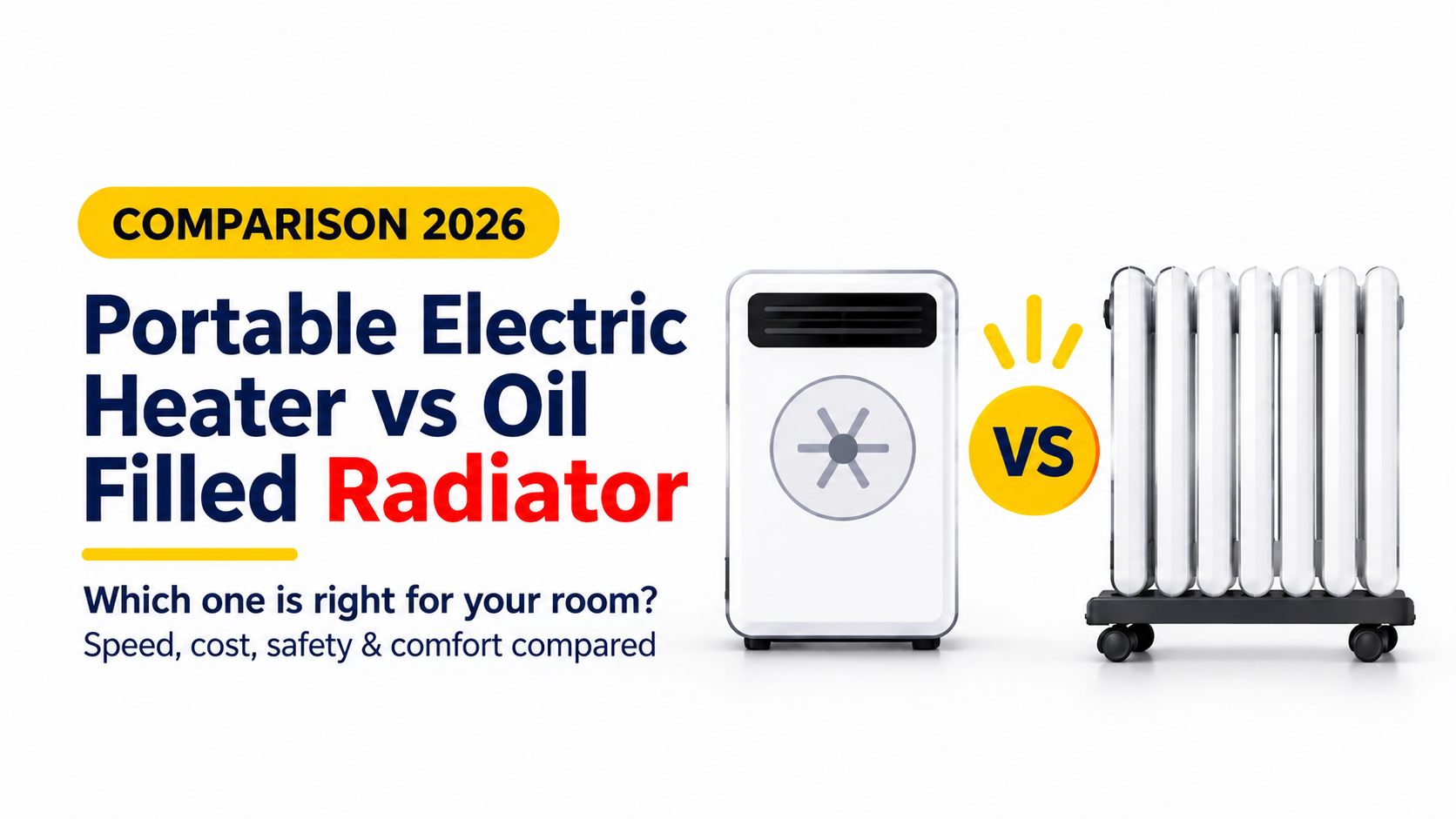
When winter arrives and the room feels like a fridge, you quickly start comparing options. The most common decision is portable electric heater vs oil filled radiator. Both plug into a wall socket, both warm a room without any fuel and both are easy to move around. Yet they heat in very different ways, and that changes how fast the room warms, how it feels, how much noise you hear and which one suits your home.
In this detailed comparison you will learn how each type works, how they differ in speed, running cost, safety, noise, comfort and lifespan, and which one is better for a bedroom, bathroom, home office, garage or large living room. By the end you will know exactly which heater fits your needs.
First, a Quick Clarification
An oil-filled radiator is also a portable electric heater, because it is movable and runs on electricity. In this article, “portable electric heater” refers to the common fan heaters, ceramic heaters and similar compact heaters that use a heating element and often a fan, while “oil-filled radiator” refers to the sealed unit with fins filled with heat-retaining oil. Infrared heaters are mentioned briefly where useful.
How Each Heater Works
Portable Electric Heater (Fan or Ceramic)
These heaters pass electricity through a heating element, such as a metal coil or ceramic plates. A fan then blows air across the hot element and into the room. Because the element is small and the air moves quickly, you feel warm air almost immediately. When the heater switches off, the warmth fades fast, since there is nothing storing heat.
Oil-Filled Radiator
An oil-filled radiator has a sealed metal body filled with thermal oil. An electric element at the bottom heats the oil, and the oil warms the metal fins. The fins then give off heat to the room by convection and radiation, with no fan involved. The oil is not burned or used up. It simply stores and spreads heat. Because the oil holds heat, the radiator keeps giving off warmth for a while after the element turns off.
Quick Comparison Table
| Feature | Portable Fan / Ceramic Heater | Oil-Filled Radiator |
|---|---|---|
| Heat-up speed | Very fast | Slow to medium |
| Heat after switching off | Almost none | Keeps warm for a while |
| Noise | Fan noise | Nearly silent |
| Heat feel | Blown warm air, can feel drying | Gentle, even warmth |
| Weight and size | Light and compact | Heavy and bulky |
| Price | Usually lower | Usually higher |
| Surface temperature | Grille can be very hot | Warm to hot, no exposed element |
| Best for | Quick, short-term heating | Long, steady heating |
Heating Speed: Which Warms the Room Faster?
The fan heater wins on speed. Its small, hot element and moving air can make you feel warmer within a minute or two. An oil-filled radiator needs time to warm the oil and the metal body before it gives out its full heat. In a typical room this can take 15 to 30 minutes or more, depending on size and power.
If you want instant comfort, such as warming a bathroom before a shower or a desk for a short job, a fan or ceramic heater feels better. If you will be in the room for hours, the slower start of an oil-filled radiator matters much less.
Running Cost and Energy Efficiency
This is where many myths appear. Electric resistance heaters, including both fan heaters and oil-filled radiators, convert almost all the electricity they use into heat. A 1,500 W fan heater and a 1,500 W oil-filled radiator give out nearly the same amount of heat per hour and use the same amount of electricity at full power. So neither type is automatically cheaper to run in terms of pure efficiency.
The real difference comes from how you use them:
- Thermostat cycling: An oil-filled radiator keeps radiating heat after the element switches off, so the thermostat can cut power more often once the room is warm. Over many hours this can reduce total electricity use compared with a heater that must keep restarting.
- Short bursts: A fan heater warms a small space quickly, so for ten or twenty minutes of use it can be more economical because you only run it briefly.
- Room insulation: A well-insulated room holds heat, which helps any heater cycle off more often.
- Wattage setting: Using a lower power setting or thermostat reduces the bill with either type.
To estimate cost, multiply the heater’s kilowatts by the hours of use and by your electricity price per kWh. For example, a 1.5 kW heater running for 4 hours at full power uses 6 kWh.
Comfort and Heat Quality
A fan heater delivers warm air in a stream, so the area in front of it feels hot while the far corners may stay cool. It can also stir up dust and make the air feel dry, which some people find uncomfortable, especially during long use.
An oil-filled radiator gives a softer, more even warmth through natural convection and radiant heat. With no fan, there is no draught and less dust movement. Many people describe the heat as more like a traditional radiator, which is why oil-filled models are popular for living rooms, bedrooms and offices.
Noise Levels
Fan heaters make a noticeable hum or whoosh from the motor. Some are quiet, but even a gentle fan can bother light sleepers or disturb a video call. Oil-filled radiators are almost silent. You might hear a faint tick or gurgle as the metal expands and the oil warms, but that is minor.
Safety Comparison
Both types can be safe when used properly, and both should have key protection features. Neither should be left running unattended or placed near flammable materials.
Fan and Ceramic Heaters
- Some models have a very hot grille and an exposed element behind it.
- Lighter bodies are easier to knock over, though a tip-over switch should cut power.
- Fan airflow can pull in dust, and dust build-up near the element raises the fire risk if it is not cleaned.
Oil-Filled Radiators
- No exposed glowing element, and the sealed design keeps oil inside the unit.
- Heavy, low-profile body is harder to tip over.
- Surfaces can still get hot enough to cause burns, especially on contact over time.
- Hot surfaces can scorch fabric left draped over the unit, so never dry clothes on it.
Safety Features Both Should Have
- Tip-over protection.
- Overheat protection.
- Adjustable thermostat.
- Timer or auto shut-off where possible.
- Heavy-duty cord and plug with recognised safety certification.
For children and pets, oil-filled radiators are often preferred because of their stability and lack of an exposed element, as long as contact with the hot surface is prevented.
Portability, Size and Storage
If portability matters, a fan heater is the clear winner. It is light, compact and easy to carry from room to room. You can slide it into a cupboard when summer arrives. An oil-filled radiator is heavy and wide, though most models have wheels and a carry handle. It is easy to roll across a flat floor, but harder to carry upstairs or store in a small space.
Lifespan and Maintenance
Oil-filled radiators are sealed and have no fan motor, so they have fewer parts that wear out. The oil does not need refilling. Maintenance is mostly wiping dust off the body. Fan heaters have a motor and a fan that can wear over time, and they need regular cleaning of vents and the fan area to prevent dust build-up. With good care, both can last for years, though oil-filled radiators tend to be more durable.
Best Heater for Specific Rooms
Bedroom
An oil-filled radiator is usually the better choice. It is quiet, gives soft warmth and does not blow air in your face. Even so, safety advice suggests turning heaters off or using a timer and thermostat while you sleep.
Bathroom
A fan or ceramic heater designed for bathrooms is better for quick heating before and after a shower. You must choose a model with suitable water protection and place it away from water. An oil-filled radiator is generally too bulky and is not suitable for wet areas unless made for them.
Home Office
An oil-filled radiator is silent, making it ideal for work and calls. If you need quick heat at your desk, a small ceramic heater is a handy complement.
Living Room
An oil-filled radiator offers steady background warmth for hours. In a large living room you may need a higher wattage or more than one unit.
Garage or Workshop
A fan heater with a higher output usually suits these spaces because they are large, drafty and need quick heat. Oil-filled units are too slow for poorly insulated spaces.
Nursery or Children’s Room
An oil-filled radiator is often preferred for its stable, enclosed design and lack of fan noise, with a barrier and strict distance rules. A wall-mounted panel heater is another strong choice.
Small Spaces and Desks
A compact ceramic or fan heater warms you directly and quickly without heating the whole room.
Pros and Cons Summary
| Fan / Ceramic Heater | Oil-Filled Radiator |
|---|---|
| Pros Heats very quickly Light and compact Lower price Great for small spaces and quick use |
Pros Quiet operation Even, gentle heat Keeps warm after switching off Sturdy, no exposed element Long lifespan |
| Cons Fan noise Heat fades quickly Can dry the air and stir dust Often a very hot grille |
Cons Slow warm-up Heavy and bulky Usually higher price Hot surface can still burn |
Which One Should You Choose?
- Choose a fan or ceramic heater if: you need quick heat, have a small budget, want something light to move around or heat a small space for short periods.
- Choose an oil-filled radiator if: you want quiet, steady warmth for hours, care about even heat and a drier-air-free feel and will use the heater in a bedroom, living room or office.
- Choose both if: you want fast heat for a quick warm-up and a radiator for long, comfortable background warmth.
How to Size Your Heater
A rough guide is about 10 watts per square foot (about 100 watts per square metre) of floor area in an average insulated room. Poor insulation, high ceilings or cold climates may require more. Many heaters have several power settings, which lets you adjust output as the room warms.
| Room Size | Approx. Area | Suggested Wattage |
|---|---|---|
| Small | Up to 100 sq ft | Up to 1,000 W |
| Medium | 100 to 150 sq ft | 1,000 to 1,500 W |
| Large | 150 to 250 sq ft | 1,500 to 2,500 W |
Safety Rules That Apply to Both
- Plug directly into a wall outlet and avoid extension cords and power strips.
- Keep at least three feet (about one metre) clear of curtains, bedding, furniture and clothes.
- Place on a flat, stable, hard floor.
- Never cover the heater or dry clothes on it.
- Do not leave it running unattended or while you sleep.
- Check the cord and plug regularly for damage or warmth.
- Keep children and pets away from it.
- Follow the maker’s manual for exact rules.
Common Mistakes When Choosing
- Buying a heater that is too weak for the room and running it nonstop.
- Expecting an oil-filled radiator to heat instantly.
- Choosing a fan heater for a quiet bedroom or office.
- Ignoring safety features to save a little money.
- Assuming one type is much cheaper to run because of its design.
- Forgetting how heavy an oil-filled radiator is before buying.
Frequently Asked Questions (FAQ)
Is an oil-filled radiator cheaper to run than a fan heater?
At the same wattage, both use about the same electricity at full power. An oil-filled radiator can use less over long periods because it keeps releasing heat after the element switches off, so the thermostat cuts power more often.
Which heats a room faster, a fan heater or an oil-filled radiator?
A fan heater heats much faster. An oil-filled radiator takes longer to warm up but then provides steady, lasting warmth.
Is an oil-filled radiator safer than a fan heater?
Often it is considered safer because it has no exposed element, a stable body and no fan to pull in dust. It can still burn skin, so keep children and pets away.
Do oil-filled radiators dry out the air?
They do not remove moisture from the air, and with no fan they feel less drying than fan heaters. Very dry indoor air in winter may still occur, so ventilation helps.
Can I leave an oil-filled radiator on overnight?
Safety organisations advise turning heaters off while you sleep. If you must use one, choose a model with a thermostat, timer and full safety protection and keep it away from bedding.
Do oil-filled radiators need refilling?
No. The oil is sealed inside for the life of the unit and never needs topping up.
Which is better for a small bedroom?
A small oil-filled radiator or a panel heater is usually more comfortable because it is quiet and gives even warmth. A fan heater is better if you only need quick heat before bed.
Can I use either one in a bathroom?
Only use a heater specifically rated for bathroom or damp conditions and keep it away from water. Standard oil-filled radiators and ordinary fan heaters are generally not designed for wet areas.
Final Thoughts
In the portable electric heater vs oil filled radiator debate, there is no single winner. A fan or ceramic heater is the best choice when you want fast, flexible and affordable heat. An oil-filled radiator is the better pick when you want quiet, steady and even warmth for hours, especially in bedrooms and offices.
Think about the room, how long you will use the heater, how much noise you can tolerate and who lives in your home. Choose a model with a thermostat, tip-over and overheat protection and the right wattage, and you will enjoy a warmer, more comfortable winter either way.