









Throw pillows are the fastest and cheapest way to change how a room looks and feels. A few well-chosen cushions can make a plain sofa feel warm, a dull living room feel fresh, and a bedroom feel like a hotel suite. But the same pillows can also make a space feel messy if the colors fight each other.
If you have ever stood in a store holding five pillows and wondering whether they “go together,” this guide is for you. Below you will learn how to choose throw pillow colors step by step, using simple design rules, practical examples and ready-to-use palettes. No design degree needed.
Why Throw Pillow Color Matters So Much
Pillows sit at eye level on the largest piece of furniture in most rooms. That makes them a focal point. The colors you pick influence three things at once:
- Mood: Warm shades such as terracotta and mustard feel cozy, while cool blues and greens feel calm and airy.
- Balance: Pillows can connect your sofa, rug, curtains and wall color so the room feels pulled together.
- Flexibility: Unlike a sofa or a rug, pillows are easy and affordable to swap, so you can refresh your room every season.
Step 1: Look at What You Already Have
Before you buy anything, take a good look at the room. The best pillow colors are rarely chosen in isolation. Check these four things first:
- Your sofa or bed color. This is the largest surface your pillows will sit on, so it sets the starting point.
- Your wall color. Warm whites, grays and beiges are easy to match. Bold walls need calmer pillows.
- Your rug and curtains. Pull one or two colors from them to repeat in your pillows.
- Your lighting. Natural light makes colors look brighter, while warm yellow bulbs can make blues look duller. Always judge colors in the room where they will live.
Tip: Take a photo of your room and look at it on your phone. Colors that clash or blend often become clearer in a photo than in real life.
Step 2: Understand the Basics of Color Theory
You do not need to memorize design theory, but knowing three simple color relationships makes decisions much easier.

Complementary Colors
These are colors on opposite sides of the wheel, such as blue and orange or green and red. They create strong contrast and a lively look. For pillows, use one color as the main shade and the other as a small accent. A navy sofa with a couple of mustard pillows is a classic example.
Analogous Colors
These are colors that sit next to each other, such as teal, blue and indigo. Rooms styled this way feel soft, calm and cohesive. It is a safe choice for bedrooms and reading corners.
Triadic Colors
Three colors spaced evenly around the wheel, for example yellow, blue and red, give a playful look. Because it can feel busy, pick one color as the leader and use the others in smaller amounts.
Monochromatic Colors
This approach uses different shades and tints of one color, such as pale blue, mid blue and navy. It looks elegant and is almost impossible to get wrong. Add texture (linen, velvet, knit) so the pillows do not look flat.
Step 3: Use the 60-30-10 Rule
Interior designers often rely on the 60-30-10 rule to keep rooms balanced. You can apply the same idea to your sofa and pillows.

- 60% base color: Your sofa, walls and large rug. Usually a calm neutral.
- 30% secondary color: Most of your pillows, a throw blanket or curtains. This color supports the base.
- 10% accent color: One or two small pillows, a vase or artwork in a bold shade that makes the room interesting.
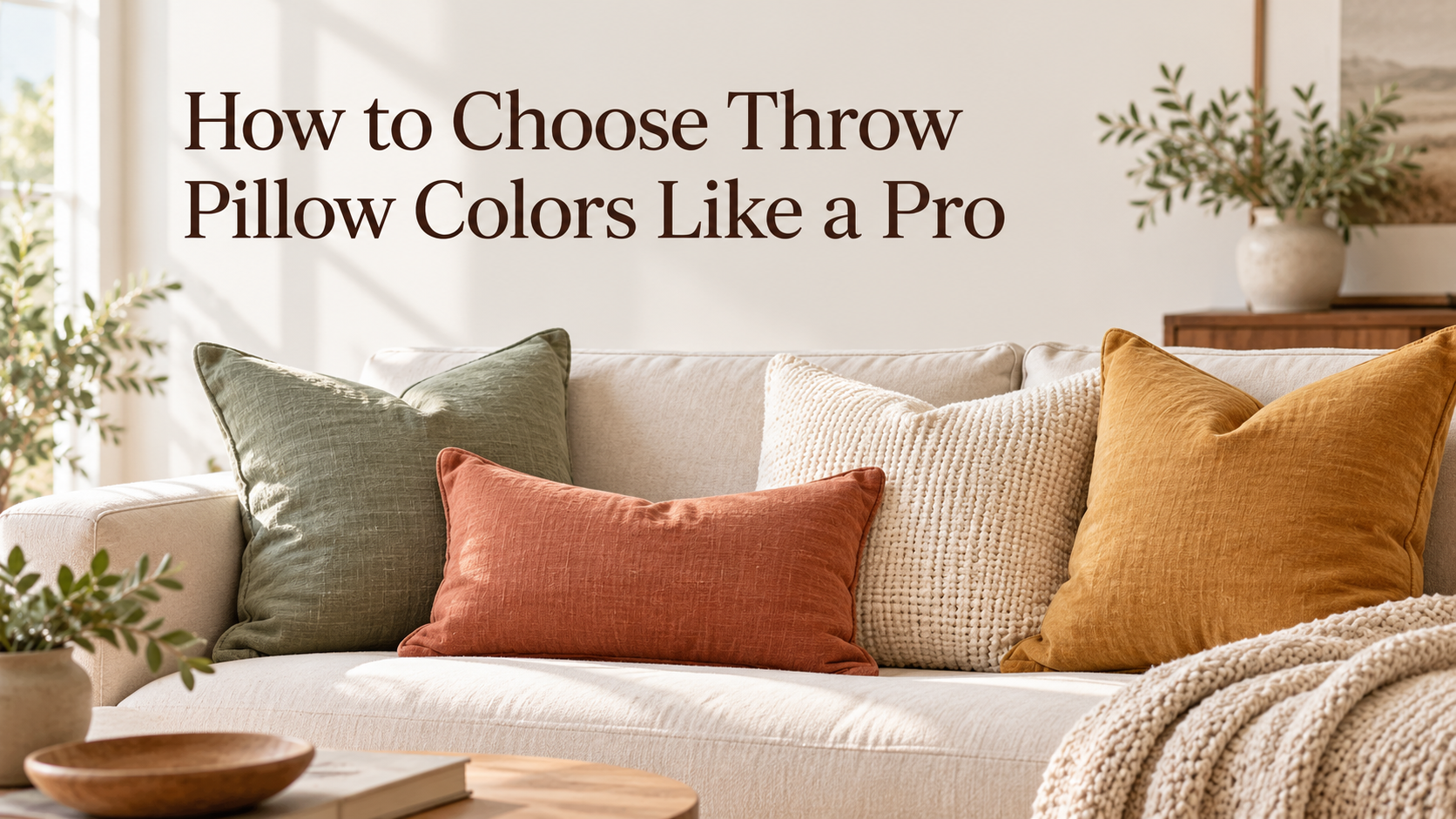
For example, on a beige sofa you might choose three soft green pillows (secondary) and one rust-orange pillow (accent). The result feels intentional rather than random.
Step 4: Match Pillow Colors to Your Sofa
The sofa is where most people start, so here are tested combinations for the most common sofa colors.

| Sofa Color | Pillow Colors That Work | Resulting Look |
|---|---|---|
| Gray | Mustard, teal, blush pink, white | Modern and fresh |
| Beige / Cream | Terracotta, olive green, navy, rust | Warm and earthy |
| Navy Blue | Mustard, blush, white, coral | Classic and elegant |
| Black | White, gold, emerald green, red | Bold and dramatic |
| White | Any color, especially deep blue, green or charcoal | Bright and flexible |
| Brown / Leather | Cream, teal, burnt orange, forest green | Cozy and rich |
| Green | Cream, blush, mustard, soft pink | Natural and calming |
Step 5: Pick a Ready-Made Palette
If you want a shortcut, start with one of these three palettes. Each uses four shades that are known to work well together.

Warm Neutral Palette
Cream, soft blush, caramel and chocolate brown. This palette suits cozy, minimalist and Scandinavian rooms. It is perfect if you want a peaceful space and do not like strong colors.
Calm Coastal Palette
White, pale sky blue, dusty blue and deep navy. It brings a clean, breezy feel and works well in bright rooms and bedrooms.
Bold and Cozy Palette
Mustard, terracotta, wine red and navy. Great for people who enjoy color and want a warm, lively feel, especially during autumn and winter.
Step 6: Consider the Room and Its Purpose
Living Room
The living room is where you can be most playful. Choose a mix of solid colors and one patterned pillow that repeats colors from your rug or artwork.
Bedroom
Choose calming colors such as soft blue, sage green, cream and gray. Avoid too many high-contrast shades if you want a restful feel.
Home Office or Reading Corner
Muted greens, blues and warm neutrals reduce visual stress and help you feel relaxed but focused.
Kids’ Room
Bright, cheerful colors work well, but pick durable, washable fabrics. Solid bright pillows with one playful pattern keep things lively without becoming chaotic.
Outdoor Spaces
Choose fade-resistant, water-resistant fabrics. Bright greens, yellows and blues look great against natural wood and plants.
Step 7: Mix Patterns and Textures Wisely
Color is only part of the picture. A set of pillows in the same flat shade can feel dull, while a well-planned mix looks rich and layered.
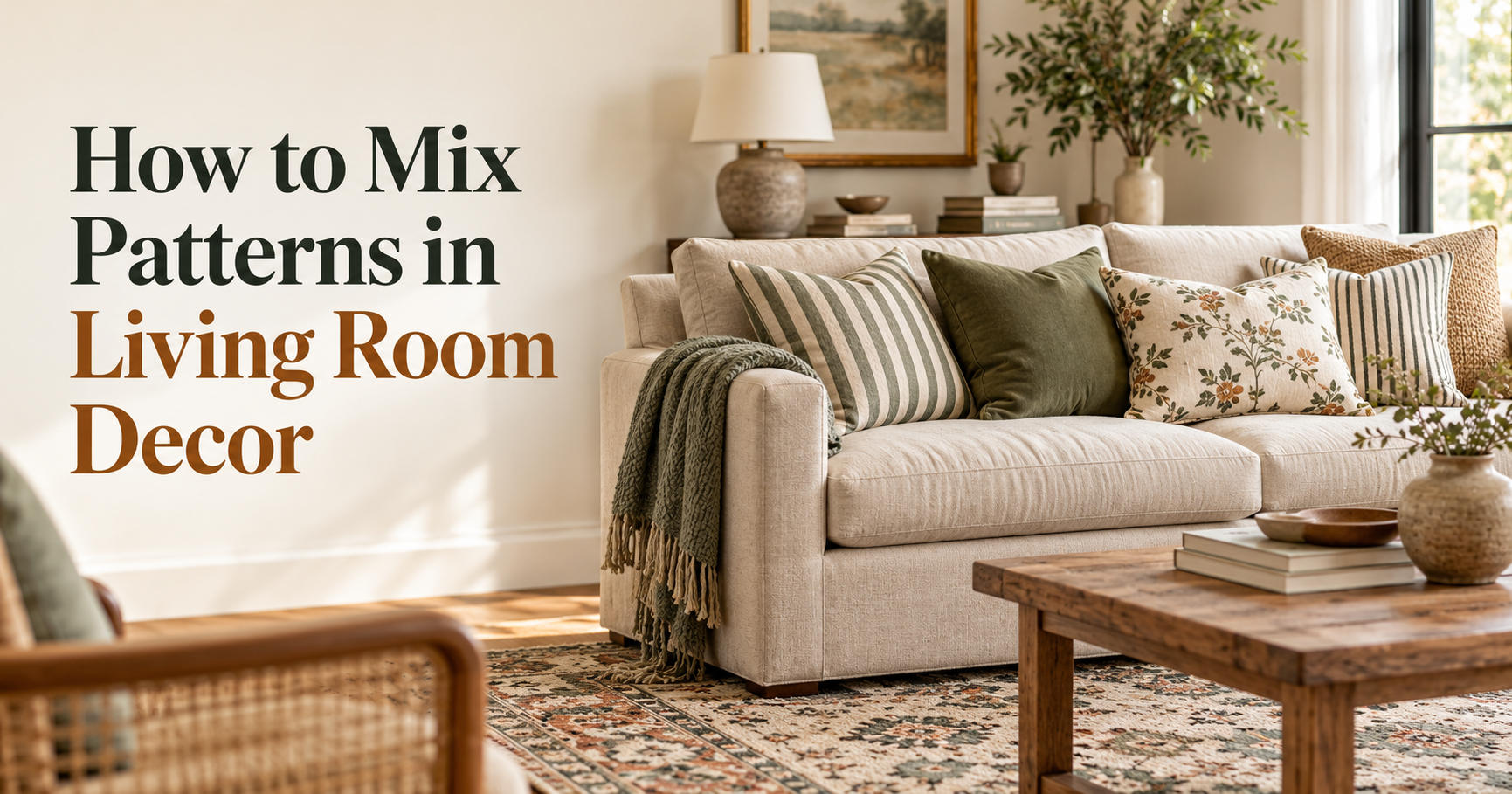
- Use the “solid, solid, pattern” idea. For every pattern pillow, add two solids that match one of its colors.
- Mix pattern scales. Combine a large pattern, a small pattern and a solid for depth. Stripes, florals, geometric prints and checks can all work together if they share a color.
- Add texture. Velvet, linen, boucle, cotton, wool and faux fur reflect light differently, so even matching colors feel more interesting.
- Stick to one common color. If every patterned pillow includes at least one shared shade, the group will look planned.
Step 8: Choose Colors for the Season
One of the biggest advantages of pillows is that they are easy to switch. Here is a quick seasonal guide:
- Spring: Soft pastels such as mint, lavender, blush and light yellow.
- Summer: Bright whites, aqua, coral and citrus tones.
- Autumn: Rust, mustard, olive, burgundy and warm brown.
- Winter: Deep green, navy, plum, charcoal and cozy cream with plenty of textured fabrics.
A smart approach is to keep two neutral pillows on the sofa all year and swap the other two or three each season.
Step 9: Get the Number and Arrangement Right
Even perfect colors can look wrong if the layout is off. Use these simple guidelines:

- Small sofa or loveseat: 3 pillows.
- Standard three-seater sofa: 5 pillows (two matching on each end, one different in the center).
- Large sectional: 2 to 3 pillows per section, repeating colors across the whole piece.
- Bed: 2 sleeping pillows, 2 shams and 2 or 3 decorative pillows.
Mix sizes as well. Pair larger 20 x 20 inch pillows at the back with smaller 16 x 16 inch ones in front, and add a lumbar pillow in the middle for variety.
Common Mistakes to Avoid
- Matching everything exactly. A perfectly matched set can feel flat. Choose colors that coordinate instead of copying each other.
- Using too many colors. Stick to three or four colors in total, including neutrals.
- Ignoring undertones. A cool blue-gray sofa looks odd next to a yellowish cream pillow. Match warm with warm and cool with cool.
- Buying online without checking the shade. Screens can change how colors look. Check reviews and customer photos, and order a sample or swatch if possible.
- Forgetting about maintenance. White and light shades show stains easily. If you have kids or pets, choose removable, washable covers or darker, textured fabrics.
- Choosing only trends. Trends fade. Build your base with timeless colors and add trendy shades in small amounts.
Smart Shopping Tips Before You Buy
- Buy covers, not whole pillows. Removable covers let you change colors without replacing the insert, which saves money and storage space.
- Check the insert quality. A cover looks only as good as the filling inside it. Choose full inserts, ideally one size larger than the cover for a plump look.
- Look at fabric care labels. Machine-washable covers are easier to keep clean over time.
- Choose zippers over sewn closures. Hidden zippers make covers easier to remove, wash and replace.
- Start small. Buy two or three pillows first, test them in your room for a few days, and add more later.
Frequently Asked Questions
What color throw pillows go with a gray couch?
Gray is very flexible. Mustard yellow, teal, blush pink, navy and white all look great. Choose warm accents for a cozy feel or cool blues and greens for a calm, modern look.
How many colors should I use in my throw pillows?
Two to three colors are ideal for most rooms, plus one neutral. This keeps the look planned and not cluttered.
Should throw pillows match the sofa or contrast with it?
Both approaches work. Matching shades create a soft, tone-on-tone look, while contrast adds energy and makes the sofa stand out. If your sofa is a bold color, use calmer pillows. If it is neutral, use more color.
Can I mix patterned and solid pillows?
Yes. A good rule is to use at least one solid pillow for every patterned one, and make sure the patterns share at least one color.
What are the best neutral throw pillow colors?
Cream, ivory, beige, gray, taupe, charcoal and white are the safest neutrals. Add texture to keep them interesting.
How often should I change my throw pillows?
Many people refresh them once or twice a year, often with the seasons. Replace them sooner if the fabric fades or the filling loses shape.
What colors make a small room look bigger?
Light and cool colors such as white, pale blue, soft green and light gray make a small room feel more open. Use darker accent pillows sparingly for depth.
Final Thoughts
Learning how to choose throw pillow colors comes down to a few simple ideas: start from your sofa and room, pick a clear palette, follow the 60-30-10 rule, mix patterns and textures with care, and avoid using too many colors at once. Do that, and your pillows will make the room look finished and welcoming.
Remember that decorating is personal. Use these guidelines as a starting point, then trust your eye and choose colors that make you happy every time you walk into the room. Start with two or three pillows, see how they feel, and build from there.