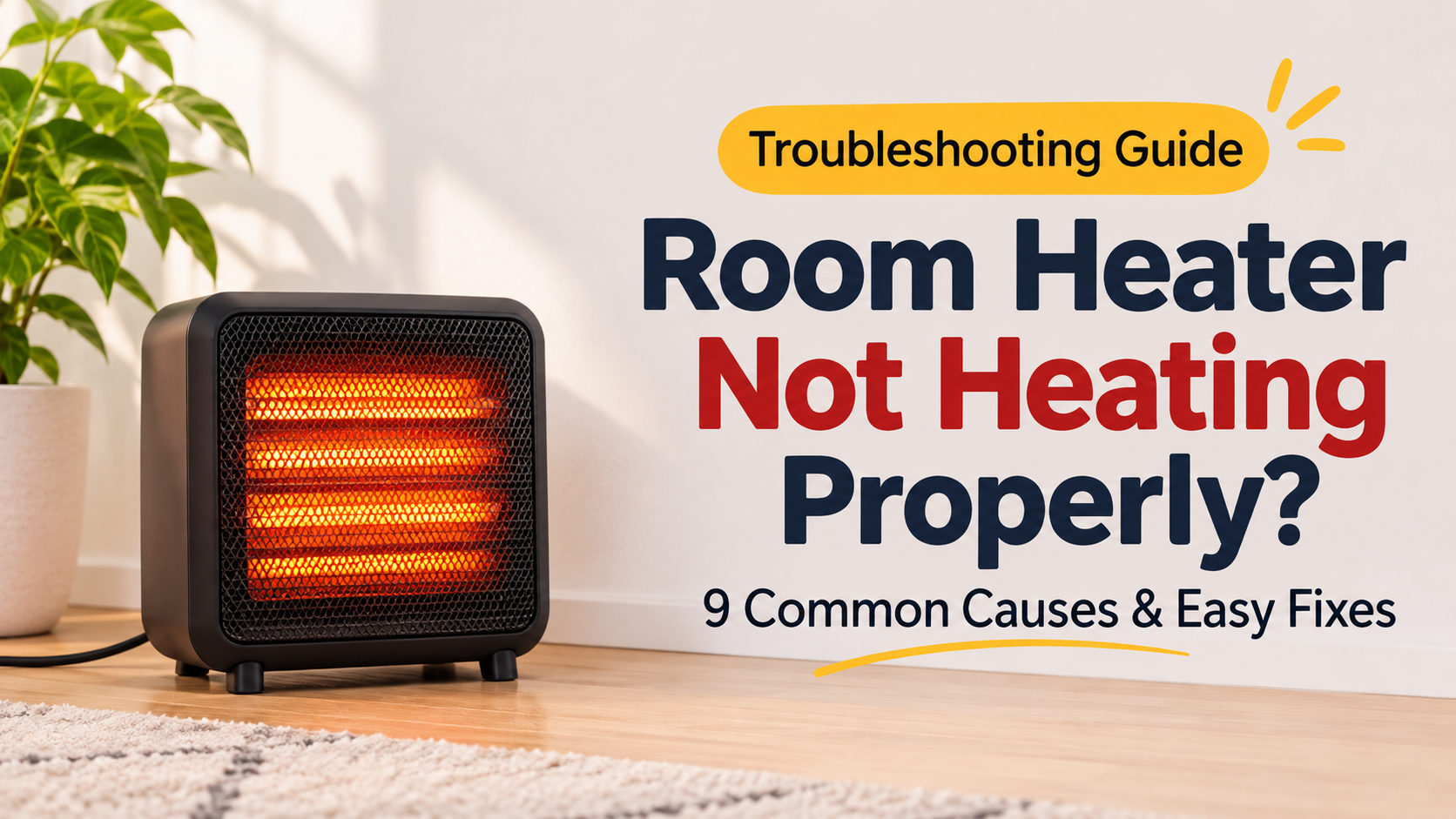

Room Heater Not Heating Properly? 9 Common Causes and Easy Fixes
Winter nights can be tough when your room heater is not heating properly. The element glows, the fan runs, the light is on, but the room stays cold. The good news is that most heater problems are small and can be fixed at home in a few minutes, without spending a lot of money.
In this complete guide you will learn why a heater stops heating, how to diagnose the problem step by step, when to repair it, and when it is smarter to replace it. This guide applies to fan heaters, oil-filled radiators, ceramic heaters, halogen heaters and infrared heaters.
Quick Answer: Why Is My Room Heater Not Heating?
The most common reasons are a loose plug or faulty socket, a thermostat set too low, dust blocking the air vents, a tripped tip-over or overheat safety switch, and a burnt-out heating element. Start with the simple checks first, because they solve most cases.

1. Power Supply Problem
Before opening anything, check the basics. A loose plug, a worn socket or a tripped circuit breaker can reduce power so the heater turns on but produces little heat.
- Plug the heater directly into a different wall socket.
- Check the circuit breaker or fuse in your electrical panel.
- Avoid extension cords and multi-plugs. Heaters draw high current and cords can overheat.
- Inspect the plug for black marks, a burning smell or a hot cable.
2. Thermostat Set Too Low or Faulty
The thermostat tells the heater when to heat and when to rest. If it is set too low, the heater may switch off the element as soon as the room feels slightly warm. A damaged thermostat can also switch the heating off too early or never switch it on.
Fix: Turn the thermostat to maximum and choose the highest heat setting. If the heater heats at maximum but not at the normal setting, the thermostat may need replacing by a technician.
3. Dust and Dirt Blocking the Vents
Dust is the number one silent killer of heater performance. When the air intake and outlet are clogged, airflow drops, the heater overheats inside and the safety system reduces or cuts the heat.
How to clean it safely:
- Switch off the heater, unplug it and let it cool for at least 30 minutes.
- Use a soft brush or vacuum cleaner to remove dust from the grille and vents.
- Wipe the outer body with a slightly damp cloth, then dry completely.
- Never pour water or spray liquid inside the heater.
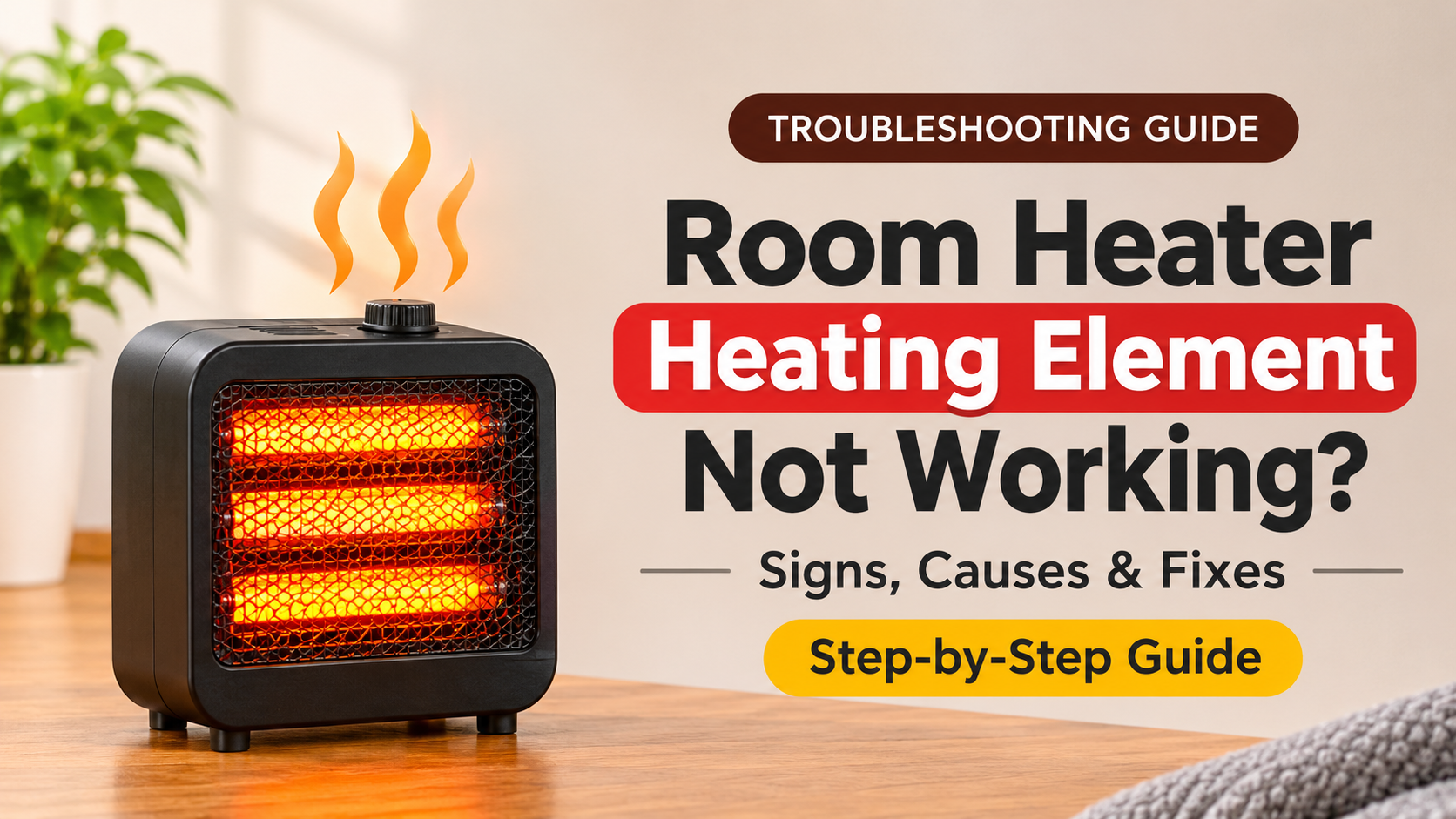
4. Burnt or Damaged Heating Element
The heating element, a coil, ceramic plate or halogen tube, creates the heat. After years of use it can weaken or break. If the fan runs but the air stays cold, or you see a broken or blackened coil, the element has probably failed.
Fix: A broken element usually needs professional replacement. On low-cost heaters, replacing the whole unit is often cheaper than repair.
5. Tip-Over Switch Activated
Modern heaters have a tip-over switch that cuts power if the heater tilts or falls. If the heater sits on a carpet, an uneven floor or was knocked slightly, the switch may stay in safety mode.
Fix: Place the heater on a flat, hard surface, switch it off for a minute and switch it on again.
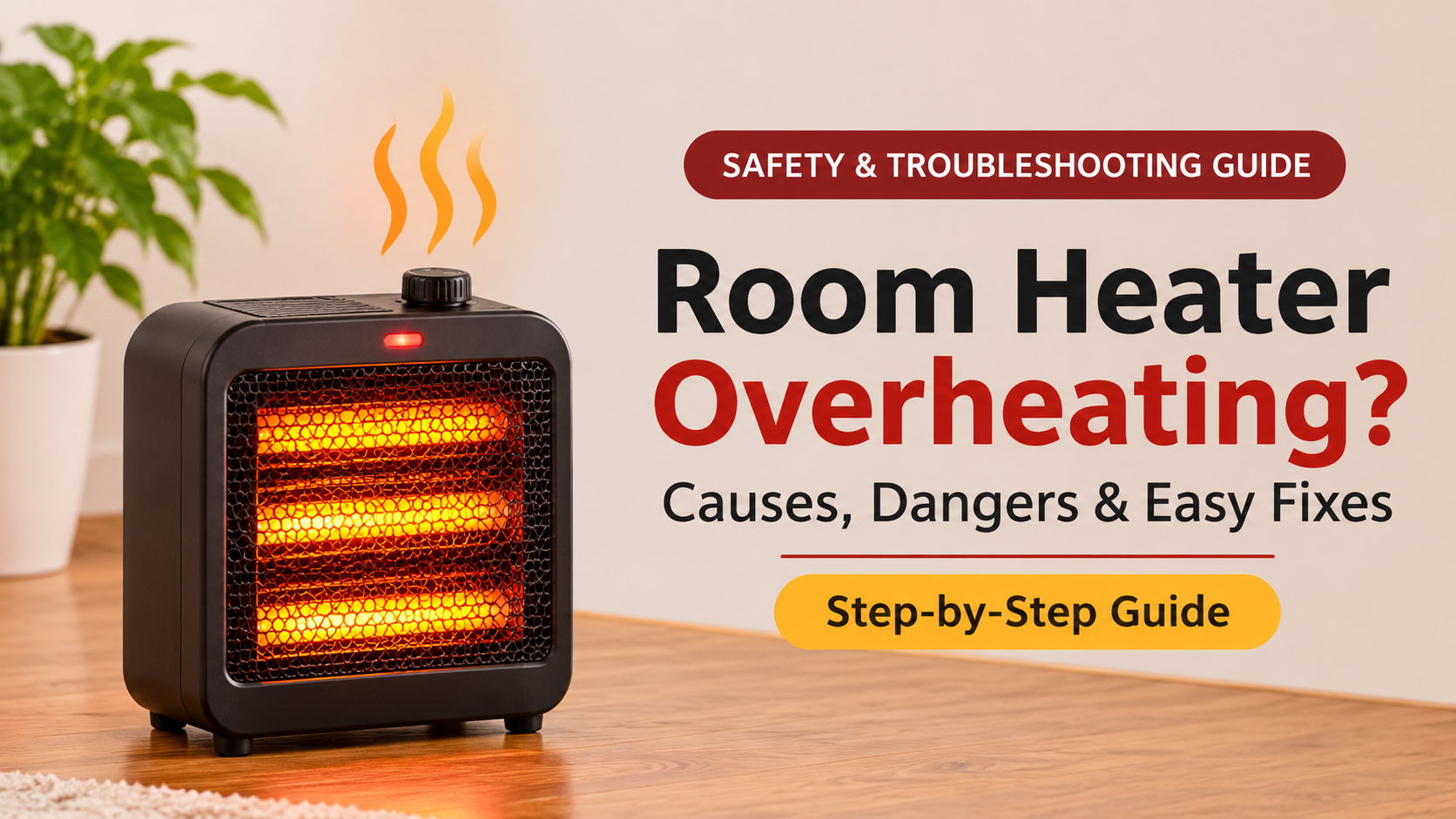
6. Overheat Protection Has Tripped
Every good heater has an overheat cut-off. It switches the heater off, or sometimes only the element, when the inside gets too hot, often because of blocked vents, covered surfaces or heavy dust.
Fix: Unplug the heater, let it cool for 30 to 60 minutes, clean the vents and restart. If it trips again and again, there is a deeper fault and it should be checked.
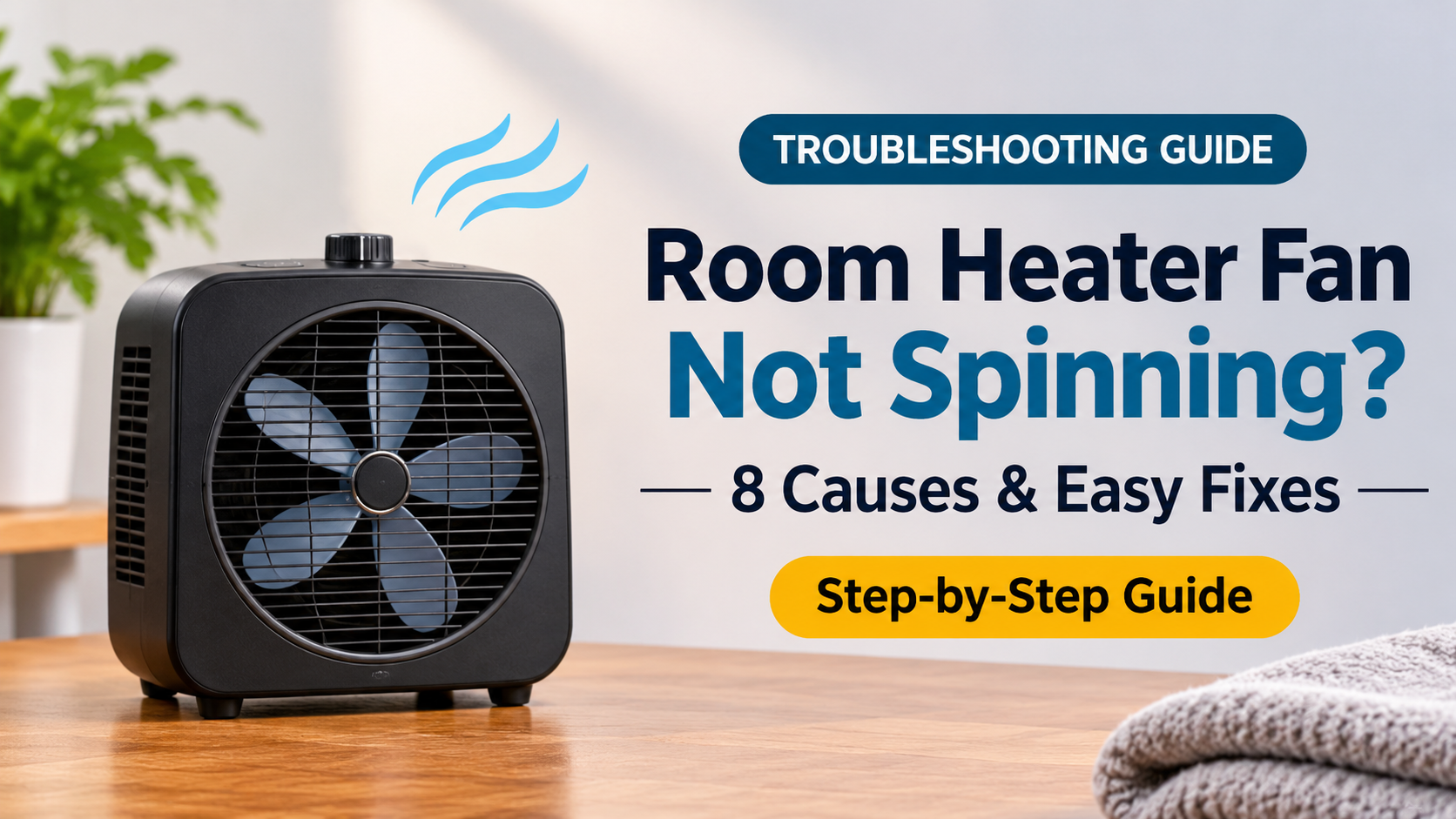
7. Faulty Fan Motor
In a fan heater, the motor pushes warm air into the room. If the fan is slow, noisy or stopped, the heat stays near the element and the room never warms properly. A weak fan can also cause overheating and shutdowns.
Signs: grinding noise, slow rotation, a burning smell, or the fan stopping after a few minutes.
8. Heater Is Too Small for the Room
Sometimes the heater is working perfectly, but it simply does not have enough power. A small 1000 W heater cannot warm a large hall, and open doors or windows make it worse.

| Room Size | Suggested Heater Power |
|---|---|
| Up to 100 sq ft (small room) | 500 to 800 W |
| 100 to 150 sq ft (medium room) | 1000 to 1500 W |
| 150 to 250 sq ft (large room) | 2000 W or more |
These are general guidelines. Poor insulation, high ceilings and very cold weather may need more power.
9. Low Voltage or Damaged Power Cord
Low voltage makes a heater produce less heat than its rating. A damaged or overheated power cord can also limit current. If other appliances also run weak at the same time, the problem may be your home wiring or supply, and an electrician should check it.
Heater Not Heating: Problems by Heater Type
| Heater Type | Most Common Problem | Quick Fix |
|---|---|---|
| Fan heater | Dust, weak fan, overheat trip | Clean vents, cool down, restart |
| Oil-filled radiator | Thermostat setting, slow warm-up, power setting | Set to max, wait 15 to 20 minutes |
| Ceramic heater | Blocked airflow, thermostat fault | Clean grille, test at max setting |
| Halogen / infrared | Burnt tube, dirty reflector | Replace tube, clean reflector |
Step-by-Step Troubleshooting Checklist
- Try a different wall socket and check the circuit breaker.
- Set the thermostat to maximum and select the highest heat mode.
- Place the heater on a flat, hard surface.
- Unplug, cool, and clean all vents and grilles.
- Let the heater rest for 30 minutes to reset the overheat protection.
- Switch on again and listen. Is the fan working? Do you smell burning?
- If there is still no heat, contact a qualified technician or consider replacement.
Repair or Replace: What Should You Do?
Repair makes sense if the heater is fairly new, the fault is minor (thermostat, switch, cord) or it is an expensive oil-filled or premium model.
Replace if the heater is more than 5 to 7 years old, the element is burnt, the repair cost is more than half the price of a new one, or it shows signs of melting, sparks or a strong burning smell.
Safety Tips Every Heater User Should Know

- Never leave a heater running while you sleep or leave home.
- Keep it at least 3 feet away from beds, curtains, sofas and clothes.
- Do not use damaged cords or plugs.
- Stop using the heater immediately if you smell burning, see sparks or notice smoke.
- Never open the heater and touch internal parts while it is plugged in.
How to Keep Your Heater Working Like New
- Clean the vents every 1 to 2 weeks in the season.
- Before winter, take the heater out and test it on a warm day.
- Store it in a dry, covered place after the season.
- Use a heater with auto shut-off, tip-over protection and a good thermostat if you plan to buy a new one.
What to Look for When Buying a New Room Heater
- Correct wattage for your room size.
- Safety features: tip-over switch, overheat protection and cool-touch body.
- Adjustable thermostat and multiple heat settings.
- Energy efficiency to keep electricity bills under control.
- Low noise if it will be used in a bedroom.
- Warranty and brand service support in your area.
Frequently Asked Questions (FAQ)
Why is my room heater running but not giving heat?
The most likely causes are a burnt heating element, a thermostat fault, or an overheat cut-off that has tripped because of dust. Clean the vents, let it cool down and test again at maximum setting.
Why does my heater turn off after a few minutes?
This is usually the overheat protection, caused by blocked vents, poor airflow or a weak fan motor. A faulty thermostat can also cause it.
Why is my oil heater not getting hot?
Oil-filled heaters warm up slowly, so give them 15 to 30 minutes. If they stay cold, check the power setting, thermostat and socket. A faulty element or thermostat may need professional service.
Can I repair a room heater at home?
You can safely do basic checks such as the socket, thermostat setting, tip-over position and cleaning. Any internal repair should be done by a trained technician.
How long does a room heater usually last?
With good care, most room heaters last about 5 to 10 years, depending on quality and usage.
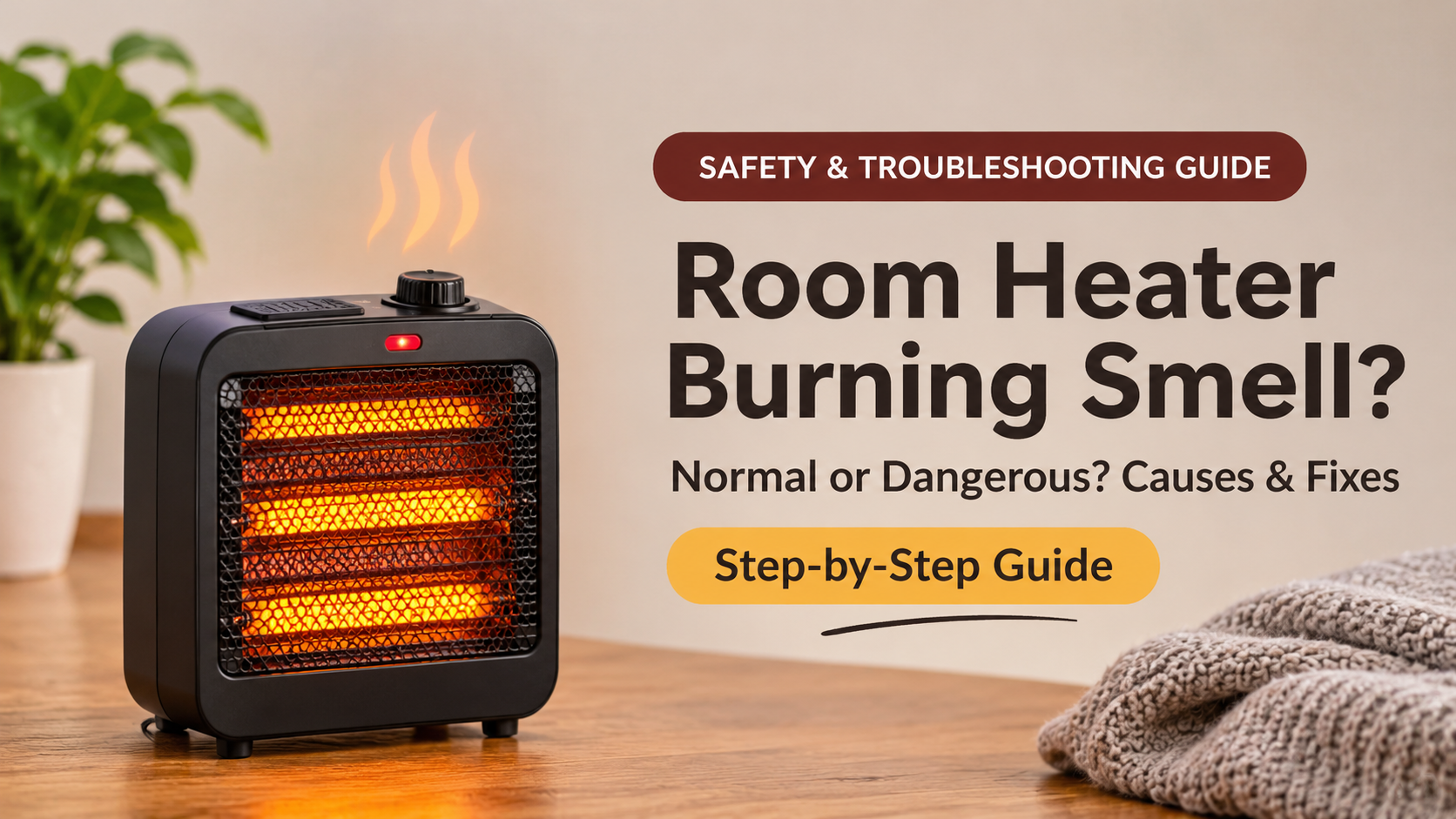
Is it safe to use a heater with a burning smell?
A light dusty smell at the start of the season is normal and fades quickly. A strong, continuous burning or plastic smell is not normal. Switch it off, unplug it and have it checked.
Final Thoughts
A room heater that is not heating properly is frustrating, but most of the time the cause is simple: power supply, thermostat settings, dust or a safety switch. Follow the steps in this guide, clean the heater regularly and always put safety first. If the heater still does not warm up, a professional repair or a new, correctly sized model will keep your room warm and comfortable all winter.