






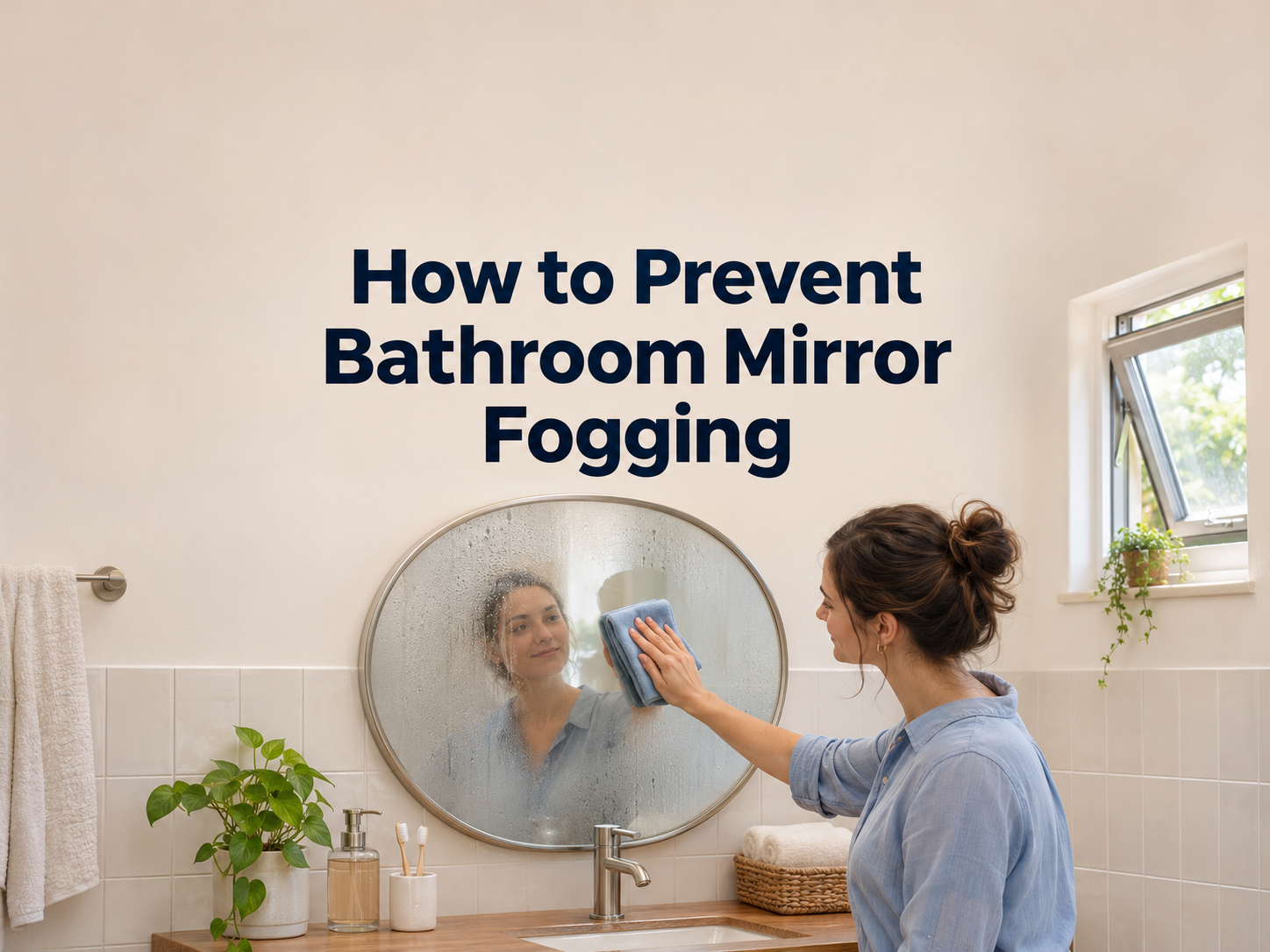

You step out of a warm shower, reach for your razor or toothbrush and look up, only to find a blank, misty sheet where your reflection should be. Fogged-up bathroom mirrors are one of the most common everyday annoyances. You wipe the glass with a towel, and within a minute the fog creeps back.
The good news is that fogging is completely preventable. In this guide you will learn how to prevent bathroom mirror fogging by understanding why it happens and tackling it from several angles: better ventilation, smarter shower habits, quick DIY tricks and, if you want a permanent solution, heated or anti-fog mirrors.
In this article
- Why bathroom mirrors fog up
- Six ways to stop fogging: an overview
- Improve ventilation
- Change your shower habits
- DIY anti-fog methods
- Heated and anti-fog mirror options
- Other helpful fixes
- Common mistakes and a routine checklist
- Frequently asked questions
Why Does a Bathroom Mirror Fog Up?
Fog is not dirt, and it is not a fault with your mirror. It is simple physics. Warm air can hold much more water vapour than cool air. When you take a hot shower, the air fills with steam. That warm, humid air touches the mirror, which is usually cooler than the air around it. The vapour cools quickly, can no longer stay as a gas and condenses into thousands of tiny water droplets on the glass.
Each droplet bends and scatters light in a different direction, so instead of a clear reflection you see a cloudy haze. The temperature at which this happens is called the dew point. If the surface of the mirror is colder than the dew point of the air, it will fog. If it is warmer, it will not.

That gives you three ways to prevent fogging. You can reduce the amount of moisture in the air, warm the mirror above the dew point, or change the surface of the glass so that water cannot form light-scattering droplets. The best results usually come from combining at least two of these.
Six Ways to Stop Your Bathroom Mirror from Fogging

Here is a quick overview before we go through each one in detail:
- Ventilate: remove humid air before it reaches the mirror.
- Cut the steam: use cooler, shorter showers.
- Warm the mirror: use a heated pad or a demister mirror.
- Coat the glass: apply an anti-fog spray, film or DIY treatment.
- Remove moisture: use a dehumidifier or heater.
- Wipe and squeegee: clear residual water quickly.
1. Improve Ventilation
Ventilation is the foundation of a fog-free bathroom. Humid air that has nowhere to go will settle on the coldest surface in the room, and that is very often the mirror. It will also encourage mildew on the walls and ceiling, so better airflow protects more than just your reflection.
Use an Extractor Fan Properly
If your bathroom has an exhaust fan, use it every time. Switch it on before you start the shower and leave it running for 15 to 20 minutes afterwards, which gives it time to clear the lingering humidity. A fan that only runs while you are in the shower removes steam during use but leaves the room damp afterward.
Check That the Fan Is Strong Enough
A fan that is too small or blocked by dust will not keep up. A common rule of thumb for bathrooms up to about 100 square feet is to aim for roughly 1 CFM (cubic feet per minute) of airflow for each square foot of floor area, with a minimum of about 50 CFM. A small 5 by 8 foot bathroom is 40 square feet, so a 50 CFM fan is a sensible starting point. Larger or high-ceilinged bathrooms need more.

It also matters where the fan vents. A duct that discharges outdoors removes the moisture properly. A fan that blows into an attic can simply move the problem somewhere else and cause damp damage. If your fan is very noisy, weak or old, replacing it with a quiet, efficient model that has a humidity sensor or timer can make a huge difference.
No Fan? Use Windows and Doors
If you have a window, open it a little during and after your shower. If the bathroom has no window and no fan, open the door once you have finished, or leave it ajar so steam can escape. A small portable fan pointing out of the doorway can speed things up.
2. Change Your Shower Habits
The less steam you create, the less there is to condense. A few small changes will cut humidity substantially without making your shower unpleasant.

- Lower the water temperature. Warm water produces far less vapour than very hot water. It is also kinder to your skin and hair.
- Shorten your showers. Every extra minute adds more moisture to the air.
- Use cold water first when running a bath. Starting with cold water and adding hot afterward reduces the amount of steam released.
- Keep the door open afterwards. Once you are dressed, let humid air escape into the rest of the house. If the rest of the home is cold, balance this with the fan.
- Dry the room. Squeegee the shower glass and walls and hang damp towels outside the bathroom or on a heated rail.
3. DIY Anti-Fog Methods for Mirrors
These quick treatments work by leaving an ultra-thin film on the glass. The film reduces the surface tension of water, so instead of forming separate light-scattering droplets, it spreads into a thin, nearly invisible sheet that you can see through. They are cheap and take a few minutes, though they wear off and need repeating.

Dish Soap Solution
Mix one drop of mild dish soap with about a cup of water. Wipe a very thin layer over a clean, dry mirror with a microfiber cloth, then buff it with a second dry cloth until the glass looks clear. Using too much soap leaves a cloudy film, so keep it light.
Shaving Foam
Dab a small amount of plain shaving foam on a clean mirror, spread it thinly and wipe it off with a dry cloth. The residue that remains helps water spread rather than bead up. Use a basic foam without strong colorants and avoid getting it on the mirror edges.
Commercial Anti-Fog Spray
Anti-fog sprays are sold for glasses, car windows and bathroom mirrors. Choose one that is safe for glass and follow the directions on the pack. They often last longer than home methods, but you will still need to reapply them from time to time.
Quick tip
Always clean the mirror before applying any anti-fog treatment. A film over dirt or oil will look streaky. If you need streak-free cleaning tips, use distilled water and a clean microfiber cloth, and buff dry.
4. Heated and Anti-Fog Mirror Options
If you are tired of repeating DIY treatments, a heated solution is the closest thing to a permanent fix. These keep the mirror surface warmer than the dew point, so condensation simply does not form.

Heated Demister Pads
A demister pad is a thin electric heating element fixed to the back of the mirror. It warms the glass gently, usually switching on with the bathroom light, and keeps it clear without any effort. Because it involves electricity in a wet environment, installation must follow local regulations. Have it fitted by a qualified electrician.
Built-In Heated or Demister Mirrors
Many modern bathroom mirrors, including LED mirrors, have a built-in anti-fog function. They are often controlled by a switch or touch sensor and are designed for bathroom conditions. When you shop, check the IP rating, which shows how well the product is protected against moisture, and make sure it is suitable for the zone of the bathroom where it will be fitted.
Anti-Fog Film
This is a clear adhesive film applied to the mirror surface. It needs no power and is useful for small mirrors, but it should be applied carefully to avoid bubbles and edges that lift.
Which Should You Choose?
- Renting or on a budget: a DIY solution or anti-fog spray.
- Renovating or buying a new mirror: a built-in heated mirror is the simplest long-term answer.
- Existing mirror you like: a heated demister pad, installed professionally.
- Small mirror and no wiring: anti-fog film.
5. Other Helpful Fixes
Run a Dehumidifier
In a bathroom with poor ventilation, a small dehumidifier can pull moisture out of the air and lower the dew point. It is especially useful in humid climates or during rainy seasons, though it must be placed safely away from water splashes.
Warm the Room
A warmer room means a warmer mirror and warmer walls. A heated towel rail or a safe bathroom heater helps both the air and the surfaces stay above the dew point. It also dries towels quickly, so they release less moisture into the room.
Wipe and Squeegee
A quick wipe of the mirror with a microfiber cloth clears any fog in seconds. A small squeegee on the shower screen and walls after each shower removes a lot of the water that would otherwise evaporate into the room.
Use a Hair Dryer Carefully
Some people clear a fogged mirror with a few seconds of warm air from a hair dryer. It works because it warms the glass, but only do this if it is safe: keep the dryer dry, well away from water and never use it with wet hands.
Mind the Position of the Mirror
Mirrors on cold exterior walls tend to fog more because the glass is chilled by the wall behind it. If you are planning a layout, place mirrors on interior walls where possible and away from the direct stream of shower steam.
Common Mistakes That Make Fogging Worse
- Turning off the fan as soon as you leave the shower. The humidity is still high and the mirror will fog.
- Keeping the door closed for too long. Moist air gets trapped.
- Using a weak or clogged fan. Clean the grille regularly, and consider upgrading.
- Applying too much anti-fog product. It leaves streaks and a hazy film.
- Drying clothes in the bathroom. Wet laundry adds a lot of moisture.
- Letting water pool on floors and mats. It keeps evaporating into the room.
- Ignoring damp and mildew. Persistent fog is often a sign of humidity that needs a better fix.

Frequently Asked Questions
Why does my bathroom mirror fog up so quickly?
The mirror is cooler than the humid air created by your shower. When the warm vapour touches it, the vapour condenses into droplets right away. The hotter the water and the weaker the ventilation, the faster this happens.
What is the cheapest way to stop a mirror from fogging?
The cheapest options are shorter, cooler showers, opening a window or door, and wiping the mirror with a very thin layer of dish soap solution or shaving foam. These cost almost nothing.
Does shaving cream really stop a mirror from fogging?
Yes, for a while. A thin film of shaving foam reduces droplet formation by helping water spread out. It wears off after some time, so you will need to reapply it.
Is it safe to use dish soap on a mirror?
Yes, a very diluted solution is safe for the glass if it is used sparingly and wiped dry. Avoid soaking the mirror and keep liquid away from the edges, because moisture can seep behind the glass over time.
How long should I run the bathroom fan after a shower?
Run it for 15 to 20 minutes after you finish, or until the mirror and walls are visibly dry. A fan with a timer or humidity sensor can do this automatically.
Are heated mirrors worth it?
If fogging is a daily annoyance, yes. A heated or demister mirror keeps the glass clear without any effort and is a one-time upgrade rather than a regular chore.
Can I add a defogger to an existing mirror?
Yes. Heated demister pads are designed to fit behind existing mirrors. Because they connect to the electricity supply in a wet area, they should be installed by a qualified electrician.
Will fixing fog also help with mold?
Usually, yes. Reducing humidity and improving airflow helps keep walls, ceilings and grout drier, which makes it much harder for mildew to grow.
Final Thoughts
A fogged mirror is a signal that your bathroom is holding too much warm, moist air. The most effective fix is to deal with the cause: ventilate well, keep showers a little cooler and shorter, and let the fan run after you leave. For extra insurance, add a DIY anti-fog film, a spray, or a heated mirror that keeps the glass above the dew point.
Start with the free changes, then add one or two of the other solutions that suit your budget and your bathroom. Within a few days you will have a mirror that is clear when you need it, and a fresher, drier bathroom overall.