

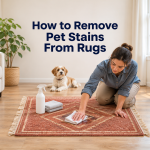





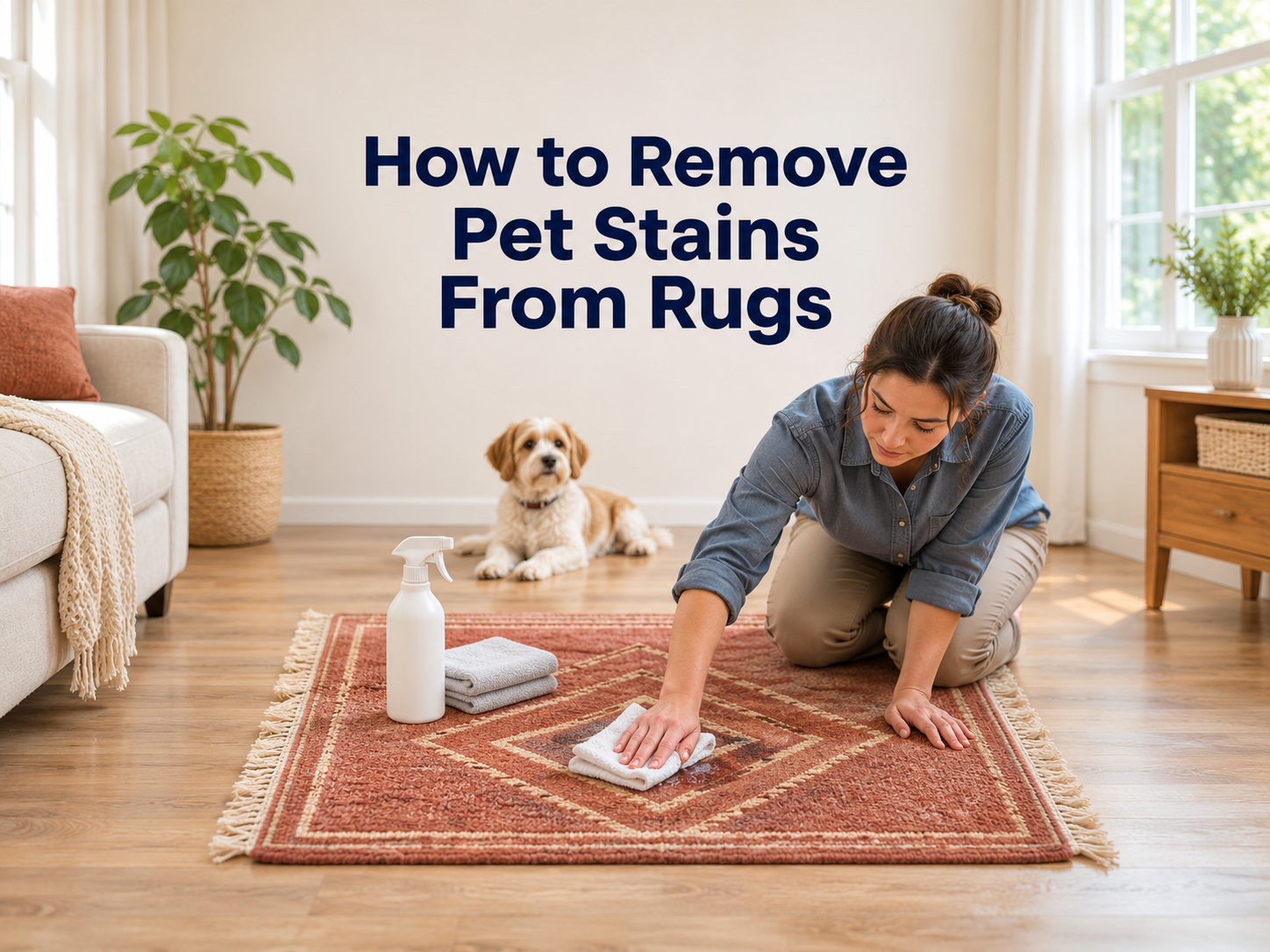

How to Remove Pet Stains From Rugs
If you share your home with a dog or cat, a stain on the rug is only a matter of time. Puppies have accidents, older pets sometimes can’t make it outside, and even the best-behaved animal can get sick. The good news is that most pet stains can be removed if you act quickly and use the right method.
The bad news is that the wrong approach, such as scrubbing, using hot water or reaching for the wrong cleaner, can make a stain permanent and leave an odour that draws your pet back to the same spot. This guide walks you through a safe, step-by-step process for urine, vomit, feces and other pet stains, plus how to remove odours and what to do with old, set-in marks.
Blot, don’t rub. Use cool water and a gentle or enzyme-based cleaner. Rinse by blotting, dry the rug completely, and repeat if needed. Test any cleaner on a hidden corner first, and call a professional for delicate or valuable rugs.
Why Pet Stains Need Special Treatment
Pet accidents are not like spilled coffee. Urine, vomit and feces contain proteins and compounds that bond with rug fibres, and urine in particular leaves behind salts and odour-causing compounds that stay long after the visible stain is gone. Ordinary soap and water often remove the colour but not the smell.
That is why enzyme-based cleaners are widely recommended for pet messes. They use enzymes that break down the organic material in the stain, which helps remove both the mark and the odour rather than covering it up. Since pets track scent, any smell left behind can encourage repeat accidents in the same place.
What You Will Need
- Clean white cloths or paper towels
- A spoon or dull knife for solids
- A pet-safe enzyme cleaner (look for one suitable for rugs and carpet)
- Mild dish soap
- Cool water and a spray bottle
- Baking soda
- White vinegar (for suitable rugs only)
- A soft brush and a vacuum
- A fan to speed up drying
- Rubber gloves
Step-by-Step: How to Remove a Pet Stain From a Rug

Step 1: Act Quickly and Blot
The sooner you deal with a stain, the easier it is to remove. Put on gloves and remove any solids with a spoon or dull knife. Then press a clean cloth or paper towels onto the stain to soak up as much liquid as possible. Blot from the outside edge toward the centre so the stain does not spread. Keep using fresh cloths until little moisture comes up. Do not rub or scrub, because that pushes the stain deeper into the fibres and can damage the pile.
Step 2: Test Your Cleaner
Before using any product, test it on a hidden corner or the underside of the rug. Apply a small amount, wait a few minutes, and blot with a white cloth. If colour transfers, or the fibres look damaged, do not use that product on the rug.
Step 3: Treat the Stain
For most pet stains, apply an enzyme cleaner according to the directions on the label. Saturate the area enough to reach as far down as the stain went, but avoid soaking the backing of the rug. Leave it for the time listed on the product, since enzymes need time to work.
If you do not have an enzyme cleaner, mix a few drops of mild dish soap in a cup of cool water, gently work it into the stain with a cloth, and blot.
Step 4: Rinse by Blotting
Dampen a clean cloth with cool water and blot the area to lift out cleaner residue. Residue left in the rug can attract dirt and make the spot look dull. Repeat with fresh cloths until the area feels clean and the cloth comes up clear.
Step 5: Dry Completely
Press the area with dry towels, then point a fan at it, or leave it in a well-ventilated room. Moisture left in the rug can cause mildew and a musty smell, so make sure it is fully dry, including the backing and the floor underneath. Once dry, brush the pile gently and vacuum.

How to Remove Specific Types of Pet Stains
Urine Stains
Blot up as much as possible, then treat with an enzyme cleaner. For a mild homemade option on a colourfast rug, some people lightly spray a mix of equal parts white vinegar and cool water, leave it for a few minutes, blot, then sprinkle baking soda once it is dry and vacuum it up later. Avoid vinegar on wool, silk and other delicate fibres, and test first. For old urine stains, a black light can help you find hidden spots so you treat the whole area.
Vomit Stains
Scoop up solids first, then blot. Treat with mild dish soap and cool water, then an enzyme cleaner if a smell remains. Vomit often contains stomach acids and food dyes that can leave colour behind, so address it quickly.
Feces Stains
Lift the solids carefully without pressing them into the rug. Blot the area, then clean with mild soap and cool water. Finish with an enzyme cleaner to remove odour. Wash your hands thoroughly afterwards.
Drool, Mud and Other Marks
Let mud dry fully, then vacuum or brush away what you can before treating the remaining mark with mild soap and water. Drool stains usually respond well to the basic method above.
Old, Set-In Stains
Older stains are more stubborn, but they are not always hopeless. Treat with an enzyme cleaner and give it extra dwell time, keeping the area damp as directed on the label. You may need to repeat the process two or three times, drying between each round. If the stain remains after a few attempts, a professional cleaner is a better choice than repeated harsh scrubbing.
Cleaning Methods Compared
| Cleaner | Best for | Watch out for |
|---|---|---|
| Enzyme cleaner | Urine, feces, vomit and odours | Follow the label; test first |
| Mild dish soap and cool water | Fresh, light stains | Rinse well so no residue is left |
| White vinegar and water | Mild urine stains on colourfast rugs | Not for wool, silk or delicate rugs |
| Baking soda | Absorbing damp and light odours once dry | Vacuum thoroughly afterwards |
| 3% hydrogen peroxide with a drop of soap | Stubborn stains on light-coloured rugs | Can bleach; test in a hidden spot first |
| Professional cleaning | Large, old or valuable rugs | Costs more, but safer for delicate rugs |
How to Remove Pet Odours From Rugs
- Treat the source first. If the stain itself is not fully cleaned, the smell will return.
- Use an enzyme cleaner that is designed to break down odour-causing compounds.
- Let the rug dry fully, then sprinkle baking soda over the area and leave it for several hours or overnight.
- Vacuum the baking soda up thoroughly.
- Check the padding and floor. Urine can soak through to the rug pad and floor beneath. If the smell persists, lift the rug and treat the underside, or replace the pad.

Cleaning Different Types of Rugs
- Synthetic rugs (nylon, polyester, polypropylene): Usually the easiest to clean and the most stain-resistant. The standard method works well.
- Wool rugs: Use cool water, mild soap or a wool-safe cleaner and avoid vinegar and bleach. Do not over-wet, since wool can shrink or stain from dye bleed.
- Cotton and washable rugs: Some can be machine washed. Check the care label for instructions.
- Jute, sisal and natural fibre rugs: They absorb liquid quickly and can stain permanently. Blot gently, use as little liquid as possible, and dry fast.
- Silk, viscose and antique or handmade rugs: Do not DIY. Call a professional rug cleaner right away.
How to Prevent Pet Stains in Future
- Keep up with regular outdoor breaks and a consistent routine, especially for puppies.
- Reward your pet for going in the right place.
- Clean accidents promptly and fully, so no scent is left behind.
- Use washable rugs or stain-resistant fibres in areas where pets spend time.
- Place a waterproof rug pad underneath for added protection.
- Trim your pet’s nails and brush them regularly to reduce wear and dirt.
- Vacuum often to remove hair and dirt before they build up.
Frequently Asked Questions
Does vinegar remove pet urine from rugs?
Diluted white vinegar can help with mild stains and odours on suitable colourfast rugs, but it is not the best option for every rug or every stain. Avoid it on wool and silk, and use an enzyme cleaner for stronger odours.
Can I use a steam cleaner on pet stains?
It is better not to steam clean a stain before it is removed. Heat can set protein-based stains and odours into the fibres. Clean the stain first, then use a steam or carpet cleaner for general cleaning if the rug allows it.
Why does the smell come back after the rug dries?
Often some urine remains in the fibres, the backing or the rug pad. Moisture or humidity can reactivate the smell. Treat the area again with an enzyme cleaner and make sure it reaches all the layers affected.
How long does it take to remove a pet stain?
A fresh stain may take 15 to 30 minutes of active cleaning plus drying time. Old stains can take several rounds and a few days.
Is it safe for pets to walk on a rug after cleaning?
Keep pets away until the rug is completely dry and any cleaner has been rinsed out. Always use products labelled as pet-safe and follow the instructions.
Final Thoughts
Pet stains are part of life with animals, but they do not have to ruin your rugs. Move fast, blot gently, choose the right cleaner, rinse well and dry completely. For stubborn odours, an enzyme cleaner is often the key. And for delicate, antique or very valuable rugs, leave it to a professional.
Keep a small stain-cleaning kit with an enzyme cleaner, clean cloths and baking soda somewhere easy to reach, so the next accident is a two-minute job and not a lasting mark.
Disclaimer: This article is for general information only. Always follow the care label and the instructions on any cleaning product, and test on a hidden area first. For ongoing pet health concerns, consult a veterinarian.