

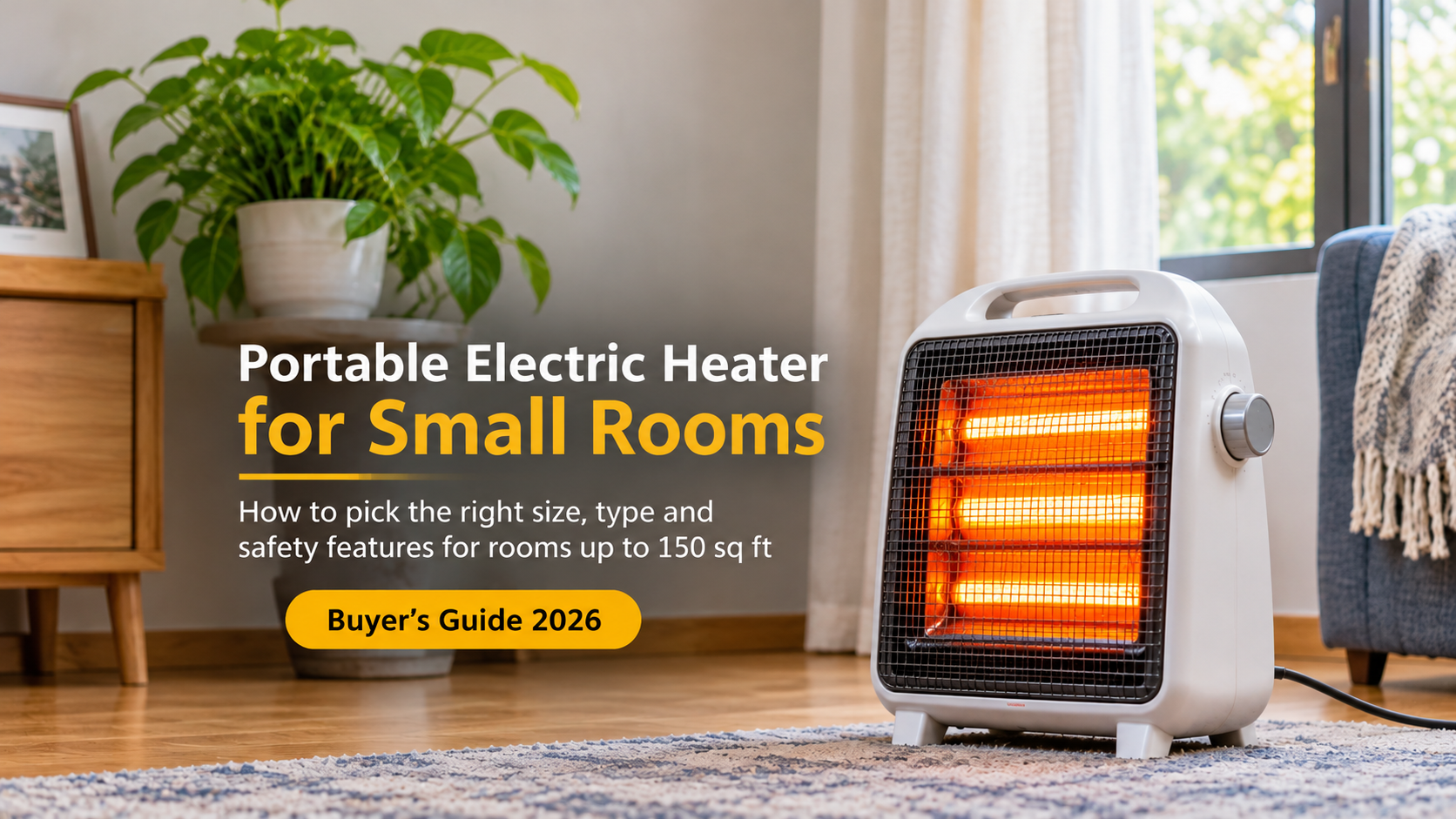

A small room can turn into the coldest spot in your home. A home office, a box-room bedroom, a tiny bathroom or a dorm space often sits at the end of the heating line, with thin walls, a drafty window and no real warmth. The good news is that the fix does not need to be big. A well-chosen portable electric heater for a small room can make the space comfortable in minutes, without heating the rest of the house.
The challenge is choosing well. Wattage, heater type, noise, safety features and placement all matter, and a wrong pick means either a room that never warms up or a heater that cycles hard and wastes electricity. This guide walks through each decision step by step so you can buy once and buy right.
Key takeaways
- For a small room, plan on about 10 watts of heating power per square foot of floor space.
- Most rooms up to 150 square feet are comfortably served by a 750 W to 1,500 W heater.
- Ceramic heaters warm up fastest, oil-filled heaters stay quietest and steadiest, and infrared heaters are best for warming you directly.
- Look for tip-over protection, overheat protection, an adjustable thermostat and a timer.
- Place the heater on a flat floor, keep three feet of clear space around it, and plug it straight into the wall.
What counts as a small room?
For heater shopping, a small room is generally one of about 150 square feet or less, with standard 8-foot ceilings. That covers a large share of the spaces people struggle to heat:
- Small and medium bedrooms
- Home offices and study rooms
- Bathrooms and utility rooms
- Dorm rooms and studio corners
- Nurseries, craft rooms and guest rooms
Small rooms are actually the best case for portable electric heaters. There is less air to warm, so a compact unit can do the job quickly, and you only pay to heat the space you are using.
How much power does a small room need?
The simplest rule is about 10 watts per square foot. Multiply the length of your room by its width, then multiply the result by 10. A 10 by 10 foot bedroom is 100 square feet, so it needs around 1,000 watts.

When to go higher or lower
Adjust the rule of thumb to fit your situation:
- Go higher if the room has big windows, an outside wall on several sides, a bare floor over a garage, or very thin insulation.
- Go lower if the room is well insulated, has a low ceiling, or you only need to warm the area around a desk or chair.
- Choose adjustable power settings so you can run a high setting to warm up and drop to low once the room is comfortable.
Most portable heaters in North America top out at 1,500 W, which is the most a standard 15-amp household outlet can safely supply to one appliance. That is plenty for any small room, so there is rarely a reason to look for something bigger.
Types of portable electric heaters for small rooms
All plug-in electric heaters turn nearly all of their electricity into heat. The real differences are in how the warmth feels, how fast it arrives, how loud the heater is and how much space it takes up. Here is how the main types compare.
| Heater type | How it works | Best small-room use | Trade-off |
|---|---|---|---|
| Mini ceramic tower or cube | Fan pushes air over a hot ceramic element | Quick warmth in offices, bathrooms and bedrooms | Fan noise; heat fades fast after it switches off |
| Small oil-filled radiator | Heated oil warms fins that radiate steady heat | Bedrooms and long evenings, silent comfort | Slow to warm up; bulkier and heavier |
| Infrared (radiant) heater | Invisible rays warm you and nearby objects | Desk, sofa or reading corner spot heating | Only warms what it faces |
| Panel or convection heater | Air circulates gently over a flat heated panel | Slim, quiet heat; many can stand or mount on a wall | Medium heat-up speed; needs space around it |
| Under-desk heater | Compact radiant unit aimed at legs and feet | Cold home office or study desk | Warms one person, not the room |

Ceramic heaters
Ceramic heaters are the most popular choice for small rooms, and for good reason. They are compact, warm up in seconds and often include handy extras like oscillation, a remote and a timer. Many ceramic elements are self-regulating, which helps limit overheating. The trade-off is fan noise, which can be noticeable in a quiet bedroom.
Oil-filled radiators
An oil-filled radiator takes a few minutes to get going but then gives off soft, steady heat, and it keeps radiating after the element cycles off. There is no fan, so it runs almost silently, which makes it a strong match for bedrooms. The downside is size: even small models are heavier and take more floor space than a ceramic tower.
Infrared heaters
Infrared units warm people and objects directly instead of heating the air first, so you feel warmth almost the moment you switch on. They suit desks, reading chairs and drafty spots. They are less effective at raising the temperature of an entire room, so think of them as spot heaters.
Panel and convection heaters
Slim panel heaters offer quiet, even warmth and often stand on feet or mount on a wall, which frees up floor space in tight rooms. They sit between ceramic and oil-filled models in speed and noise, which makes them a balanced all-rounder.
Under-desk and personal heaters
If the real problem is cold feet at your desk, a small under-desk heater delivers targeted warmth at low wattage. It will not heat the room, but it can let you leave the main thermostat lower while you work.
Choosing the right heater for your room
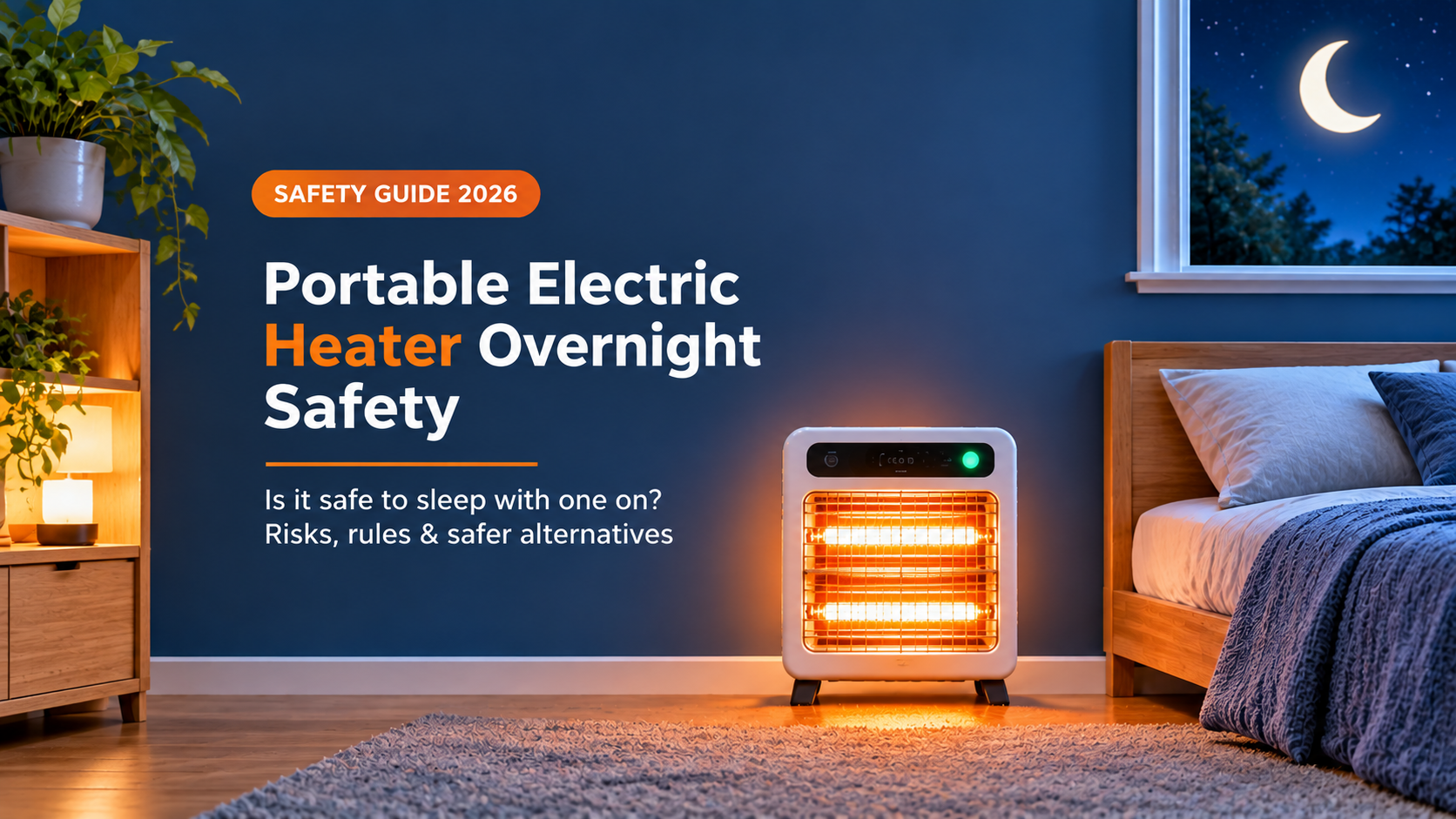
Bedroom: Prioritize quiet operation and a timer. An oil-filled or panel heater, or a ceramic model with a low-noise mode, is usually the most comfortable choice for sleeping areas. Make sure it has tip-over and overheat protection.
Home office: Choose something quiet enough for calls. An infrared, panel or under-desk heater keeps you warm without blasting air across your papers.
Bathroom: Only use a heater that is clearly rated for bathroom use, mount it or position it as the manufacturer instructs, and keep it well away from water. Many people prefer a compact ceramic model made for damp areas.
Dorm or rental room: Check any building rules first. A small, certified ceramic or panel heater with auto shut-off is typically the safest and most portable option.
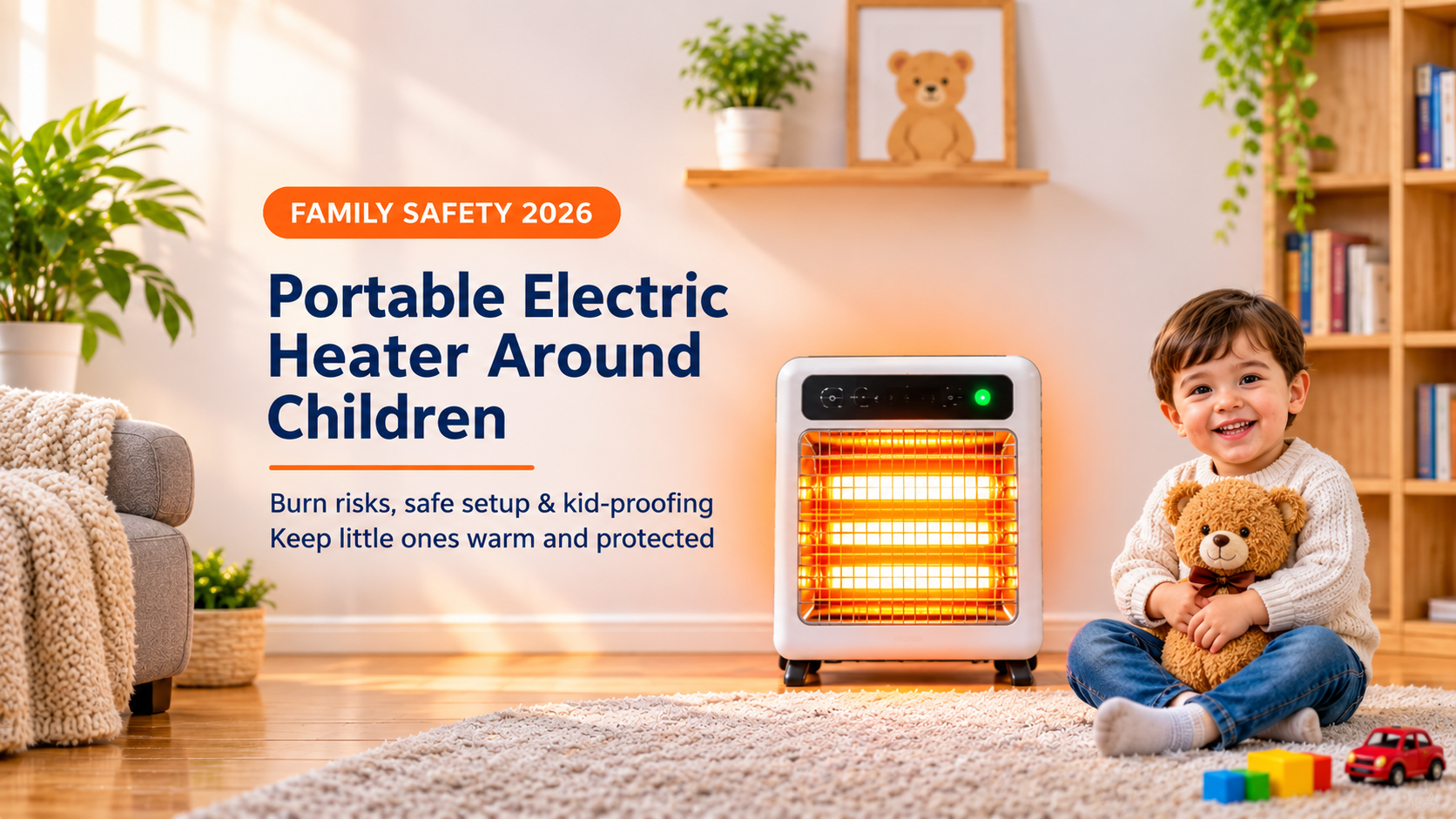
Nursery or kids’ room: Pick a cool-touch model with a tamper-resistant control panel, and keep it far out of reach. Safety features matter more here than speed.
Features worth paying for
- Adjustable thermostat: holds the room at a set temperature so the heater cycles off instead of running flat out.
- Tip-over switch: automatically cuts power if the heater is knocked over.
- Overheat protection: shuts the unit down if it gets too hot, which is vital in a small space.
- Timer: lets you warm the room before bed or before you wake, then shuts off on its own.
- Multiple heat settings: a low setting is often enough to maintain comfort once the room is warm.
- Cool-touch housing: helpful around children and pets.
- Low noise level: especially important for bedrooms and offices.
- Safety certification: look for a mark from a recognized testing laboratory on the product or packaging.
- Compact size and carry handle: makes it easy to move between rooms and store in summer.
How much does it cost to run a small-room heater?
You can estimate running cost with this formula:
Cost = (Watts ÷ 1,000) × Hours of use × Price per kWh
The table below assumes an example electricity price of $0.16 per kWh. Substitute your own rate from your electricity bill to get an accurate figure.
| Heater power | Cost per hour | Cost for 8 hours | Cost for 30 days (8 hrs/day) |
|---|---|---|---|
| 500 W | $0.08 | $0.64 | $19.20 |
| 750 W | $0.12 | $0.96 | $28.80 |
| 1,000 W | $0.16 | $1.28 | $38.40 |
| 1,500 W | $0.24 | $1.92 | $57.60 |
These are worst-case figures at constant full power. A thermostat cycles the heater off once the room is warm, so real-world cost is usually lower, especially in a small, well-sealed room. The fastest way to save is to use a lower-wattage heater and a timer so it only runs when you actually need it.
Where to place a heater in a small room
Placement matters more in a small room, where there is less space between the heater and everything flammable.

- Set the heater on a hard, flat, level surface. Avoid carpet edges, beds and sofas.
- Keep at least three feet of space between the heater and bedding, curtains, clothes and furniture.
- Position it where air can move freely, ideally near the cold wall or window, rather than tucked into a corner.
- Close the door so the warmth stays in the room.
Safety rules you should never skip
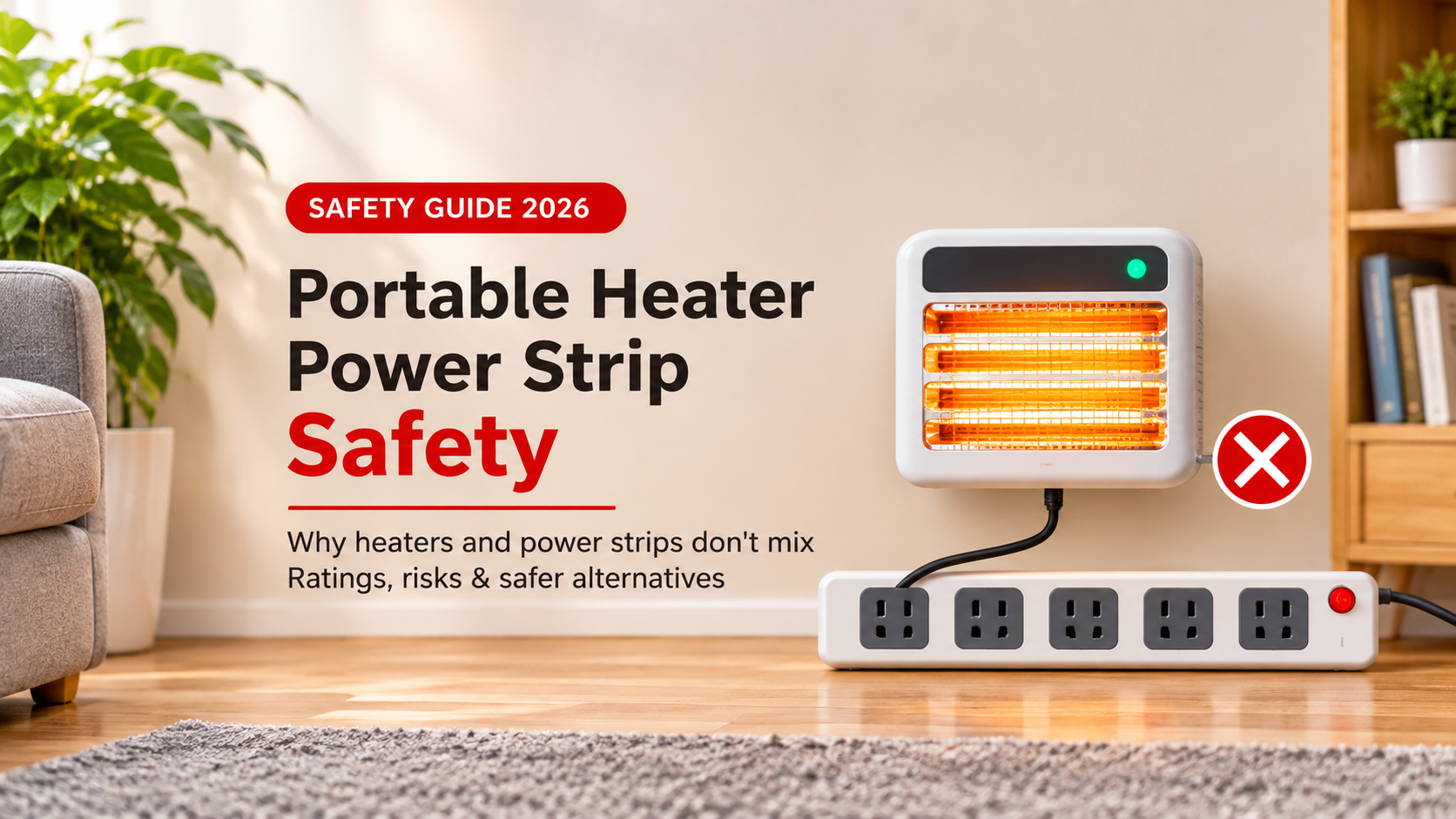
- Plug the heater directly into a wall outlet. Extension cords and power strips can overheat under a heater’s load.
- Never cover a heater or use it to dry clothes.
- Do not leave a heater running unattended, and follow the manufacturer’s guidance about use while sleeping.
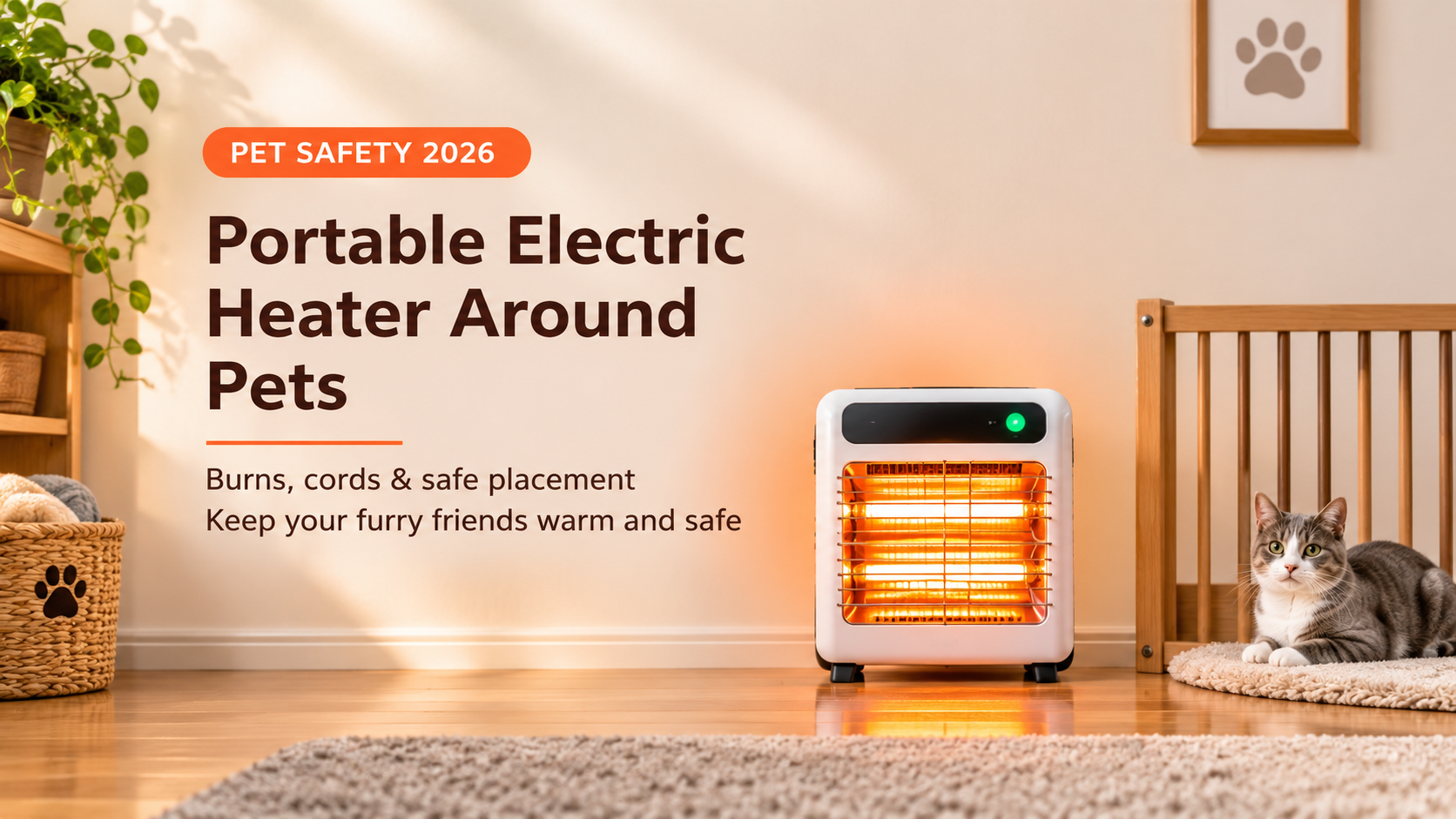
- Keep children and pets away from the unit, and choose a cool-touch model if they share the room.
- Inspect the cord and plug regularly, and stop using the heater if either looks damaged or feels hot.
- Make sure smoke alarms are installed and working near any room where you use a heater.
Simple ways to make a small room warmer for less
- Block drafts with weather stripping or a door draft stopper.
- Hang thick curtains to reduce heat loss through windows.
- Add a rug over bare floors for warmer feet and less heat escaping downward.
- Use the timer to pre-warm the room instead of running the heater all day.
- Choose the lowest comfortable setting and layer clothing or blankets for the rest.
- Keep the door closed so you only heat the space you are using.
Quick buyer’s checklist
- Wattage matched to your room size (about 10 W per sq ft)
- Adjustable thermostat and timer
- Tip-over and overheat protection
- Safety certification from a recognized testing lab
- Noise level that suits the room
- Compact footprint and easy-to-carry design
- Cord long enough to reach the outlet without an extension cord
- Clear warranty and reliable customer support
Frequently asked questions
What size heater do I need for a small room?
Use about 10 watts per square foot. A 100 square foot room needs roughly 1,000 W, and a 150 square foot room is a good match for a 1,500 W heater. Poor insulation or very cold weather may mean you want a little more power.
Which type of portable heater is best for a small room?
It depends on how you use the room. Ceramic heaters warm up fastest, oil-filled heaters are quietest and hold heat longest, and infrared heaters warm you directly at a desk or chair. For bedrooms, many people prefer oil-filled or panel models for their low noise.
Is a 1,500 watt heater too much for a small room?
It can be, if the room is tiny and well insulated, because it may heat the space faster than you need. A thermostat solves most of that by cycling the heater off once the room is warm. If you only need light warmth, a model with a low setting or a 750 W to 1,000 W unit may suit you better.
Are portable electric heaters safe to use in a bedroom?
They can be when used correctly. Choose a model with tip-over and overheat protection, keep it at least three feet from bedding and curtains, plug it directly into the wall, and follow the manufacturer’s advice about running it while you sleep.
How much does it cost to run a small heater?
At an example rate of $0.16 per kWh, a 1,000 W heater costs about $0.16 per hour at full power, and a 1,500 W heater costs about $0.24 per hour. Real cost is often lower because the thermostat cycles the heater off.
Can I use a portable heater in a bathroom?
Only if the heater is specifically rated for bathroom or damp-area use, and only as the manufacturer instructs. Keep it well away from water, sinks and tubs, and never use a standard indoor heater where it can get wet.
Do I need a heater with a fan?
Not necessarily. Fan heaters warm a room quickly but are noisier. Fanless oil-filled, panel and infrared heaters are quieter, which many people prefer for bedrooms and offices.
Why does my small heater keep turning off?
Most often it is the thermostat cycling off because the room has reached your set temperature. If it shuts off suddenly or too early, check that the vents are clear of dust, that nothing is blocking airflow, and that the unit is on a flat surface. A heater that shuts down repeatedly or smells strongly should be unplugged and checked.
Final thoughts
The best portable electric heater for a small room is the one that fits the space, suits how you use it and includes the safety features you can trust. Start with your room size to find the right wattage, pick the type that matches your priorities, whether that is speed, silence or spot warmth, and then check the thermostat, timer and protection features before you buy.
Pair the right heater with a few simple habits, like blocking drafts, using the timer and keeping a clear zone around the unit, and even the coldest corner of your home can become a comfortable place to be.