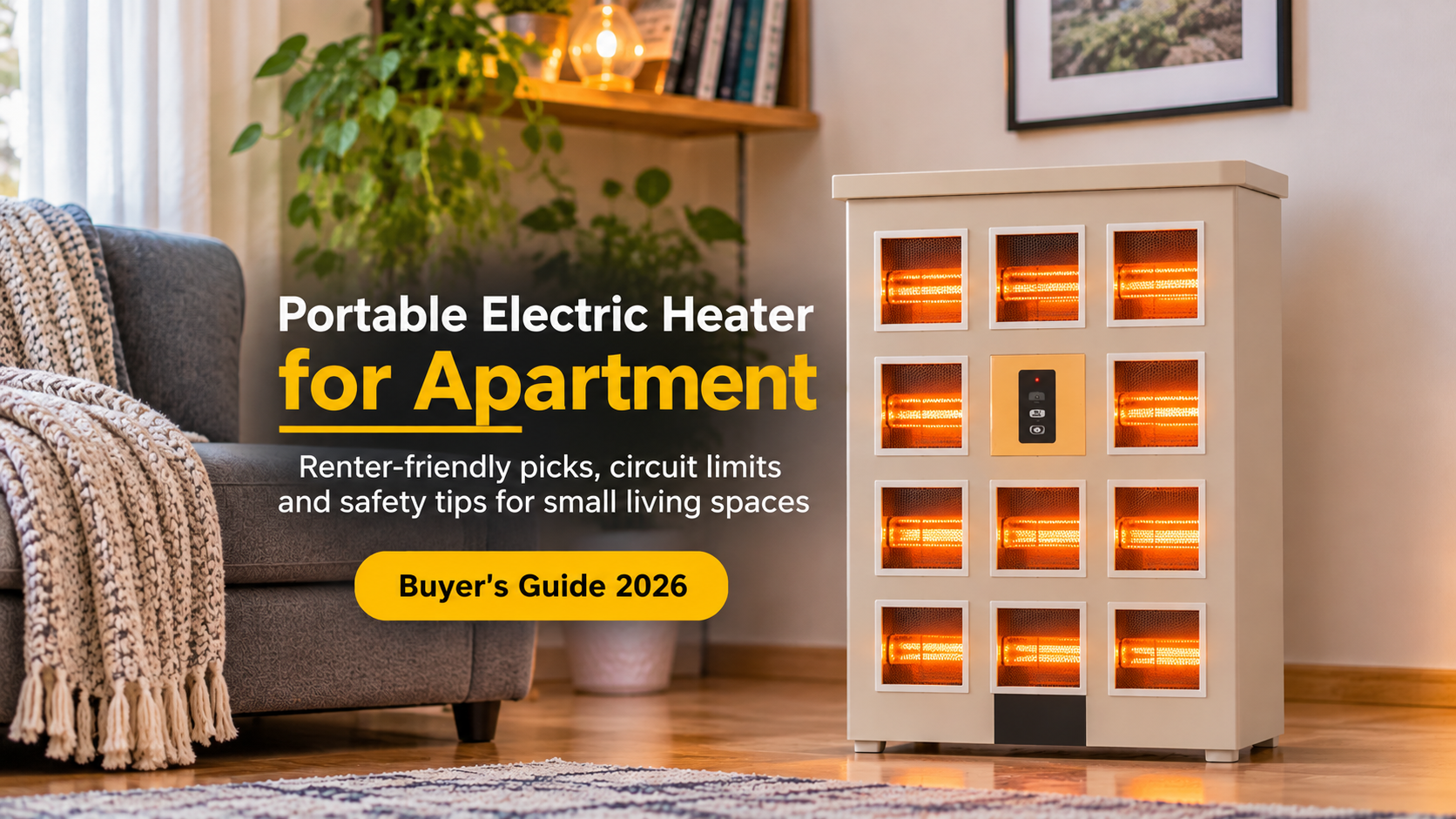

Apartment living comes with its own heating headaches. You often cannot control the building’s thermostat, the windows may be drafty, the walls thin and the radiator either blasting or barely working. Installing a new heating system is out of the question for a renter. That is why a portable electric heater has become the go-to fix for apartment dwellers who just want one room to feel comfortable.
But apartments are not like detached houses. You share walls and sometimes electrical circuits with neighbors, your lease may have rules, and space is tight. This guide explains how to choose a portable electric heater for an apartment, how to avoid tripping breakers, which types are quietest, and how to use one safely without driving up your electricity bill.
Key takeaways
- Check your lease and building rules before you buy. Some landlords restrict space heaters.
- One plug-in heater warms one room. For a studio or large living area, use zone heating around where you sit or sleep.
- Most heaters max out at 1,500 W, so avoid running another high-power appliance on the same circuit.
- Quiet, compact, fanless models are best for thin walls and small spaces.
- Tip-over protection, overheat protection, a thermostat and a timer are essential.
Why a portable heater suits apartment life
- No installation: plug it in and use it right away, which is ideal when you cannot modify the property.
- Renter-friendly: take it with you when you move.
- Targeted warmth: heat only the room you use instead of relying on building heat that may run too hot or too cold.
- No fumes or venting: electric heaters do not burn fuel, so there are no combustion gases in your living space.
- Compact options: slim towers, panels and mini heaters fit tight apartments.
Check your lease and building rules first
Before buying, read your lease and ask your landlord or property manager whether there are rules about portable heaters. Some buildings restrict them for fire-safety and electrical reasons, especially in older properties.
- Look for any clause that mentions space heaters or electric appliances.
- Ask whether there is a wattage limit or an approved-product requirement.
- Ask whether your electricity is included in the rent. Some landlords restrict heater use for that reason.
- If your heating is not working properly, report it. In many places, landlords are responsible for providing working heat.
How big a heater does your apartment need?
The usual rule of thumb is about 10 watts per square foot of floor space. A 120 square foot bedroom needs about 1,200 W, so a 1,500 W heater is a good fit. Larger rooms need more than one plug-in heater can provide.

Use zone heating for living rooms and studios
In a studio or open living area, trying to heat every square foot with one portable heater will not work well. Instead, warm the zone where you sit, work or sleep, keep interior doors closed, and layer clothing and blankets for the rest.
Think about insulation, not just wattage
An apartment with big single-pane windows, an exterior corner wall or a floor over an unheated space loses heat quickly, so it needs more help than a well-insulated mid-building unit. A few cheap draft fixes can matter as much as a bigger heater.
Don’t trip the breaker: understand your circuit
One of the most common apartment heater problems is a tripped breaker. Most household outlets share a circuit with other outlets and lights, and a typical 15-amp circuit supports roughly 1,800 watts at most, and less for continuous use. A 1,500 W heater already uses most of that capacity.

- Do not run a microwave, toaster, hair dryer or air conditioner on the same circuit as the heater.
- If a breaker trips, switch off other devices on that circuit or try an outlet in another room.
- If you keep tripping the same breaker, switch to a lower power setting and ask your landlord or an electrician to check the wiring.
- Never defeat or modify a breaker or outlet to keep a heater running.
Best types of portable heaters for an apartment
Every plug-in electric heater converts nearly all of its electricity into heat, so none is meaningfully more efficient than another in raw terms. What matters in an apartment is noise, footprint and how easily you can move it.
| Heater type | How it heats | Why it suits an apartment | Trade-off |
|---|---|---|---|
| Ceramic tower heater | Fan blows air across a hot ceramic element | Fast, compact, light and easy to move between rooms | Fan noise can carry through thin walls |
| Oil-filled radiator | Heated oil warms fins that radiate steady heat | Silent, steady warmth for bedrooms and long evenings | Slow to heat; heavy and bulky |
| Panel or convection heater | Air circulates gently over a flat heated panel | Slim, quiet, and many stand on feet or hang on a wall | Medium heat-up speed |
| Infrared (radiant) heater | Invisible rays warm you and nearby objects | Instant warmth at a desk or sofa; good for drafty rooms | Only warms what it faces |
| Mini personal heater | Small fan or radiant element for close range | Tiny footprint for desks, bathrooms and nooks | Not enough for a whole room |

For thin walls and light sleepers
Choose a fanless oil-filled or panel heater. They run almost silently, which keeps both you and your neighbors happy.
For small spaces and quick warmth
A compact ceramic tower or infrared heater warms you in seconds and tucks neatly into a corner. Look for a quiet mode if you work from home or take calls.
For bathrooms and tiny nooks
Only use a heater that is clearly rated for bathroom or damp-area use, and follow the manufacturer’s placement instructions. A mini personal heater is handy for a desk or a cold corner.
Must-have features for apartment heaters
- Tip-over switch: cuts power automatically if the heater is knocked over.
- Overheat protection: shuts the unit down if it gets too hot.
- Adjustable thermostat: holds a steady temperature so the heater cycles off instead of running flat out.
- Timer and auto shut-off: prevents wasted energy and helps if you forget to switch it off.
- Multiple power settings: lets you drop to 750 W or lower to avoid tripping the breaker.
- Low noise or fanless design: respects thin walls and neighbors.
- Cool-touch housing: reduces burn risk around kids and pets.
- Safety certification: look for a mark from a recognized testing laboratory on the product or packaging.
- Light, compact build with a handle: easy to carry and store.
Apartment heater safety rules
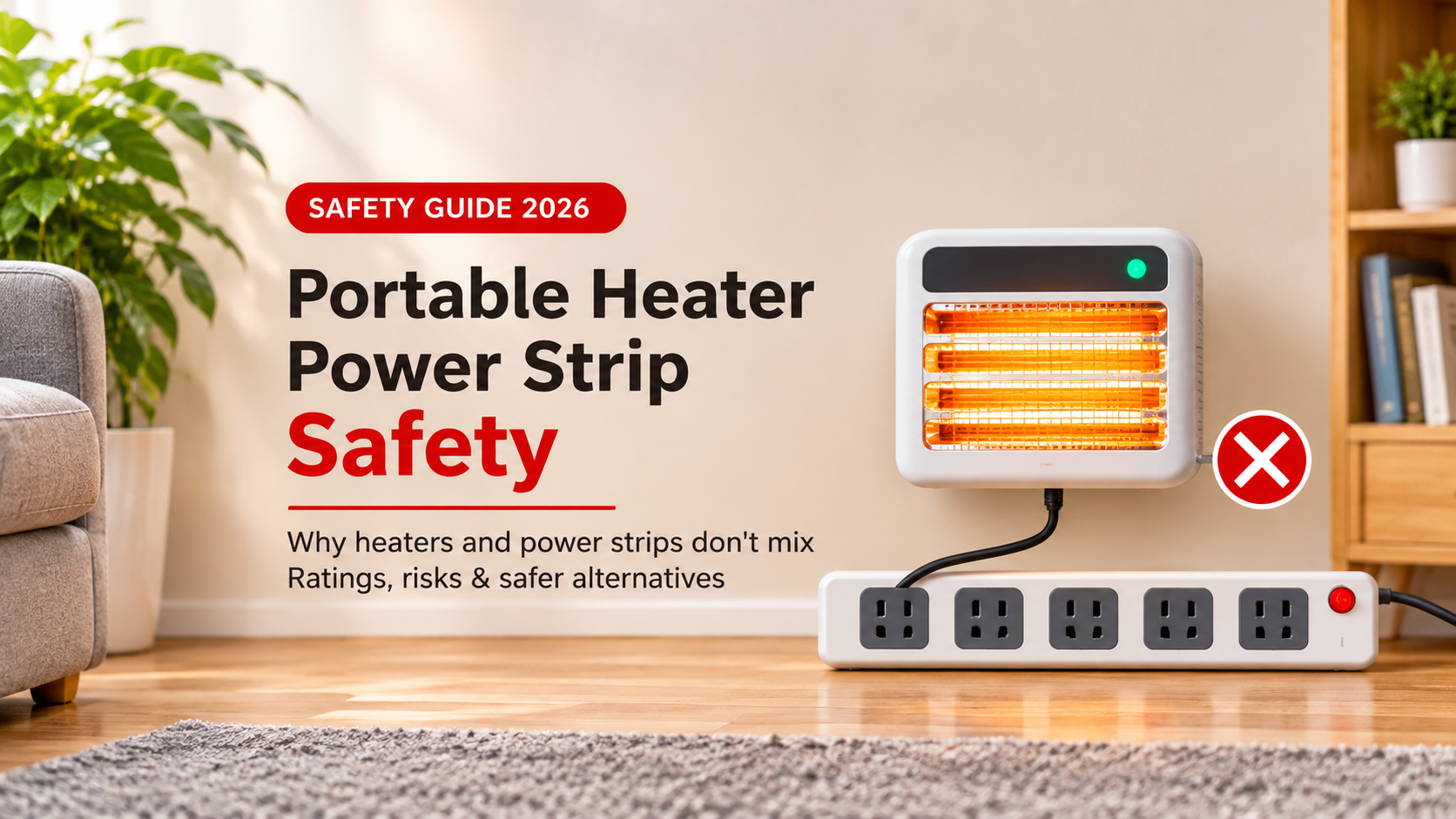
- Plug the heater directly into a wall outlet. Extension cords and power strips can overheat under a heater’s load.
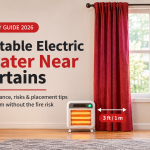
- Keep at least three feet of clear space around the heater, away from curtains, bedding, furniture and clutter.
- Place it on a hard, flat surface, never on a sofa, bed or thick rug edge.
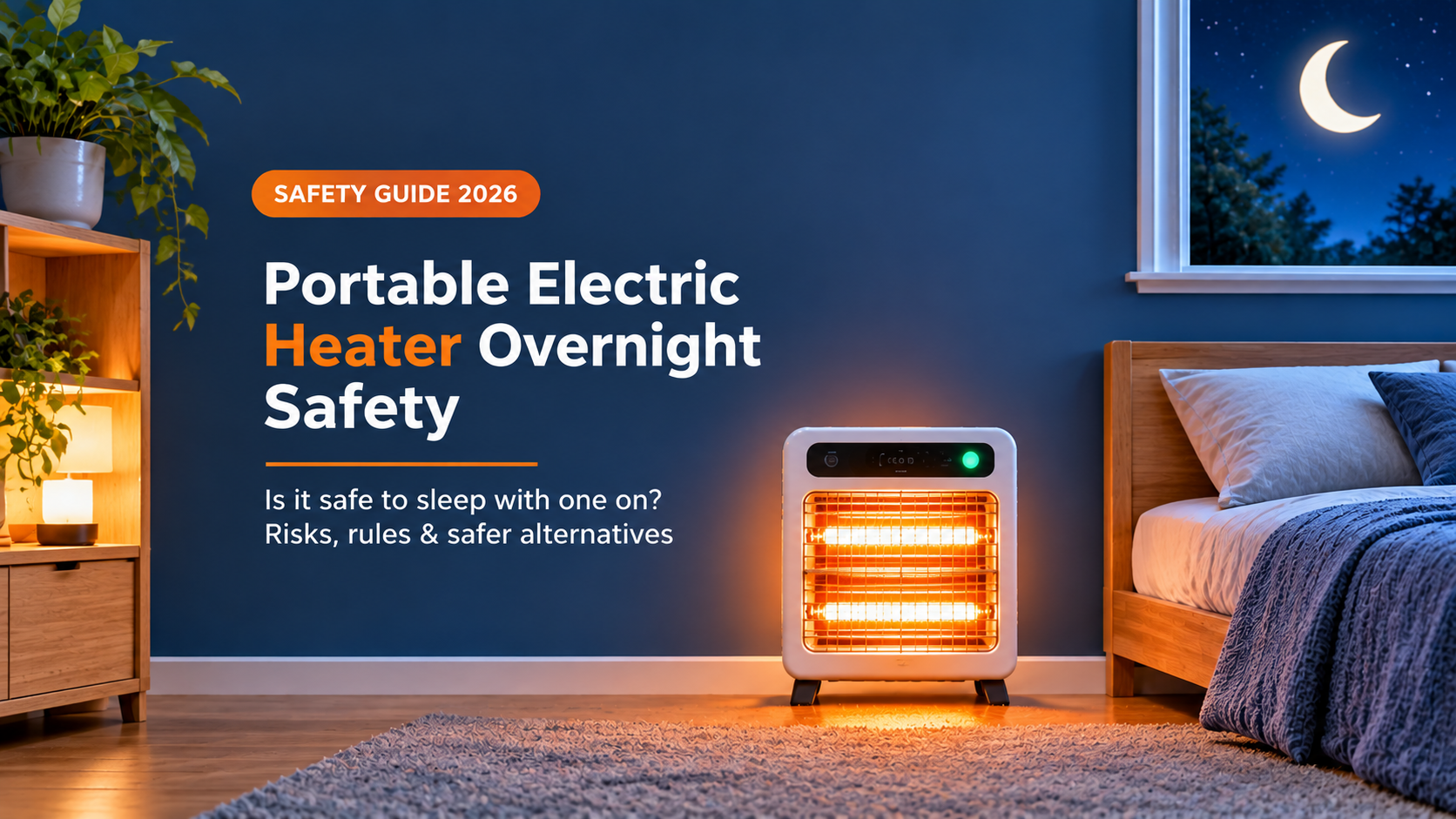
- Never leave a heater running unattended or while you are out. Follow the manufacturer’s guidance on use while sleeping.
- Never use a heater to dry laundry or cover it with anything.
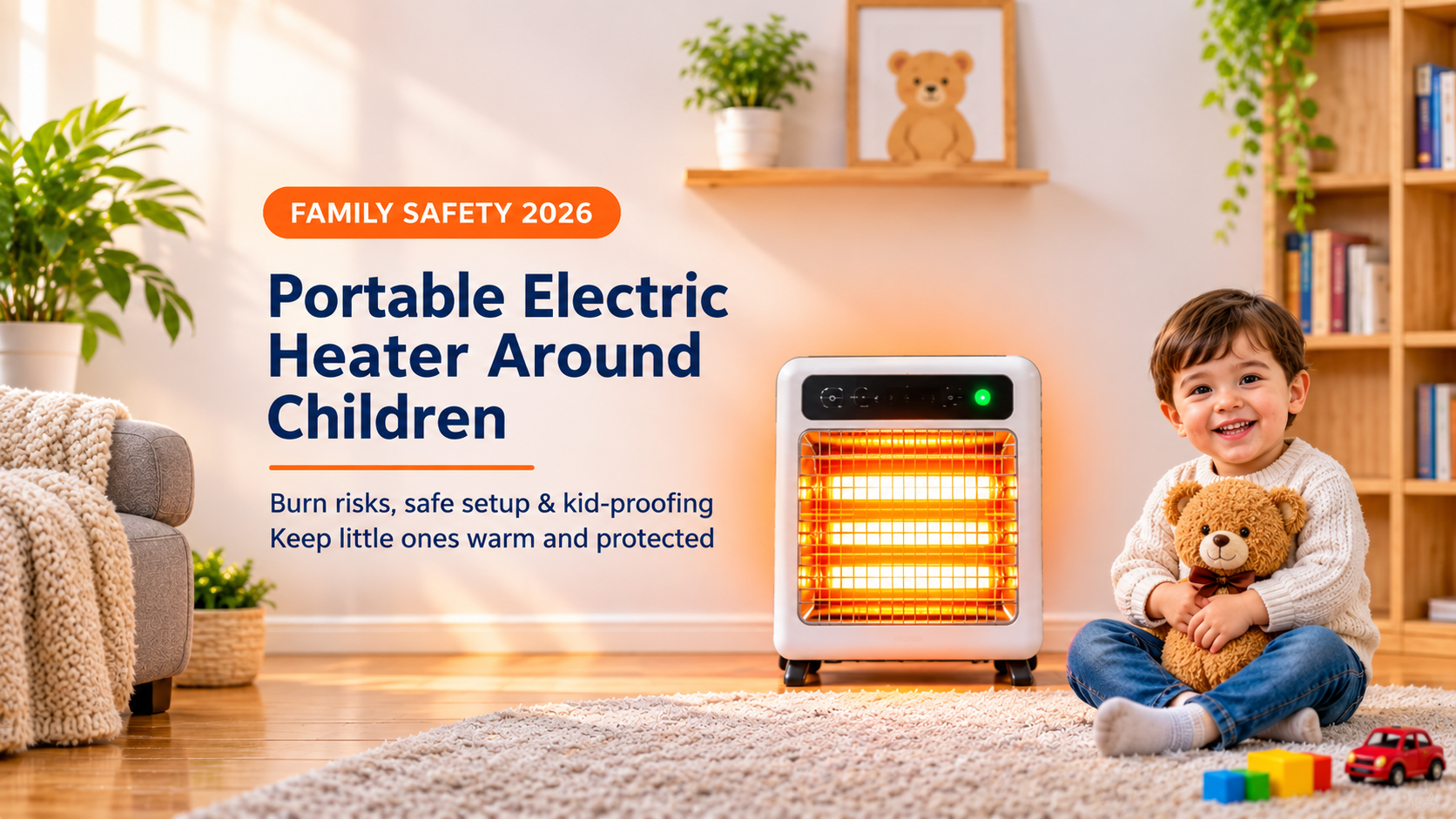
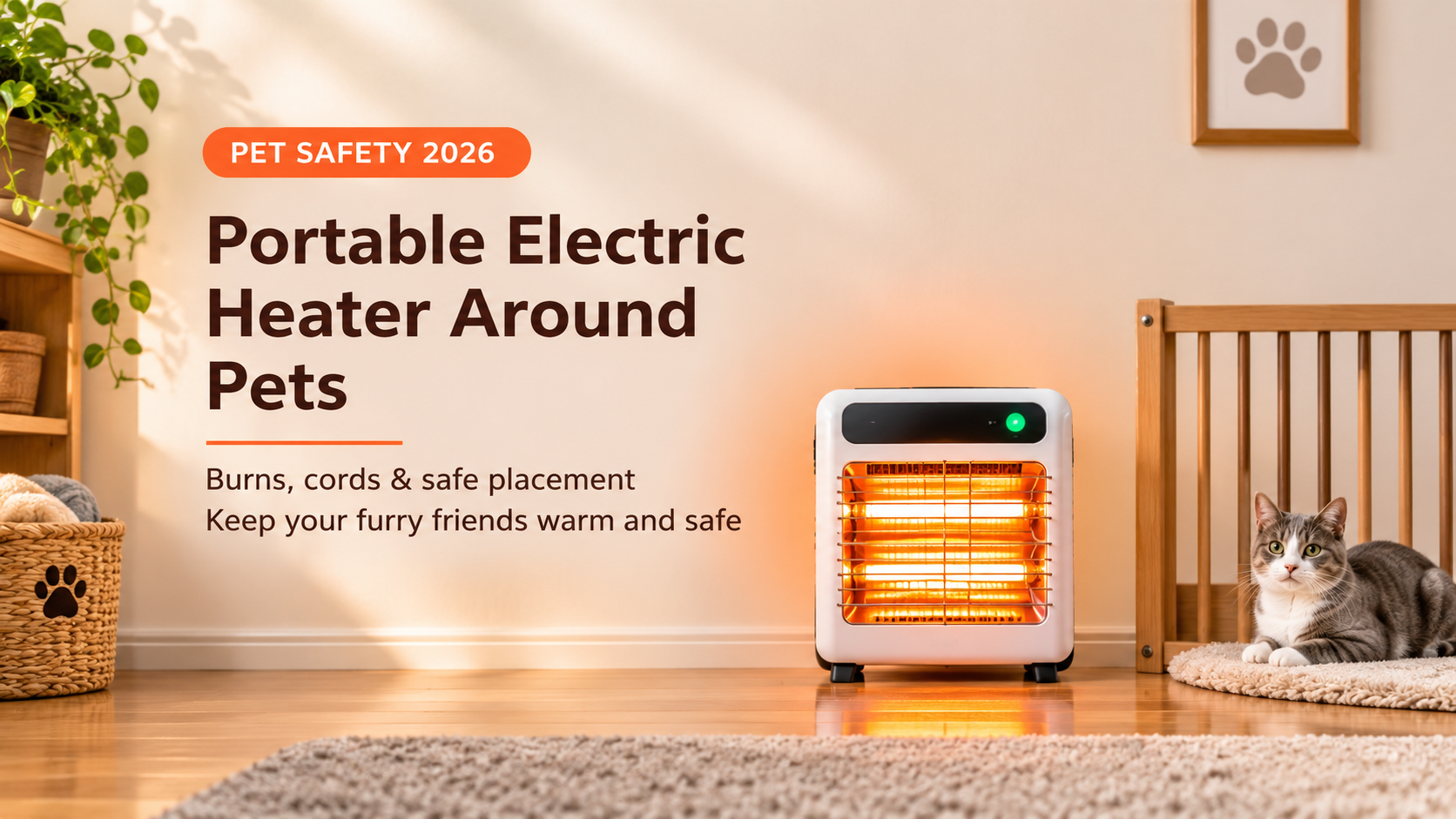
- Keep children and pets away from the unit.
- Make sure smoke alarms are installed and working. Test them regularly.
- Stop using the heater if the cord or plug is damaged or feels hot, or if you notice a burning smell.
How to arrange heating in your apartment

- Place the heater near the coldest wall or window, as long as it stays clear of curtains.
- Keep the cord out of walkways so nobody trips on it.
- Close interior doors so the warmth stays in the room you are heating.
- Use a timer to pre-warm the bedroom before bed rather than leaving the heater on all night.
How much does it cost to run an apartment heater?
Use this formula to estimate running cost:
Cost = (Watts ÷ 1,000) × Hours of use × Price per kWh
The table below assumes an example electricity price of $0.16 per kWh and 4 hours of full-power use a day. Swap in your own rate from your electricity bill.
| Heater power | Cost per hour | Cost for 4 hours a day | Cost for 30 days |
|---|---|---|---|
| 500 W | $0.08 | $0.32 | $9.60 |
| 750 W | $0.12 | $0.48 | $14.40 |
| 1,000 W | $0.16 | $0.64 | $19.20 |
| 1,500 W | $0.24 | $0.96 | $28.80 |
A thermostat usually brings real-world cost below these figures, since the heater cycles off once the room is warm. If your landlord includes electricity in the rent, you may not see these costs directly, but heavy heater use can still lead to rule changes, so be considerate.
Ways to keep your apartment warmer for less
- Seal drafts around windows and doors with removable weather stripping or a door draft stopper.
- Use removable window insulation film or thick curtains to cut heat loss through glass.
- Lay down rugs over bare floors for warmer feet and less heat escaping.
- Close doors to rooms you are not using.
- Layer clothing and bedding so you can keep the room temperature lower.
- Use the timer to heat only when you need to.
Apartment heater buyer’s checklist
- Lease and building rules confirmed
- Wattage matched to the room (about 10 W per sq ft)
- Quiet or fanless operation for thin walls
- Adjustable thermostat, timer and multiple power settings
- Tip-over and overheat protection
- Compact footprint, light and easy to carry
- Recognized safety certification
- Cord long enough to reach the wall without an extension cord
- Clear warranty and customer support
Frequently asked questions
What is the best portable heater for a small apartment?
For a bedroom or small room, a 1,000 W to 1,500 W oil-filled or panel heater offers quiet, steady warmth. For quick spot heating at a desk or sofa, a compact ceramic or infrared heater works well.
Are space heaters allowed in apartments?
It depends on your lease and building. Many landlords allow them, but some restrict them for fire-safety or electrical reasons. Read your lease and ask your property manager before using one.
Can a portable heater heat a whole apartment?
Not usually. A plug-in heater is designed for one room of about 150 square feet or less. For a larger apartment, use zone heating in the rooms you occupy and close the doors.
Why does my heater keep tripping the breaker?
Most likely the circuit is overloaded. A 1,500 W heater uses most of a typical 15-amp circuit, so running another high-power device at the same time can trip it. Try a lower setting, a different outlet or turning off other appliances. If it keeps happening, ask your landlord or an electrician to check.
Can I leave a heater on while I’m out?
No. Never leave a heater running unattended or while you are away. Use a model with a timer and auto shut-off, and switch it off when you leave.
What type of heater is quietest?
Fanless heaters, such as oil-filled radiators and many panel and infrared models, are nearly silent. Fan-forced ceramic heaters are louder, so look for a quiet mode if you share thin walls.
How much does it cost to run an apartment heater?
At an example rate of $0.16 per kWh, a 1,500 W heater costs about $0.24 per hour at full power, and a 1,000 W heater costs about $0.16. A thermostat and timer usually bring real costs below those figures.
Can I use an extension cord with a space heater?
It is best not to. Heaters draw a lot of power, and extension cords and power strips can overheat. Plug the heater directly into a wall outlet.
Final thoughts
The best portable electric heater for an apartment is quiet, compact, correctly sized and packed with safety features. Check your lease first, pick a model that matches the room you want to heat, and be careful not to overload your circuit. Choose fanless if you have thin walls, and make sure it has tip-over protection, overheat protection, a thermostat and a timer.
Add simple habits like zone heating, sealing drafts, closing doors and using the timer, and even a drafty rental can feel warm and cozy without a big bill or safety worries.