

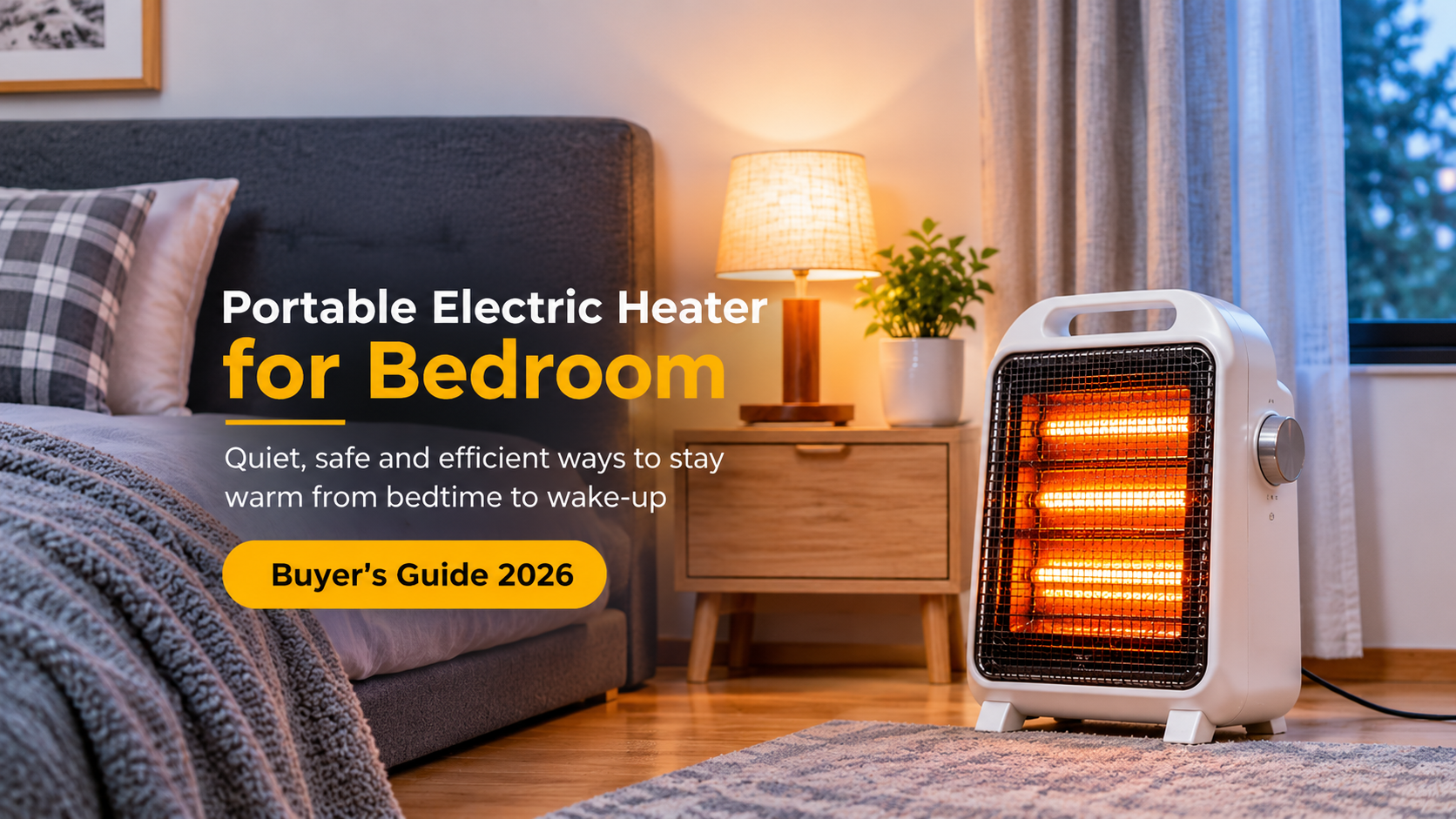

Getting out of a warm bed into a cold bedroom is one of winter’s small miseries, and trying to fall asleep in a chilly room is not much better. Heating the whole house just to warm one room is expensive, which is why so many people turn to a portable electric heater for the bedroom. Done right, it takes the edge off the cold exactly where and when you need it.
But a bedroom is not like a living room or a garage. You want a heater that is quiet, safe around bedding and curtains, gentle on the air, and easy to control with a timer. This guide covers everything you need to choose and use one wisely: how much power you need, which type suits sleeping spaces, which safety features matter most, and how to keep running costs under control.
Key takeaways
- Plan on about 10 watts of heating power per square foot. Most bedrooms are well served by a 1,000 W to 1,500 W heater.
- Oil-filled and panel heaters are usually the quietest. Ceramic heaters warm up fastest.
- Tip-over protection, overheat protection, a thermostat and a timer are the must-have features for bedrooms.
- Keep the heater at least three feet from beds, bedding and curtains, and plug it straight into the wall.
- Use the timer to pre-warm the room, rather than heating all night.
Why a portable heater makes sense for a bedroom
A bedroom is usually the right size for a plug-in electric heater. It is a small, enclosed space, you spend most of your time there at predictable hours, and you rarely need the room warm for long. A few smart advantages stand out:
- Zone heating: warm only the room you are in and keep the rest of the house cooler.
- No fumes: electric heaters do not burn fuel, so they produce no combustion gases in the room.
- Easy setup: plug in, set the temperature and go. No installation or venting is needed.
- Portability: move it between rooms, or tuck it away in summer.
One thing to keep in mind: sleep specialists often cite a cool bedroom, roughly 60 to 67°F (15 to 19°C), as the sweet spot for sleeping. So the goal is not a hot room at night. It is a comfortably mild room for getting into bed and getting dressed in the morning, which is exactly what a timer and thermostat are good at.
How much power does a bedroom heater need?
The standard rule of thumb is about 10 watts per square foot. Multiply your room’s length by its width, then multiply by 10. A 12 by 12 foot bedroom is 144 square feet, so it needs about 1,440 watts, which means a 1,500 W heater is the right fit.

Why most heaters stop at 1,500 watts
Standard household outlets in North America can safely supply about 1,500 watts to a single appliance, which is why almost every portable heater maxes out there. For a large bedroom over about 150 square feet, a single heater may struggle on very cold nights. Better insulation, sealing drafts, closing the door and adding a second small heater are all smarter solutions than looking for a bigger unit.
Look for adjustable power
Choose a heater with multiple power settings and an adjustable thermostat. You can use a higher setting to take the chill off quickly, then drop to a lower setting to maintain comfort. This is more efficient, and it keeps noise down.
Best types of portable heaters for a bedroom
All plug-in electric heaters turn nearly all of the electricity they use into heat, so none is meaningfully more efficient than another in raw terms. What differs is how the heat feels, how loud the heater is and how quickly it works. For a bedroom, noise and steadiness matter most.
| Heater type | How it heats | Why it suits a bedroom | Trade-off |
|---|---|---|---|
| Oil-filled radiator | Sealed oil warms metal fins that radiate steady heat | Silent, steady, soft warmth that lingers after the element cycles off | Slow to warm; heavy and bulky |
| Panel or convection heater | Air circulates gently over a flat heated panel | Quiet, slim, and many models stand or wall-mount to save floor space | Medium heat-up speed |
| Ceramic tower heater | Fan blows air across a hot ceramic element | Fast warmth, compact, often with timer and remote | Fan noise can bother light sleepers |
| Infrared (radiant) heater | Invisible rays warm you and nearby objects | Quick warmth for dressing or reading in bed | Warms what it faces, not the whole room |
| Micathermic panel heater | Mix of radiant and convection heat from a thin panel | Lightweight, slim and fairly quiet | Fewer models to choose from |

Oil-filled radiators: the quiet choice
An oil-filled radiator has no fan, so it runs almost silently. It takes a little while to heat up, but then it provides soft, even warmth and keeps radiating for a while after the element switches off. That makes it a favorite for people who are light sleepers. The downsides are weight and a bigger footprint.
Panel and convection heaters: slim and balanced
Slim panel heaters are quiet, lightweight and often designed to stand against a wall or even mount on one, which is great when floor space is tight. They warm up faster than oil-filled units but not as fast as ceramic fan heaters.
Ceramic tower heaters: fast and compact
If you want the room warm in a few minutes, ceramic tower heaters are hard to beat. They often come with timers, remotes and oscillation. Because they use a fan, they are louder than fanless models, so look for a quiet mode or low-noise rating if you plan to run one while you are in the room.
Infrared heaters: instant direct warmth
Infrared heaters warm you rather than the air, which is handy for the moments when you are getting dressed or reading in bed. They are less effective at raising the temperature of the whole room.
Must-have features for bedroom heaters
- Tip-over switch: cuts power immediately if the heater is knocked over by a pet, a child or a stray foot.
- Overheat protection: shuts the heater down automatically if it gets too hot.
- Accurate thermostat: holds your chosen temperature so the heater cycles off instead of running flat out.
- Programmable timer: pre-warms the room before you get into bed or before you wake up, then turns off on its own.
- Low noise level or sleep mode: keeps the fan quiet, or removes it entirely.
- Dimmable or switch-off display: a bright display can disturb sleep.
- Cool-touch housing: reduces burn risk around kids and pets.
- Remote control: adjust settings from bed without getting up.
- Safety certification: look for a mark from a recognized testing laboratory on the product or packaging.
Is it safe to use a heater in a bedroom?
Space heaters are a leading cause of home heating fires when misused, so bedroom safety deserves your full attention. A properly chosen and placed electric heater can be used safely, but the rules are not optional.
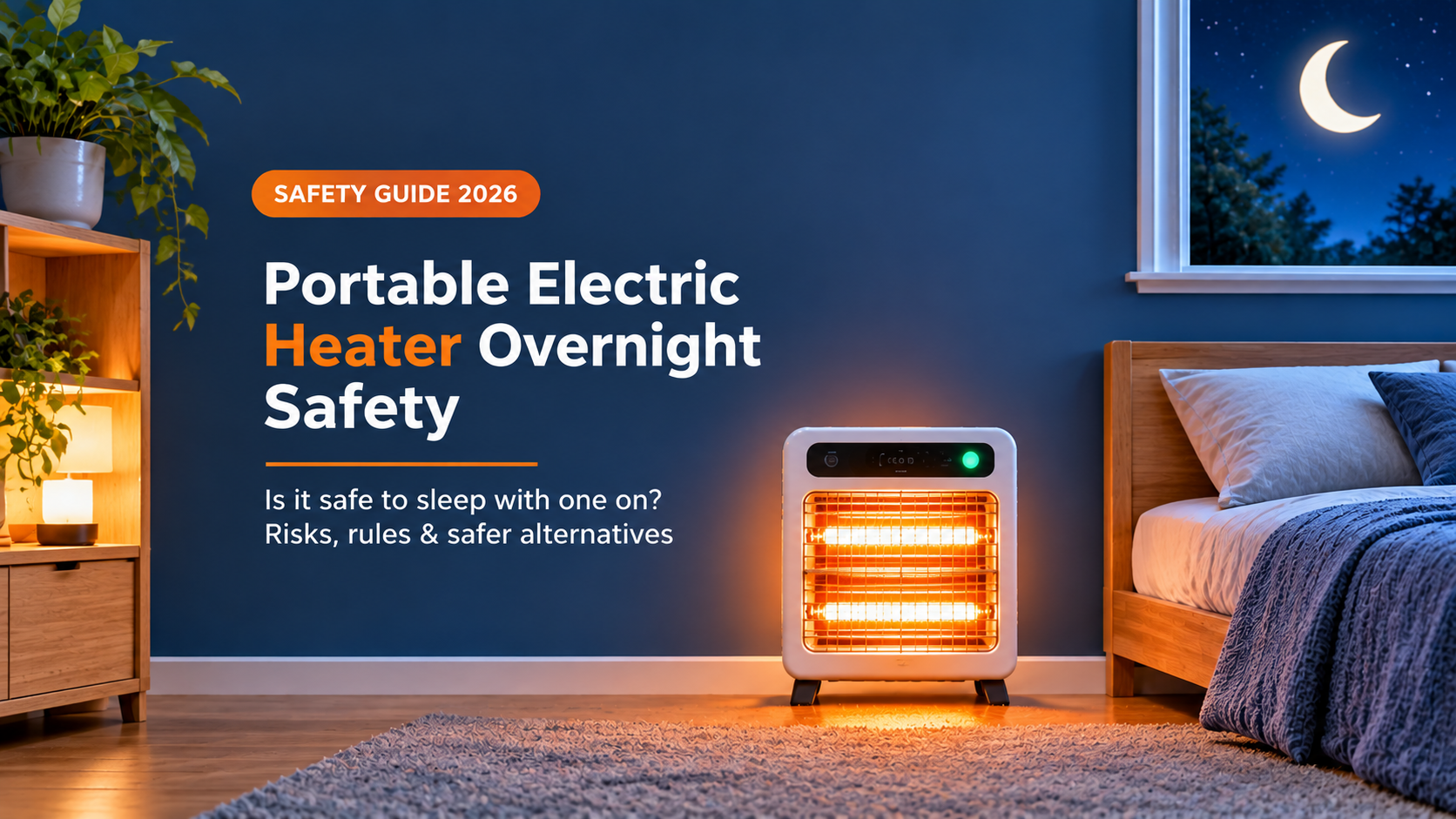
- Follow the manufacturer’s guidance on whether the heater is designed to run while you sleep. Many say it should not be left running unattended.
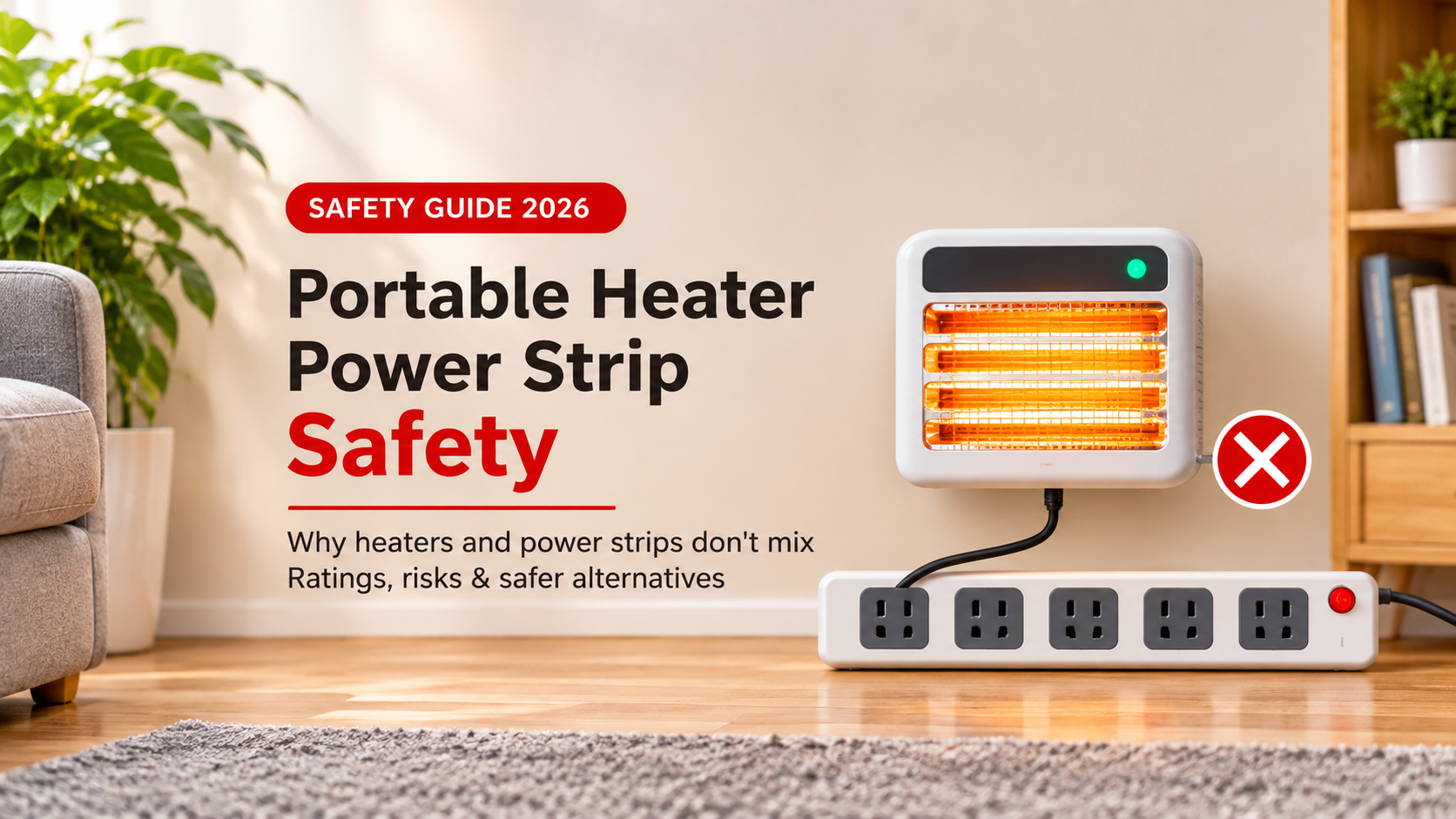
- Plug the heater directly into a wall outlet. Extension cords and power strips can overheat.
- Keep at least three feet of clear space between the heater and the bed, bedding, curtains and clothing.
- Place the heater on a hard, flat surface. Never put it on a bed, sofa or thick carpet edge.
- Do not cover the heater or use it to dry clothes.
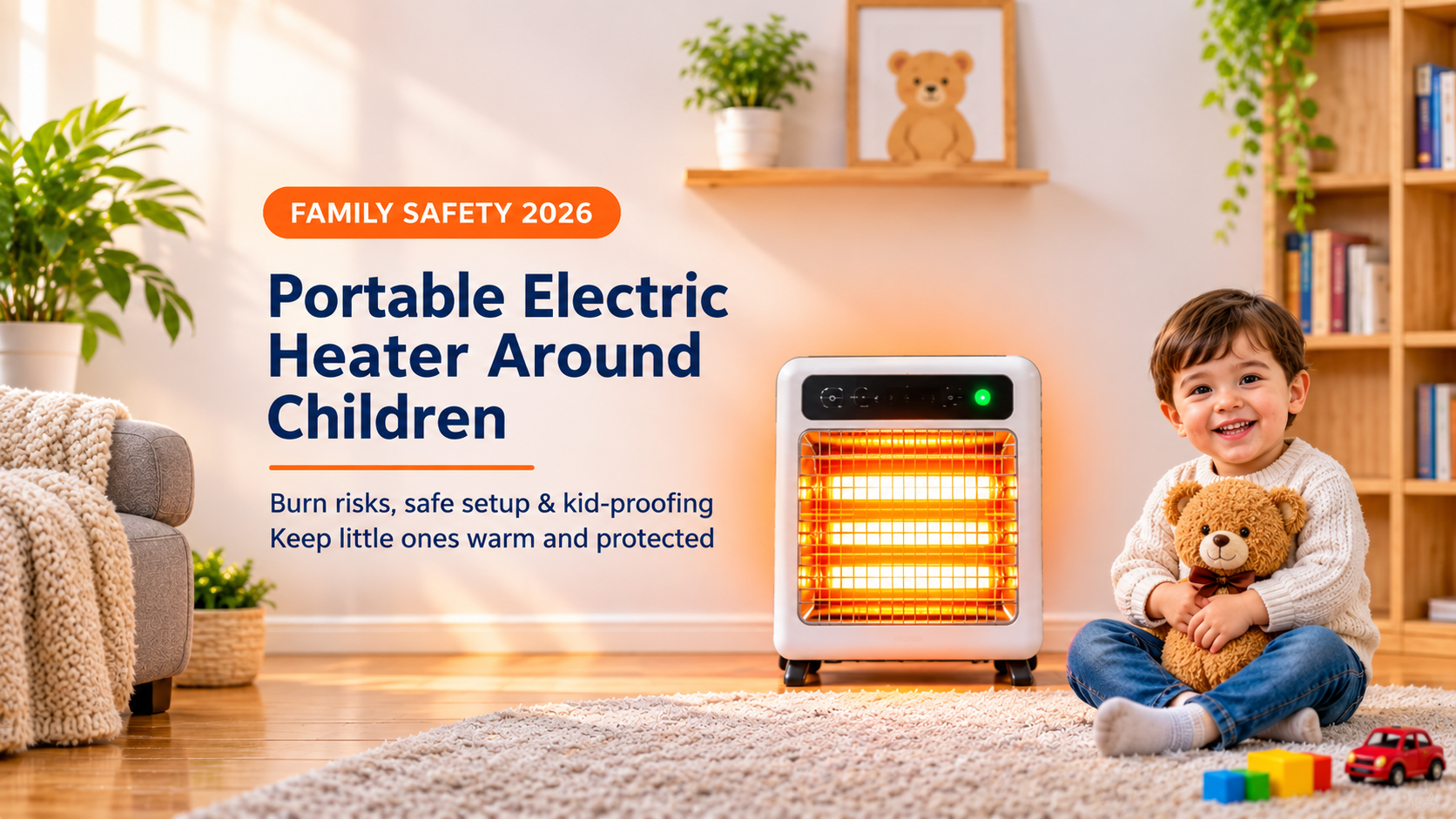
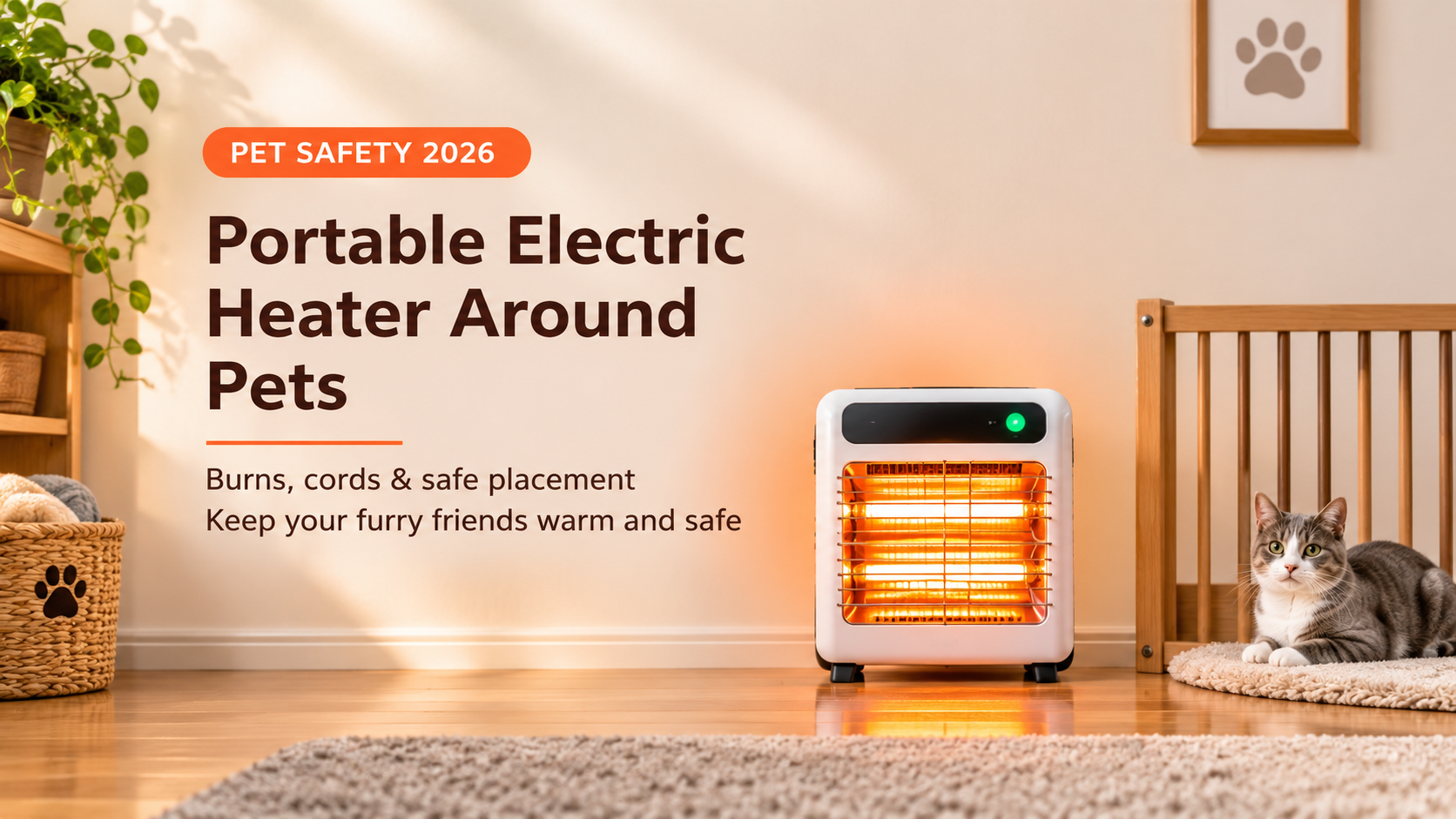
- Keep children and pets away from the unit.
- Check the cord and plug often, and stop using a heater with any sign of damage or a hot plug.
- Install and test smoke alarms in your bedroom and nearby hallway.
Where to put the heater in your bedroom

- Position the heater near the coldest wall or window, where it can counter the draft, as long as it stays clear of curtains.
- Keep the cord short and out of the walkway so nobody trips on it in the dark.
- Leave air space on all sides and make sure vents are not blocked.
- Close the bedroom door so the heat stays where you want it.
A smart bedtime heating routine
You do not need the heater running all night. A simple routine keeps the room comfortable and your bill lower:

How much does it cost to heat a bedroom?
Use this formula to estimate your running cost:
Cost = (Watts ÷ 1,000) × Hours of use × Price per kWh
The table assumes an example electricity price of $0.16 per kWh and an 8-hour period of continuous full power, which is the worst case. Swap in your own rate from your electricity bill.
| Heater power | Cost per hour | Cost for an 8-hour night | Cost for 30 nights |
|---|---|---|---|
| 500 W | $0.08 | $0.64 | $19.20 |
| 750 W | $0.12 | $0.96 | $28.80 |
| 1,000 W | $0.16 | $1.28 | $38.40 |
| 1,500 W | $0.24 | $1.92 | $57.60 |
In practice, a thermostat-controlled heater cycles off once the room is warm, so the real cost is usually lower. Running a heater for 30 to 60 minutes before bed and again before you wake costs only a small fraction of these numbers.
Ways to keep your bedroom warmer with less energy
- Seal drafts around windows and doors with weather stripping or a door draft stopper.
- Hang thick or thermal curtains to cut heat loss through glass, and keep them clear of the heater.
- Add a rug to a bare floor for warmer feet and less heat escaping.
- Layer your bedding with a warm duvet or blanket so you can keep the room temperature lower.
- Keep the door closed so you are only heating one room.
- Use the timer rather than leaving the heater on for hours.
Bedroom heater buyer’s checklist
- Wattage matched to your bedroom size (about 10 W per sq ft)
- Quiet operation, ideally fanless or with a low-noise mode
- Adjustable thermostat and programmable timer
- Tip-over and overheat protection
- Dimmable or switch-off display
- Cool-touch housing if children or pets share the room
- Recognized safety certification
- Cord long enough to reach the wall without an extension cord
- Clear warranty and good customer support
Frequently asked questions
What is the best type of heater for a bedroom?
Oil-filled radiators and panel heaters are often the best fit because they are quiet and provide steady warmth. If you want the room warm fast, a ceramic tower heater is a good choice, though its fan is louder.
What size heater do I need for a bedroom?
Use about 10 watts per square foot. A 100 square foot bedroom needs about 1,000 W, and a 150 square foot bedroom is a good match for a 1,500 W heater. Larger or poorly insulated rooms may need extra help.
Is it safe to leave a heater on all night?
Many manufacturers advise against leaving a heater running while you sleep or unattended. If you use one, choose a model with tip-over and overheat protection and a timer, keep it well away from bedding and curtains, and follow the manufacturer’s instructions. A safer approach is to pre-warm the room and use a timer to shut the heater off.
What temperature should my bedroom be at night?
Many sleep experts suggest a cool room, roughly 60 to 67°F (15 to 19°C), for the best sleep. A heater is most useful for taking the chill off before bed and in the morning, with warm bedding doing the rest.
Are portable electric heaters noisy?
Fanless heaters such as oil-filled radiators and many panel heaters are nearly silent. Fan-forced ceramic heaters make more noise, so look for a quiet mode if you need it for sleeping areas.
How much does it cost to run a bedroom heater?
At an example rate of $0.16 per kWh, a 1,500 W heater costs about $0.24 per hour at full power, and a 1,000 W heater about $0.16. Thermostat cycling and timers usually bring real costs well below the worst-case figures.
Do electric heaters dry out the air?
Electric heaters do not remove moisture, but warming air lowers its relative humidity, so a room can feel drier. If that bothers you, keep the room only as warm as needed, and consider a humidifier or a bowl of water as a simple help.
Can I use an extension cord with a bedroom heater?
It is best not to. Heaters draw a lot of power, and extension cords and power strips can overheat. Plug the heater straight into a wall outlet.
Final thoughts
The best portable electric heater for a bedroom is quiet, correctly sized and packed with the right safety features. Match the wattage to your room, choose a type that fits how light a sleeper you are, and make sure it has a thermostat, a timer, and both tip-over and overheat protection.
Pair it with simple habits like sealing drafts, keeping a clear zone around the heater and using the timer, and your bedroom can feel warm and welcoming without a big bill or any safety worries.