




A garage can be a workshop, a gym, a hobby room, a laundry area or simply a place to park the car. But in winter it quickly turns into an icy box. Cold hands make work slow, tools feel stiff, paint and glue refuse to cure properly and even a short visit feels unpleasant. A portable electric heater for garage use is the easiest way to fix this without building a permanent heating system.
Garages are tricky to heat, though. They often have thin walls, big doors, concrete floors and little or no insulation. They may also contain fuel, paint, solvents and sawdust. That makes choosing the right heater about more than just comfort. In this complete guide you will learn how to size a heater, which types work best, what safety features matter and how to keep running costs under control.
Why Choose an Electric Heater for Your Garage?
There are many ways to heat a garage, including propane, kerosene, diesel and wood burners. Electric heaters stand out for a few important reasons:
- No fumes: Electric heaters do not burn fuel, so they do not release carbon monoxide inside your garage.
- Easy to use: Plug in, switch on and adjust the thermostat. There is no fuel to buy, store or refill.
- Portable: You can move the heater to wherever you are working or put it away in summer.
- Quick heat: Many models start warming the air or your body almost immediately.
- Low maintenance: There are few moving parts, no burners to clean and no wicks to replace.
- Quieter than many alternatives: Especially infrared and oil-filled models.
How to Size a Heater for Your Garage
The most common mistake is buying a heater that is too small. Garages lose heat fast, so you need enough power to overcome that loss. A simple starting rule for an insulated garage is about 10 watts per square foot. For an uninsulated garage or a very cold climate, you may need 12 to 15 watts per square foot or more.
Measure your garage length by width to get the floor area, then use the chart below as a rough guide.
If you only want to warm the area where you stand, such as a workbench, a smaller heater is enough. In that case a spot heater like an infrared model can feel warm even when the garage air stays cool.
Factors That Change How Much Power You Need
- Insulation: Insulated walls, ceiling and door make a huge difference.
- Garage door type: A thin single-layer door loses heat quickly.
- Ceiling height: Taller ceilings mean more air to warm.
- Outdoor temperature: The colder it is outside, the more power you need to hold a comfortable temperature.
- Air leaks: Gaps under the door and around windows let warm air escape.
- Target temperature: Keeping a garage at a frost-free level uses far less energy than warming it to room comfort.
Types of Portable Electric Heaters for Garages
1. Forced-Air (Fan) Heaters
These push air across a hot element and blow warm air into the room. They heat quickly, handle larger areas and come in compact, portable bodies. Higher-powered 240V models can be very effective in a two-car garage. The downside is noise and the fact that they warm the air, which can drift away when the door opens.
2. Infrared (Radiant) Heaters
Infrared heaters send out radiant heat that warms objects and people directly, much like sunshine. They are silent and give instant comfort, so they are ideal for a workbench, a car repair spot or a short project. They do not heat the whole air volume as evenly, so you feel less warmth when you step outside their beam.
3. Ceramic Heaters
Ceramic heaters are safe, compact and reasonably efficient. They are good for small garages or a personal workspace. For big garages, they are usually less powerful than industrial style fan heaters.
4. Oil-Filled Radiators
These give gentle, steady heat and keep warming even after the thermostat cuts out. They are quiet and good for long sessions, but they heat slowly, so they are best for a small, well-insulated garage.
5. Convection Heaters
Convection heaters warm air by natural circulation. They are silent, but the heating is slow. They work best in small garages or as a background heat source to keep a space above freezing.
6. Heavy-Duty Shop or Construction Heaters
Built with tough steel bodies and strong elements, these are made for demanding spaces. Many run on 240V and produce a lot of heat for large garages and workshops. They are a great fit for people who use the garage as a serious workspace.
120V vs 240V Garage Heaters
Voltage is one of the biggest choices for garage heating. Standard household plugs in many countries are 120V, while larger heaters commonly use 240V connections.
| Feature | 120V Heater | 240V Heater |
|---|---|---|
| Typical Power | Up to about 1,500 W | 3,000 W to 10,000 W |
| Best For | Small spaces and spot heating | Large garages and workshops |
| Installation | Plug into a standard outlet | Needs a dedicated circuit, often by an electrician |
| Portability | Very easy | Less flexible, tied to an outlet |
| Heat Speed | Moderate | Fast |
A heater cannot be used safely on a circuit that cannot carry its load. As a general rule, the continuous load should stay below 80% of the circuit’s rating. For example, a 15-amp, 120V circuit is limited to roughly 1,440 W continuous. Do not share that circuit with other power tools while the heater is running. When in doubt, ask a licensed electrician.
Key Features to Look For
- Adjustable thermostat: Keeps the temperature steady and prevents wasted energy.
- Tip-over switch: Cuts power if the heater is knocked over, a must in a busy garage.
- Overheat protection: Turns the unit off if internal temperatures become unsafe.
- Durable build: A metal body and sturdy handle survive bumps, dust and daily use.
- Dust and water resistance: A good IP rating helps in dusty or damp garages.
- Wall mount or stand options: Mounting keeps the heater off the floor and away from foot traffic.
- Timer and remote: Useful for pre-heating before you step into the garage.
- Cord quality: A thick, heavy-duty cord reduces overheating risk.
- Safety certification: Choose products tested to recognised safety standards.
- Noise level: Important if you spend long hours working or listening to music.
Garage Safety: What You Must Know
Garages often store flammable liquids and dust, so safe use matters more than in a normal room. Follow these rules every time:
- Keep flammables far away: Gasoline, paint thinner, solvents, aerosols and rags should be stored well away from the heater. Keep clear of fumes from fuel tanks, lawn equipment and cars.
- Respect clearance distances: Leave at least three feet (about one metre) of empty space around the heater on all sides.
- Use a stable surface: Place it on a flat, solid, non-flammable floor or mount it securely.
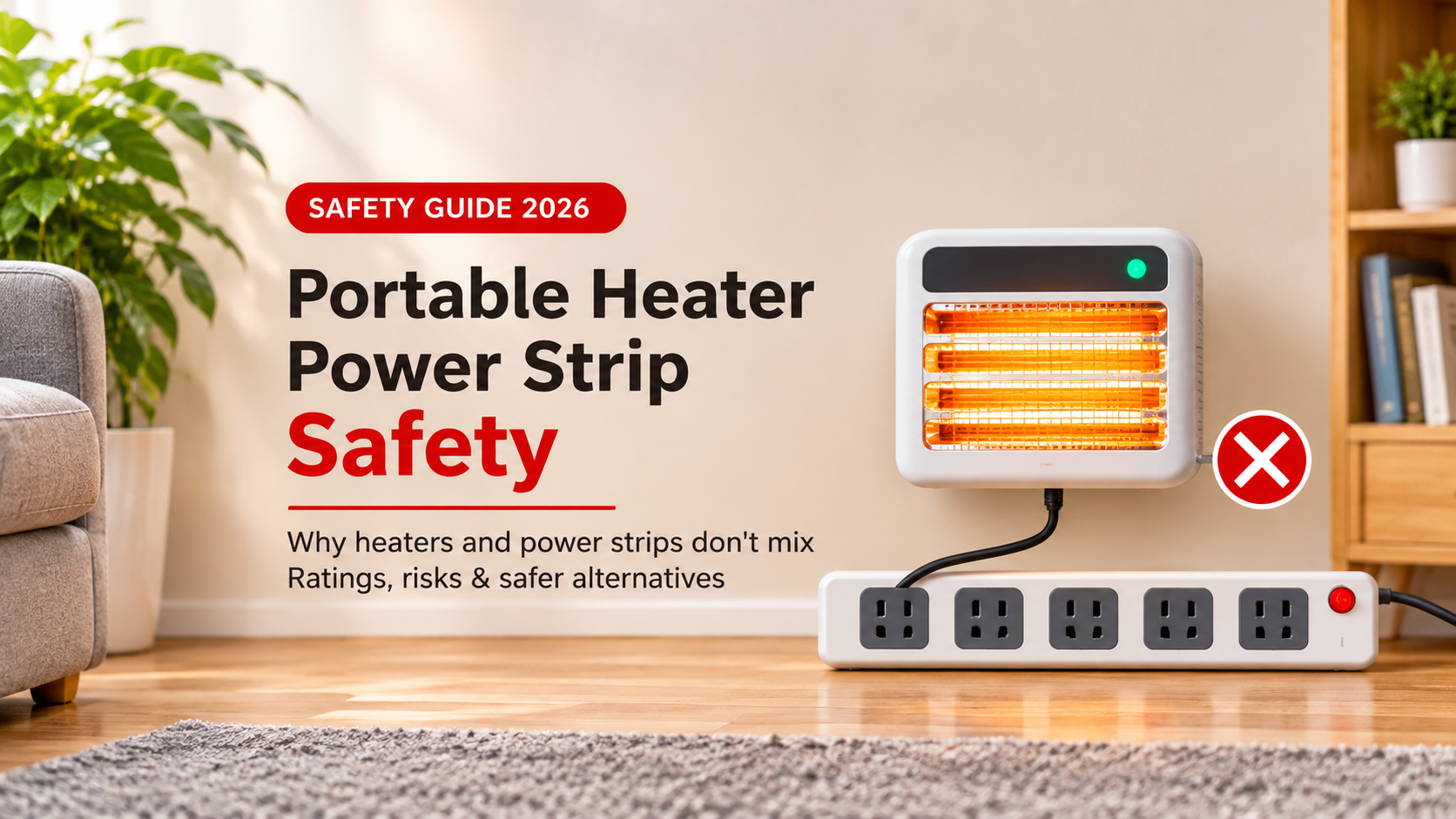
- Plug directly into the wall: Avoid extension cords and power strips. If you must use one, choose a heavy-duty cord rated above the heater’s load.
- Use a protected circuit: Ground-fault protection adds an important safeguard in garages and damp spaces.
- Never leave it running unattended: Switch it off when you leave the garage or go to sleep.
- Keep sawdust and debris away: Dust buildup can ignite or block the vents.
- Do not cover the heater: Never drape clothes, blankets or tarps over it.
- Inspect regularly: Check the cord, plug and body for damage before each winter season.
- Install smoke and carbon monoxide alarms: Electric heaters do not produce carbon monoxide, but your car, generator or other tools might.
Electric Heater vs Other Garage Heating Options
| Heating Option | Advantages | Drawbacks |
|---|---|---|
| Portable Electric | No fumes, easy setup, portable | Higher electricity use for big spaces |
| Propane or Kerosene | Strong heat, works without power | Fumes, ventilation needed, fuel storage risk |
| Wood Stove | Low fuel cost in some areas | Needs chimney, permits and constant attention |
| Mini-Split System | Efficient, heats and cools | High upfront cost and installation |
For occasional use, a portable electric heater is usually the best balance of cost, convenience and safety.
How Much Does It Cost to Run a Garage Heater?
You can estimate running cost with a simple formula: kilowatts × hours × price per kWh. A 1,500 W heater uses 1.5 kWh per hour. At 12 cents per kWh, that is about 18 cents an hour at full power. A 5,000 W heater costs about 60 cents an hour at the same rate. Thermostats cycle the element on and off, so real cost is often lower.
Tips to Lower Heating Costs
- Seal gaps around the door, windows and the bottom seal of the garage door.
- Insulate walls, ceiling and the garage door where possible.
- Use a thermostat and set it only as high as you need.
- Heat the work area, not the whole garage, with a radiant model.
- Keep the door closed as much as possible while heating.
- Pre-heat with a timer instead of leaving the heater on all day.
- Lay a rubber mat or rug on a cold concrete floor to make standing more comfortable.
Common Mistakes to Avoid
- Buying a heater that is too weak for the space and then running it nonstop.
- Using a thin, light extension cord that can overheat.
- Putting the heater beside paint, fuel or other flammables.
- Ignoring insulation and air leaks, which waste most of the heat.
- Skipping thermostat and tip-over protection to save a few dollars.
- Overloading a circuit shared with tools, chargers or a freezer.
Maintenance Tips
Unplug and let the heater cool before cleaning. Use a soft brush or vacuum to remove dust from vents and grilles, because garages collect more dirt than living rooms. Wipe the housing with a dry or barely damp cloth. Inspect the cord for cracks and check that the plug does not feel unusually hot after use. At the end of winter, store the heater in a clean, dry place, ideally in its original packaging.
Which Heater Is Best for Your Garage?
- Small single garage with occasional use: A ceramic or infrared 1,500 W heater.
- Workbench or car repair spot: An infrared heater aimed at your working area.
- Insulated two-car garage: A 240V forced-air heater, ideally with a thermostat.
- Home gym or hobby room: A quiet convection or oil-filled model plus good insulation.
- Heavy workshop use: A heavy-duty 240V shop heater with a rugged body and strong safety features.
Frequently Asked Questions (FAQ)
What size electric heater do I need for a 2-car garage?
For an insulated two-car garage of about 400 sq ft, you usually need around 4,000 to 5,000 watts. Uninsulated garages or very cold areas may need more.
Is it safe to use an electric heater in a garage?
Yes, if you choose a good quality model, keep flammable items away, plug it into a suitable circuit and never leave it unattended.
Can I plug a garage heater into an extension cord?
It is best to plug the heater directly into a wall outlet. If an extension cord is unavoidable, use a short, heavy-duty cord rated for the heater’s power.
Which is better for a garage, infrared or fan heater?
Infrared is excellent for warming yourself at a workbench, while a fan heater is better for raising the air temperature of the whole garage. Many people choose based on how they use the space.
Can I use a portable heater in an uninsulated garage?
You can, but it will be less efficient and more expensive to run. Adding even basic insulation and sealing gaps greatly improves results.
How long does it take to heat a garage?
It depends on size, insulation and heater power, but a correctly sized heater can make a noticeable difference in 15 to 30 minutes.
Do electric heaters produce carbon monoxide?
No. Electric heaters do not burn fuel, so they do not create carbon monoxide. Still, install an alarm if you run vehicles or fuel-powered equipment in the garage.
Can I leave a garage heater on overnight?
This is not recommended. Use a thermostat and timer, and only leave a heater running unattended if the manufacturer clearly allows it and the setup is fully safe.
Final Thoughts
A portable electric heater for garage use can turn a freezing space into a comfortable place to work, exercise or tinker all winter. The secret is matching the heater to your garage: pick the right wattage and voltage, choose the type that suits how you use the space and insist on solid safety features such as a thermostat and tip-over protection.
Combine your new heater with simple insulation upgrades and smart habits, and you will enjoy a warmer garage while keeping energy bills and risks under control.