
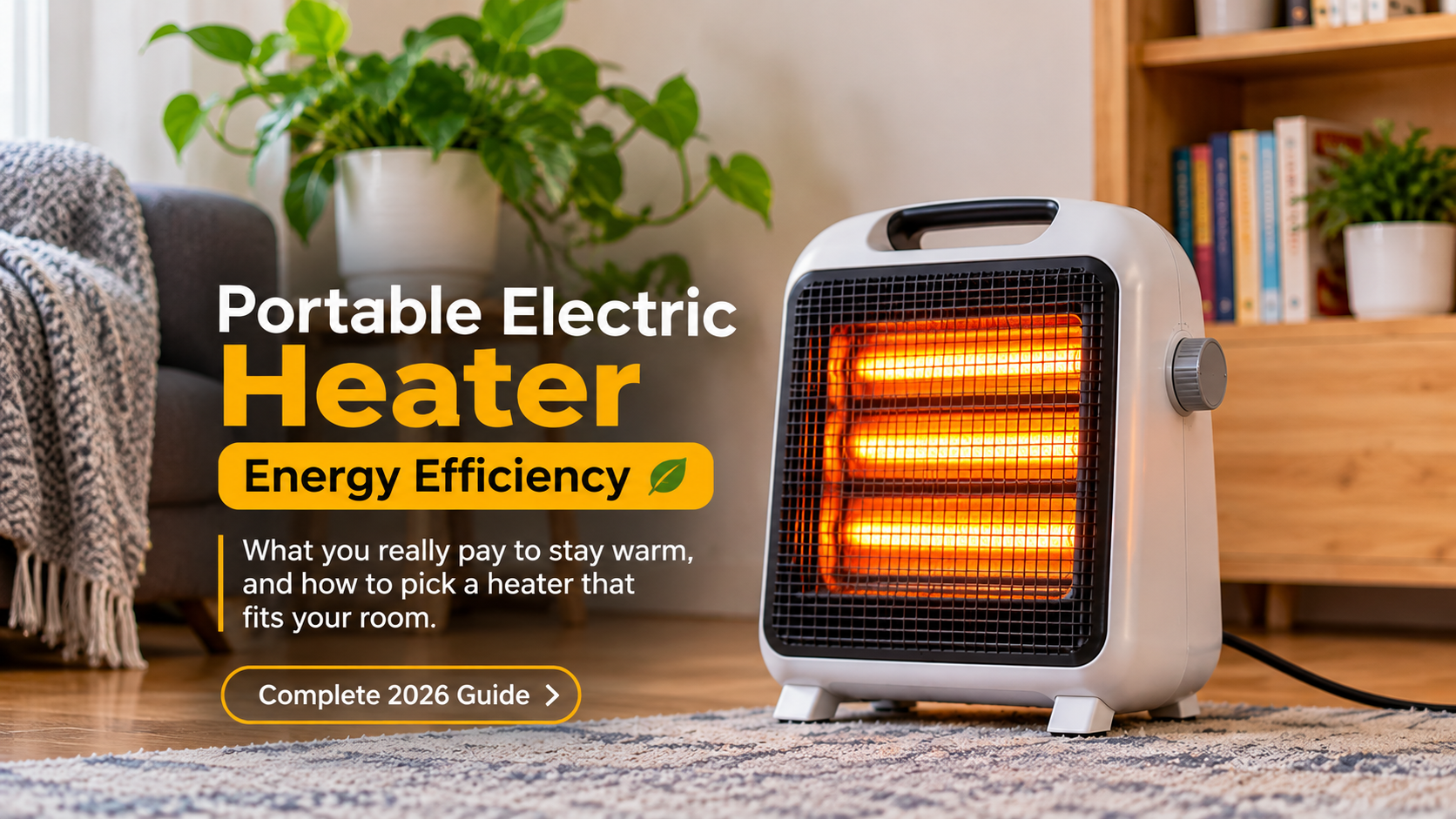

When the temperature drops, a portable electric heater feels like the easiest fix: plug it in, press a button, and the chill disappears. But the same convenience raises a fair question. Are portable electric heaters actually energy efficient, or are they quietly inflating your electricity bill?
The honest answer has two sides. In a technical sense, a plug-in heater is almost perfectly efficient. In a practical sense, how much you pay depends on the heater’s wattage, how long it runs, your electricity rate, and whether you are heating a small room or a whole house. This guide explains each of those pieces in plain language, with real numbers, so you can pick the right heater and use it wisely.
Key takeaways
- Almost every portable electric heater converts about 100% of the electricity it uses into heat.
- Running cost is set by wattage, hours of use and your local rate. A 1,500 W heater costs about $0.24 per hour at $0.16 per kWh.
- Heater type changes how the warmth feels and how fast it arrives, not how much heat you get per unit of electricity.
- The smartest savings come from heating only the space you use, choosing a model with a good thermostat, and sealing drafts.
- A heat pump is far more efficient than any plug-in heater, but it costs more up front and is not portable.
Are portable electric heaters energy efficient?
Electric resistance heaters, which include every ceramic, oil-filled, infrared, and panel heater you can plug into a wall, work on a simple principle. Electricity flows through a heating element, and nearly all of that energy leaves the heater as heat. Very little is wasted as light or sound. That is why their conversion rate is quoted as roughly 100%.
This means a $40 heater and a $200 heater turn each kilowatt-hour into the same amount of heat. Differences in price usually come from build quality, safety features, thermostat accuracy, noise level, and how the heat is delivered, not from raw efficiency.

Efficient is not the same as cheap
Here is where many buyers get confused. A heater can be 100% efficient and still be an expensive way to warm a home, because electricity often costs more per unit of heat than other fuels such as natural gas. Heat pumps beat all plug-in heaters because they move heat from outside air into your home instead of creating heat from scratch, which is why they can reach 200% to 400% efficiency.
So portable electric heaters make the most sense when you need targeted, short-term warmth: a home office, a bedroom at night, a cold bathroom, a garage workbench, or one chilly corner. They make the least sense as the main heat source for an entire house.
How much does a portable electric heater cost to run?
You can calculate running cost with one simple formula:
Cost = (Watts ÷ 1,000) × Hours of use × Price per kWh
For example, a 1,500 W heater running for 8 hours with electricity at $0.16 per kWh costs (1,500 ÷ 1,000) × 8 × 0.16 = $1.92. Check your electricity bill for your own rate and swap it into the formula.
| Heater power | Cost per hour | Cost for 8 hours | Cost for 30 days (8 hrs/day) |
|---|---|---|---|
| 500 W | $0.08 | $0.64 | $19.20 |
| 750 W | $0.12 | $0.96 | $28.80 |
| 1,000 W | $0.16 | $1.28 | $38.40 |
| 1,500 W | $0.24 | $1.92 | $57.60 |

Remember that these are worst-case numbers. Once the room reaches your set temperature, a thermostat-controlled heater cycles on and off, so actual consumption is often noticeably lower than full-power math suggests. A well-sealed room with a smaller heater will cost much less than a drafty room with a large one.
What does 1,500 watts really mean?
Most portable heaters in North America top out at 1,500 watts because that is the most a standard 15-amp household outlet can safely supply to a single appliance. At that setting a heater produces roughly 5,100 BTU of heat per hour. If your room needs more heat than that, buying a bigger heater is not an option on a regular outlet. The better answer is a second heater in another room, better insulation, or a different heating system.
Types of portable electric heaters compared
Because all of these convert electricity to heat at about the same rate, choosing between them comes down to how you want the warmth delivered. Here is a quick comparison.
| Heater type | How it heats | Best for | Watch out for |
|---|---|---|---|
| Ceramic fan heater | Air blown across a hot ceramic element | Fast warmth in small rooms, offices, bathrooms | Fan noise; warmth fades quickly once it switches off |
| Oil-filled radiator | Sealed oil warms metal fins that radiate heat | Bedrooms and long, steady use; quiet operation | Slow to warm up; heavy and takes time to cool |
| Infrared (radiant) heater | Invisible rays warm people and objects directly | Spot heating at a desk or sofa; drafty spaces | Only warms what it faces; weak for whole-room heat |
| Convection panel heater | Air circulates gently across a flat heated panel | Quiet, even heat in small to medium rooms | Moderate heat-up speed; needs space around it |
| Micathermic panel heater | Mix of radiant and convection heat from a thin panel | Slim, lightweight, wall-friendly heating | Fewer models; surfaces can get hot to the touch |
Which type is the best choice for energy savings?
No type uses less energy to produce a given amount of heat, but some are better at keeping you comfortable on less power:
- Infrared heaters warm you directly, so you can feel comfortable at a lower room temperature when sitting at a desk or on a sofa.
- Oil-filled radiators keep radiating warmth after the element switches off, which suits bedrooms and long evenings.
- Ceramic fan heaters are the best pick for quick top-ups in small spaces where you only need heat for a short time.
How to choose the right size heater for your room
An oversized heater wastes money and cycles too aggressively, while an undersized one runs nonstop and never quite gets the room comfortable. A widely used rule of thumb is about 10 watts per square foot of floor space for rooms with standard 8-foot ceilings and reasonable insulation.

If your room is poorly insulated, has large windows, or sits over a cold garage, move up a size or add extra insulation. For rooms larger than about 150 square feet, a single portable heater will struggle, and zone heating with two units, or a different system altogether, will work better.
Features that help a heater use less energy
Because the heating element is equally efficient across models, controls are where energy savings are really won. Look for these features when comparing options:
Adjustable thermostat
A digital thermostat that holds a set temperature prevents overheating and keeps consumption down. Dial-style thermostats work too, but digital ones are usually more precise.
Timer and auto shut-off
A programmable timer lets you warm a room before you get there and shut off automatically when you leave or fall asleep. It is one of the simplest ways to avoid paying for heat nobody is using.
Eco or energy-saving mode
Eco modes adjust power output to hold temperature with less energy. They are a convenient set-and-forget option for steady use.
Multiple power settings
A heater with low, medium and high settings lets you match output to the room instead of running at full blast all the time.
Remote control or smart controls
Remote and app controls make it easier to adjust or switch off without getting up, which means the heater actually gets turned down when it should be.
Safety matters as much as efficiency
Saving energy never justifies risking safety. Space heaters are a well-known cause of home fires when misused, so treat these basics as non-negotiable.
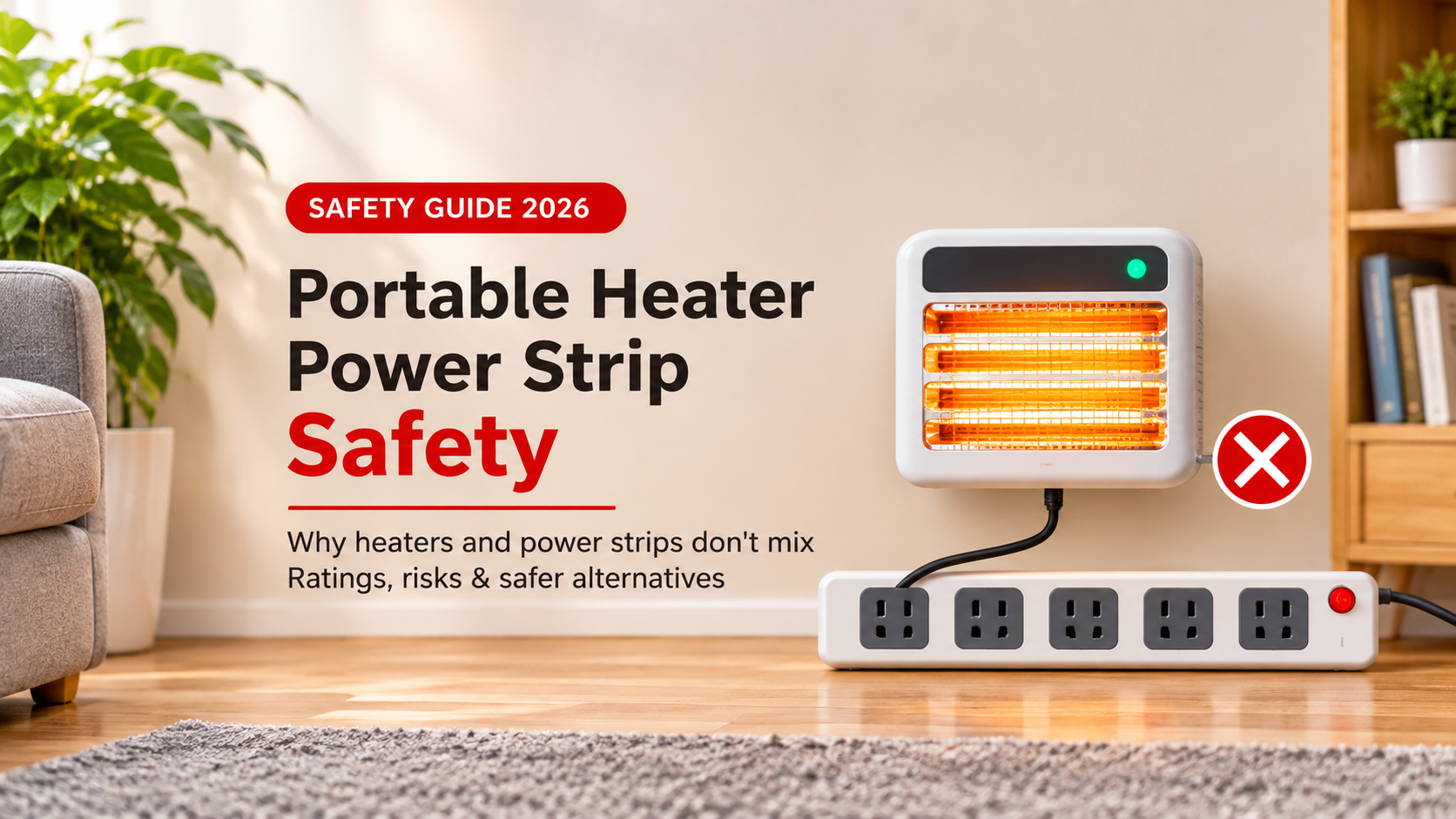
- Plug the heater directly into a wall outlet. Avoid extension cords and power strips, which can overheat under a heater’s load.
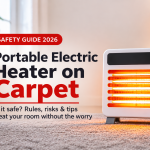
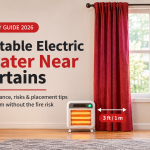
- Keep at least three feet of clear space around the heater, away from curtains, bedding, furniture and paper.
- Choose a model with tip-over protection and overheat protection, and look for a recognized safety certification mark.
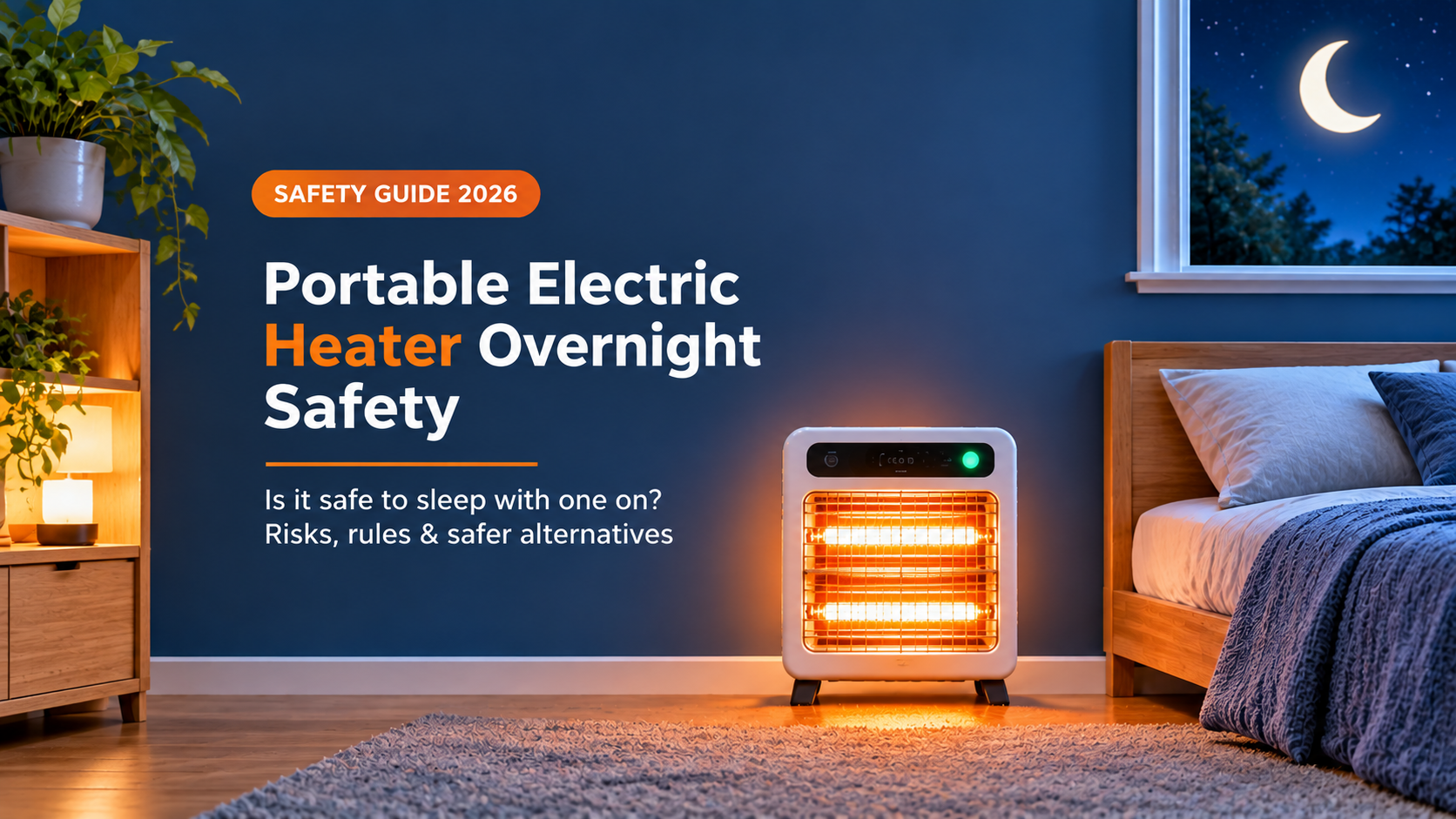
- Never leave a heater running unattended or while you sleep unless the model is specifically designed for it and has the right safeguards.
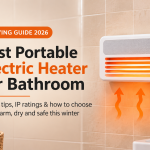
- Do not use a portable heater in wet areas unless it is rated for that environment.
- Test your smoke alarms regularly, especially in rooms where you run a heater.
Practical ways to cut your heating bill
Pairing a heater with smart habits can shrink your bill more than any single feature. These steps tend to deliver the most value for the effort:
- Heat the person, not the house. Warming one occupied room while lowering the central thermostat is where portable heaters shine. Energy agencies commonly estimate that turning your main thermostat down several degrees for part of the day can trim yearly heating costs.
- Close doors. A closed door keeps the warmth in the room you are paying to heat.
- Seal drafts. Weather stripping around doors and windows is cheap and can reduce how hard any heater has to work.
- Use curtains and rugs. Thick curtains reduce heat loss through glass, and rugs make floors feel warmer.
- Place the heater wisely. Put it on a hard, level surface, away from furniture and drafts, and where air can move freely.
- Use the timer. Heat the room before you arrive, then let the thermostat do the work.
- Clean it regularly. Dust buildup can reduce airflow and create unpleasant smells. Always unplug and let the heater cool before cleaning.
Buyer’s checklist: what to look for
- Wattage that matches your room size (about 10 watts per square foot)
- Accurate, adjustable thermostat
- Timer or programmable schedule
- Tip-over and overheat protection
- Safety certification from a recognized testing lab
- Noise level that suits the room (important for bedrooms and offices)
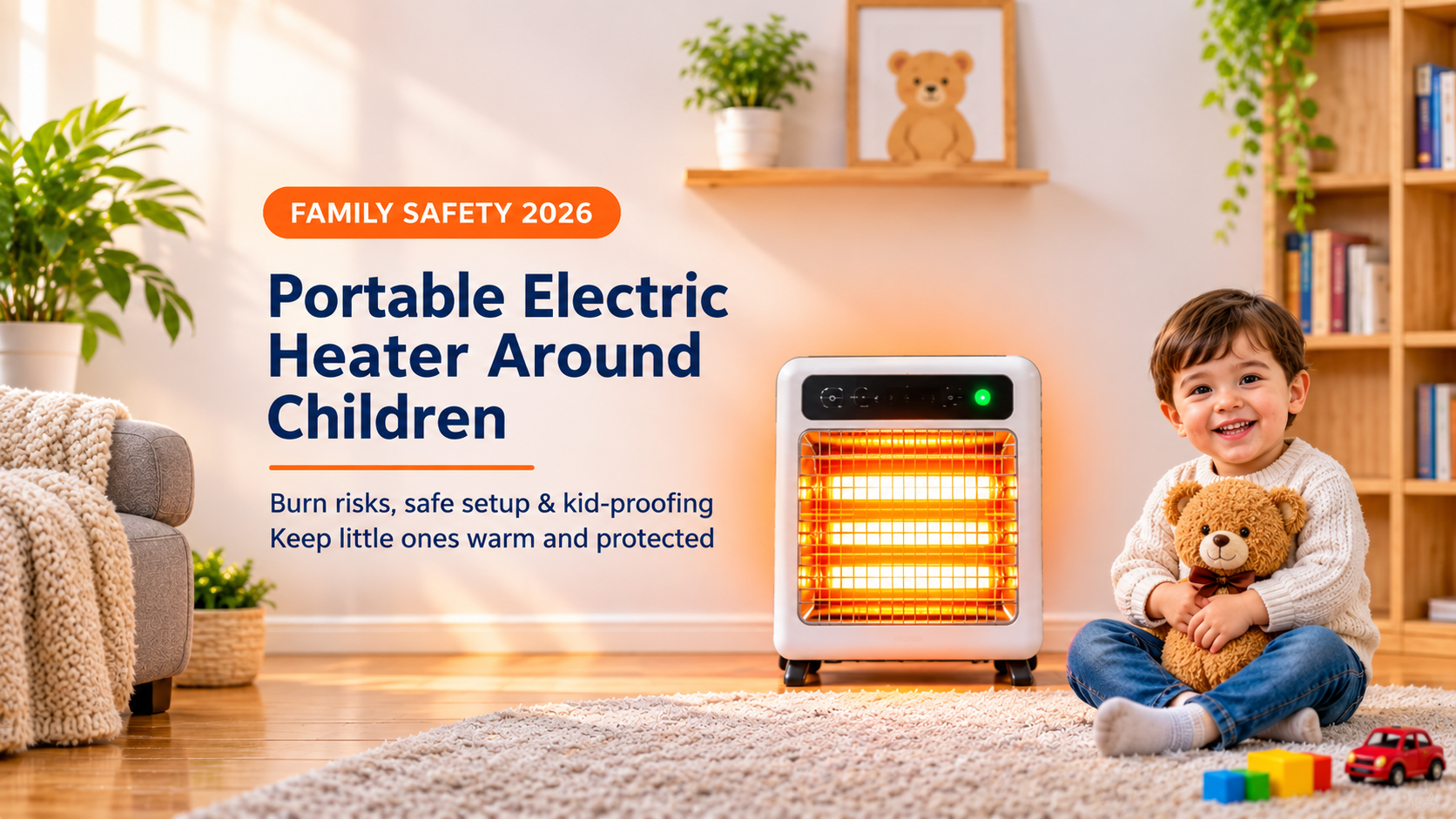
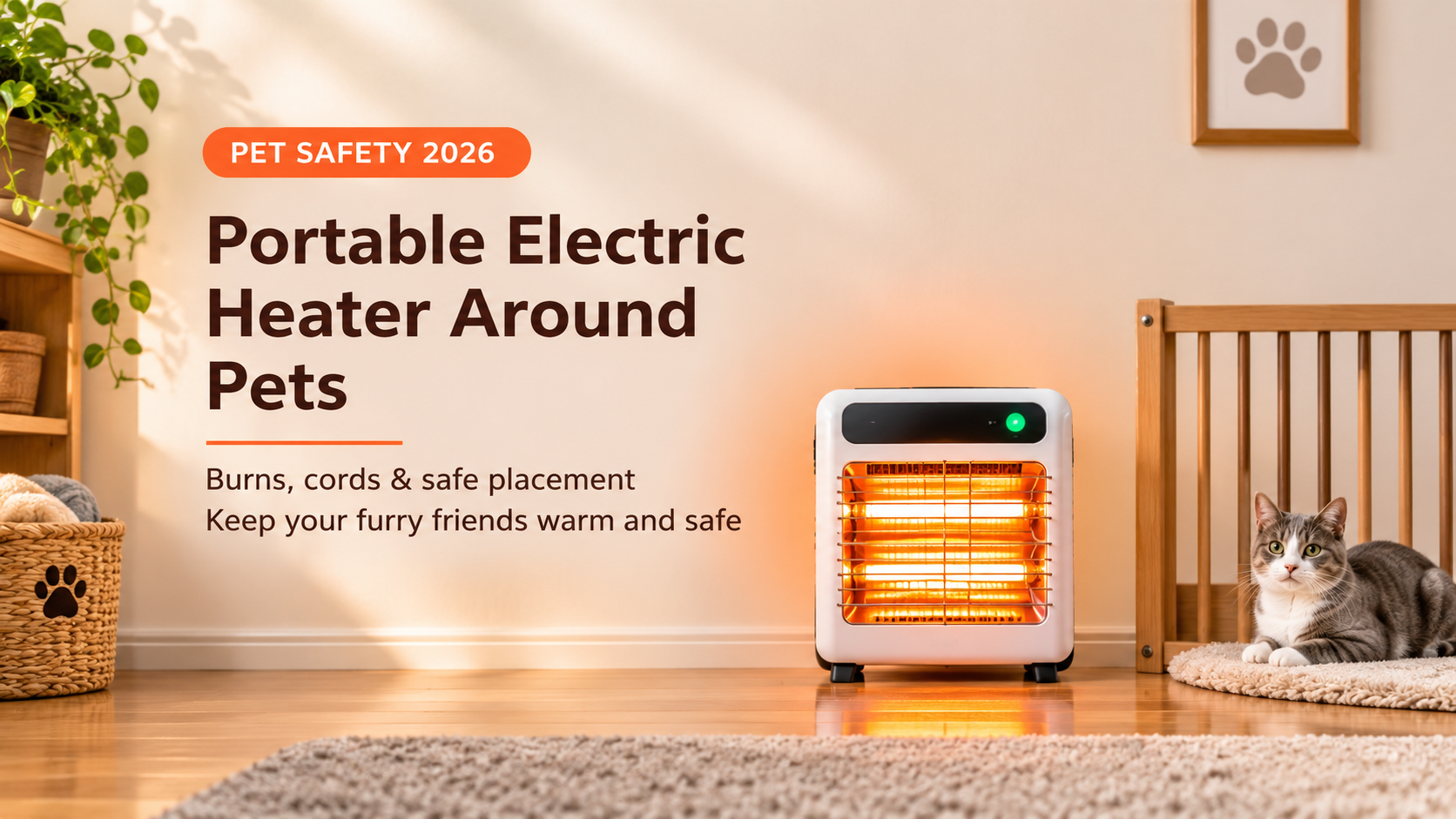
- Cool-touch housing if children or pets are around
- Sturdy cord and plug with enough length to reach an outlet without an extension cord
- Clear warranty and customer support
Which heater type fits you best?
For a home office or desk: an infrared or small ceramic heater gives quick, direct warmth without heating the whole room.
For a bedroom: an oil-filled radiator or quiet convection panel provides steady, silent heat through the evening.
For a bathroom or small space: a compact ceramic fan heater warms the air fast, and many models are made with bathroom use in mind.
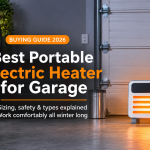
For a garage or workshop: a robust, higher-output heater that is rated for the space is a better fit than a basic indoor model.
For whole-home heating: consider a heat pump or central system instead. A portable heater is a supplement, not a replacement.
Frequently asked questions
Do portable electric heaters use a lot of electricity?
A 1,500 W heater uses 1.5 kWh for every hour at full power, which is more than most household appliances. It adds up quickly if it runs for many hours a day, but a thermostat that cycles the heater off keeps real consumption lower.
Which type of portable heater is the most energy efficient?
All resistance heaters convert about 100% of electricity into heat, so none is meaningfully more efficient in raw terms. The best choice for you is the one that delivers warmth where and when you need it, such as infrared for direct spot heat or oil-filled for steady heat in a bedroom.
Is it cheaper to run a space heater or central heating?
It depends on your fuel and electricity rates. Heating a single occupied room with a portable heater while lowering the central thermostat can save money. Heating an entire home with several portable heaters is usually more expensive than using an efficient central system.
Can I leave a portable heater on all night?
Many manufacturers advise against leaving heaters running unattended or while you sleep. If you must use one overnight, choose a model with tip-over protection, overheat protection and a timer, keep it well away from bedding, and follow the manufacturer’s instructions.
What size heater do I need for a 150 square foot room?
A common rule of thumb is about 10 watts per square foot, so a 1,500 W heater suits a room of roughly 150 square feet with standard ceilings and decent insulation. Poor insulation or very cold weather may call for more help.
Does an oil-filled heater use less electricity than a fan heater?
At the same wattage and run time they use the same electricity. An oil-filled heater cycles off more often once the room is warm and keeps radiating heat afterward, so it can feel like it uses less over a long evening, but a fan heater can warm a small space faster.
Are heat pumps better than space heaters?
For heating a whole home or large space, yes. Heat pumps move heat instead of creating it, so they can deliver two to four times as much heat per unit of electricity. They cost more to install and are not portable, so a small plug-in heater is still handy for short-term, single-room use.
Final thoughts
Portable electric heaters are technically very efficient at turning electricity into heat, but real savings come from using them wisely. Pick a wattage that fits your room, choose a model with a precise thermostat and timer, seal drafts, and heat only the space you are actually using. Do that, and a portable heater can keep you comfortable at a fraction of the cost of heating an entire home.
If you are comparing models, start with your room size and how you plan to use the heater, then match the type and features to your needs. A well-chosen heater with sensible habits gives you the warmth you want without surprises on your next electricity bill.