




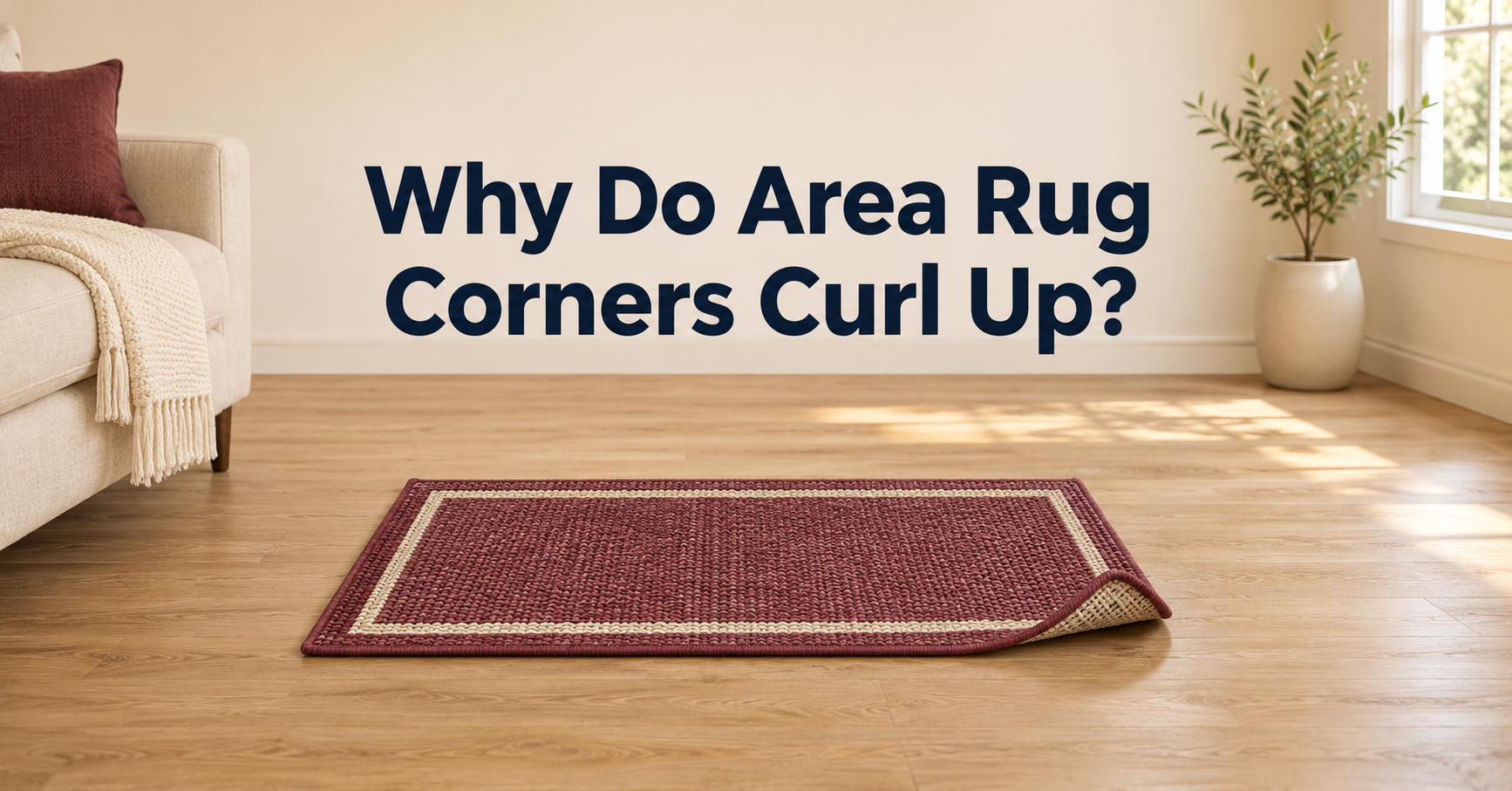
Introduction: Why Do Area Rug Corners Curl Up?
You bring home a beautiful area rug, lay it out, and it looks perfect. A few weeks later, the corners start lifting off the floor. Curled corners look untidy, collect dust, and, more importantly, create a real tripping hazard for children, seniors, and pets. They can also catch on vacuum cleaners and furniture legs and damage the rug.
The good news is that curling is common, understandable, and fixable. In this guide, you will learn exactly why area rug corners curl up, how to flatten them, and how to keep them flat for good.
The Main Reasons Area Rug Corners Curl Up
1. Rolled or Folded Packaging
This is the number one cause. Most rugs are shipped tightly rolled or folded for weeks. The fibers and backing “remember” that shape, so the edges naturally try to return to a curved position once the rug is laid flat. New rugs often curl the most, especially in the first few weeks.
2. Stiff or Rigid Backing
Rugs with latex, rubber, or other stiff backings are more likely to hold a curl. Cheaper rugs with thin or low-quality backing can also warp when exposed to temperature changes or when stored for a long time.
3. Humidity and Moisture
Natural fibers such as cotton, jute, wool, and sisal respond to moisture. In humid rooms, or after a spill, the fibers swell unevenly and the edges can lift or ripple. Drying unevenly after cleaning is a common trigger.
4. Temperature Changes and Sunlight
Heat and direct sunlight can dry out and shrink fibers and backings at different rates. Rugs placed over floor vents, radiators, or underfloor heating, or in strong sun, are more likely to warp and curl.
5. Poor Rug Pad or No Pad at All
Without a pad, there is nothing to support the rug and hold the edges down. A pad that is too thick, too small, or low in quality can also fail to keep the corners flat.
6. Foot Traffic and Furniture Movement
Daily foot traffic, chair legs dragging at the edge, and vacuum cleaners pulling at corners slowly change the shape of the rug and push the edges upward.
7. Thin or Lightweight Construction
Flatweave and lightweight rugs have little weight to hold their edges down. Rugs placed on slippery floors also shift and bunch, which causes the corners to fold up.
How to Flatten Curled Rug Corners
Method 1: Reverse Roll
Roll the rug up in the opposite direction of the curl, with the pile facing outward, and leave it for 24 to 48 hours. This helps the fibers and backing relax and lose the memory of the old shape. Unroll it and lay it flat.
Method 2: Use Weight
Place heavy books or furniture on the corners for several days. For stubborn corners, leave the weight on for up to a week. Place a clean towel or cardboard between the rug and the weight to avoid marks.
Method 3: Light Steam or Gentle Heat
Hold a steamer or iron on a low steam setting a few inches above the curled area to warm and relax the fibers. Never touch the rug with a hot iron, and always check the care label first. Press the corner flat and place a weight on it until it cools. Avoid this on synthetic rugs with heat-sensitive backings, and test a hidden corner first.
Method 4: Use Rug Tape
Double-sided rug tape holds corners firmly down. Clean the floor and rug backing, apply tape along the corners and edges, and press down firmly. Choose a floor-safe, removable tape, especially for hardwood floors.
Method 5: Add Corner Grippers
Triangular rug corner grippers slide under each corner and keep it flat. They are inexpensive, easy to use, and work well for smaller rugs and runners.
How to Prevent Rug Corners from Curling Again
- Use a quality rug pad: Choose a felt and rubber pad about one inch smaller than the rug on all sides. It supports the edges and adds grip.
- Anchor with furniture: Place the front legs of sofas and chairs, or the bed, on the edges of the rug.
- Rotate the rug: Turn it every few months to even out wear and stress.
- Control humidity: Keep rooms between 30 and 50 percent humidity and dry the rug fully after cleaning.
- Avoid direct heat and sun: Use curtains or UV-blocking film, and keep rugs away from vents and radiators.
- Vacuum carefully: Avoid pulling vacuum beaters across the edges and corners.
- Store properly: If you need to store a rug, roll it loosely with the pile facing outward and never fold it.
Which Rugs Curl the Most?
| Rug Type | Curling Risk | Best Fix |
|---|---|---|
| Flatweave and cotton | High | Rug pad and corner grippers |
| Latex or rubber-backed | High | Reverse roll and weight |
| Jute and sisal | Medium | Humidity control and pad |
| Shag and thick pile | Low to medium | Thin, firm rug pad |
| Wool, hand-knotted | Low | Reverse roll and felt pad |
Common Mistakes to Avoid
- Ironing directly on the rug: This can melt synthetic fibers or scorch natural ones.
- Using strong glue or adhesive: It can permanently damage both the floor and the rug.
- Choosing a pad that is too large: It peeks out and creates a new tripping edge.
- Ignoring the problem: The longer the corner stays curled, the more permanent it becomes.
- Soaking the rug to flatten it: Excess moisture can cause mold and more warping.
Frequently Asked Questions
How long does it take for a new rug to stop curling?
Most new rugs relax within a few days to two weeks. Reverse rolling and placing weight on the corners speeds up the process.
Will a curled rug flatten on its own?
Often yes, especially for new rugs, but it can take time. Helping it along with weight, a reverse roll, or a pad is faster and more reliable.
Can I use heat to flatten my rug?
Gentle steam can help on natural fibers, but never apply direct heat. Always check the care label and test a hidden spot first.
Does a rug pad stop corners from curling?
A good, properly sized pad supports the edges and helps a lot, though stubborn corners may also need tape or grippers.
Is a curled rug dangerous?
Yes. Raised corners are a common trip hazard, so fix them as soon as you notice them.
Final Thoughts
Area rug corners curl up mainly because of rolled packaging, stiff backing, humidity, heat, and a lack of support underneath. The solution is usually simple: relax the fibers with a reverse roll, weigh the corners down, and secure them with a quality rug pad, tape, or grippers. With a little care and the right setup, your rug will stay flat, safe, and good-looking for years to come.