
Introduction: Why Does Your Area Rug Keep Sliding?
An area rug can transform a room, adding color, warmth, and comfort. But a rug that slides, bunches, or curls at the edges quickly turns from a design feature into a safety hazard. Slipping rugs are a leading cause of trips and falls at home, especially for children, seniors, and pets. They also wear out faster, because constant movement grinds the backing against the floor.
The good news is that stopping a rug from sliding is easy and inexpensive. In this complete guide, you will learn why rugs slip, the best ways to keep them in place on every floor type, and the mistakes to avoid.
Why Area Rugs Slide in the First Place
Before fixing the problem, it helps to understand the cause. Rugs usually slide for one or more of these reasons:
- Smooth flooring: Hardwood, tile, laminate, and vinyl have very little natural friction.
- Slick rug backing: Cotton, flatweave, and some synthetic rugs have thin backings that do not grip.
- Foot traffic: Walking, running, and turning on the rug pushes it in small increments.
- Moving furniture and pets: Chairs, vacuum cleaners, and playful dogs all nudge rugs out of place.
- Old or worn grippers: Rubber and adhesive lose their hold over time, especially with dust and moisture.
1. Use a Quality Rug Pad (The Best Overall Solution)
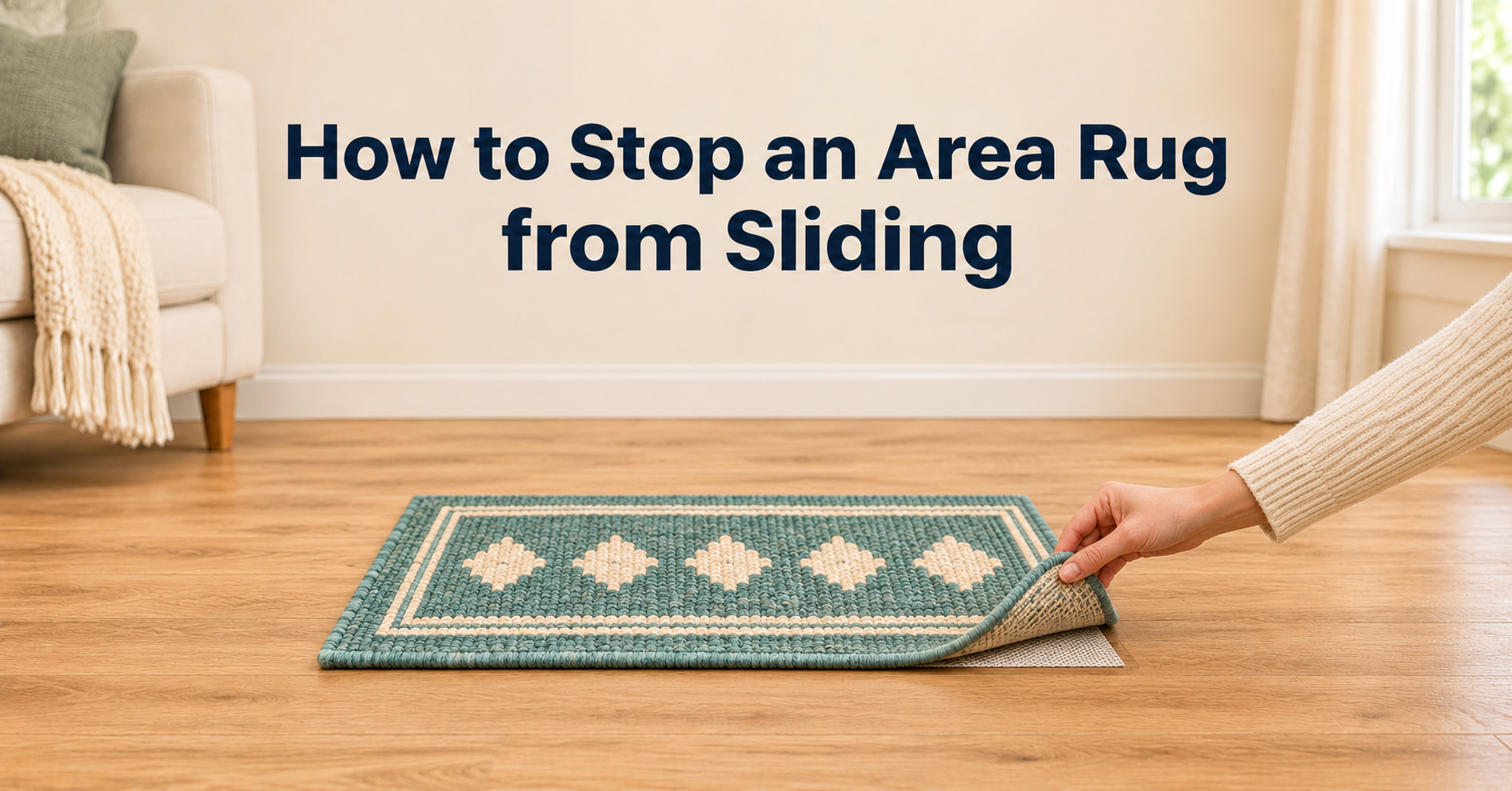
A rug pad is the most reliable way to stop an area rug from sliding. It sits between the rug and the floor, adding grip, cushioning, and protection at the same time.
Types of rug pads
- Natural rubber pads: Excellent grip and long-lasting. Best for hard floors, though some low-quality rubber can stain certain finishes, so choose a pad marked floor-safe.
- Felt pads: Add thickness and cushioning. They work best on carpet or in combination with a grip layer.
- Felt and rubber combination pads: The most popular choice, offering both grip and comfort.
- PVC pads: Cheap, but they can discolor or damage some wood and vinyl floors over time. Avoid them on finished wood.
How to choose the right size
Choose a pad about one inch (2.5 cm) shorter than the rug on every side. This keeps the pad hidden and prevents the rug edges from curling upward.
2. Try Double-Sided Rug Tape
Rug tape is a quick, affordable fix for small and lightweight rugs. It has adhesive on both sides: one sticks to the floor and the other to the rug.
How to apply it:
- Clean the floor and the back of the rug so they are free of dust and oils.
- Apply strips of tape along each edge and across the center of the rug.
- Press the rug firmly into place and walk on it to set the adhesive.
Caution: Standard tape can leave residue on hardwood or damage finishes. Choose a removable, floor-safe product, and replace it every few months. Avoid tape on valuable or antique rugs.
3. Use Rug Grippers for Corners
Corner grippers are small triangles or strips made of rubber or non-slip fabric. They are tucked or stuck under the corners of a rug to stop curling and sliding. They work well for runners and small accent rugs, but for large rugs a full pad performs better.
4. Add Non-Slip Rug Backing or Spray
If a rug has a smooth or worn backing, you can add grip directly to it:
- Liquid latex or non-slip coating: Brushed onto the back in a grid or dot pattern and left to dry fully. It creates a rubbery, grippy surface.
- Non-slip spray: A faster option, though it usually needs reapplying after washing.
- Silicone dots or grip strips: Applied in rows for lasting traction.
Always test on a hidden corner first, and let the product cure completely before putting the rug back down.
5. Place Heavy Furniture on the Rug
One of the simplest and most stylish solutions is anchoring the rug with furniture. Placing the front legs of a sofa or armchair on the rug holds it firmly in place. In bedrooms, place the bed over the top third of the rug. In dining rooms, make sure all chair legs remain on the rug even when pulled out, which also prevents chair legs from catching on the edge.
6. Choose the Right Method for Your Floor Type
| Floor Type | Best Solution | Avoid |
|---|---|---|
| Hardwood | Felt and natural rubber pad | PVC pads, strong adhesive tape |
| Tile and stone | Rubber pad, rug tape | Thick pads that raise the edges |
| Laminate and vinyl | Floor-safe rubber or felt pad | Low-quality rubber that can stain |
| Carpet (rug on carpet) | Rug-on-carpet pad with textured grip | Smooth rubber pads |
| Concrete | Rubber pad or latex backing | Cheap tape that loses hold on dust |
7. Fix Curling Corners and Edges
Rugs that curl at the corners are a major trip hazard. To fix curling:
- Roll the rug the opposite way and leave it for a day or two to relax the fibers.
- Apply a light steam over the curled area and press it flat under a heavy book.
- Add corner grippers or a pad that fully supports the edges.
Common Mistakes to Avoid
- Using a pad that is too large: It peeks out and creates a tripping edge.
- Choosing the cheapest PVC pad: It may discolor or bond to your floor finish.
- Skipping cleaning: Dust under the rug reduces grip dramatically.
- Using household glue or strong adhesive: It can permanently damage floors and rugs.
- Ignoring wear: Pads and grippers flatten and lose traction over time.
How to Maintain a Non-Slip Rug
- Vacuum regularly on a gentle setting to prevent dust buildup.
- Lift and clean underneath every month or two, wiping the floor and pad.
- Rotate the rug every few months for even wear.
- Replace the pad when it feels flat, brittle, or sticky, typically every one to three years.
Frequently Asked Questions
What is the cheapest way to stop a rug from slipping?
Double-sided rug tape or corner grippers are the most budget-friendly options, especially for small rugs.
Will a rug pad damage my hardwood floor?
Not if you choose a high-quality, floor-safe pad made of natural rubber or felt. Avoid cheap PVC pads on finished wood.
Can I stop a rug from sliding on carpet?
Yes. Use a pad designed for rug-on-carpet use, which has a textured surface that grips both layers.
How often should I replace a rug pad?
Most pads last one to three years, depending on foot traffic and quality. Replace it when it stops gripping.
Do I need a pad for a thick rug?
Yes. Even heavy rugs shift over time, and a pad prevents wear and adds comfort.
Final Thoughts
A sliding area rug is more than an annoyance. It is a safety risk and a threat to both your rug and your floors. By choosing the right rug pad, adding grippers or tape where needed, anchoring with furniture, and keeping things clean, you can enjoy a rug that stays flat, safe, and beautiful for years. Start with the method that fits your floor type, and your rug will stay exactly where you put it.