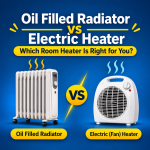




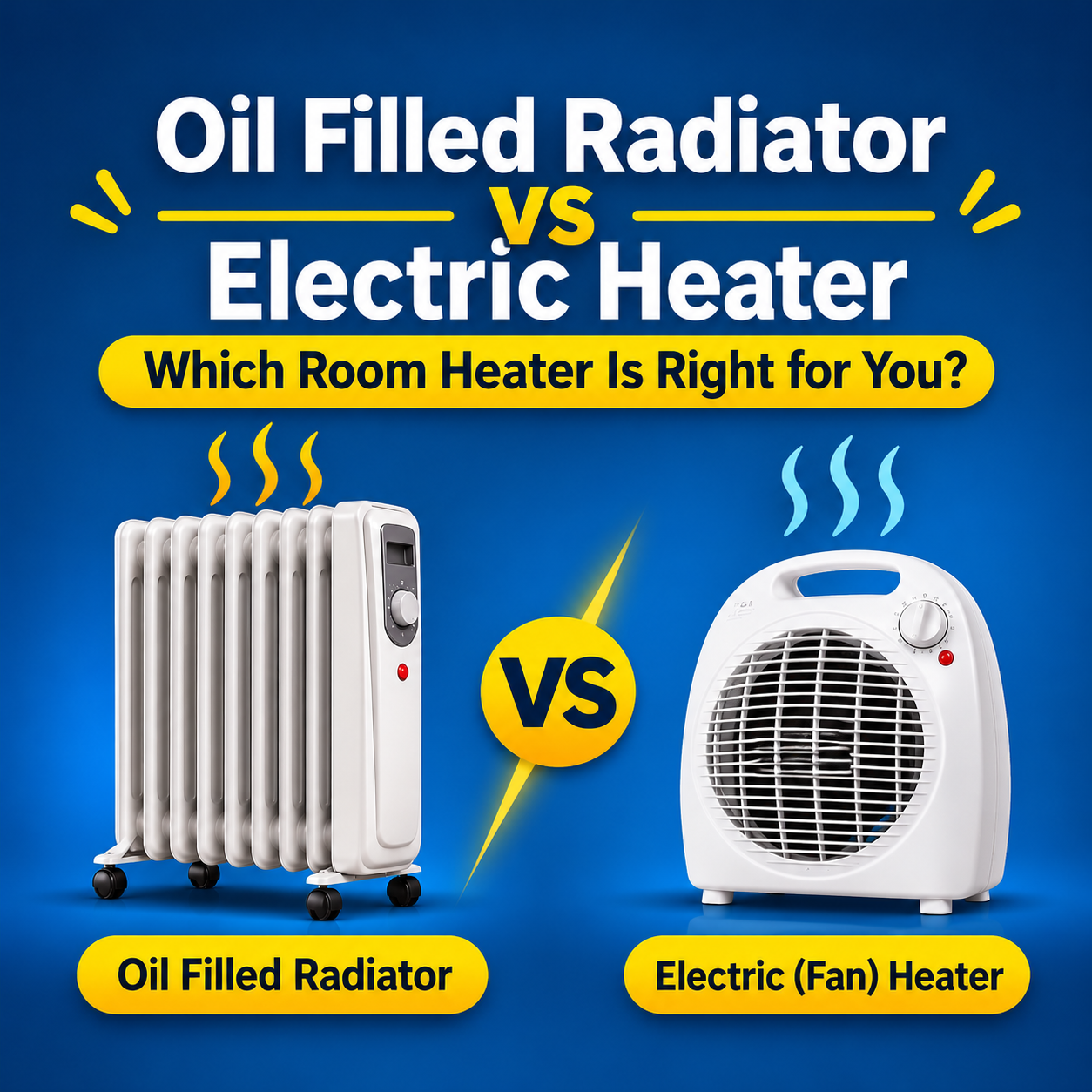
Oil Filled Radiator vs Electric Heater: Which Is Better for Your Home?
When the temperature drops, a portable heater is often the quickest way to make a cold room comfortable. But the market is crowded, and the biggest decision comes down to two popular choices: the oil filled radiator and the electric heater (usually a fan heater or ceramic heater). They both plug into a wall socket and both turn electricity into warmth, yet they behave very differently in real life.
This guide explains how each type works, compares them on heat output, running cost, safety, noise and convenience, and helps you decide which one fits your room, your budget and your habits.
- Choose an oil filled radiator for bedrooms, nurseries, home offices and any room you heat for hours. It is silent, gentle and keeps radiating warmth after it switches off.
- Choose an electric fan or ceramic heater for fast, short bursts of heat in bathrooms, garages, workshops or at your desk, and when you need something light to carry.
What Is an Oil Filled Radiator?
An oil filled radiator looks like a traditional central heating radiator on wheels. Inside its metal fins is a sealed reservoir of thermal (diathermic) oil. An electric element at the bottom heats this oil, the oil warms the metal columns, and the surface of the radiator then releases heat into the room.
The oil is never burned or used up. It simply stores and carries heat, so you never need to refill it. Because metal and oil hold heat well, the unit keeps giving off warmth for a while even after the thermostat cuts the power.
Main strengths
- Silent operation, since there is no fan
- Soft, even warmth that does not dry the air as aggressively as a blower
- Strong heat retention, which helps the thermostat cycle off and on
- No glowing element and no moving parts
Main weaknesses
- Slow to warm a cold room, often 20 to 30 minutes or more
- Heavier and bulkier than most electric heaters
- Outer fins get hot enough to be uncomfortable to touch on some models
What Is an Electric Heater?
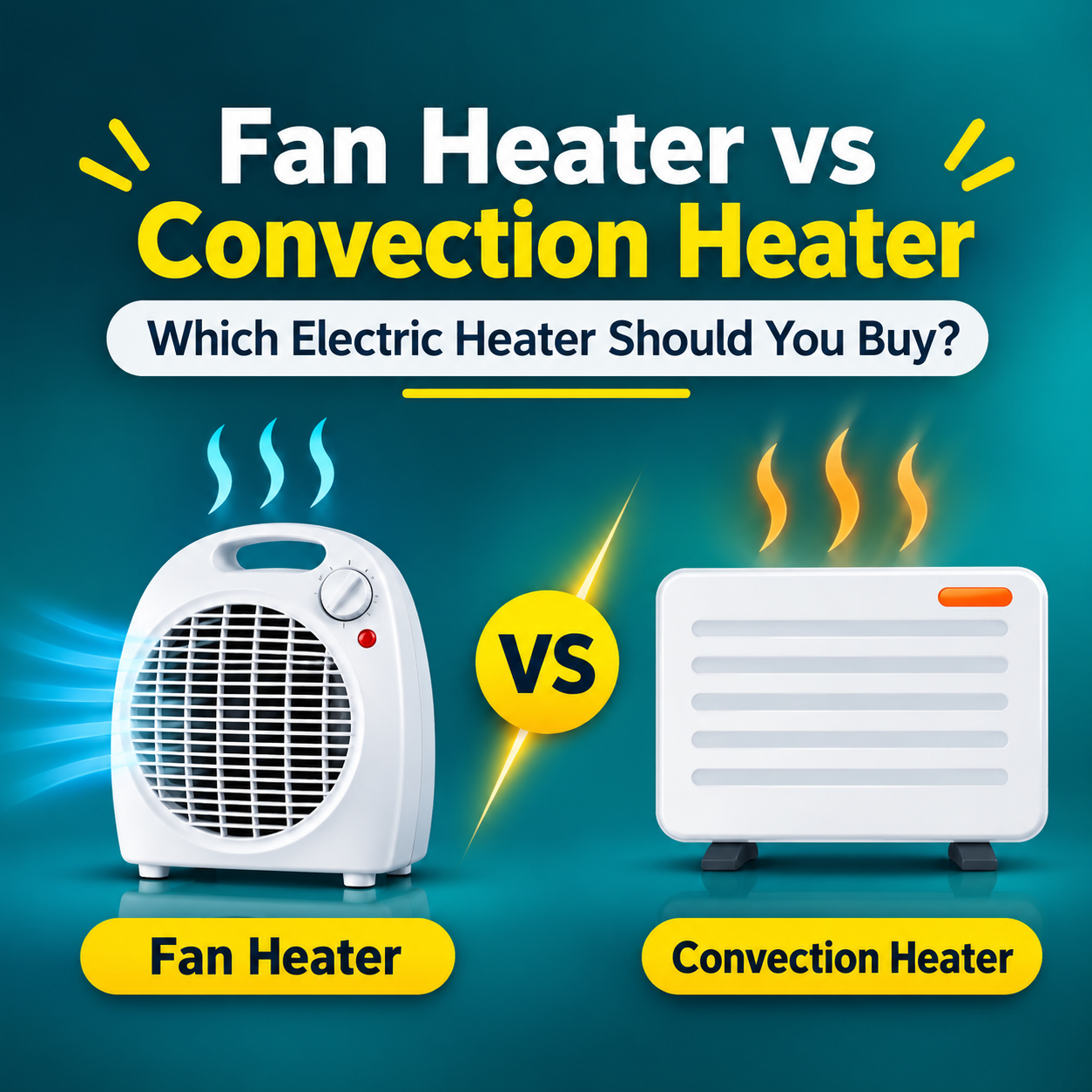
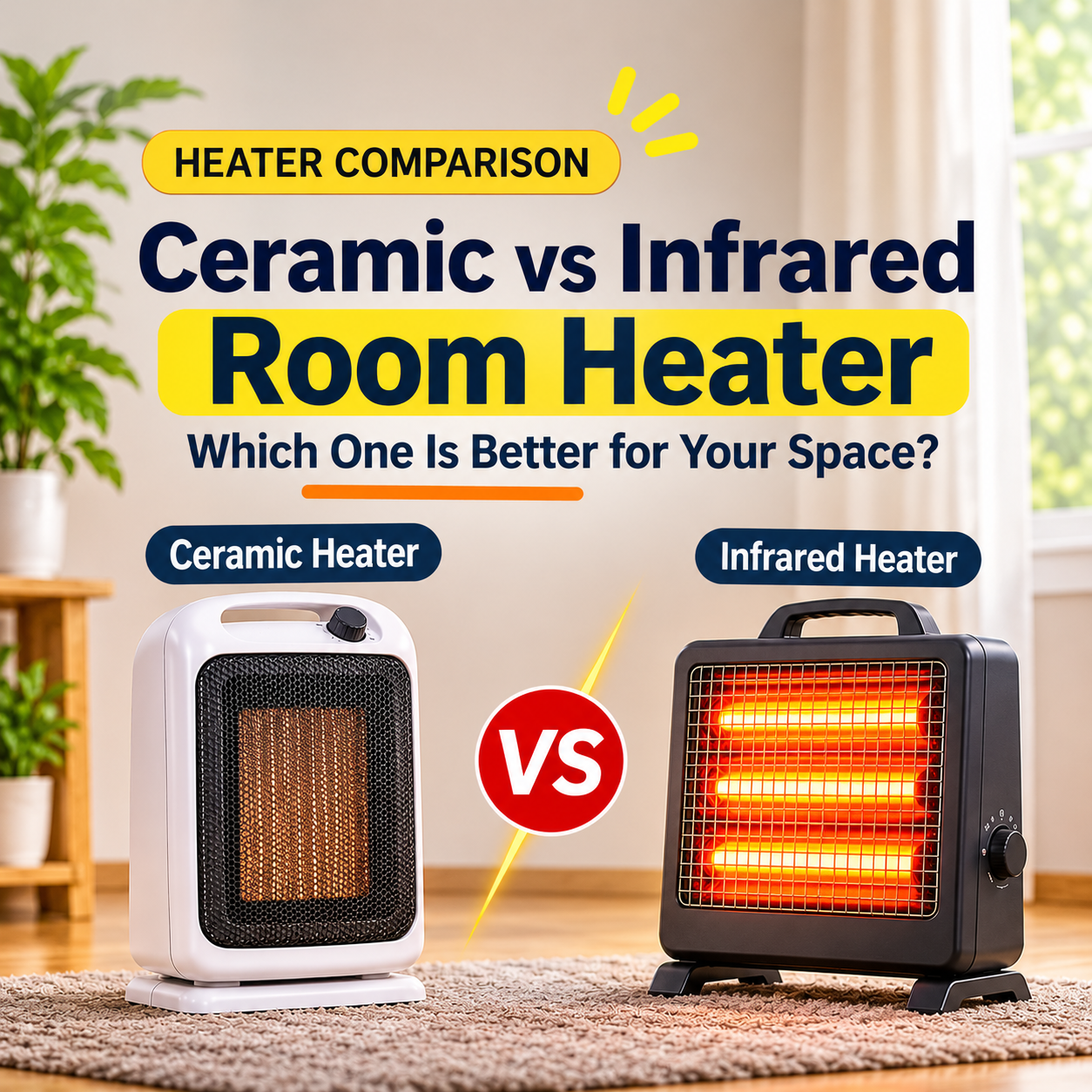
“Electric heater” is a broad term. In most comparisons it means a fan heater or ceramic heater: a compact unit where an electric element, coil or ceramic plate heats up and a fan blows air across it. Other electric types include infrared (radiant) heaters, convector heaters and panel heaters, but the fan style is the one most people are comparing against an oil radiator.
Because the fan moves warm air straight into the room, you feel heat almost the moment you switch it on. The trade-off is that the warmth disappears just as quickly once the heater is turned off.
Main strengths
- Very fast heat, usually within a minute or two
- Lightweight and easy to move from room to room
- Generally cheaper to buy
- Many models include tip-over protection, oscillation and a timer
Main weaknesses
- Fan noise, which can be distracting at night or on calls
- Heat fades quickly after switching off
- Warmth is uneven, with hot spots near the unit and cold corners elsewhere
- Air can feel dry, and the fan may stir up dust
How They Work: Side-by-Side
Oil Filled Radiator vs Electric Heater: Detailed Comparison
1. Heating Speed
Electric fan heaters win clearly here. If you walk into a freezing room and want warmth now, a fan or ceramic heater delivers it almost immediately. An oil filled radiator needs time to heat its oil and metal, so it is better switched on a little before you need the room.
2. Heat Quality and Comfort
Oil filled radiators produce a gentle, steady warmth that spreads through the whole room by radiation and natural convection. Many people describe it as similar to central heating. Fan heaters produce stronger but less even heat, and you often feel a blast of warm air when close and little benefit across the room.
3. Running Costs and Energy Efficiency
Almost all of the electricity used by either heater ends up as heat in your room, so both are close to 100% efficient at the plug. A 1500-watt heater uses 1.5 kWh for every hour it runs at full power, whichever type it is. To estimate cost, multiply 1.5 by your electricity price per kWh.
The real difference is behaviour. An oil filled radiator stores heat, so once the room is warm the thermostat switches the element off for longer periods while the fins keep radiating. In a closed, reasonably insulated room, this can mean lower consumption over several hours. A fan heater tends to be better for short top-ups, because you can switch it off as soon as you leave.
4. Noise Level
An oil filled radiator is virtually silent apart from a faint click when the thermostat switches. Fan heaters produce continuous fan noise, which makes them a poor fit for bedrooms, studies and baby rooms.
5. Safety
Both types are safe when used properly, but they have different risks. Oil radiators have no exposed element and are stable when fully assembled, though the fins can be hot to touch. Fan heaters have a hot element or ceramic plate behind a grille, so tip-over cut-off and overheat protection are essential features.
- Plug directly into a wall socket and avoid extension leads
- Keep curtains, bedding, clothes and furniture at least one metre away
- Never cover the heater or use it to dry laundry
- Do not leave any heater running unattended in a room with young children or pets
- Check that the product carries recognised safety certification
6. Portability and Space
Fan heaters are small and light, so you can carry one from the living room to a bathroom or garage. Oil filled radiators are heavier and sit on wheels, so they are more of a semi-permanent fixture in one room.
7. Lifespan and Maintenance
Because they have no fan, oil radiators have fewer parts to wear out and often last many years. Fan heaters need occasional dusting of the grille and fan, and the motor can wear over time. Neither type needs significant maintenance.
8. Price
Fan and ceramic heaters usually cost less upfront. Oil filled radiators cost more, but their comfort and durability can justify the difference for regular daily use.
Comparison Table
| Feature | Oil Filled Radiator | Electric Fan / Ceramic Heater |
|---|---|---|
| Heat-up time | Slow (20 to 30+ minutes) | Very fast (seconds to minutes) |
| Heat after switch-off | Continues for a while | Stops almost immediately |
| Noise | Near silent | Fan noise |
| Warmth distribution | Even, whole room | Directional, uneven |
| Best for | Long-term heating, bedrooms, offices | Quick bursts, small spaces, bathrooms |
| Weight and portability | Heavy, wheeled | Light, easy to carry |
| Upfront price | Moderate to high | Low to moderate |
| Air feel | Gentle, less drying | Can feel dry |
Pros and Cons at a Glance
Oil Filled Radiator: Pros
- Silent
- Even, comfortable warmth
- Keeps radiating after switch-off
- Durable, low maintenance
Oil Filled Radiator: Cons
- Slow to heat up
- Heavy and bulky
- Higher purchase price
Electric Heater: Pros
- Instant heat
- Light and portable
- Affordable
Electric Heater: Cons
- Noisy fan
- Uneven heat
- Heat vanishes quickly
- Can dry the air
Which Should You Choose?
Best for bedrooms and nurseries
The oil filled radiator. Silence and gentle heat make it the better choice for sleeping areas, and a thermostat with a timer keeps the temperature steady overnight.
Best for home offices and living rooms
Again the oil filled radiator, especially if you work in the room for hours. It will not interrupt calls or recordings with fan noise.
Best for bathrooms, garages and workshops
An electric fan or ceramic heater. For quick, short-term heat in a space you only use briefly, speed matters more than steady comfort. For bathrooms, make sure the heater is specifically rated for that environment.
Best for renters and frequent movers
A light electric heater is easier to carry and store, although a wheeled oil radiator is still manageable for most people.
Best for large or poorly insulated rooms
Neither portable heater is ideal for big, draughty spaces. If you must use one, an oil radiator with a high wattage and good thermostat will maintain temperature more steadily, and sealing draughts will help more than any heater upgrade.
Buying Checklist
- Wattage: as a rough guide, plan for around 10 watts per square foot of floor area in a typical room, and more for poorly insulated spaces
- Adjustable thermostat: prevents overheating and saves energy
- Multiple heat settings: lets you choose between low, medium and high output
- Timer or programmable controls: useful for pre-heating a room
- Tip-over and overheat protection: a must-have safety feature
- Cord storage and wheels or handle: make moving the unit easier
- Warranty: a longer warranty is a good sign of build quality
Tips to Get the Most From Any Heater
- Close doors and windows so heat stays in the room
- Place the heater away from walls and furniture, on a flat, hard surface
- Use the thermostat instead of running on maximum constantly
- Pre-heat the room with an oil radiator before bedtime or work hours
- Use draught excluders and thick curtains to reduce heat loss
Frequently Asked Questions
Is an oil filled radiator cheaper to run than an electric heater?
At the same wattage, both draw the same power while the element is on. An oil radiator can use less over several hours in a closed room because it cycles off while retained heat keeps the room warm. For very short use, a fan heater can be cheaper because it heats quickly and you switch it off sooner.
Can I leave an oil filled radiator on all night?
Many people do, and modern units have thermostats and safety cut-offs. Always follow the manufacturer’s instructions, keep the area clear, and use a timer or thermostat rather than maximum power.
Do oil filled radiators need to be refilled with oil?
No. The oil is sealed inside at the factory and does not get used up. If a unit leaks, stop using it and replace it.
Which heater dries out the air more?
Fan heaters tend to feel drier because they blow hot air around the room. Neither heater actually removes moisture, but oil radiators usually feel gentler.
Which heater is better for a small room?
A small electric heater warms a compact room quickly, while a small oil radiator gives steadier comfort once warm. For short use choose electric; for long stays choose oil.
Are oil filled radiators safe around children and pets?
They have no exposed element, but the fins can become very hot. Keep a safe distance and supervise children and pets, or choose a model with a lower surface temperature.
Final Verdict
If you want comfortable, silent, long-lasting warmth and you will heat the same room for hours, the oil filled radiator is the better buy. If you need instant heat, easy portability and a lower price for short bursts, the electric fan or ceramic heater is the smarter pick. Many households end up using both: an oil radiator in the main living space or bedroom, and a small electric heater for quick top-ups elsewhere.