





Ceramic and infrared heaters are two of the most popular types of electric room heaters, and they are often confused. They both plug into a wall socket and turn electricity into heat, but they warm you in very different ways. Choosing the wrong one can leave you with cold spots, a noisy room, or a heater that is poorly suited to your space. This guide explains ceramic vs infrared room heaters, with a clear comparison so you can pick the right one.
Quick Answer
- Choose a ceramic heater if you want to warm the air in a small to medium room, and you like features such as a thermostat, oscillation, and a timer.
- Choose an infrared heater if you sit in one place, want silent operation, or need instant, targeted warmth in a draughty or open space.
How Each Heater Works

What Is a Ceramic Heater?
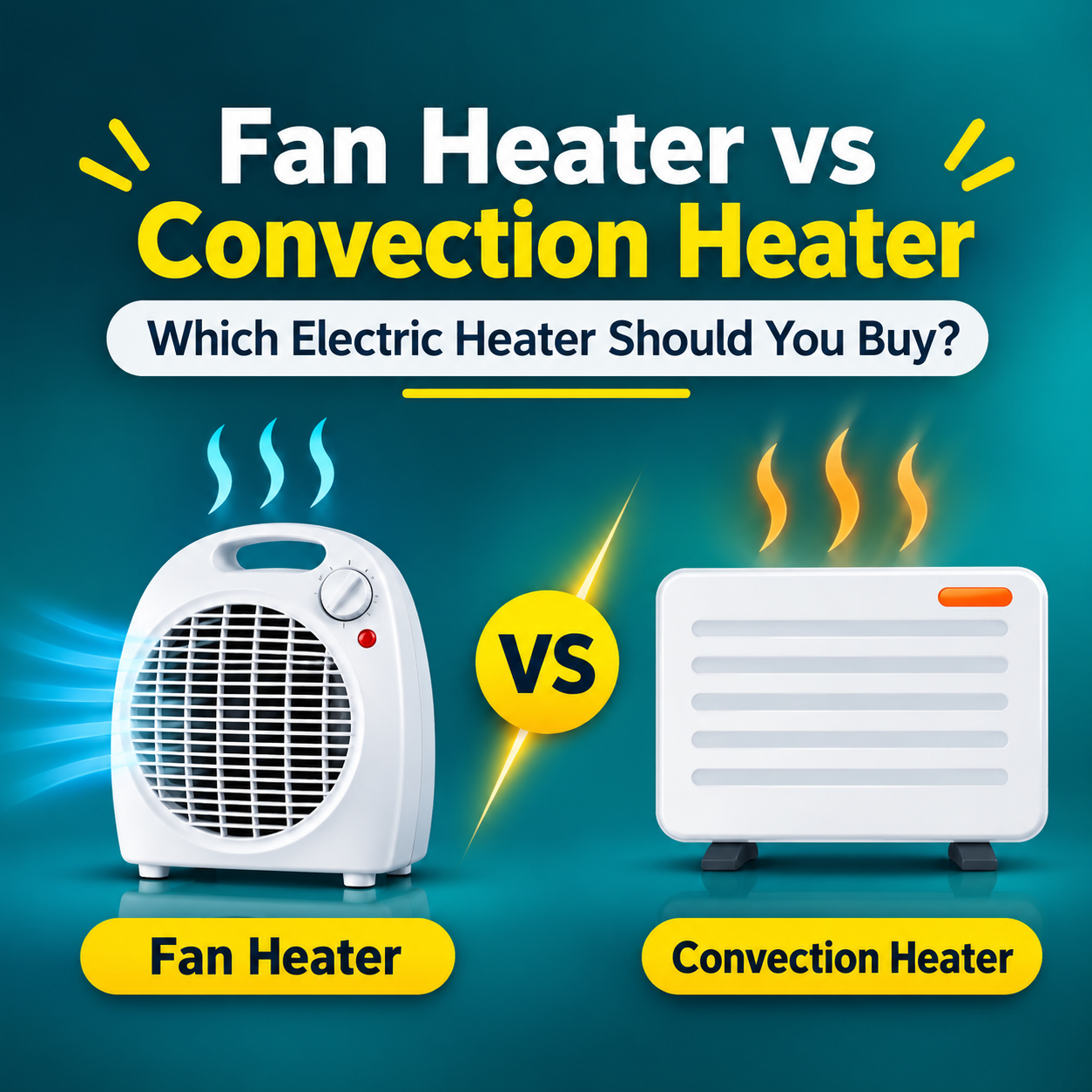
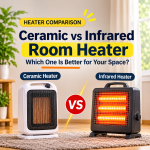
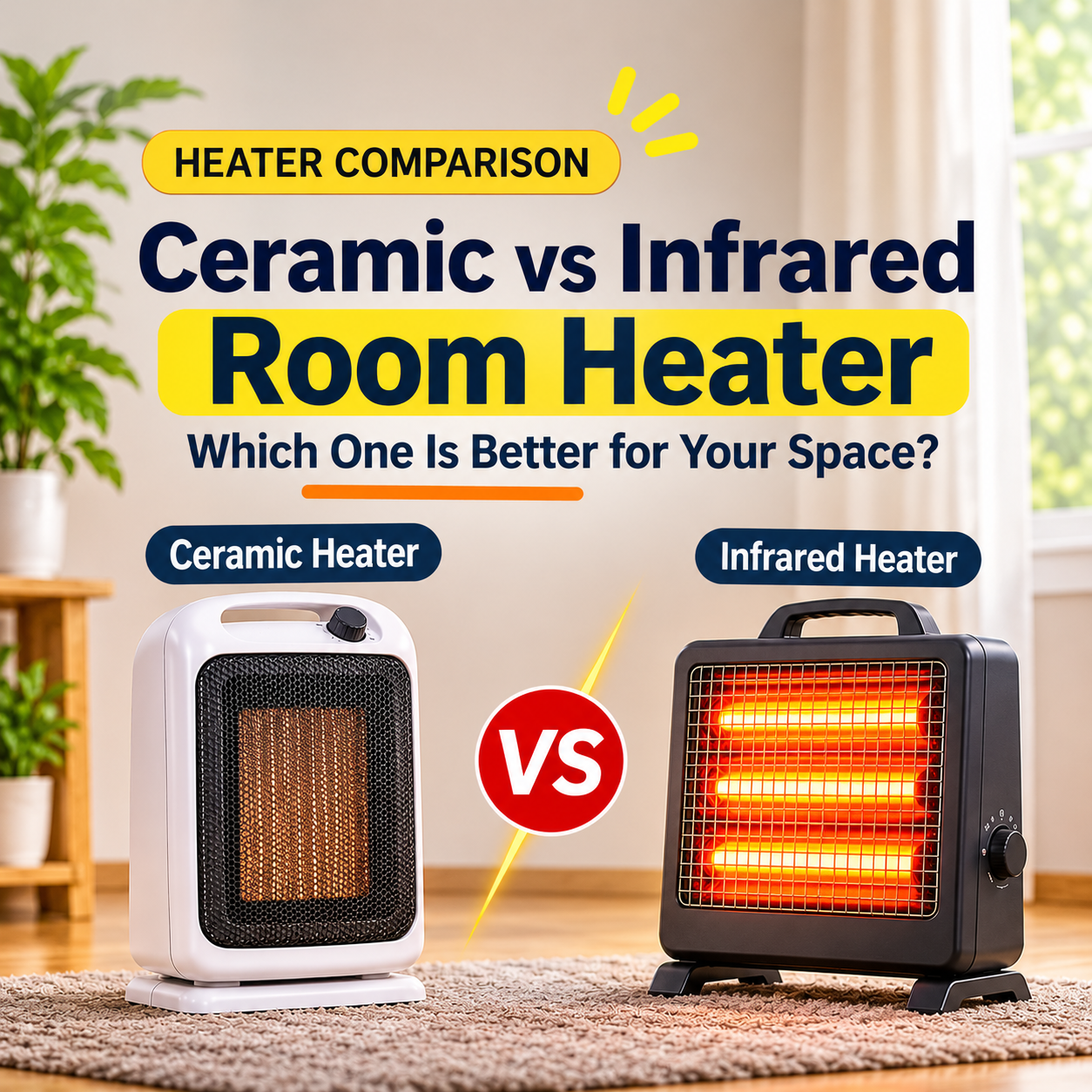
A ceramic heater uses ceramic heating elements, often called PTC (positive temperature coefficient) plates. Electricity heats the ceramic, and air passes over it to carry the heat into the room. Many ceramic heaters use a fan to push warm air out, while some are fanless tower or panel designs. This is a convection style of heating, because it warms the air.
A useful feature of PTC ceramic elements is that they limit their own temperature, which helps make them stable and safer than a bare, glowing wire.
What Is an Infrared Heater?
An infrared heater, also called a radiant heater, produces infrared radiation, the same type of heat you feel from the sun or a fire. The heating element, often a quartz tube, a halogen lamp, or a carbon element, glows and sends out radiant heat. This heat warms you and objects in its path directly, without needing to heat the air first.
Ceramic vs Infrared Heater: Side-by-Side Comparison

1. Heating Style and Feel
A ceramic heater warms the air, so the room slowly gets warmer and the warmth spreads wherever the air goes. An infrared heater warms the person or object in front of it, so you feel warm quickly, even if the room air stays cool. Step out of the beam and the warmth fades fast.
2. Room Size and Coverage
For heating a whole small or medium room, ceramic heaters usually perform better, because they heat the air throughout the space. Infrared heaters are better for spot heating, such as a desk, a sofa, a workbench, or a small seating area. Neither type is a perfect choice for a very large room, which needs a high-capacity heater or a central system.
3. Speed
Infrared heaters feel warm almost the moment you switch them on, because they send heat directly to you. Fan-assisted ceramic heaters warm up quickly too, but you will feel the room warm gradually as the air temperature rises.
4. Noise
Infrared heaters are usually silent. Ceramic heaters with fans make some noise, though many are quiet enough for a living room or office. Fanless ceramic models are quieter still. If you want to work or sleep in silence, infrared or a fanless model is worth considering.
5. Energy Use and Running Cost
Both heater types convert almost all the electricity they use into heat. This means a 1500 W ceramic heater and a 1500 W infrared heater use the same amount of electricity per hour at full power. Claims that one type is far more “efficient” are often exaggerated. The real saving comes from using the right heater for the job: spot heating with infrared can feel comfortable at a lower room temperature, while a ceramic heater with a good thermostat can hold a room at a steady temperature efficiently.

6. Safety
Both types are safe when used correctly, but they have different hazards.
- Ceramic heaters often have a cooler outer housing and a self-limiting PTC element, but the air coming out is hot, and the grille can still get hot.
- Infrared heaters have a very hot element, often glowing, and strong radiant heat. Keep the heater well away from curtains, bedding, and furniture, and never touch the element.
In both cases, keep at least 3 feet (about 1 metre) of clear space around the heater, plug it directly into a wall socket, and never cover it or leave it unattended. Always choose a model with tip-over and overheat protection.
7. Air Quality and Dryness
Heaters do not remove moisture from air, but warming the air lowers its relative humidity, so a ceramic heater that heats the whole room can make the air feel dry. Fan-driven airflow can also feel drying on skin and eyes. Infrared heaters warm you without heating all of the air, so some people find them less drying, although they are not a fix for dry air. A hygrometer and a humidifier help in either case.
8. Best Use Cases

| Situation | Better Choice | Why |
|---|---|---|
| Small bedroom or study | Ceramic (or fanless ceramic) | Warms the whole room air, and works with a thermostat |
| Sitting at a desk | Infrared | Warms you directly with silent operation |
| Draughty garage or workshop | Infrared | Warms people and tools even if air is cool |
| Living room with several people | Ceramic | Spreads warmth around the room |
| Bathroom (only if rated for it) | Infrared (bathroom-rated) | Targeted heat, but only use models designed for wet areas |
| Quick warm-up when you get home | Infrared or fan ceramic | Both give fast comfort |
Pros and Cons
| Ceramic Heater | Infrared Heater | |
|---|---|---|
| Pros | Warms the air in the room, often has thermostat, timer and oscillation, cooler housing, widely available | Instant targeted warmth, silent operation, good for draughty or open areas, does not need to heat all the air |
| Cons | Fan can be noisy, warmth drifts away in draughty spaces, can feel drying | Heats only what is in its line of sight, glowing element needs more clearance, not ideal for whole-room heating |
Which One Should You Choose?

Tips to Get the Best Performance From Either Type
- Choose the right wattage, with about 10 watts per square foot as a common starting point for whole-room heating.
- Use a thermostat and timer, and avoid running at maximum all the time.
- Seal draughts and close doors, because it helps both heater types.
- Keep the heater clean, since dust on vents or elements reduces performance and causes a burning smell.
- For infrared, position it so the beam reaches where you sit, with a clear line of sight.
- For ceramic, place it on the cold side of the room with open space around it.
What to Look for When Buying
Ceramic Heater Features
- Adjustable thermostat and multiple heat settings.
- Oscillation for wider coverage.
- Timer and remote control.
- Quiet fan or a fanless design.
- Tip-over and overheat protection.
Infrared Heater Features
- Safe guard or protective grille over the element.
- Adjustable power levels.
- Stable base or wall mount, with tip-over protection.
- Appropriate wattage for your space.
- Ratings suited to where you will use it, such as bathroom or outdoor-rated models for those spaces.
For both, check the product label for recognised safety certification marks, and look for clear instructions and a reliable warranty.
Frequently Asked Questions
Is an infrared heater better than a ceramic heater?
Neither is better in every situation. Infrared is better for targeted, silent spot heating, and ceramic is better for warming the air in a small to medium room.
Which uses less electricity, ceramic or infrared?
At the same wattage, they use the same electricity. A heater that suits your use and has a good thermostat will cost less in practice.
Is a ceramic heater safe to leave on overnight?
It is safer not to. Switch off any heater before sleeping unless the manufacturer states it is designed for unattended use.
Can an infrared heater heat a whole room?
It can make a room feel warmer in its line of sight, but it does not heat the whole air volume as well as a ceramic or convection heater. It is best for zones and spot heating.
Do infrared heaters dry out the air?
They warm you without heating as much air, so some people find them less drying. Any heater that raises room temperature lowers relative humidity.
Which is quieter?
Infrared heaters are usually silent, while ceramic heaters with fans make some noise. Fanless ceramic heaters are quieter.
Which is better for a bedroom?
A quiet ceramic or fanless heater with a thermostat and timer is a common choice. Place any heater at least 3 feet from the bed and switch it off before you sleep.
Final Thoughts
Ceramic and infrared heaters both do a good job, but for different reasons. A ceramic heater warms the air, so it suits small to medium rooms where you want even warmth and good control. An infrared heater warms you directly, so it shines for silent spot heating and draughty spaces. Match the heater to how and where you will use it, keep safety rules in mind, and choose a model with a thermostat, timer, and proper protection. That way you will stay comfortable without wasting power.