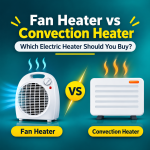
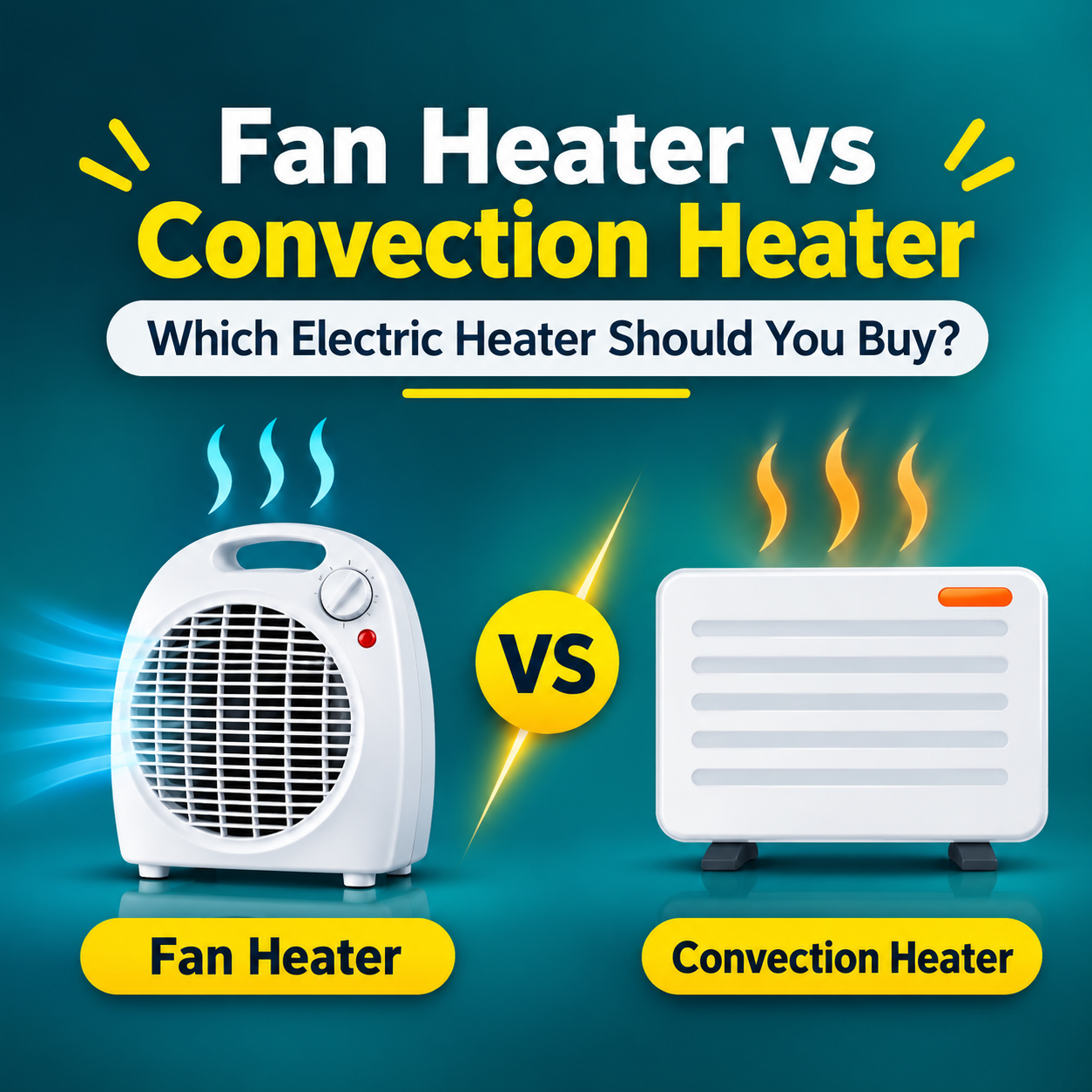
Fan Heater vs Convection Heater: Which One Should You Buy?
Choosing a portable electric heater sounds simple until you see how many types are on sale. Two of the most popular are the fan heater and the convection heater. They cost a similar amount to run, plug into the same socket and often look alike, yet the way they warm a room is very different, and so is the way they feel to live with.
This guide explains how each one works, compares them on speed, comfort, noise, running cost and safety, and shows you which type suits each room in your home.
- Choose a fan heater when you want heat fast, for short periods, in a small space, or when you need a light heater you can carry around.
- Choose a convection heater when you want quiet, steady, whole-room warmth for hours, such as in a bedroom, living room or home office.
What Is a Fan Heater?
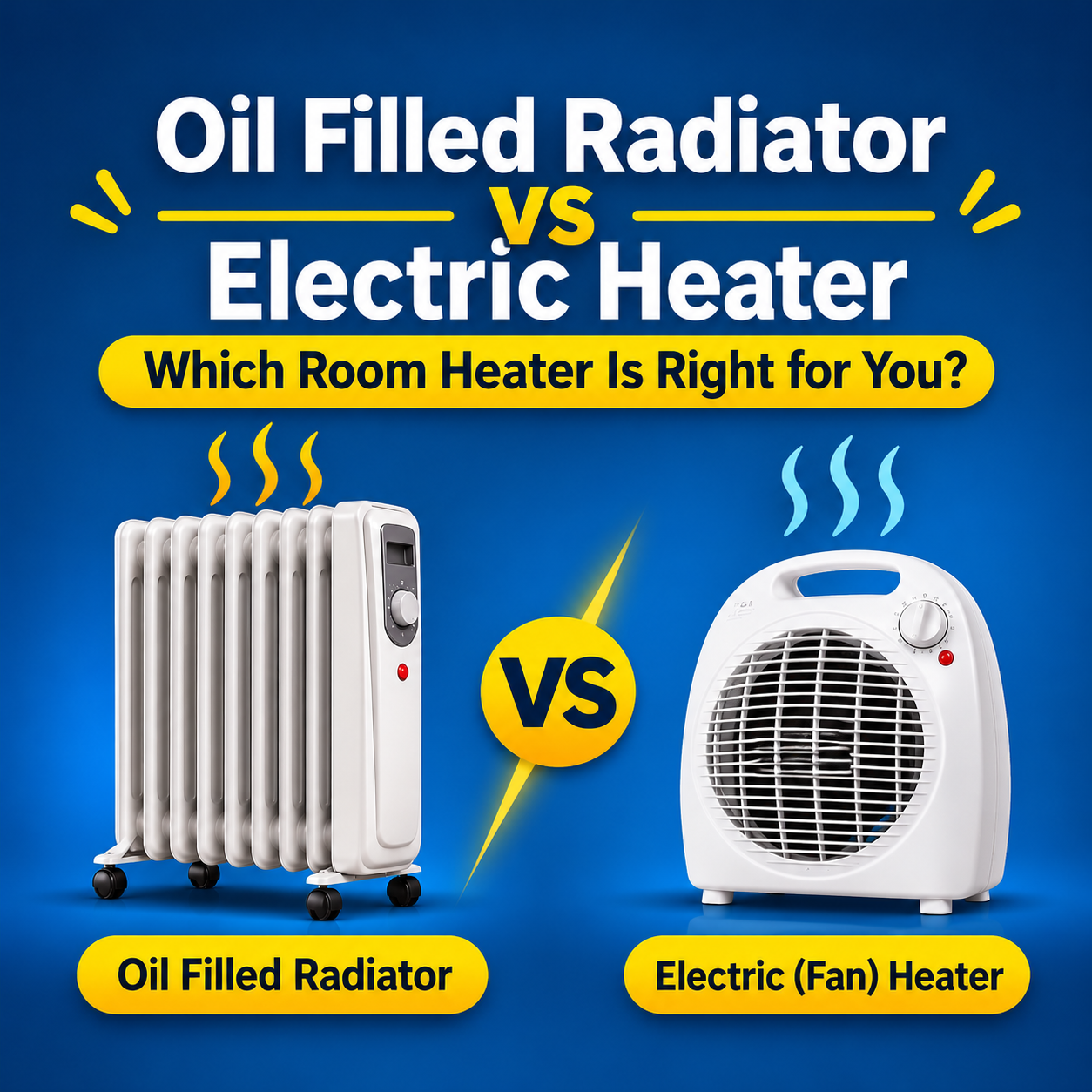
A fan heater contains an electric heating element, either a metal coil or a ceramic plate, and a small electric fan. When you switch it on, the element heats up in seconds and the fan blows room air across it. The warmed air is then pushed directly into the space in front of the heater.
Because the fan forces air through the unit, you feel warmth almost immediately. This is why fan heaters are so popular for quick relief on a cold morning.
Main strengths
- Very fast heat, often noticeable within a minute
- Compact, lightweight and easy to carry
- Usually the cheapest type to buy
- Many models offer oscillation, timers and cool-blow summer mode
Main weaknesses
- Fan noise, which can be tiring over time
- Heat is uneven and drops fast when switched off
- Can make the air feel dry and circulate dust
- Better for short use than all-day heating
What Is a Convection Heater?
A convection heater warms the air by natural air movement. Cool air from the floor enters through vents at the bottom, passes over a heated element inside the casing, becomes lighter as it warms and rises out through vents at the top. Cooler air then flows in to replace it, and this slow loop gradually warms the whole room.
Most convection heaters have no fan, so they are quiet. Some include an optional “turbo” fan to speed things up, which gives you a bit of both worlds. They come as freestanding units or as slim panels that can be wall-mounted.
Main strengths
- Silent or near-silent operation
- Even, comfortable warmth across the whole room
- Accurate thermostats that hold a steady temperature
- Gentler on the air, with less dust movement
Main weaknesses
- Slower to warm a cold room
- Less effective in large or draughty spaces
- Usually costs more than a basic fan heater
- Larger and less convenient to move around
How They Work: Side-by-Side
Fan Heater vs Convection Heater: Detailed Comparison
1. Heating Speed
The fan heater wins for speed. Its fan pushes warm air toward you straight away, so you feel the difference almost at once. A convection heater needs time to warm the air in the whole room before it feels comfortable, which can take 15 to 30 minutes in a cold space.
2. Quality of Warmth
Convection heaters give a steady, even warmth because warm air rises and spreads naturally to all areas of the room. Fan heaters concentrate heat in the area they are pointed at, so the spot in front of the unit feels hot while corners can stay cold.
3. Running Costs and Energy Efficiency
Almost all the electricity either heater uses ends up as heat in your room, so both are very close to 100% efficient at the plug. A 2000-watt heater uses 2 kWh for each hour at full power, and a 1500-watt heater uses 1.5 kWh. Multiply that by your electricity price per kWh to estimate your hourly cost.
The difference comes from how you use them. A fan heater is cost-effective for short bursts because you can warm up quickly and switch it off. A convection heater with an accurate thermostat can be more economical for longer stretches, as it cycles on and off to hold the temperature without overshooting.
4. Noise Level
Convection heaters are quiet, apart from a soft click as the thermostat operates. Fan heaters generate constant fan noise, which makes them a poor match for bedrooms, nurseries and quiet working spaces.
5. Safety
Both types are safe when used correctly, but they have different risks. Fan heaters can have very hot internal elements and outlet grilles, so tip-over switches and overheat protection are essential. Convection heaters generally run at lower surface temperatures, especially panel designs, though the top vents and casing can still get hot.
- Plug straight into a wall socket and avoid extension leads
- Keep at least one metre of clear space around the heater
- Never cover vents or dry clothes on a heater
- Do not leave any heater unattended with young children or pets
- Choose a model with recognised safety certification
6. Portability and Placement
Fan heaters are the clear winner for moving between rooms. They are small and light, and many have a carry handle. Convection heaters are heavier, but wall-mounted panels free up floor space and are a good fit for children’s rooms or small rooms where floor space is limited.
7. Air Quality and Comfort
Moving air from a fan heater can stir up dust and make the room feel drier. Convection heaters move air gently, so the environment feels calmer and more comfortable. For people with sensitive airways, this is a practical benefit.
8. Lifespan and Maintenance
A fan heater has a motor that can wear out, and the grille and fan need regular dusting. A convection heater has fewer moving parts and typically lasts longer, though it also benefits from occasional vent cleaning.
Comparison Table
| Feature | Fan Heater | Convection Heater |
|---|---|---|
| How it heats | Fan blows air over hot element | Warm air rises and circulates naturally |
| Speed | Very fast | Moderate to slow |
| Noise | Audible fan noise | Silent or near silent |
| Warmth distribution | Directional, uneven | Even, whole room |
| Best for | Short bursts, small spaces | Long periods, bedrooms, offices |
| Portability | Light, easy to carry | Heavier, some wall-mountable |
| Upfront price | Low | Low to moderate |
| Air feel | Can feel dry, moves dust | Calmer, gentler |
Pros and Cons at a Glance
Fan Heater: Pros
- Instant heat
- Light and portable
- Affordable
- Often has extra modes
Fan Heater: Cons
- Noisy
- Uneven warmth
- Heat fades quickly
- Can dry the air
Convection Heater: Pros
- Quiet
- Even, steady warmth
- Precise thermostat
- Often wall-mountable
Convection Heater: Cons
- Slower to heat
- Heavier
- Weaker in big, draughty rooms
Which Should You Choose?
Best for bedrooms and nurseries
The convection heater. Silent operation and gentle, even heat are what you want in a room where people sleep.
Best for home offices and living rooms
The convection heater again, especially for long sessions. It will not interrupt calls or TV with fan noise.
Best for bathrooms, garages and workshops
The fan heater, because fast heat for short stays matters more than long-term comfort. For bathrooms, use only a model that is rated for damp areas.
Best for desks and small spaces
A small fan heater gives you quick personal warmth at your feet or hands without heating the whole room.
Best for renters and frequent movers
A fan heater is lighter and easier to store. A wall-mounted convection panel is great if your lease allows it.
Buying Checklist
- Wattage: as a rough guide, plan for about 10 watts per square foot of floor area, and more for poorly insulated rooms
- Adjustable thermostat: keeps the room steady and saves energy
- Multiple heat settings: lets you tune output to the weather
- Timer: useful for pre-heating a room or limiting runtime
- Tip-over and overheat protection: essential on every heater
- Noise rating or fan-free design: important for bedrooms and offices
- Warranty: a longer warranty usually reflects better build quality
Tips to Get the Most From Any Heater
- Close doors and windows to keep heat inside the room
- Place the heater on a flat, hard surface away from furniture and curtains
- Use the thermostat rather than running on maximum all the time
- Start a convection heater a little earlier, because it takes longer to build warmth
- Seal draughts and use thick curtains to reduce heat loss
Frequently Asked Questions
Is a convection heater cheaper to run than a fan heater?
At the same wattage, both use the same power while heating. A convection heater with a good thermostat can use less over several hours, while a fan heater is cost-effective for quick top-ups.
Which heats a room faster?
A fan heater, by a clear margin. A convection heater heats the whole body of air in the room, which takes longer.
Is a fan heater or convection heater safer?
Both are safe when used correctly. Convection heaters typically have lower surface temperatures, but a fan heater with tip-over and overheat protection is also a safe choice.
Can I leave a convection heater on overnight?
Many are designed for extended use with thermostats and cut-offs, but always follow the manufacturer’s instructions and keep the area clear.
Why does my heater smell when I first use it?
New heaters can burn off dust or manufacturing residue. This should fade after a short time in a ventilated room. If a burning smell continues, switch it off and unplug it.
Can a convection heater with a turbo fan replace a fan heater?
Often yes. The turbo mode gives you faster warm-up, while the standard mode gives you quiet, even heat afterward.
Final Verdict
If you need fast, portable heat for a short time, the fan heater is the practical and affordable choice. If you want quiet, even warmth for hours in the rooms you use most, the convection heater is the better long-term investment. For a flexible setup, consider a convection heater as your main heater and a small fan heater for quick top-ups.