








What Size Rug for a Living Room? The Complete Sizing Guide
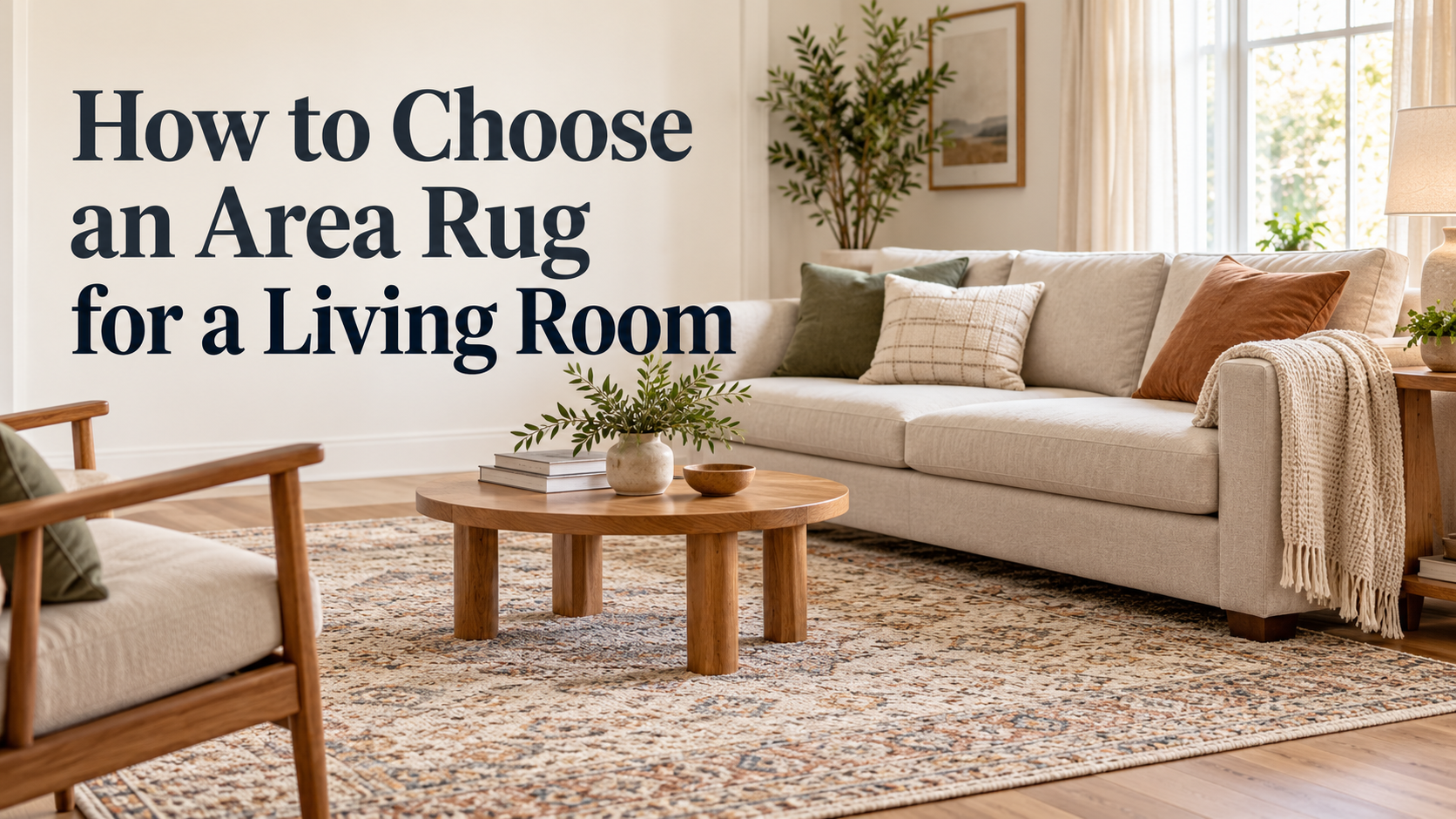
Picking a rug is one of those decisions that looks easy until you are standing in the room with a tape measure. Go too small and the whole space feels disjointed. Go too big and it can swallow the room. The right size ties your furniture together, defines the seating area, and makes the room feel finished.
This guide walks you through exactly how to choose the right rug size for your living room, from standard dimensions and layout options to the measuring tricks designers rely on. By the end, you will know what size to buy with confidence.
Quick Answer
For most living rooms, an 8 x 10 ft rug is the best size. Small rooms usually suit a 5 x 8 ft rug, and large rooms or open-plan spaces usually suit a 9 x 12 ft or bigger.
The rule that matters most: at least the front legs of your main seating should sit on the rug.
Why Rug Size Matters So Much
A rug does more than add color and softness underfoot. It acts as an anchor for your furniture and visually groups the seating into one conversation area. When the size is right, the room looks balanced and intentional.
When the size is wrong, the problem is obvious even if people cannot say why. A rug that is too small looks like it is floating in the middle of the room, and the furniture appears scattered around it. Size is the single most common rug mistake, and it is also the most expensive one to fix, so it pays to get it right before you buy.
Standard Rug Sizes at a Glance
Rugs come in a handful of common sizes. Knowing what each one is best for makes shopping much easier.
| Rug size | Best for | Typical use |
|---|---|---|
| 5 x 8 ft | Small living rooms, apartments | Under a coffee table with front legs of seating on it |
| 6 x 9 ft | Compact to mid-size rooms | A step up from 5 x 8 when you want more coverage |
| 8 x 10 ft | Average living rooms | The most popular size for sofa plus chairs |
| 9 x 12 ft | Large living rooms | Fits a full seating group, including sectionals |
| 10 x 14 ft | Very large or open-plan rooms | Defines a big seating zone |
| Round 6 to 8 ft | Corner seating, accent areas | Softens square rooms and sits well with round tables |
The Three Ways to Place a Living Room Rug
Before you pick a size, decide how you want the rug to relate to your furniture. There are three main layouts, and each one calls for a different rug size.

1. All Legs On
Every piece of furniture in the seating group sits fully on the rug. This is the most polished and luxurious look, and it makes the room feel unified. It works best in large living rooms, and it usually needs a 9 x 12 or bigger. To pull it off, the rug must be big enough that the sofa, chairs, and side tables all fit inside its edges.
2. Front Legs On
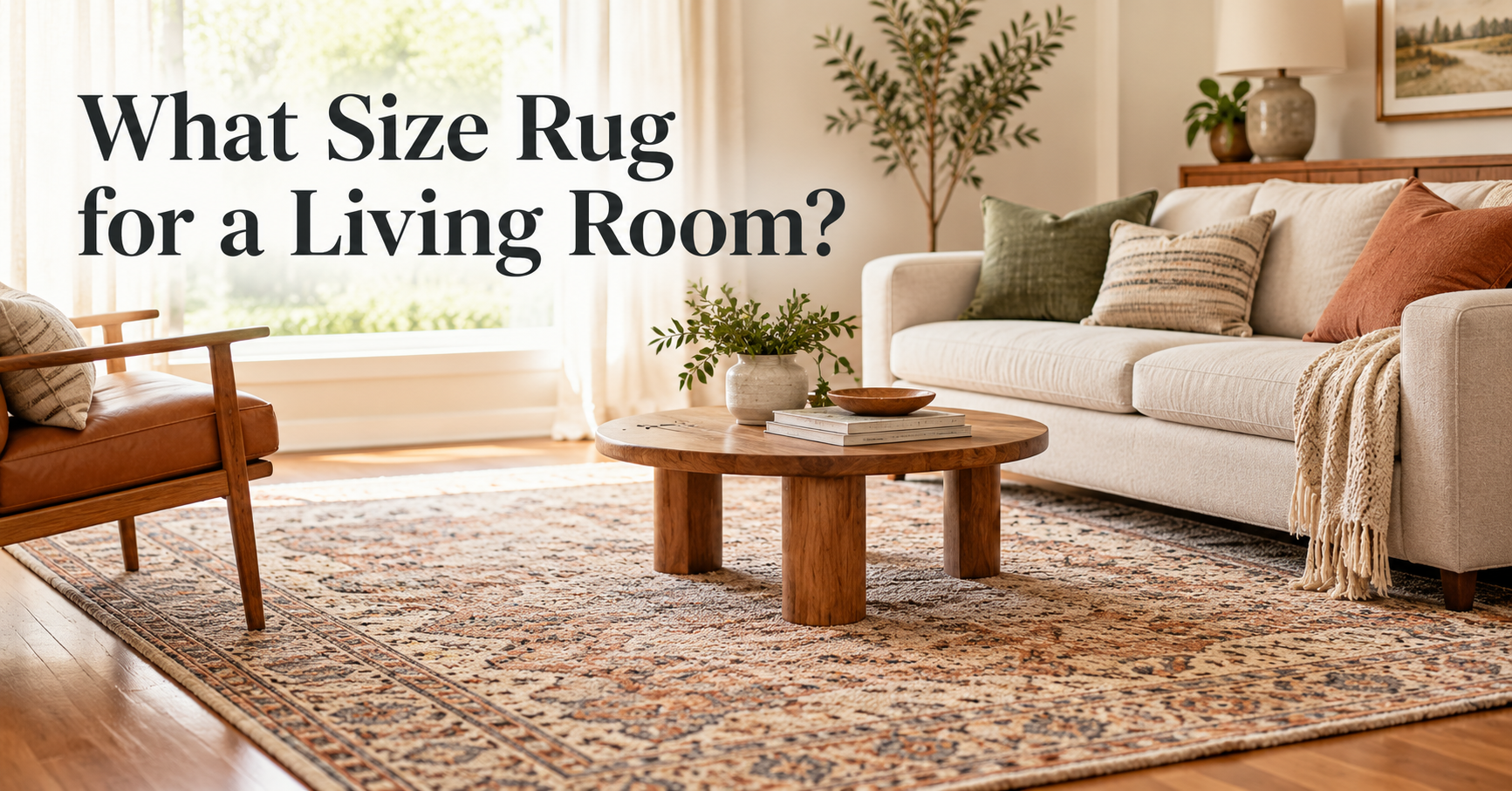
The front legs of the sofa and chairs rest on the rug, while the back legs sit on the floor. This is the most popular layout, and for good reason. It connects the furniture to the rug without requiring an enormous size, and it works with an 8 x 10 in most average living rooms. For a smaller room, the same idea works with a 5 x 8 or 6 x 9.
When using this layout, let the rug extend at least 8 to 12 inches under the front of the sofa so the connection looks deliberate.
3. Floating (Mostly Off the Furniture)
The rug sits only under the coffee table, and no seating touches it. This can work in very tight spaces, but it is the layout that most often looks wrong. A small rug in the middle of a larger room tends to look like a doormat. If you choose it, keep the room small and make sure the rug at least extends a bit past the coffee table on all sides.
Designer Tip
Living Room Rug Size Chart by Room Size
Use this chart as a starting point. Your furniture layout can shift the answer a little, but these sizes cover most homes.

The Measurements That Make a Rug Look Right
Designers rely on a few simple spacing rules. Keep these numbers in mind as you compare rug sizes.

- Leave about 18 inches of bare floor around the rug. The workable range is roughly 8 to 24 inches. This frames the rug and keeps the room from feeling crowded.
- Let the rug extend 8 to 12 inches under your seating. This is the minimum for a grounded look when you use the front legs on layout.
- Keep 14 to 18 inches between the sofa and coffee table. That is close enough to reach a drink and far enough to walk by comfortably.
- Preserve a walkway of 30 to 36 inches through the main traffic paths so the rug does not make the room feel blocked.
- Choose a rug pad about 1 inch smaller than the rug on each side so it stays hidden.
How to Measure Your Living Room for a Rug
You do not need special tools. A tape measure and some painter’s tape or old newspaper will do the job.
- Decide on your layout. Choose all legs on, front legs on, or floating before you measure.
- Measure the seating area. Measure the width of the sofa and the full depth of the seating arrangement, from the back of the sofa to the front of the chairs.
- Add the extra inches. Add 6 to 12 inches on each side of the sofa so the rug does not end flush with the furniture.
- Check the bare floor. Subtract the rug size from the room size to make sure you still have a margin of exposed floor.
- Mark it out on the floor. Tape the exact rug dimensions on the floor, or lay out newspaper, and live with it for a day. This is the best way to see how it feels in the room.
Choosing a Rug Size for Different Living Room Setups
Small Living Rooms
In a small room, a 5 x 8 or 6 x 9 rug is often best. Resist the urge to go tiny just because the room is small. A rug that is slightly bigger can actually make the room feel larger by creating a clear seating zone. Aim to place at least the front legs of your sofa and chairs on it.
Average Living Rooms
For rooms around 12 x 12 to 12 x 15 feet, the 8 x 10 is the safe and stylish choice. It handles a standard sofa, two chairs, and a coffee table, and it leaves a comfortable margin of floor around the edges.
Large Living Rooms
Large rooms look best with a 9 x 12 or 10 x 14. A bigger rug lets you place every piece of furniture fully on it, which gives that high-end, put-together look. If one rug still feels small in the space, consider a larger size rather than layering several.
Open-Plan Living Rooms
In open spaces, the rug is what defines the living area. Make sure it is large enough to hold the entire seating group, and position it so it clearly separates the lounge area from the dining or kitchen zone. Do not let the rug edge land awkwardly in the middle of a walkway.
Rooms with a Sectional
Measure the full footprint of the sectional, including the chaise or corner. At a minimum, the front legs of every section should sit on the rug. In most cases that means an 8 x 10 or 9 x 12. A rug that is too narrow for a sectional will look lopsided.
Rooms with a Fireplace or Doorways
Keep the rug a safe distance from the fireplace hearth. Also check how doors swing. A thick rug can catch the bottom of a door, so choose a lower pile near entrances or leave enough clearance.
Rug Shape: Rectangle, Round, or Runner?
Rectangular rugs fit most living rooms because they match the shape of the seating group. Round rugs work well in square rooms, with corner seating, or under a round coffee table. They soften sharp lines but need a large enough diameter, usually 8 feet or more, to hold seating. Runners are better in hallways and narrow spaces than in the main seating area.
Pile Height and Material: Do They Change the Size You Need?
Size and style work together. A thick, high-pile rug takes up visual weight and can make furniture sit unevenly if only the front legs rest on it. Low-pile and flat-weave rugs sit closer to the floor, so the sofa and chairs stay level and doors clear more easily.
- Low pile or flat weave: Great for high-traffic rooms, homes with kids or pets, and layouts where furniture sits partly on the rug.
- Medium pile: A comfortable balance of softness and durability for most living rooms.
- High pile or shag: Cozy and luxurious, best in low-traffic areas. It is easy for a chair to wobble if only part of it rests on a thick rug.
Material matters for durability as well. Wool is naturally resilient and a long-time favorite for living rooms. Synthetic fibers such as polypropylene and polyester are budget-friendly and easy to clean. Natural fibers like jute and sisal add texture but are less soft underfoot.
Common Rug Sizing Mistakes to Avoid
- Buying a rug that is too small. This is the number one mistake. If in doubt, size up.
- Ignoring the furniture layout. Always plan the rug around where the seating will sit, not just the room dimensions.
- Letting the rug touch the walls. Leave a margin of bare floor so the rug does not look like wall-to-wall carpet.
- Skipping the rug pad. Without one, rugs slip, wear faster, and can bunch up.
- Not testing the size first. Tape it out on the floor before you spend the money.
- Forgetting about doors and vents. Check that the rug will not block a door, a floor vent, or an outlet you use.
Frequently Asked Questions
What size rug is best for a standard living room?
For most living rooms around 12 x 12 to 12 x 15 feet, an 8 x 10 rug is the best all-around choice. Place it so the front legs of your sofa and chairs rest on it. If your room is smaller than 10 x 10 feet, a 5 x 8 rug is usually the right call. Larger rooms of 14 x 16 feet and up are better served by a 9 x 12.
Should all furniture legs be on the rug?
They can be, but they do not have to be. All legs on gives the most luxurious, unified look and suits larger rooms. Front legs on is the most popular choice because it ties the seating together without needing a huge rug. The one layout to avoid is having no furniture touch the rug at all, because it makes the rug look like a doormat.
Is a 5 x 8 rug too small for a living room?
In a small living room or apartment, a 5 x 8 can work well, especially under a coffee table with the front legs of the seating on it. In an average or large living room it usually looks undersized and disconnected from the furniture.
How far should a rug extend past the sofa?
Aim for the rug to extend about 6 to 12 inches beyond each side of the sofa when you can. This keeps the sofa visually anchored. If the rug is narrower than the sofa, it tends to look too small.
How much floor should show around the rug?
Most designers suggest about 18 inches of exposed floor around the rug in an average room, with a workable range of roughly 8 to 24 inches. In small rooms, leaving 6 to 8 inches can still look intentional.
Do I need a rug pad?
Yes, in nearly every case. A pad keeps the rug from sliding, adds cushioning, protects your floor, and helps the rug last longer. Choose a pad about an inch smaller than the rug on every side so it stays hidden.
What rug size works with a sectional?
Choose a rug large enough for at least the front legs of the sectional to sit on it. In most cases that means an 8 x 10 or 9 x 12. Measure the full footprint of the sectional, including the chaise, before you decide.
Should the rug go under the coffee table?
Yes. The coffee table should sit fully on the rug with room to spare. It is best when the rug extends a few inches beyond the table on every side, so the table does not straddle the rug edge.
Final Thoughts
The right rug size comes down to a few simple choices. Decide how you want the rug to meet your furniture, match that layout to a standard size, and leave a comfortable border of bare floor. For most living rooms, an 8 x 10 with the front legs of the seating resting on it is the safest bet. Small rooms do well with a 5 x 8 or 6 x 9, and large or open-plan rooms look best with a 9 x 12 or bigger.
Before you buy, tape out the dimensions and give it a day. That small step has saved plenty of people from an expensive sizing mistake, and it will help you choose a rug you love for years.