







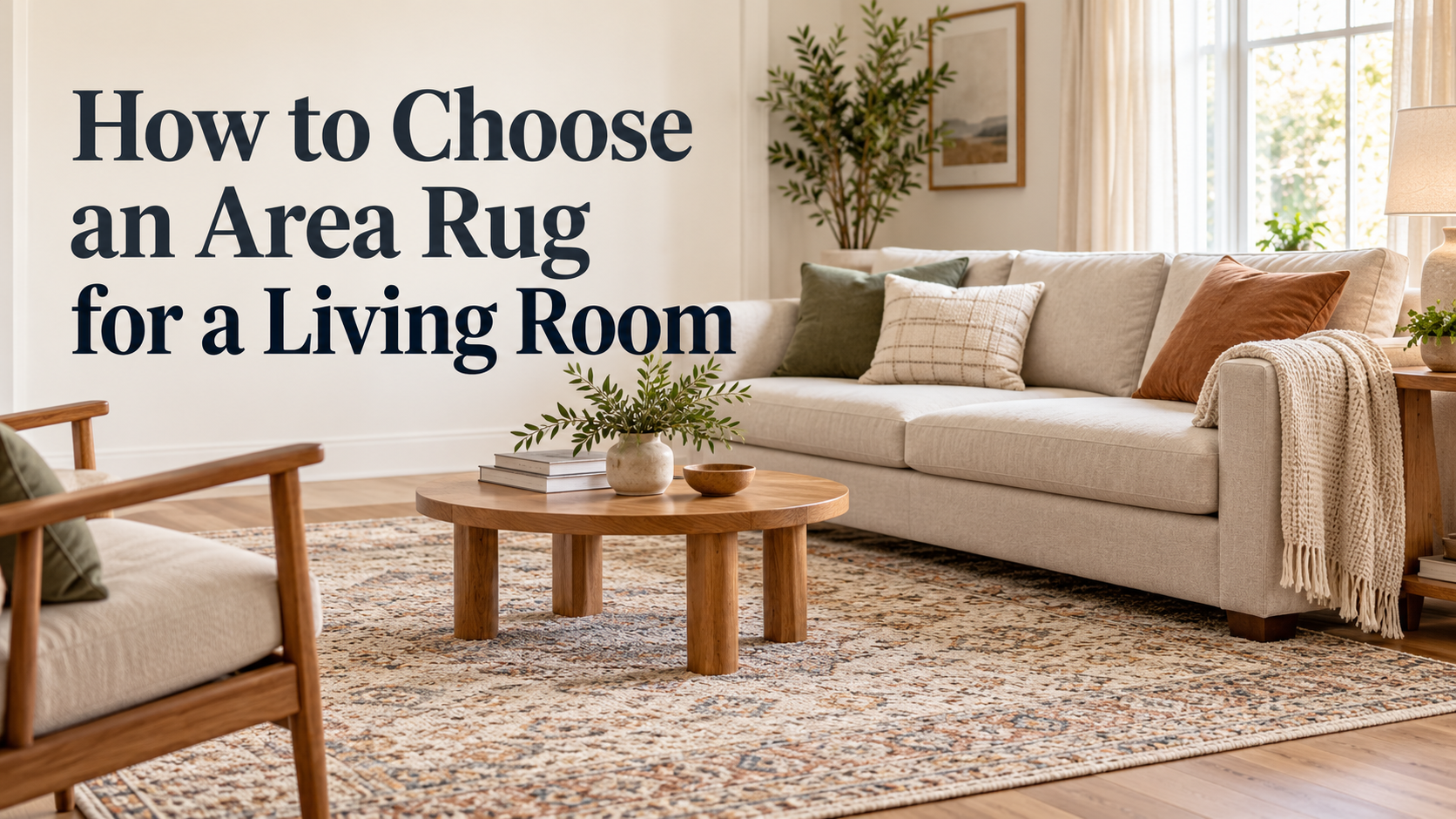

The right area rug can completely change how a living room looks and feels. It anchors your furniture, adds warmth underfoot, softens echoes, and ties your colors together. The wrong rug does the opposite. It can make a room feel smaller, look disconnected, or wear out within a couple of years.
The good news is that choosing a rug is much easier once you know the order to decide things in. This guide walks you through every step: measuring your space, picking the right size and shape, comparing materials and pile heights, choosing colors and patterns, and caring for your rug so it lasts. By the end, you will know exactly what to look for before you buy.
Quick Answer: What to Decide First
- Size: Most living rooms look best with an 8×10 ft or 9×12 ft rug, with at least the front legs of all main furniture sitting on it.
- Material: Wool is the best all-round choice for durability. Polypropylene is a smart budget pick for kids and pets.
- Pile: Low to medium pile is easiest to clean and works for most households.
- Always add a rug pad. It prevents slipping, adds cushioning, and protects your floor and your rug.
Step 1: Measure Your Living Room and Plan the Layout
Before you look at a single rug, spend ten minutes measuring. Most rug mistakes come from buying a size that looked right online but does not fit the way the furniture is arranged.
- Measure the room. Note the length and width of the open floor area, and mark doors, vents, and anything that swings or slides.
- Decide on your seating zone. The rug should define the area where people sit and talk, not simply fill the floor.
- Mock it up. Use painter’s tape or sheets of newspaper to mark the outline of the rug size you are considering. Leave it for a day and walk around it. This simple trick shows you right away whether the size feels right.
- Check the clearances. Make sure the rug will not block doors, and that it will not sit too close to a fireplace or heating vent.
Step 2: Choose the Right Rug Size
Size is the single most important decision. A rug that is too small is the most common living room mistake, because it makes the furniture look like it is floating and makes the room feel smaller. As a general rule, go bigger than you think you need.
The Three Main Furniture Placement Options

- All legs on the rug. Every piece of furniture in the seating area sits fully on the rug. This looks the most polished and works best in medium to large rooms. It usually calls for a 9×12 ft rug or larger.
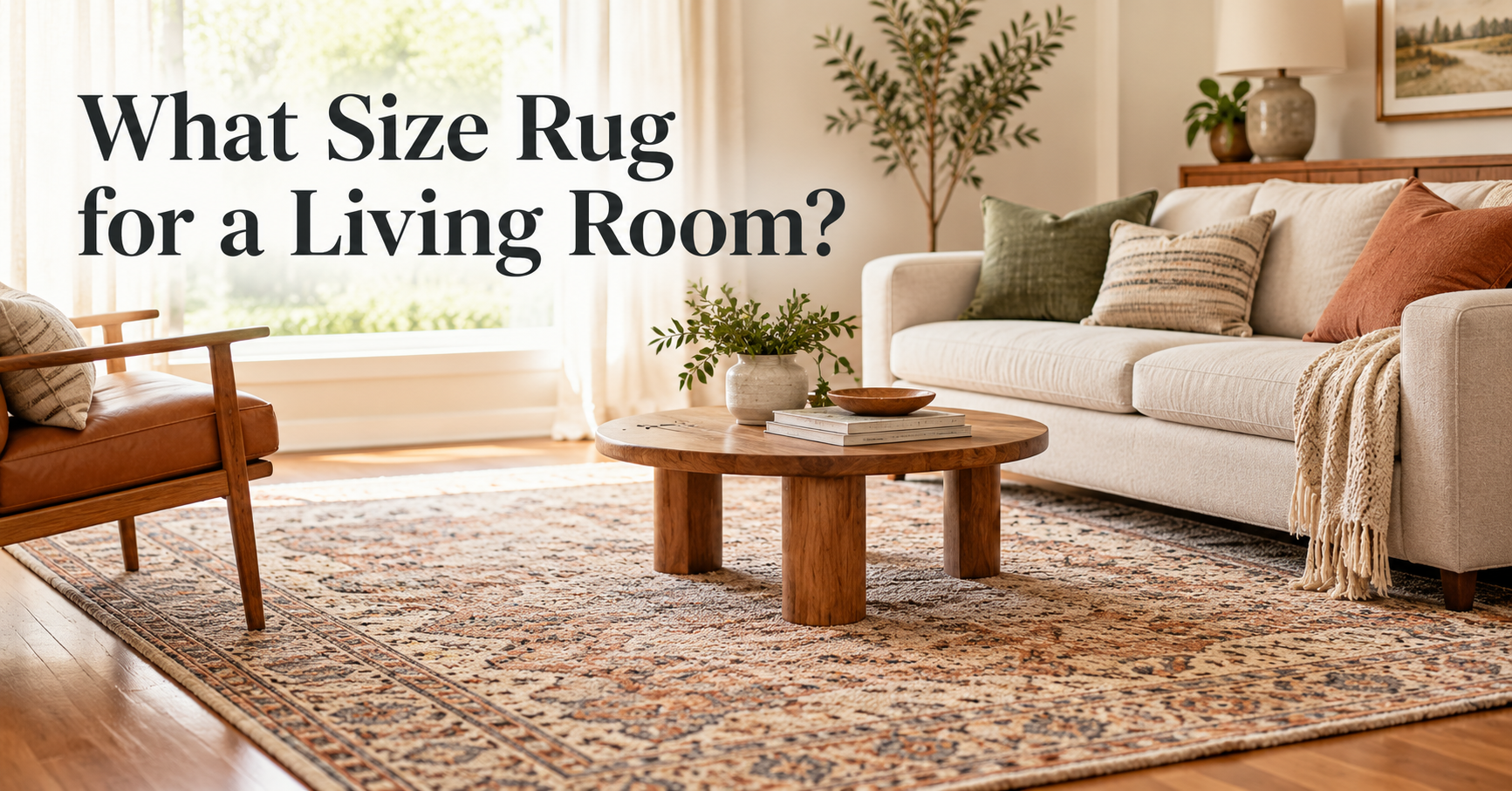
- Front legs on the rug. The front legs of the sofa and chairs rest on the rug, and the back legs sit on the floor. This is the most popular approach because it connects the furniture without needing a very large rug. An 8×10 ft rug is the usual choice.
- Floating (no legs on the rug). Only the coffee table sits on the rug. This often looks disconnected, and it is best avoided unless the room is tiny or has an unusual layout.
Common Rug Sizes by Room Size
| Living Room Size | Suggested Rug Size | Notes |
|---|---|---|
| Small (about 10×10 ft or less) | 5×8 ft | Front legs of the sofa and chairs on the rug. Keep a clear border of floor. |
| Medium (about 12×12 ft) | 8×10 ft | The most common and flexible size. Works with the front-legs-on layout. |
| Large (about 12×18 ft or more) | 9×12 ft | Allows all furniture legs on the rug for a luxurious look. |
| Open-plan living area | 9×12 ft or 10×14 ft | Use the rug to define the seating zone separately from the dining or kitchen area. |
Sizing Rules of Thumb
- Leave about 12 to 18 inches of bare floor between the rug edge and the walls in an average room. Larger rooms can have a wider border.
- Make sure the rug extends at least 6 to 8 inches beyond the sides of your sofa so it feels connected.
- Place the coffee table fully on the rug, with room to pull out the nearby chairs without their legs catching the edge.
- Whichever layout you choose, keep it consistent. Either all front legs on, or all legs on, for every seating piece.
Step 3: Pick the Best Shape
Rectangular rugs are the default for a reason, but the right shape depends on your room and furniture arrangement.

- Rectangle: The safe, flexible choice. It echoes the shape of most rooms and sofas and works with nearly every layout.
- Round: Softens a room full of straight lines. It works well in a reading corner or under a circular coffee table, and with chairs arranged in a circle.
- Oval: A good middle ground for narrow or long rooms, because it adds movement without hard corners.
- Runner: Better for hallways and entryways than for a main living area, though a pair of runners can sometimes sit beside a sofa.
- Square: Best for square rooms or for a seating area arranged around a central coffee table.
Step 4: Compare Rug Materials
The material decides how your rug looks, how it feels, how well it handles spills, and how long it lasts. Think about how your household really lives. A rug in a quiet adult-only room can be more delicate than a rug that handles kids, pets, and daily foot traffic.

| Material | Strengths | Watch Out For |
|---|---|---|
| Wool | Very durable, naturally resilient, soft, and fairly stain resistant. Ages beautifully. | Higher price. May shed fibers for the first few months. |
| Jute / Sisal | Natural, textured look. Affordable and eco-friendly. | Rough underfoot and difficult to clean if spills soak in. Not ideal for bare feet or messy households. |
| Cotton | Soft, casual, and often lightweight. Many flat-weave styles are easy to refresh. | Wears and flattens faster. Can stain and fade. |
| Polypropylene (olefin) | Budget friendly, highly stain and moisture resistant, easy to clean. | Can feel less soft and may mat down under heavy furniture. |
| Viscose / Silk-like | Beautiful sheen and a very soft feel. | Fragile, stains easily, and does not handle moisture well. Best for low-traffic rooms only. |
| Nylon | Excellent durability and good stain resistance. | Usually costs more than polypropylene and can hold static. |
Which Material Fits Your Home?
- Families with kids: Polypropylene, nylon, or a low-pile wool rug are all practical choices.
- Pet owners: Choose a low pile, tightly woven rug in polypropylene or wool. Loops and loose fibers can catch claws.
- Allergy concerns: Low pile rugs are easier to vacuum thoroughly and hold less dust than shag rugs.
- Quiet adult spaces: Wool or a viscose blend adds luxury where traffic is light.
Step 5: Choose the Pile Height
Pile height is the length of the rug fibers. It changes the comfort, the look, and how much upkeep the rug needs.

- Low pile: Flat, dense, and easy to vacuum. Chairs and furniture sit steadily on it. A smart pick for busy living rooms and homes with robot vacuums.
- Medium pile: A balance of softness and easy care. This is the best all-round choice for most households.
- High pile or shag: Plush and cozy but harder to clean. Crumbs and pet hair sink into the fibers. It is best for low-traffic spots where you want a cozy feel.
Step 6: Select Colors and Patterns
Color and pattern are where your personality shows. A few simple principles will keep the result looking intentional rather than random.
Start With Your Existing Palette
Pick two or three colors already in the room, such as the sofa, curtains, or wall art, and look for a rug that includes at least one of them. That single shared color is usually enough to make the rug feel like it belongs.
Balance Pattern and Solid
- If your sofa and walls are neutral and plain, a bold or patterned rug can become the focal point.
- If you already have patterned curtains or lots of cushions, choose a quieter solid or subtle texture for the rug.
- If you want to mix patterns, vary the scale. Pair a large pattern with a small one so they do not compete.
Think About Practicality
- Light rugs make a room feel bigger and brighter but show dirt more easily.
- Dark rugs hide stains well but can show lint, dust, and pet hair.
- Mid-tone, patterned rugs are the most forgiving choice for busy households because they hide everyday marks.
Use Color to Shape the Room
In a small living room, a light or cool-toned rug helps the floor feel more open. In a very large or echoey room, a warm, deep-toned rug makes the space feel cozier and more grounded.
Step 7: Do Not Skip the Rug Pad
A rug pad is one of the least glamorous purchases and one of the most useful. It keeps the rug from sliding, which is a real safety matter on hard floors. It also adds cushioning, helps the rug wear more evenly, and protects the floor beneath.
- Choose a pad about 1 inch smaller than the rug on every side so it stays hidden.
- Felt-and-rubber pads give the best mix of grip and cushioning on hardwood and tile.
- Check that the pad is safe for your floor type. Some rubber backings can discolor certain finishes, so look for pads labeled safe for hardwood or vinyl.
- If you have a very thick rug, you may only need a thin grip pad. On a thin flat weave, a thicker pad adds comfort.
Step 8: Set a Realistic Budget
Rugs vary hugely in price, so decide your budget early. As a general rule, a rug that is the right size and in a durable material is worth more than a smaller one with a prettier pattern. It is often better to buy a larger rug in an affordable material than a tiny rug in an expensive one.
- Spend more on rugs in high-traffic rooms where durability matters, such as the main living room.
- Spend less if you expect to change your style often, or if the room sees heavy wear from kids and pets.
- Remember to include the cost of a rug pad in your total.
How to Care for Your Rug
Good care protects your investment, and a handful of habits will keep a rug looking good for years.
- Vacuum weekly, or more often in busy rooms. Turn off the beater bar for delicate or high pile rugs.
- Blot spills immediately with a clean cloth. Press, do not rub, because rubbing pushes the stain deeper.
- Rotate the rug every six to twelve months so sunlight and foot traffic wear it evenly.
- Use furniture pads under heavy legs to avoid permanent dents.
- Get it professionally cleaned every year or two, depending on traffic.
- Protect it from direct sunlight with curtains or blinds, since strong sun fades colors over time.
Common Mistakes to Avoid
- Buying a rug that is too small. This is the number one mistake. When in doubt, size up.
- Ignoring the rug pad. Without one, rugs slide, wear faster, and can be a trip hazard.
- Choosing by color alone. A beautiful rug that sheds, stains, or wears out quickly is not a good buy.
- Forgetting about foot traffic. Match the material and pile to how the room is actually used.
- Not checking the return policy. Colors and textures can look different at home than on a screen. Try to see a sample first, or confirm that returns are allowed.
- Skipping the floor-tape test. Tape out the size before buying so you can see how it really fits.
Final Buying Checklist
Before You Hit Buy, Confirm:
- You measured the room and tested the size with tape or newspaper.
- The size lets at least the front legs of your main furniture sit on the rug.
- The material and pile suit your kids, pets, and daily traffic.
- The colors share at least one tone with your sofa, walls, or curtains.
- You have budgeted for a rug pad.
- You know how to clean it and the return policy is clear.
Frequently Asked Questions
What size rug do I need for a living room?
For most living rooms, an 8×10 ft rug works well and lets the front legs of the sofa and chairs sit on it. Larger rooms usually suit a 9×12 ft rug. Smaller rooms can work with a 5×8 ft rug, as long as the main seating still connects to it.
Should the sofa sit on the rug?
Ideally, yes. At least the front legs of the sofa and chairs should rest on the rug so the seating area looks unified. Having all legs on the rug is the most polished look if the room is big enough.
Can I use a round rug in a living room?
Yes. A round rug can look lovely in a room with a lot of straight lines, in a reading corner, or under a round coffee table. Make sure it is large enough for the seating to relate to it.
Do I really need a rug pad?
It is strongly recommended. A pad stops slipping, adds cushioning, reduces wear, and protects your floor. It is also a safety feature, especially on hardwood or tile.
What is the most durable rug material for a living room?
Wool and nylon are among the most durable and resilient choices. Polypropylene is also a strong budget option, especially where spills are common.
Can I layer rugs in a living room?
Yes. Layering a smaller patterned rug over a larger neutral one adds depth and texture. Use a flat-weave base rug and keep the top rug at least a few inches smaller on each side.
How often should I replace an area rug?
A quality wool rug can last many years or even decades with proper care. Cheaper synthetic rugs in busy rooms may need replacing sooner, often every few years, depending on traffic and cleaning.
Final Thoughts
Choosing an area rug for your living room comes down to a clear sequence of decisions. Start with the size and placement, because those determine how the whole room looks. Then match the material and pile to your lifestyle, pick colors that work with what you already own, and always add a rug pad. Take your time, tape out the size at home, and think about how the room is really used day to day.
Get those basics right and your rug will do more than cover the floor. It will pull the entire living room together and make it feel comfortable, finished, and inviting for years to come.