





Introduction: Why Does the Shower Curtain Stick to You?
You turn on the shower, and within seconds the curtain billows inward and clings to your legs. It is cold, clammy, and annoying, and it happens in almost every home. The sticking shower curtain is one of the most common bathroom irritations, yet most people just push it away over and over without fixing the cause.
The good news is that it is a physics problem with simple solutions. In this guide, you will learn why shower curtains stick, and the best ways to stop it, from quick tricks to permanent fixes.
Why Does the Shower Curtain Stick? The Science
There are a few forces working together to pull the curtain toward you:
- Air pressure difference (the Bernoulli effect): Falling water drags air downward with it. This lowers the air pressure inside the shower, while the air outside the curtain stays at normal pressure. The higher outside pressure pushes the curtain inward.
- Rising warm air: Hot water warms the air inside. It rises and escapes over the top, and cooler air is drawn in at the bottom, pulling the curtain with it.
- Lightweight curtain material: Thin vinyl or polyester moves easily with any airflow.
- Static and moisture cling: Wet skin and damp plastic stick together through surface tension.
- Strong shower pressure and spray angle: A powerful, wide spray creates more air movement.
- A small tub or shower space: Less room means the curtain sits closer to the water.
How to Stop a Shower Curtain from Sticking
1. Add Weight to the Bottom Hem
The simplest fix is more weight. Many curtains have small magnets or weights sewn into the hem. If yours does not, you can add them:
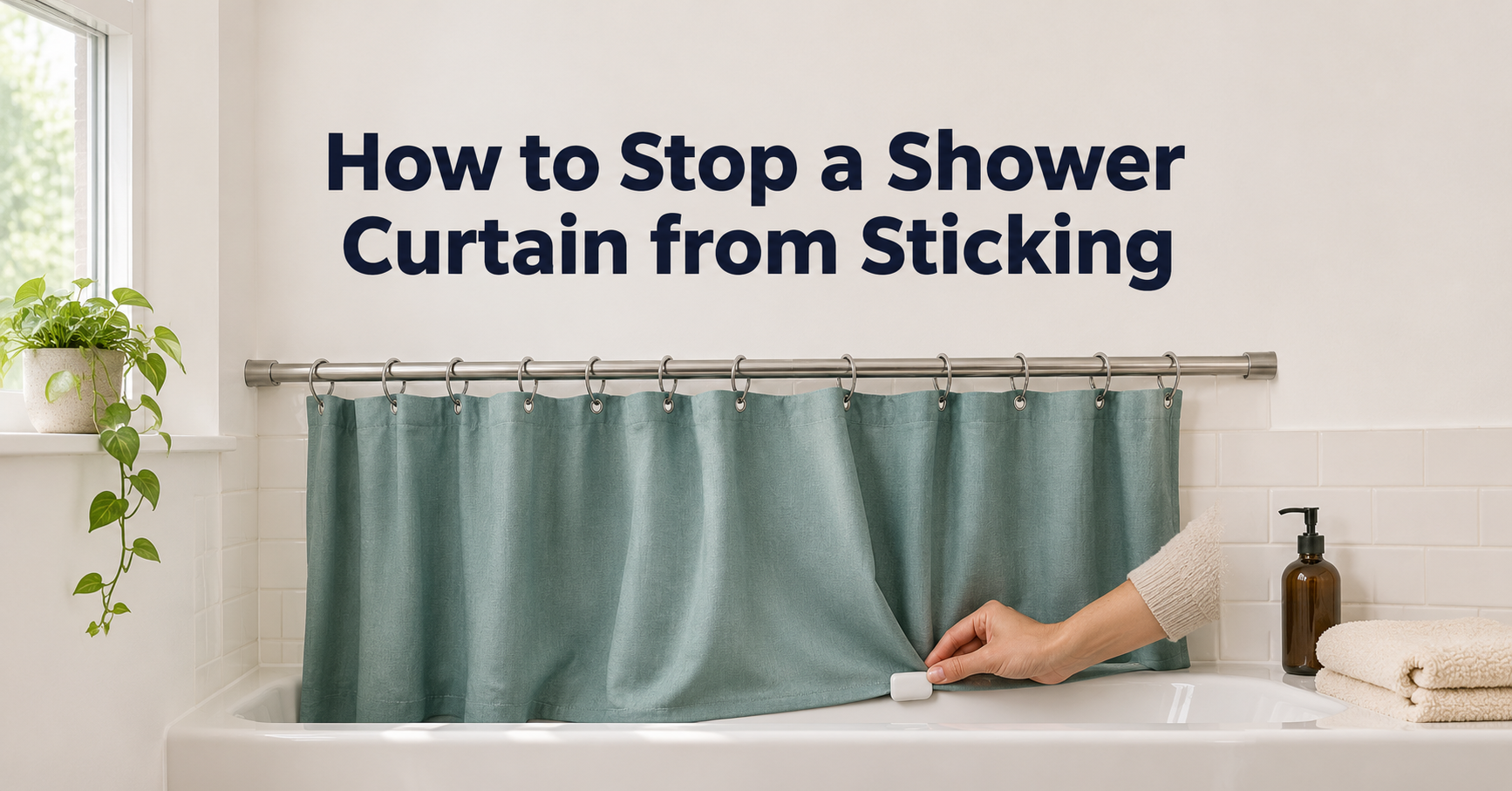
- Magnetic weights: They stick to a steel tub and hold the curtain down.
- Weighted hem chains or small weights: Slide into the hem, or attach with clips.
- Suction cups and tub clips: Anchor the curtain to the tub wall.
Choose rust-proof weights to avoid stains.
2. Use a Heavier or Higher-Quality Curtain
Thin, lightweight vinyl moves with the slightest draft. Look for:
- Thick PEVA or heavy-duty vinyl liners
- Heavyweight polyester or cotton-blend fabric curtains
- Curtains with weighted hems already built in
Heavier fabric stays put and also resists mold better.
3. Hang the Curtain Higher and Wider
A longer, wider curtain hangs straighter and has less room to billow. Choose a curtain that is wide enough to have gentle folds, and hang it on a rod set a little higher than the shower head. Keep the hem about an inch above the tub rim so it does not touch the wet surface.
4. Use Curtain Clips, Hooks, and Rings Properly
Smooth, evenly spaced rings let the curtain hang cleanly. Some clips can pin the curtain to the wall or the tub edge to keep it in place. Extra rings or clips on the sides prevent gaps where air can enter.
5. Install a Curved Shower Rod
A curved rod bows outward and gives you extra room inside the shower. This keeps the curtain farther from your body and reduces cling. It is one of the most effective permanent fixes, and many are available in tension-mounted styles that need no drilling.
6. Try Suction Cups or Adhesive Hooks on the Wall
Place suction cups or removable adhesive hooks on the tub wall to hold the curtain edges in place. Keep the surface clean and dry so the grip lasts.
7. Switch to a Glass Door or Shower Screen
If the problem never goes away, a glass door or screen eliminates it entirely. It also gives the bathroom a cleaner look and removes mold-prone fabric.
8. Lower the Water Temperature and Pressure
A cooler shower produces less rising warm air. A lower-pressure or wide-spray shower head creates less airflow. A slightly less powerful water flow may be enough to stop the billowing without affecting comfort.
9. Change the Shower Head Angle
Aim the spray away from the curtain, directly toward the wall or down at the drain. A fixed or adjustable head angled correctly reduces the draw of air toward the stream.
10. Use a Weighted Liner Inside the Curtain
Layer a heavy liner on the inside and a decorative curtain on the outside. The liner is closest to the water and takes the airflow, while the outer curtain stays calm.
Solutions Compared
| Solution | Effectiveness | Cost |
|---|---|---|
| Magnets or hem weights | High | Low |
| Heavier curtain or liner | High | Low to medium |
| Curved shower rod | Very high | Medium |
| Suction cups or clips | Medium | Very low |
| Glass door or screen | Complete | High |
| Adjust shower head or temperature | Medium | Free |
Quick Tricks You Can Try Right Now
- Tuck the liner inside the tub: Let the bottom edge lie inside the tub so water weighs it down and runs into the drain. Check that the edge is not causing water to splash outside.
- Hang the curtain on the outside: Fold the bottom edge over the tub rim, or keep it hanging outside the tub so inflow is reduced.
- Use a heavy washcloth or small weight: Clip it to the hem as a short-term fix.
- Open the bathroom window or door slightly: Balancing the air pressure can reduce the pull.
- Run a cool rinse first: Starting with cooler water briefly decreases the rising warm air.
Keep the Curtain Clean and Mold-Free
A curtain that is allowed to stay damp and bunched up grows mold and smells. To keep it fresh:
- Spread the curtain out after showers so it dries fully.
- Wash fabric curtains and liners every month or two, following the care label. Many plastic liners can be machine washed on a gentle cycle with a towel.
- Wipe down with diluted vinegar to remove soap scum.
- Replace liners every six months to a year, or when they show mold, odor, or stiffness.
Common Mistakes to Avoid
- Buying the cheapest, thinnest liner: It will billow and wear out quickly.
- Hanging the curtain too short: A gap at the bottom lets air flow in and pull the curtain.
- Using weights that rust: They leave orange stains on the curtain and the tub.
- Letting the hem touch standing water: It encourages mold and mildew.
- Using too many hooks that are too tight: The curtain cannot hang naturally and may bunch up.
- Ignoring the shower head position: A spray aimed toward the curtain makes sticking worse.
Frequently Asked Questions
Why does my shower curtain blow inward?
Falling water pulls air downward, creating lower pressure inside the shower. Higher air pressure outside pushes the curtain inward, and rising warm air adds to the effect.
Do magnets in shower curtains really work?
Yes, but only if your tub is made of steel or cast iron. Acrylic and fiberglass tubs are not magnetic, so use suction cups or weights instead.
Is a heavier shower curtain better?
Generally yes. Heavier materials resist airflow better, stay in place, and often last longer than thin plastic.
What is the best shower rod to stop a curtain from sticking?
A curved shower rod is one of the best solutions because it creates more room inside the shower and keeps the curtain farther from your body.
Should the shower curtain go inside or outside the tub?
The liner should hang inside the tub to direct water into the drain. Decorative outer curtains hang outside. Make sure no water escapes over the rim.
Final Thoughts
A shower curtain sticks because of simple air pressure and airflow, and a few small changes can stop it. Add weight to the hem, choose a heavier curtain, hang it correctly, consider a curved rod, and adjust your shower temperature and spray. Keep the curtain clean and dry to prevent mold. With the right combination, you can enjoy a comfortable, cling-free shower every day.