







Introduction: Why Do Bathroom Towels Get Mildew?
You pull a towel off the hook, and there it is: that sour, musty smell. Maybe there are even tiny gray or black spots. Mildew on bathroom towels is one of the most common household problems, and it can happen even to towels that are washed regularly. A mildewed towel feels unpleasant, smells bad, and can irritate your skin and trigger allergies.
The good news is that mildew is almost always preventable. In this guide, you will learn why towels get mildew, how to prevent it with simple daily habits, how to rescue towels that already smell, and which materials and storage ideas work best.
What Is Towel Mildew?
Mildew is a type of fungus that grows on damp, organic materials like cotton. Towels are perfect for it: they are absorbent, they stay wet, and they pick up dead skin cells and body oils that mildew feeds on. Mildew spores are in the air everywhere, so all it takes is moisture and warmth for them to start growing.
Why Do Bathroom Towels Get Mildew?
- Not drying fully between uses: Towels that stay damp for many hours quickly grow mildew.
- Poor bathroom ventilation: Steam keeps the air humid and towels damp.
- Hanging towels bunched up: Folded or crumpled towels dry slowly, especially in the center.
- Too many towels on one hook: No airflow means a damp towel stays damp.
- Using towels too many times before washing: Body oils and bacteria build up.
- Leaving wet towels in a laundry basket or washer: A damp pile is a mildew nursery.
- Too much detergent or fabric softener: Residue traps moisture and dirt and reduces absorbency.
- Washing in cold water only: It does not kill all bacteria and spores.
- Storing towels while slightly damp: The linen closet turns into a mildew breeding ground.
Signs Your Towels Have Mildew
- A musty, sour, or damp smell, even right after washing
- Gray, black, green, or white spots on the fabric
- A slimy or stiff feel
- Towels that no longer feel absorbent
- Skin irritation or sneezing after using a towel
How to Prevent Mildew on Bathroom Towels
1. Hang Towels Properly After Every Use
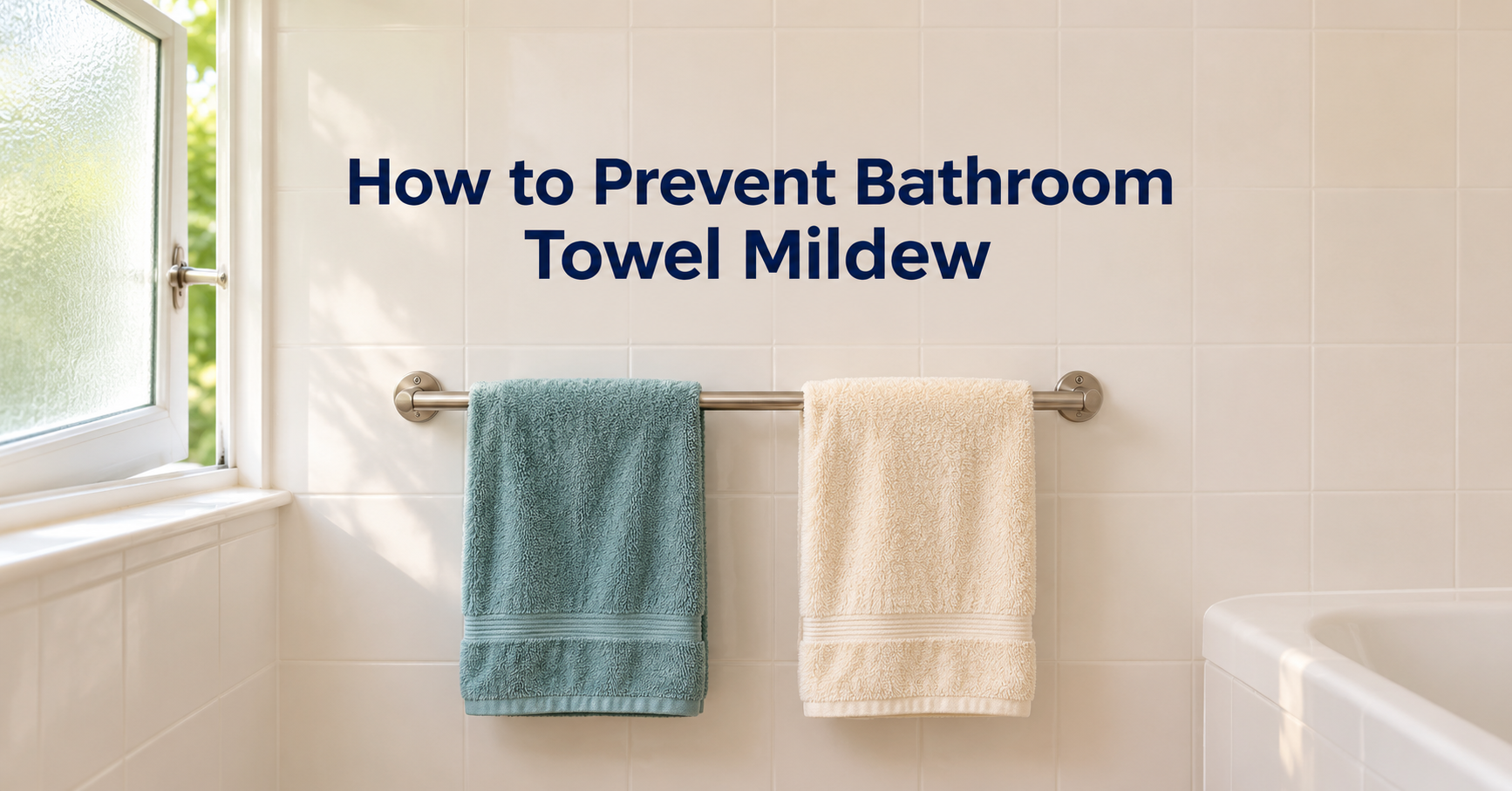
This is the number one prevention step. Open the towel fully and hang it flat over a towel bar, hook, or drying rack so air reaches both sides. Do not leave it bunched or folded in half. Where possible, use a bar with room to spread the towel instead of a single hook.
2. Use One Towel Per Hook or Bar Section
Overlapping towels trap moisture between them. Give each towel its own space, or install a second bar or an over-the-door rack.
3. Improve Bathroom Ventilation
Run the exhaust fan during showers and for 20 to 30 minutes afterward. Open a window if you have one. Leave the bathroom door ajar when you are done so humid air can escape.
4. Consider Hanging Towels Outside the Bathroom
In small, damp bathrooms, hang towels on a hook behind the bedroom door or on a rack in a drier room. Take them back only when you need them.
5. Wash Towels Often
Wash bath towels after 3 to 4 uses, and hand towels and face cloths more often. Gym or sweaty towels should be washed after every use. Do not wait until towels smell.
6. Wash with the Right Settings
- Use warm or hot water as the care label allows. White cotton towels can be washed hot.
- Use the recommended amount of detergent. More is not better, as leftover residue holds moisture.
- Add half a cup of white vinegar to the rinse cycle to fight odor and mildew, or baking soda to the drum.
- Avoid fabric softener, which coats fibers and makes them less absorbent and slower to dry.
- Do not overload the washer. Towels need room to agitate and rinse well.
7. Dry Towels Completely
Move towels from the washer to the dryer immediately. Tumble dry on medium or high heat until completely dry, including the thick seams and hems. If you line dry, choose a sunny, breezy spot. Sunlight has a natural antibacterial effect. Fold and store only when towels are fully dry.
8. Never Leave Wet Towels in the Washer or Hamper
Mildew can begin in as little as 12 to 24 hours. If towels sit wet in the washer, rewash them right away. Keep your laundry hamper dry and ventilated, and do not throw damp towels in it. Hang them to dry first.
9. Choose Quick-Drying Towels
Lighter towels dry faster than thick, heavy ones. Good options include:
- Turkish cotton: Thin yet absorbent and quick to dry.
- Microfiber: Dries very fast, though it can hold odors if not washed well.
- Waffle-weave towels: The textured surface lets air through.
- Linen and bamboo blends: Naturally breathable and resistant to odor.
10. Rotate Several Towels
Having at least two or three towels per person lets each one dry completely between uses.
11. Store Towels Properly
Keep clean, dry towels in a well-aired linen closet, with a little space between stacks. Do not pack towels tightly. A small moisture absorber or cedar block in the closet helps keep air dry.
How to Remove Mildew from Towels
If your towels already smell or show spots, you can usually save them:
- Wash with vinegar: Run a hot cycle (as the label allows) with one cup of white vinegar and no detergent. This breaks down mildew and odors.
- Wash again with baking soda: Run a second hot cycle with half a cup of baking soda and your normal detergent in the drum.
- Use oxygen bleach for tough cases: For white or colorfast towels, add an oxygen-based bleach, following the pack directions.
- Dry in direct sun or a hot dryer: Heat and sunlight help kill remaining spores.
- Check the smell: If a musty odor remains after two rounds, repeat once more. If it persists or the spots remain, replace the towel.
Important: Never mix vinegar and bleach in the same wash. Use them in separate cycles with a complete rinse between, or choose one or the other.
Quick Comparison of Drying Methods
| Method | Speed | Mildew Prevention |
|---|---|---|
| Tumble dryer (medium or high) | Fast | Excellent |
| Outdoor line in the sun | Medium | Excellent |
| Heated towel rail | Medium | Very good |
| Indoor rack with fan | Slow | Good |
| Hook in a humid bathroom | Very slow | Poor |
Common Mistakes to Avoid
- Folding a towel over a bar instead of spreading it: The folded middle stays damp for hours.
- Using too much detergent or softener: Residue feeds mildew and reduces absorbency.
- Waiting too long to wash: Overused towels harbor bacteria and oils.
- Using a damp towel to dry a wet bathroom floor, then re-hanging it: Keep a separate floor towel.
- Putting away towels that feel slightly damp: This spreads mildew to the whole closet.
- Using a closed bathroom with no airflow: Humidity keeps towels from drying.
Frequently Asked Questions
Why do my towels smell musty right after washing?
Usually because of leftover detergent or softener residue, washing in water that is too cold, overloading the machine, or leaving them damp in the washer. Try a vinegar wash and make sure they dry completely.
How long does it take a towel to grow mildew?
It can start within 12 to 24 hours in damp conditions, and sooner in warm, humid spaces.
Is mildew on towels harmful?
Small amounts are usually not dangerous, but mildew can trigger allergies, skin irritation, and breathing problems, especially in people with asthma or sensitive skin. It is best to wash or replace affected towels.
How often should I replace bath towels?
Most towels last 2 to 3 years with good care. Replace them sooner if the smell returns after washing, or if they feel stiff or no longer absorb water.
Can I use bleach on all towels?
No. Chlorine bleach is safe for white cotton towels only. Use oxygen bleach for colored towels and always check the care label.
Final Thoughts
Preventing mildew on bathroom towels comes down to one idea: keep them dry. Spread towels out after each use, ventilate the bathroom, wash them regularly with the right settings, dry them completely, and store them with good airflow. If a towel already smells, a vinegar and baking soda wash usually saves it. With these simple habits, your towels will stay soft, fresh, and mildew-free.