









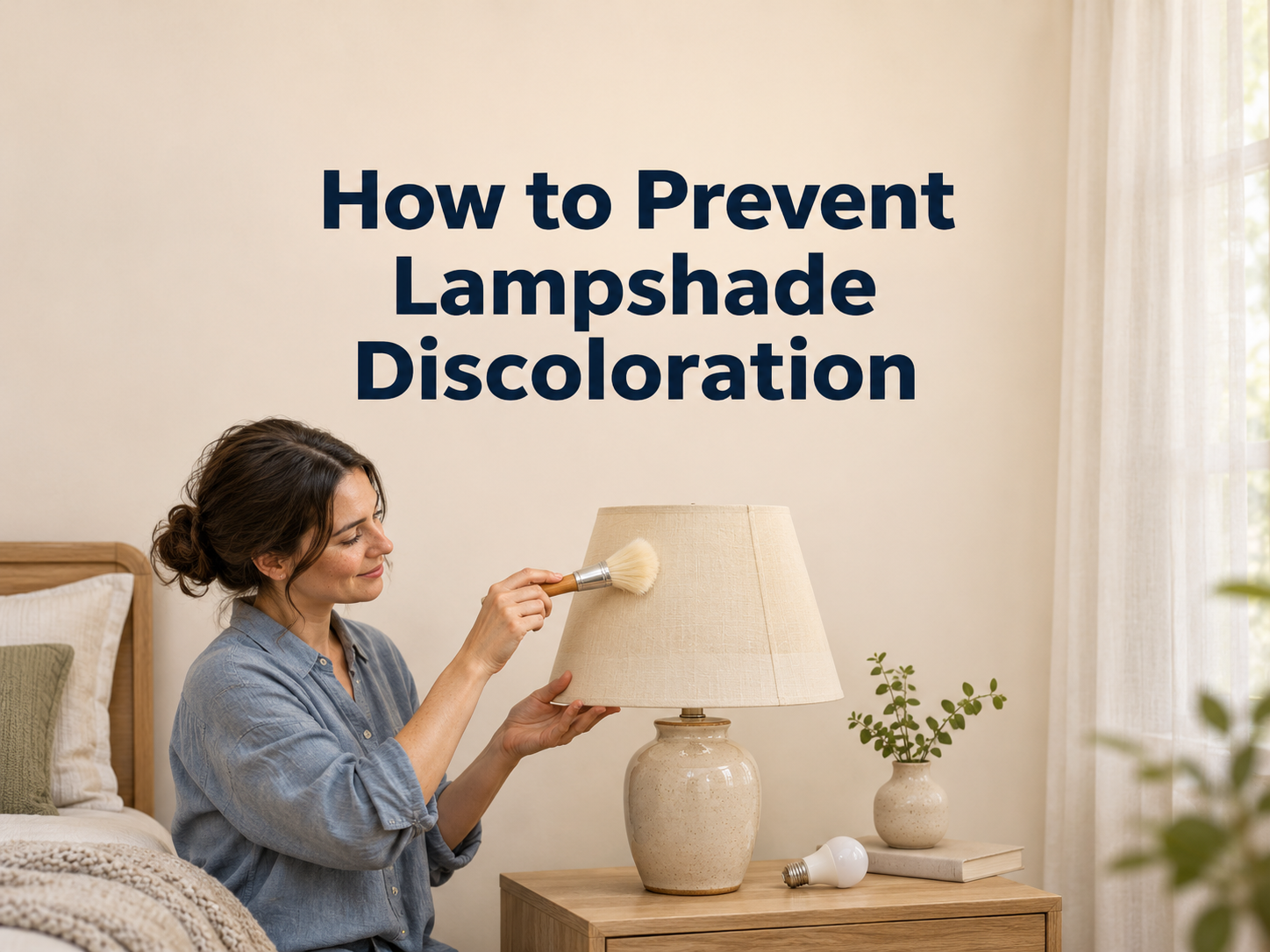
A new lampshade looks crisp, bright and evenly colored. Give it a year or two and it can start to look tired: a yellow tint near the top, brown scorch marks around the bulb, faded patches on the side facing the window, or a gray film of dust and grease. Discoloration is one of the most common complaints about table lamps, floor lamps and bedside lamps, and the good news is that most of it is preventable.
This guide explains exactly what causes lampshades to discolor and, more importantly, how to stop it before it happens. You will learn about heat, sunlight, dust, smoke, moisture and cleaning mistakes, plus practical habits and bulb choices that keep a shade looking new for years.
What Causes Lampshade Discoloration?
Knowing the cause makes prevention much easier, because each type of discoloration has a different trigger.
- Heat from the bulb: the biggest culprit for yellowing and brown rings near the top. Heat slowly changes fabric, glue and the lining.
- Sunlight and UV rays: fade dyes and bleach one side of the shade unevenly.
- Dust, oil and grease: build up and create a dull, grayish layer that is often mistaken for fading.
- Smoke and cooking fumes: leave a sticky tan or brown film, especially in kitchens and living areas.
- Humidity: causes water spots, rust marks from metal frames and mildew in damp rooms.
- Harsh cleaning: strong chemicals or too much water can leave rings and make colors run.
1. Choose a Cool-Running Bulb
Since heat is the number one cause of yellowing, the simplest fix is to switch to a bulb that produces very little of it. LED bulbs run far cooler than incandescent or halogen bulbs, so the shade is not slowly baked every evening.
- Pick a warm white LED (2700K) so the glow still looks cozy through the fabric.
- Match the bulb to the lamp’s label. Never exceed the maximum wattage printed near the socket.
- Use a bulb that is not too large. A bulb that is oversized for the shade is a classic cause of scorch marks.
2. Keep the Right Distance Between Bulb and Shade
Even a cool bulb should not sit too close to the fabric. A good rule is to keep about 1 to 2 inches (2.5 to 5 cm) of space between the bulb and the inside of the shade. If the shade is touching or very close to the bulb, you will often see a yellow or brown ring forming at that spot.
- Check that the shade sits straight on its harp or clip and is not tilted toward the bulb.
- Use a shorter bulb or a shade with a wider opening if the fit is tight.
- Choose a shade lined with a heat-resistant material if the lamp uses a high-wattage bulb.
3. Protect the Shade From Direct Sunlight
Ultraviolet light fades dyes and slowly yellows white and cream fabrics. If one side of your shade looks lighter than the other, sunlight is almost certainly the cause.
- Place lamps out of direct sun, or at least away from south- and west-facing windows.
- Use sheer curtains or UV-filtering window film in very bright rooms.
- Rotate the shade about a quarter turn every few weeks so no single side takes all the exposure.
- For shades in sunny spots, choose faded-resistant, lighter neutral colors and sun-resistant fabrics such as polyester blends.
4. Dust Regularly Before It Turns Into Stains
Dust may not seem harmful, but when it mixes with the oils in the air, it forms a sticky film that clings to fabric and darkens it. Dusting often prevents this from ever setting in.
- Dust weekly with a soft, dry brush, microfiber cloth or the soft brush attachment of your vacuum on its lowest setting.
- Brush gently from top to bottom, working with the weave.
- Use a lint roller on fabric shades for a quick refresh between deeper cleans.
- Dust the inside too, since a lot of dust and insects collect there and can show through when the lamp is on.
5. Clean Gently and the Right Way
A shade that does get dirty should be cleaned according to its material. Harsh methods are one of the leading causes of permanent water rings and color bleeding.
| Shade Material | Safe Method | Avoid |
|---|---|---|
| Fabric (cotton, linen, silk) | Dry brushing, then spot clean with a barely damp cloth and mild dish soap, blot, do not rub | Soaking, scrubbing, bleach, hot water |
| Paper or parchment | Soft dry brush or art-gum eraser for marks | Any water or liquid cleaner |
| Plastic or vinyl | Wipe with a soft cloth dampened with mild soapy water, then dry | Abrasive pads, solvents, alcohol |
| Glass | Glass cleaner or soapy water, dry with a lint-free cloth | Cleaning while the glass is hot |
| Pleated shades | Dry dusting with a soft brush along each pleat | Water, which can flatten or stain the pleats |
6. Control Smoke, Cooking Fumes and Humidity
If the lamp sits near the kitchen, a smoker’s seating area or a steamy bathroom, it faces more than ordinary dust.
- Use a range hood or open a window when cooking to move grease and fumes out of the room.
- Avoid smoking indoors near lamps, and run an air purifier if you can.
- Keep fabric and paper shades out of bathrooms and other damp spaces, or choose plastic, glass or moisture-resistant materials.
- Keep candles and diffusers away from the shade, since soot and oils settle on it.
- Use a dehumidifier in damp rooms to limit mildew and rust marks from the frame.
7. Choose Discoloration-Resistant Shades When Buying
Prevention starts at the store. Some shade materials simply age better than others.
- Light, neutral colors such as white, ivory or soft gray hide mild aging better than pure white, which shows yellowing quickly.
- Polyester or fabric blends resist fading better than untreated natural fibers.
- Lined shades protect the outer fabric from heat and glare.
- Washable or wipeable materials such as vinyl, styrene or glass make maintenance easy in busy or humid homes.
- Patterned or textured shades hide small marks far better than plain flat colors.
8. Build a Simple Maintenance Routine
What If the Shade Is Already Discolored?
Prevention is best, but if discoloration has already started, you still have options.
- Dusty or grayish shade: a thorough dry brushing and gentle spot clean often brings back the original color.
- Yellow ring near the bulb: this is usually heat damage and rarely reverses completely. Replace the bulb with an LED and consider a new shade or liner.
- Faded side: rotate the shade to hide it, or cover it with a fabric shade liner or spray designed for lampshades.
- Brown or scorched marks: stop using the lamp and replace the shade for safety.
- Mildew spots: brush off dry spores outdoors, wipe lightly with a barely damp cloth and dry fully. Replace the shade if the problem returns.
Common Mistakes to Avoid
- Using a bulb with a higher wattage than the lamp allows.
- Leaving the lamp on for many hours with a bulb touching the shade.
- Placing lamps in direct sunlight all day.
- Soaking fabric shades or scrubbing hard.
- Using bleach, alcohol or strong household cleaners on the shade.
- Ignoring dust until it becomes a stain.
- Keeping fabric shades in bathrooms or near cooking areas without protection.
Frequently Asked Questions
Why is my white lampshade turning yellow?
The most common reasons are heat from the bulb, UV exposure from sunlight, and a buildup of dust, oils and smoke. Older shades can also yellow naturally as fabrics and glues age.
Do LED bulbs really prevent lampshade discoloration?
They greatly reduce it. LED bulbs produce much less heat than incandescent or halogen bulbs, which removes the main cause of yellowing and scorch marks.
How often should I clean my lampshade?
Dust it every week or two, and do a gentle deeper clean or spot clean once or twice a year, depending on the room and the material.
Can I wash a lampshade in water?
Some plastic and glass shades can be wiped with soapy water, but many fabric, paper and pleated shades should never be soaked because water can leave rings, bleed dyes or loosen the glue. Always check the care instructions and test a hidden spot first.
How far should a bulb be from the shade?
Keep roughly 1 to 2 inches (2.5 to 5 cm) of clearance. If the bulb touches or nearly touches the shade, change the bulb size, the shade or the harp position.
Can sunlight really damage a lampshade?
Yes. UV light fades dyes and can yellow or weaken fabric over time. Moving the lamp from direct sun and turning the shade regularly are the easiest ways to prevent it.
Final Thoughts
Lampshade discoloration is rarely sudden. It builds slowly from heat, sunlight, dust, smoke and moisture, which means you can stop it with a few simple habits. Use a cool LED bulb, leave a safe gap between the bulb and the shade, keep the lamp out of harsh sunlight, dust it regularly and clean it gently with the right method for its material.
Follow these steps and your lampshades will keep their clean color and soft, even glow for many years, helping your lamps stay both beautiful and safe.