
How to Use the Handy Heater Turbo: A Simple Step-by-Step Guide for Beginners
The Handy Heater Turbo is a small plug-in space heater designed to warm a compact area without taking up floor space. It plugs straight into a wall outlet, has a digital display and a thermostat, and includes a timer. That makes it easy to use, but a few details matter if you want good results and want to use it safely. This guide explains how to use the Handy Heater Turbo from the moment you unpack it, including setup, temperature and timer controls, the best places to use it, safety rules, cleaning and quick fixes for common problems.
What Is the Handy Heater Turbo?
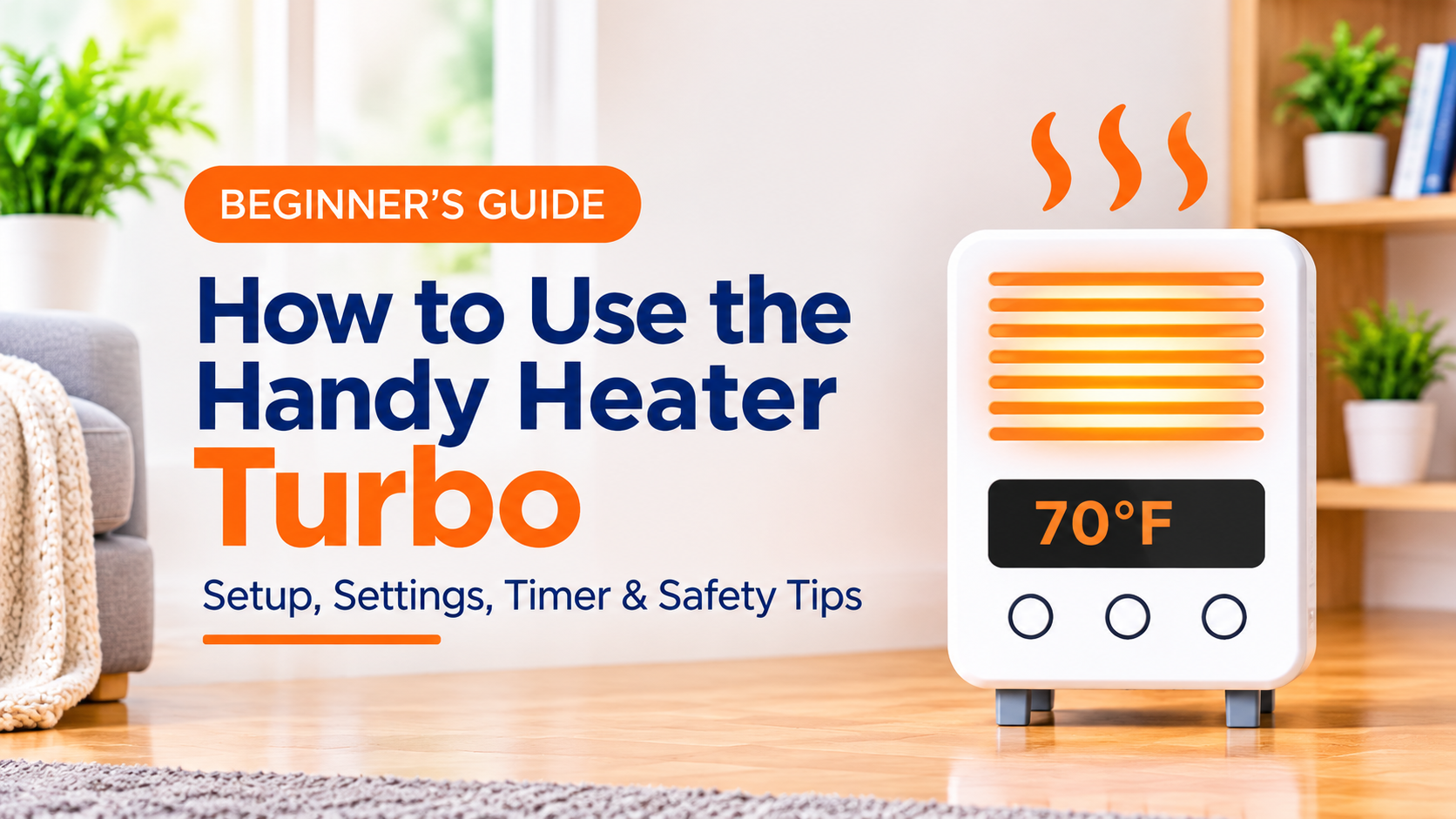
The Handy Heater Turbo (commonly sold as the Turbo 800) is a compact 800-watt ceramic heater that plugs directly into a standard wall outlet. Retailer listings and the manufacturer’s instruction manual describe it as having an adjustable thermostat from 60°F to 90°F (about 18°C to 32°C), a programmable timer of up to 12 hours, a digital display and an automatic shut-off feature. Some versions also include a remote control.
It is made for personal, small-space heating such as a desk area, a small bedroom, a bathroom or a hobby corner. It is not intended to heat a large room or an entire home.
What Is in the Box?
The exact contents depend on the version you bought, but you will typically find:
- The Handy Heater Turbo unit
- An instruction manual
- A remote control (included with some versions)
Keep the manual and your receipt. You will need them if you ever make a warranty claim.
Before You Use It for the First Time
- Read the manual. Controls and display settings can vary between versions.
- Remove all packaging, including plastic wrap and protective film, from the heater.
- Check the heater for visible damage, especially around the plug pins and vents.
- Choose a suitable outlet. It should be firm, undamaged and not loose. Because this heater has no power cord, the outlet carries its full weight and electrical load.
- Allow for a little first-use smell. New heating elements can give off a mild odor for a short time. If the smell is strong, or smells like burning plastic, unplug it and stop using it.
How to Use the Handy Heater Turbo: 5 Simple Steps

Step 1: Pick the Right Spot
Choose a small room or a personal area where you will actually be sitting or working. Make sure there is clear space around the heater, with no curtains, furniture, bedding or paper nearby.
Step 2: Plug It In Firmly
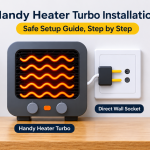
Push the heater straight into the wall outlet until it sits flush and does not wobble. Do not use an extension cord or a power strip, as high-power heaters can overheat these. If the heater feels loose or sags in the socket, try a different outlet.
Step 3: Turn the Power On
Press the power button. The display should light up and show a temperature. If nothing happens, check that the plug is fully inserted and that the outlet has power.
Step 4: Set the Temperature
Use the plus (+) and minus (−) buttons to choose your target temperature between 60°F and 90°F. The heater switches on when the room is colder than your set temperature and cycles off once the room reaches it. As a general starting point, many people find 68–72°F (20–22°C) comfortable for a small room. Remember that if you set the temperature below the current room temperature, the heater will stay off, which is normal behavior.
Step 5: Set the Timer
Press the timer button and use the plus and minus buttons to choose how long the heater should run, up to 12 hours. When the time ends, the heater shuts itself off. Using the timer every time is one of the easiest ways to avoid running the heater longer than you need.
Understanding the Controls
| Control | What It Does |
|---|---|
| Power button | Turns the heater on and off |
| Plus (+) and minus (−) buttons | Raise or lower the set temperature, and adjust the timer when in timer mode |
| Timer button | Lets you choose how long the heater runs, up to 12 hours |
| Digital display | Shows the temperature and timer settings |
| Remote control (some versions) | Turns the heater on or off, changes the temperature and sets the timer from a distance |
Some units show the temperature in Celsius, and a number of buyers report that switching to Fahrenheit is not clearly explained. If your display is in Celsius, remember that 68–72°F is roughly 20–22°C. Check your manual for your specific version.
Where to Use Your Handy Heater Turbo
Placement affects both comfort and safety. This heater works best in a small, closed space where the warm air stays close to you.

Good Places to Use It
- A home office or desk area, to warm your legs and feet
- A small bedroom, for a short warm-up before bed
- A dry bathroom or utility room, for short sessions, as long as the manual allows it and the heater stays far from water
- A hobby room, craft corner or small workshop with clear space around the outlet
Places to Avoid
- Large, open or poorly insulated rooms, where 800 watts will struggle
- Outlets that are loose, worn or discolored
- Spots behind curtains, under shelves or close to furniture
- Anywhere near water, showers, sinks or wet surfaces
How to Get the Best Results
- Close the door and windows. A small heater cannot keep up with a draft.
- Set a realistic temperature. Start at 68–72°F and adjust by a few degrees if needed.
- Preheat the room. Switch the heater on a little before you need the space.
- Dress warmly. A sweater and a blanket reduce how much heat you need.
- Be patient. A small heater needs a few minutes to make a noticeable difference.
Smart Ways to Use the Timer

The timer is a useful safety and energy-saving tool. Use short run times and increase them only if you need to. If there is a power outage or you unplug the heater, you may need to set the temperature and timer again, so check the display before relying on a saved setting.
Safety Rules You Should Always Follow
- Plug it directly into the wall. Never use an extension cord or power strip.
- Never leave it unattended for long periods, and avoid running it while you sleep.
- Do not cover the heater or block the vents at any time.
- Keep flammable items away, including curtains, bedding, paper and clothing.
- Keep it away from water and never handle it with wet hands.
- Keep children and pets away from the heater, as the surface and the air coming out can get hot.
- Stop using it immediately if the plug or outlet becomes very hot, you smell burning, or you see scorch marks or sparks.
Wall-outlet heaters put their full weight and electrical load on a single socket. Consumer testing organizations have raised safety concerns about this style of heater in some markets, and in certain countries heaters with built-in plug pins are not permitted. Before you buy or use one, make sure it is approved for your region and compatible with your outlets.
How to Clean and Care for the Heater

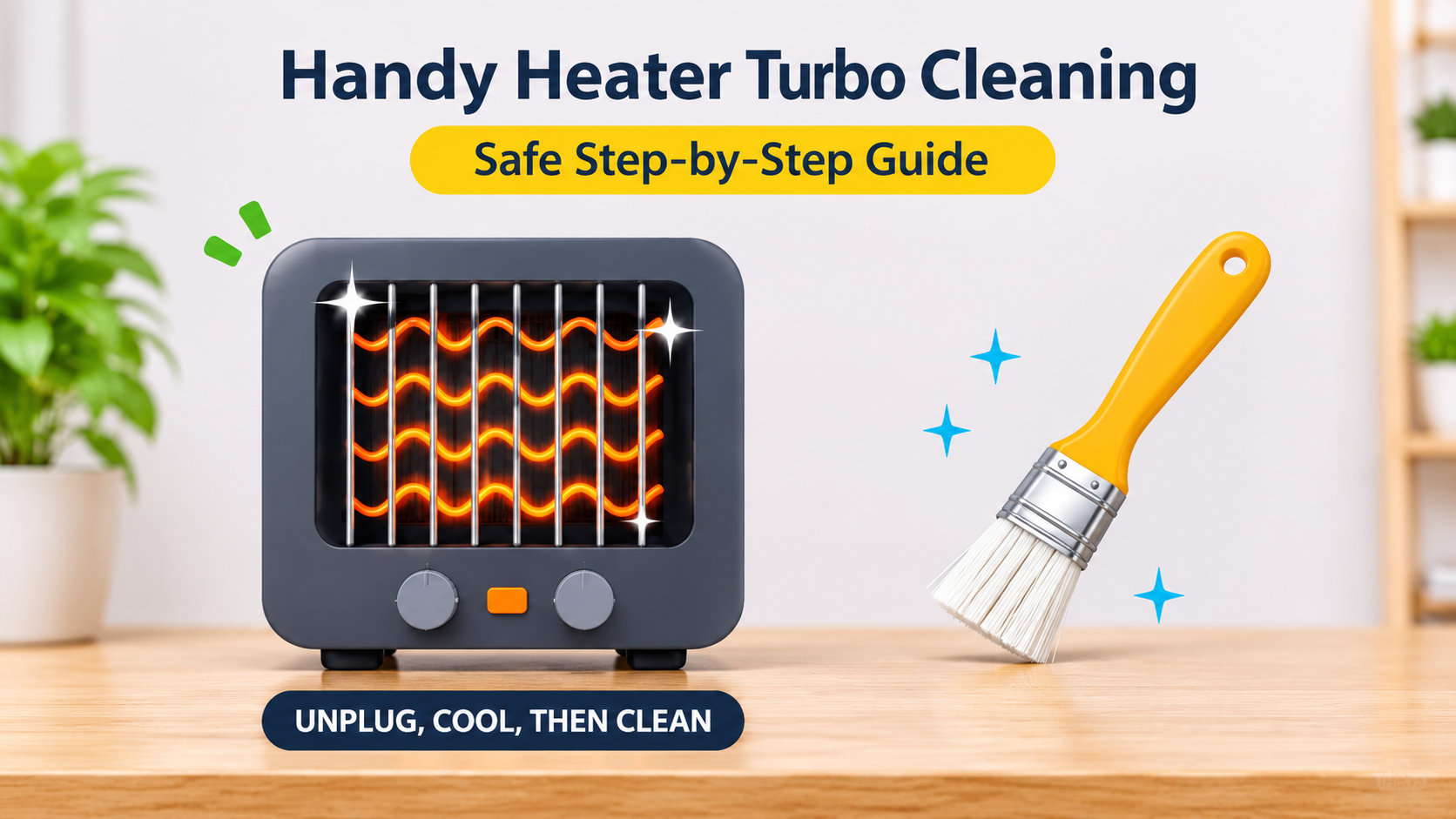
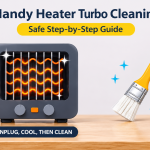
Dust is one of the most common causes of poor performance and overheating. Every few weeks during the heating season, unplug the heater, let it cool completely, and gently clean the vents with a soft brush or the brush attachment of a vacuum cleaner. Wipe the outside with a slightly damp cloth if needed, and make sure it is completely dry before plugging it in again. Never put water or cleaning spray inside the heater. At the end of the season, store it in a clean, dry place.
Quick Troubleshooting
| Problem | What to Try |
|---|---|
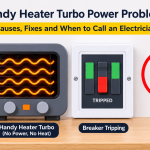
| Heater does not turn on | Press the plug in fully, try another outlet and check the breaker |
| No heat comes out | Raise the set temperature above the room temperature |
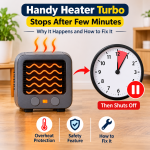
| Heater turns off after a short time | Check the timer, clean the vents and clear the area around it |
| Display is blank or unresponsive | Unplug for about 10 minutes, then plug in again |
| Room still feels cold | Use it in a smaller room, close doors and block drafts |
If the problem continues after these checks, stop using the heater and contact the seller about your warranty. Do not open the heater or try to repair it yourself.
Is the Handy Heater Turbo Worth It?
For a small, personal space, a plug-in heater like this can be a convenient and inexpensive way to add some warmth. It is compact, easy to use and does not need floor space. On the other hand, it is a low-power unit, so do not expect it to heat a large room. Customer feedback for this type of low-cost heater is mixed, with some owners happy with the convenience and others reporting weak heat or reliability issues. The safety points above are also worth weighing before you buy. If you need stronger or safer whole-room heating, consider a heater with a power cord, a stable base and a higher wattage.
Frequently Asked Questions
How do I turn on the Handy Heater Turbo?
Plug it firmly into a wall outlet and press the power button. Then use the plus and minus buttons to set a temperature above the current room temperature.
How long does it take to warm up a room?
It depends on the size of the room and how cold it is. In a small, closed room, you may notice warmth within a few minutes, but it will not quickly heat a large space.
What temperature should I set it to?
A setting between 68°F and 72°F (20–22°C) works well for most small rooms. The available range is 60°F to 90°F.
Can I use it with an extension cord?
No. Plug the heater directly into a wall outlet. Extension cords and power strips are not recommended for heaters.
Can I leave it on overnight?
It is safer not to. Space heater safety guidance generally advises against running them unattended or while you sleep. Use the timer for short periods, and unplug the heater when you finish.
How do I use the remote control?
If your version includes a remote, you can usually use it to switch the heater on and off, change the temperature and set the timer from across the room. Check your manual for the exact buttons.
How do I clean the Handy Heater Turbo?
Unplug it, let it cool and brush dust from the vents with a soft brush. Wipe the outside with a slightly damp cloth and dry it fully. Never use water inside the heater.
Final Thoughts
Using the Handy Heater Turbo is straightforward: choose a small room and a good outlet, plug it in firmly, set the temperature a few degrees above the room temperature, and use the timer every time. Keep the area clear, clean the vents regularly, and stop using the heater at the first sign of a hot plug, a burning smell or any other warning. Used with realistic expectations and basic care, it can keep a small space comfortable throughout the colder months.