

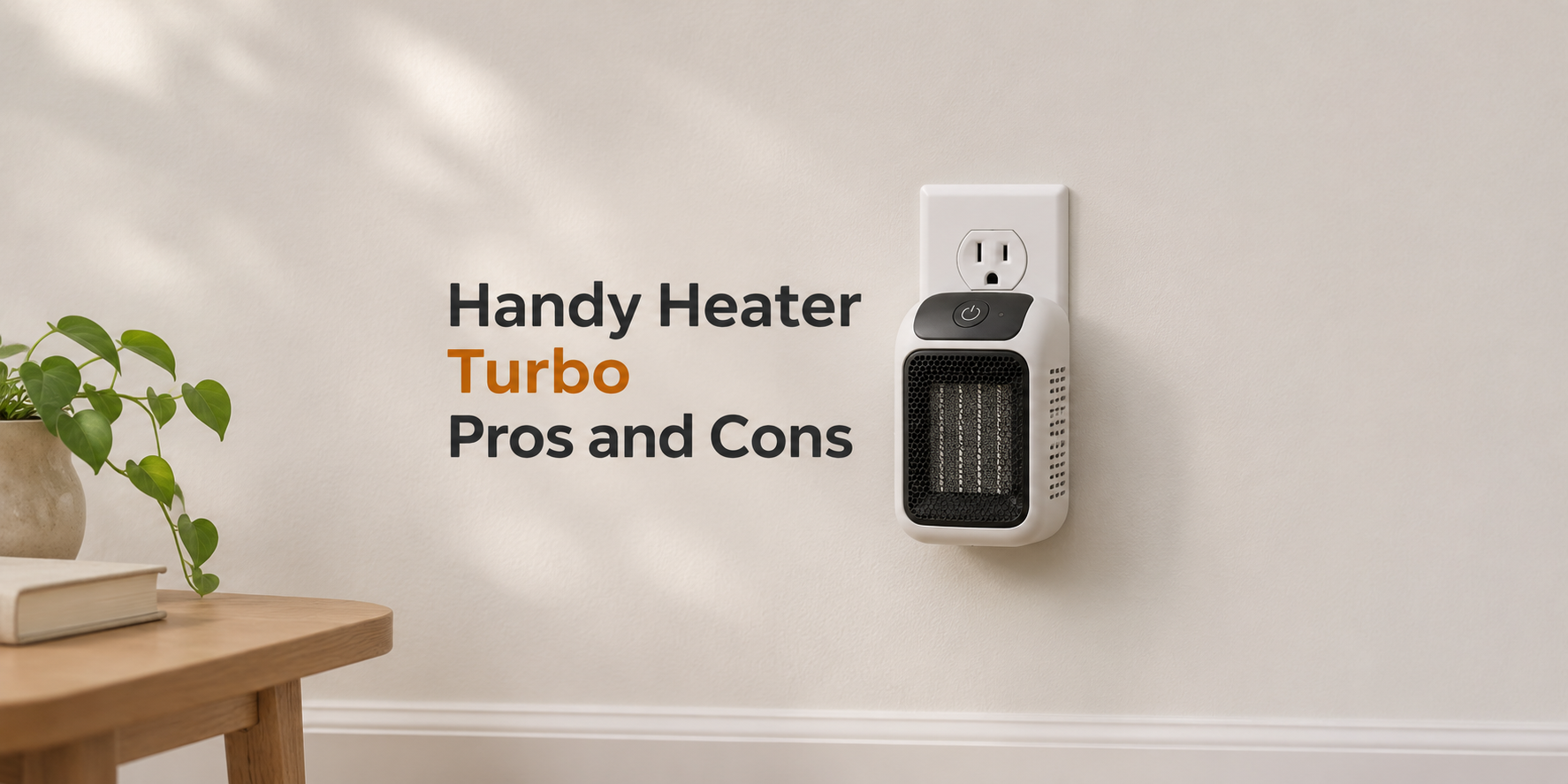
Handy Heater Turbo Pros and Cons: An Honest Buyer’s Guide

When temperatures drop, heating an entire home can feel expensive and wasteful. That is why small plug-in heaters like the Handy Heater Turbo have become so popular. They are compact, simple to use and priced far below most larger heaters. But does a tiny heater really deliver, or is it too good to be true?
In this guide, we break down the Handy Heater Turbo pros and cons in plain language: how it works, where it performs well, where it falls short, what it costs to run, and who should (and should not) buy it. By the end, you will know whether it fits your space and your expectations.
Quick Verdict
The Handy Heater Turbo is a good choice as a personal, small-space heater: a desk, a small bedroom, a home office corner or a compact room. It is not a replacement for central heating or a large room heater. If you set the right expectations, it can be a handy and affordable add-on for cold days.
What Is the Handy Heater Turbo?
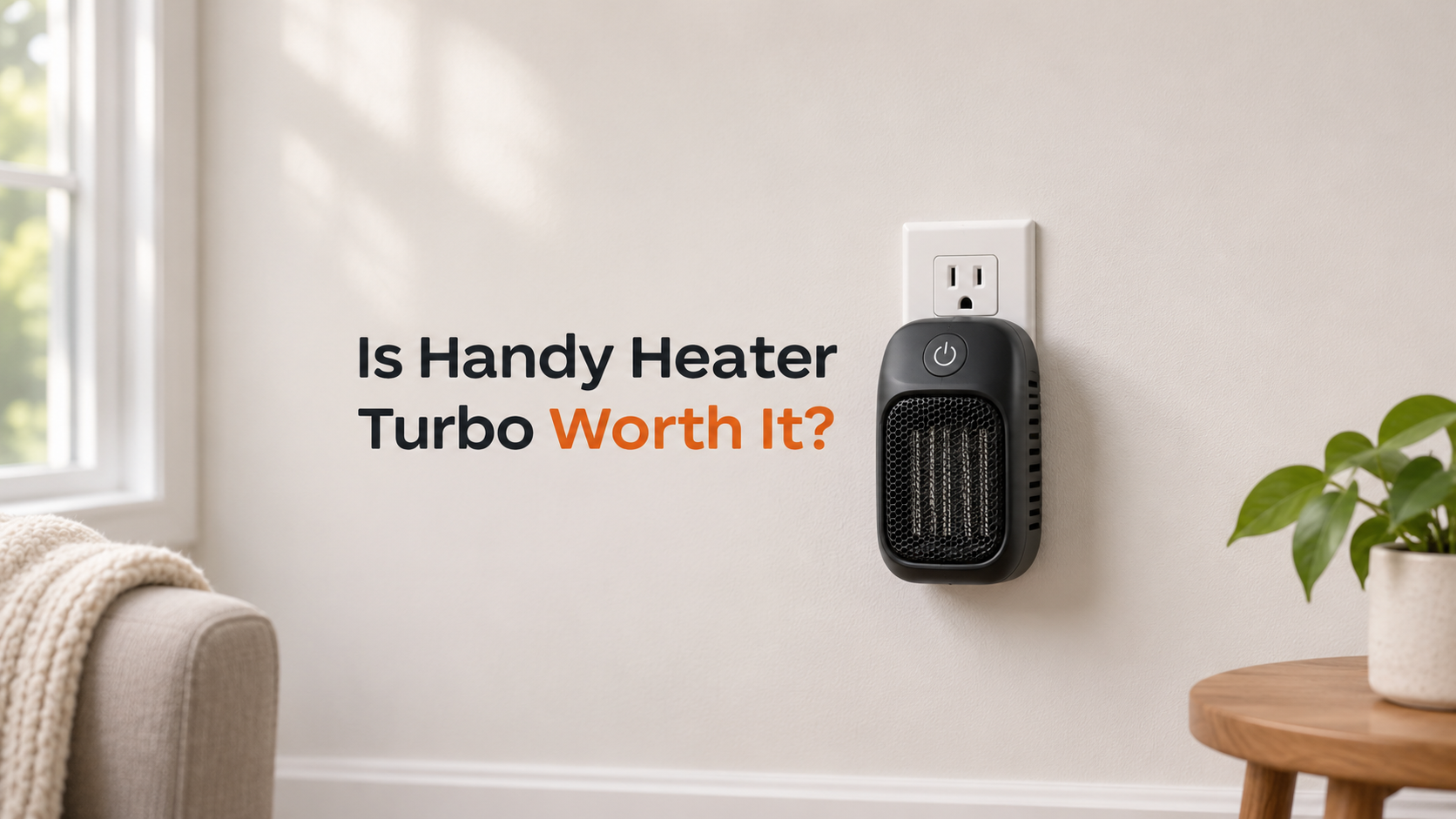
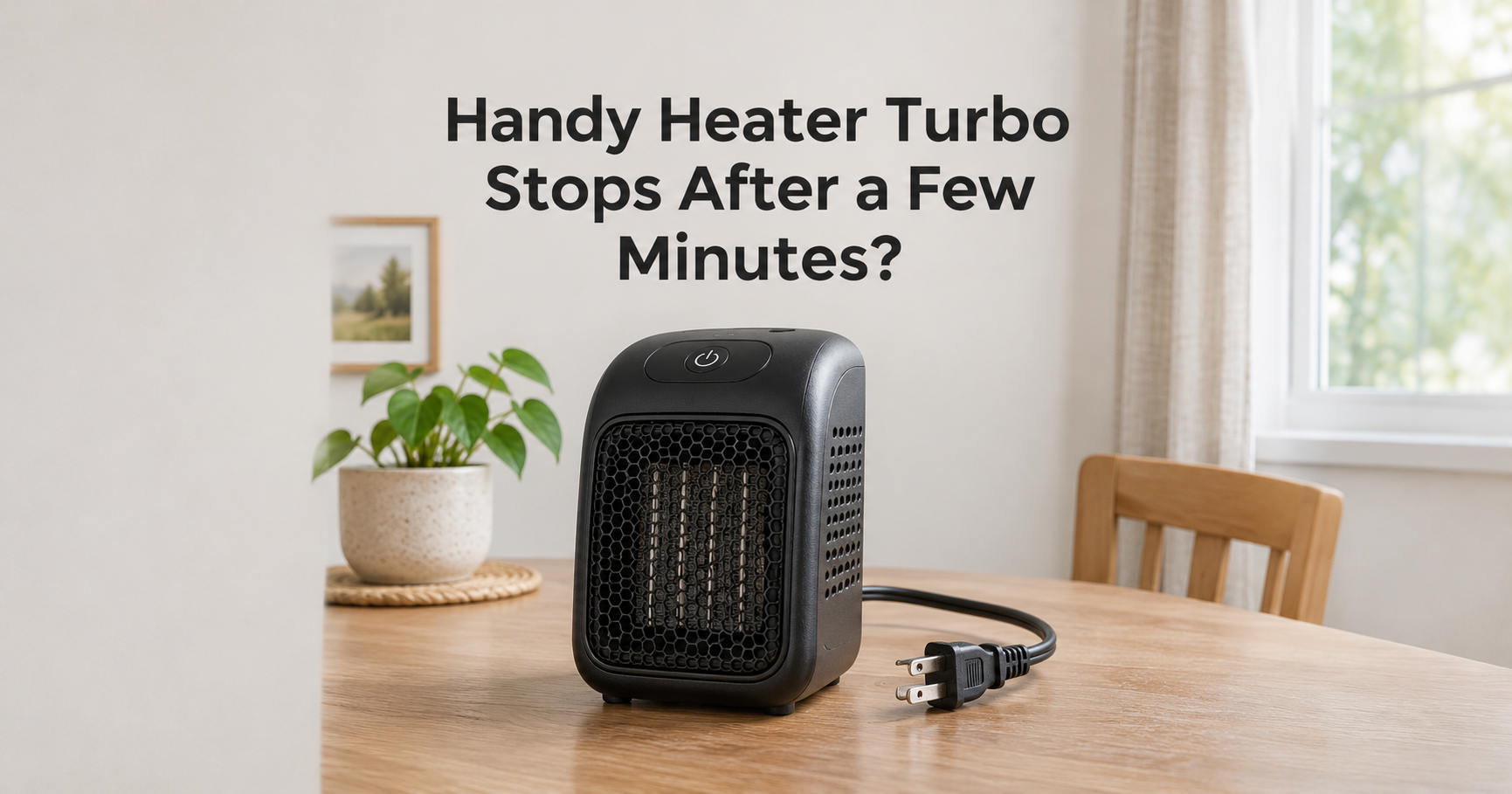
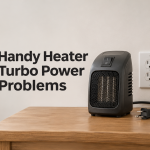
The Handy Heater Turbo is a small, plug-in electric heater that uses ceramic heating technology. Instead of a big freestanding body with a cord, it is designed to be compact and portable, so you can move it from room to room and use it where you need warmth the most.
The product is sold under a few similar names (for example Handy Heater, Turbo 800 and TurboHeat), and different sellers may describe slightly different wattage, controls or accessories. For that reason, always compare the exact model name and the specifications on the product label before you buy.
How Does It Work?
Ceramic heaters work in a simple way. Electricity passes through a ceramic heating element, which warms up quickly. A small fan then moves air across the hot element and pushes the warm air out into the space around you. Many compact models also include a thermostat or basic temperature control, and some include safety features such as tip-over or overheat protection.

Because the heat is pushed out by a fan, you feel warmth fastest when you are close to the unit. That is exactly why these heaters work well for spot heating but struggle with big rooms.
Key Features at a Glance
- Compact, plug-in design: small enough to use almost anywhere there is a wall outlet.
- Ceramic heating element: warms up quickly compared with many older heater types.
- Built-in fan: circulates heat into the nearby area.
- Simple controls: easy for anyone to operate without a manual.
- Portable and lightweight: easy to carry between rooms.
- Safety-focused design (on many models): features such as overheat protection are commonly included, but you should confirm them for your specific unit.
Handy Heater Turbo Pros
1. Compact and Easy to Carry
This is the biggest selling point. It takes very little space, you can plug it in right where you sit or sleep, and you can move it from the bedroom to the office in seconds. If you hate bulky heaters, this is a real advantage.
2. Warms Small Spaces Quickly
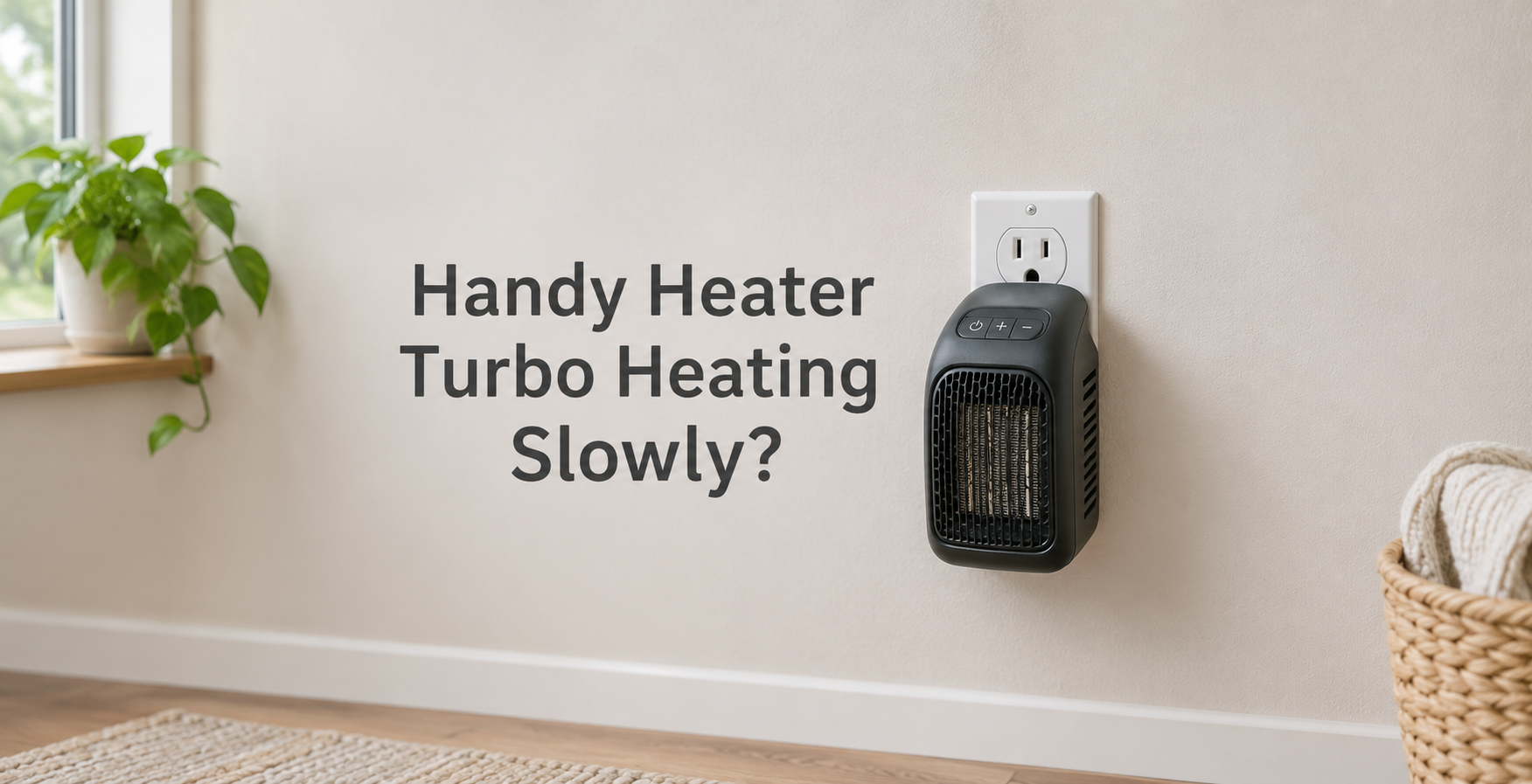
Because the ceramic element heats up fast and the fan pushes air out directly, you can feel warmth soon after turning it on, especially if you are near it. For a chilly corner of the room, this quick response is genuinely useful.
3. Simple to Use
There is almost no setup. You plug it in, choose a setting and you are done. That makes it a good option for older family members, students, renters and anyone who wants a heater without a learning curve.
4. Lower Power Draw Than Large Heaters
Its wattage is lower than that of many large portable heaters, so the cost of running it is also lower per hour. For short sessions in a small area, this can be more economical than heating an entire home.
5. Affordable Upfront Price
Compared with oil-filled radiators or tower heaters, small plug-in heaters are usually inexpensive, which makes them a low-risk way to add some warmth to a space.
6. Handy as a Backup or Travel Heater
Because it is small, it is easy to keep in a drawer or closet and bring out only when a cold snap hits, for a dorm room, a hotel room (where permitted), a guest room or a workshop corner.
Handy Heater Turbo Cons
1. Not Suitable for Large Rooms
This is the most common complaint about mini heaters. Low wattage simply cannot warm a large living room or open-plan space. You may feel warmth nearby, but the rest of the room can stay cold.
2. Requires a Wall Outlet
It has no battery option, so you need a working outlet close to where you want heat. That limits placement, and it will not help during a power cut or outdoors.
3. Marketing Claims Can Be Exaggerated
Product pages for small heaters often promise instant, whole-room comfort and huge savings. In real life, a low-wattage heater behaves like a low-wattage heater. Treat dramatic claims carefully and focus on the real specifications.
4. Unclear Model Names and Seller Differences
Similar names are used across several listings, and specifications can differ between sellers. That makes it easy to buy a model with a different wattage or fewer features than you expected, so read the listing details carefully.
5. Limited Long-Term Durability
Low-cost compact heaters are usually designed for occasional use. If you run one for many hours every single day, you may see wear sooner than you would with a heavier-duty heater. Dust buildup can also reduce performance over time if you do not clean it.
6. Dry Air and Fan Noise
Like most electric fan heaters, it can make the air feel drier. The built-in fan also produces some noise, which may bother light sleepers.

Where Does It Work Best?
Match the heater to the space, and you will be much happier with it. As a general guide, it fits personal and small spaces best and gets weaker as the room gets bigger.

How Much Does It Cost to Run?
You can estimate the running cost with a simple formula: watts ÷ 1,000 × hours × your electricity price per kWh.
For example, a heater rated at 800 watts running for one hour uses 0.8 kWh. If your electricity costs $0.15 per kWh, that is about $0.12 per hour at full output, or roughly $0.96 for eight hours. Your actual cost will depend on your local electricity price, your model’s wattage and how often the thermostat cycles the heater off. Check the label on your unit and your electricity bill for exact numbers.
The saving comes from heating only the space you are actually using instead of the whole house, not from the heater itself being magically efficient. Almost all of the electricity any electric heater uses ends up as heat, so the real difference is how much space you are trying to warm.
Handy Heater Turbo vs Other Heater Types
| Feature | Handy Heater Turbo (mini plug-in) | Ceramic Tower Heater | Oil-Filled Radiator |
|---|---|---|---|
| Best for | Desks, small rooms, spot heating | Small to medium rooms | Longer, steady heating |
| Portability | Excellent | Good | Fair (heavy) |
| Heat-up speed | Fast, near the unit | Fast | Slower |
| Room coverage | Limited | Moderate | Moderate to good |
| Upfront price | Low | Medium | Medium to high |
| Noise | Light fan noise | Fan noise | Very quiet |
Who Should Buy It?
- People who want personal warmth at a desk or workspace.
- Anyone heating a small bedroom, nursery corner or home office (with supervision and proper safety care).
- Students and renters who need something cheap and portable.
- Households that want a backup heater for cold snaps.
Who Should Skip It?
- Anyone hoping to heat a large living room or open-plan space.
- People who want a heater to run all day, every day as the main heat source.
- Buyers who expect whole-house savings from one small device.
- Anyone who needs a silent heater for sleeping.
Safety Tips for Using a Plug-In Heater
Any electric heater needs sensible handling. Follow your product manual first, and keep these basics in mind:

- Plug it straight into a wall outlet that is in good condition, and avoid extension cords and power strips.
- Keep it away from curtains, blankets, furniture, paper and anything flammable.
- Do not use it near water or with wet hands.
- Never cover it or leave it running unattended for long periods.
- Stop using it and unplug it if you notice a burning smell, a hot plug or outlet, or damage to the cord.
- Keep children and pets away from the hot grille.
- Do not overload the circuit: heaters draw a lot of power, so avoid running other high-wattage appliances on the same circuit at the same time.
Tips to Get the Best Results
- Close the door. Heating a smaller, closed space makes any small heater feel stronger.
- Place it close, but safely. Keep it near where you sit, with clear space around it.
- Block drafts. A door draft stopper or a window cover reduces heat loss.
- Clean the vents. Dust slows airflow and can reduce performance, so unplug the unit and wipe the grille regularly.
- Use it in short sessions. It is designed for supplemental heat rather than constant, long-hours use.
Before You Buy: A Quick Checklist
- Confirm the exact model name and wattage in the listing.
- Check that the plug type and voltage match your country.
- Look for a warranty and clear return policy.
- Read recent customer feedback about heating performance, noise and durability.
- Measure the size of the room you want to heat and be realistic.
Frequently Asked Questions
Is the Handy Heater Turbo good for a whole room?
Not really. It is designed as a compact, personal heater. It works best for a small area such as a desk, a small bedroom corner or a tiny office. In a large or open room, you will likely feel warmth only when you are close to it.
Does the Handy Heater Turbo use a lot of electricity?
Compared with large space heaters, it uses less power because its wattage is lower. A heater rated at 800 watts uses about 0.8 kWh for every hour it runs at full output. Check the label on your own unit, because models sold under similar names can differ.
Can I leave it on overnight?
It is safer not to. Even heaters with overheat or tip-over protection should be supervised. Use a timer function if your model has one, keep it away from bedding, and unplug it when you do not need it.
Can I plug it into an extension cord?
Most space heater manuals advise against extension cords and power strips because heaters draw a lot of current. Plug it directly into a wall outlet in good condition, unless the manual says otherwise.
Is it safe to use in a bathroom?
Avoid using any plug-in heater near water, sinks, showers or wet surfaces unless the product is explicitly rated for that use. Always read the manufacturer’s instructions first.
Does it dry out the air?
Like most electric heaters, it warms the air without adding moisture, so the air can feel drier, especially in a small closed room. Airing the room briefly or keeping a bowl or humidifier nearby can help.
How long does a unit like this usually last?
Small, low-cost heaters are generally built for light, occasional use rather than all-day, every-day heating. Regular dusting and sensible use usually helps it last longer.
What should I check before ordering?
Check the exact model name and wattage, the plug type for your country, the warranty and return policy, and recent customer feedback about heating performance and build quality.
Final Verdict
The Handy Heater Turbo is a practical, budget-friendly heater for one job: adding quick, personal warmth to a small space. Its biggest strengths are its compact size, simple use and low price. Its biggest weaknesses are limited coverage, dependence on a wall outlet and sometimes exaggerated marketing.
If you have a small room, a desk or a cold corner and you set realistic expectations, it can be a smart purchase. If you are hoping to heat a large living area or replace your main heating, you will be happier with a larger heater designed for that job. Check the model details, follow the safety rules and use it sensibly, and a little heater like this can make cold days a lot more comfortable.
Pros and Cons Summary
Pros: compact, portable, simple, quick warmth nearby, low upfront price, lower power draw than large heaters.
Cons: weak in big rooms, needs an outlet, marketing can be exaggerated, model names vary, limited durability, dry air and fan noise.
Disclaimer: Specifications, features and prices vary by model and seller. Always follow the manufacturer’s manual and local safety guidelines when using any electric heater.