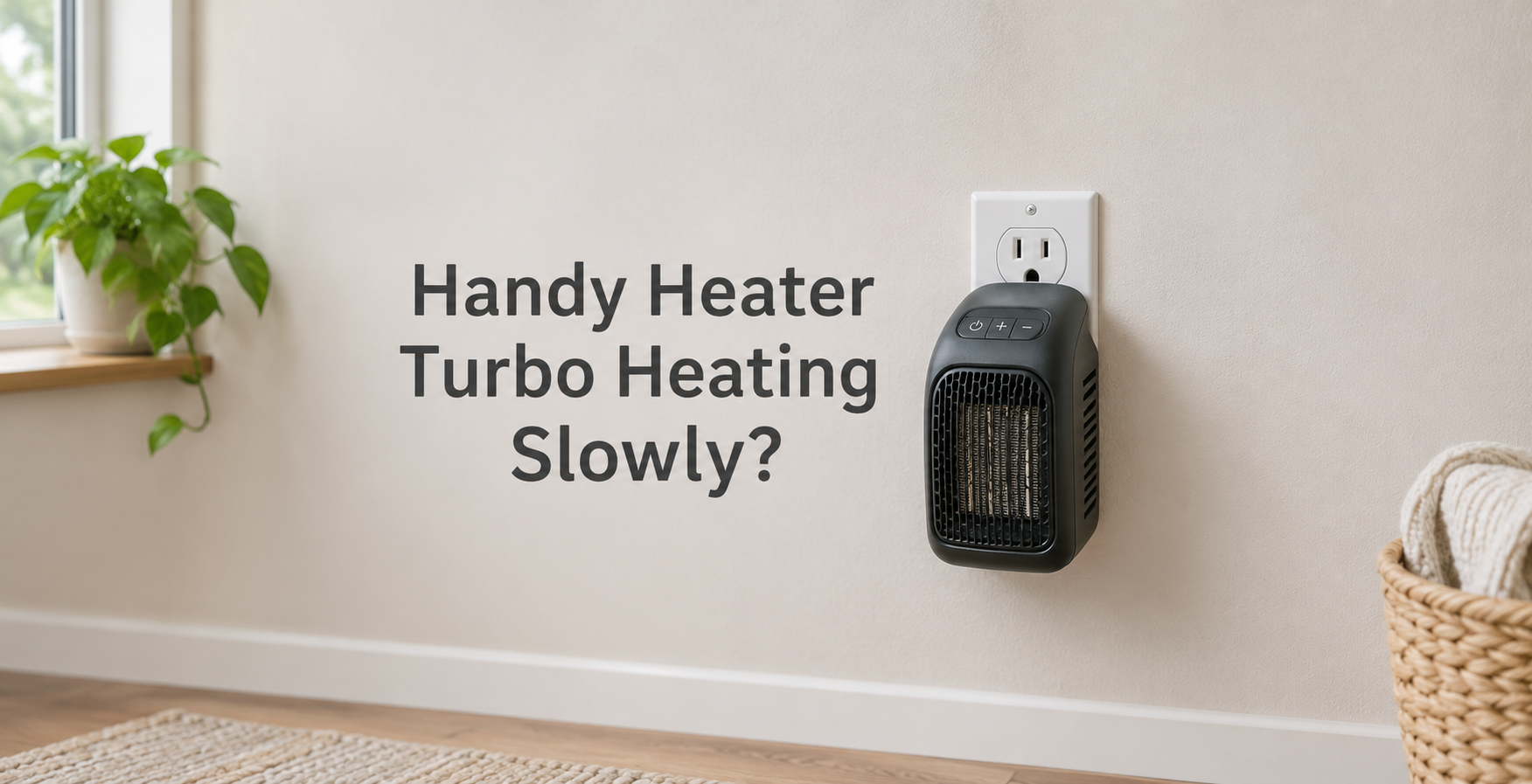

You switch on your Handy Heater Turbo, sit back, and wait for the room to warm up. Five minutes pass. Then ten. The air still feels chilly, and you start wondering whether the heater is broken. Before you give up on it, take a breath: in most cases a compact heater that warms slowly is not faulty at all. It is usually reacting to something simple, such as a dusty filter, a weak power source, blocked airflow, or a room that is simply asking too much of a small unit.
This guide walks through every common reason a Handy Heater Turbo (and similar compact turbo-style room heaters) heats slowly, how to test each one at home, and what you can do to get warmth faster. It also covers safety, realistic expectations, and when it is time to replace the unit.
Quick Answer: Why Is My Handy Heater Turbo Heating Slowly?
The most common causes are:
- A dust-covered filter, grille, or heating element
- Low voltage, a loose plug, or use of a thin extension cord
- Blocked airflow in front of or behind the heater
- A room that is too big, drafty, or poorly insulated for a small heater
- The wrong mode or a low thermostat setting
- A weakening fan or an aging heating element
- The overheat safety feature switching the heater off and on

First, Set Realistic Expectations
Compact personal heaters are designed to warm a small area, such as a desk, a bedside, a bathroom corner, or a small room. Most plug-in units of this type draw a limited amount of power, because a normal household socket can only deliver so much safely. That means the heater can warm the air close to it quickly, yet it may need a long time to change the temperature of an entire large or very cold room.
A good rule of thumb: the smaller the space and the closer you sit, the faster the heater will feel effective. If you expect it to behave like central heating, it will always feel slow. If you use it as a personal, targeted heat source, it can feel excellent.
Cause 1: Low Voltage or a Poor Power Connection
A heater converts electricity into heat. When the power supply is weak, the heat output drops with it. Low voltage can happen during peak evening hours when many appliances run on the same circuit, or when the wiring in an older building is under strain.
Signs: the fan sounds weaker than usual, the lights in the room flicker when the heater starts, or the plug feels warm.
How to fix it:
- Plug the heater directly into a wall socket. Avoid extension cords and multi-plug strips, because they add resistance and can overheat.
- Make sure the plug sits firmly in the socket without wobbling.
- Turn off other high-power appliances on the same circuit, such as irons, kettles, or air conditioners.
- If the voltage in your area is often unstable, a properly rated voltage stabilizer can help. Check the heater’s power rating first.
Safety note: if the plug, cord, or socket feels hot, discolored, or smells of burning, unplug the heater and have a qualified electrician inspect the outlet.
Cause 2: Dust on the Filter, Grille, or Heating Element
Dust is the number one silent cause of slow heating. A layer of dust on the air inlet and the front grille reduces airflow, so less warm air is pushed into the room. Dust on the heating element itself acts like a thin blanket, trapping heat and lowering efficiency. It can also create a mild burning smell when the unit warms up.
How to clean it safely:
- Switch the heater off and unplug it. Let it cool completely.
- Use a soft brush or a vacuum cleaner with a brush attachment to remove dust from the vents, grille, and inlet.
- If the filter or inlet cover is removable, wipe it with a slightly damp cloth and let it dry completely.
- Never pour water on the unit and never use it while any part is wet.
- Plug it back in and test again.
Many users notice a clear improvement after a simple cleaning. Repeat it every two to four weeks during heavy use.
Cause 3: Blocked Airflow
Turbo-style heaters rely on a fan to push warm air outward. If a curtain, blanket, sofa, or rug sits close to the front or the back, the airflow is restricted. The heater struggles to circulate warm air, the internal temperature rises, and the safety system may reduce output.
Keep at least about three feet (one meter) of clear space in front of the heater and some free space behind and around it. Place it on a flat, hard floor surface rather than on thick carpet or bedding, unless the manual says otherwise.

Cause 4: The Room Is Too Large, Cold, or Drafty
This is where most disappointment starts. Heat escapes through windows, door gaps, thin walls, and high ceilings. A small heater can only add a limited amount of warmth each minute, so if the room loses heat almost as fast as it gains it, the temperature barely rises.

Ways to help the heater win:
- Close doors and windows, and draw thick curtains at night.
- Place a rolled towel or a draft stopper along the bottom of the door.
- Heat only the area you actually use. Sit closer instead of trying to warm the whole room.
- Start the heater earlier. A very cold room needs more time, especially in winter mornings.
- Cover bare floors with a rug to reduce cold coming up from the ground.
Cause 5: Wrong Mode or Low Thermostat Setting
It sounds obvious, yet it happens often. Many heaters have multiple heat levels, a fan-only mode, or an adjustable thermostat. If the heater is on a low setting, in fan-only mode, or the thermostat is set close to the current room temperature, the heating element will cycle off quickly and the unit will feel weak.
- Choose the highest heat or turbo setting for the first 10 to 15 minutes.
- Turn the thermostat knob up if there is one, then lower it once the room is comfortable.
- Check that no energy-saving or timer function is limiting the run time.
Cause 6: A Weak Fan or an Aging Heating Element
Like any appliance, heaters wear down with time. The fan motor can slow down because of dust, dry bearings, or age, which means less warm air is delivered. The heating element can also lose efficiency after thousands of hours of use.
Warning signs:
- The fan speed seems much slower than when the heater was new
- A rattling, grinding, or buzzing sound
- The outgoing air feels only mildly warm even on the highest setting
- The heater takes much longer than before to reach the same comfort level
If cleaning does not help, do not open the heater and do not attempt repairs yourself. Internal parts carry live voltage. Contact the seller or manufacturer about a warranty claim or replacement, or have a qualified technician examine it.
Cause 7: The Overheat Protection Is Activating
Most modern heaters include a thermal safety cut-out. When internal temperature gets too high, often because of dust or blocked airflow, the heater reduces power or turns off for a short while, then restarts. To you, this feels like the heater is heating slowly or heating in waves.
If your heater clicks, shuts off briefly, and starts again, clean the vents, clear the area around the unit, and make sure it stands upright on a stable surface. If the cycling continues even in a clean, open space, stop using it and seek a professional check.
Step-by-Step Troubleshooting Checklist
Follow this order to find the problem quickly, starting with the easiest fixes:

- Plug the heater directly into a wall socket, with no extension cord.
- Select the highest heat level and raise the thermostat.
- Unplug, cool down, and clean the filter, grille, and vents.
- Clear the surrounding space and place the heater on a hard, level surface.
- Reduce room heat loss by closing doors, windows, and curtains.
- Test another wall outlet in a different part of the house to rule out a bad socket or weak circuit.
Tips to Get Warmth Faster
- Use it in a smaller space. A bathroom, a bedroom, or a home office is a much better match than a big living room.
- Position it smartly. Place the heater a few feet from where you sit and aim it toward you.
- Warm up before you need it. Turn it on 10 to 20 minutes ahead of time.
- Layer up. Warm socks and a light blanket make a small heater feel stronger.
- Keep the room humidity comfortable. Very dry air can feel less pleasant when heated, so a small bowl of water or a humidifier can help comfort.
Important Safety Rules
- Never leave the heater running while you sleep or when nobody is home.
- Keep it away from curtains, bedding, paper, and anything flammable.
- Never cover the heater to “trap” heat.
- Keep children and pets from touching or knocking over the unit.
- Do not use it in damp areas unless it is specifically rated for it.
- Stop using it immediately if you notice smoke, sparks, a strong burning smell, or a damaged cord.
When Should You Replace the Heater?
Consider a replacement if the heater is several seasons old and still weak after cleaning and testing, the cord or plug is damaged, the fan makes grinding sounds, or the unit shuts down repeatedly in a clear open space. If your room is large, it may also be wiser to move to a heater with higher output, an oil-filled radiator, or a panel heater designed for bigger spaces rather than a compact turbo unit.
When comparing options, look at the power rating, the recommended room size, safety features such as tip-over protection and overheat protection, noise level, and warranty coverage.
Frequently Asked Questions
How long should a Handy Heater Turbo take to warm a room?
It depends on room size, outside temperature, and insulation. In a small, closed room you should feel noticeably warmer air near the heater within a few minutes. Warming the entire room can take much longer, and in a large or drafty room it may never feel truly warm.
Why does my heater blow cool air at first?
The heating element needs a short moment to reach working temperature. Air may feel only lukewarm for the first minute or two. If it stays cool for much longer, check the power connection, the mode, and the cleanliness of the vents.
Can a dirty filter really slow down heating?
Yes. A clogged filter or grille restricts airflow and traps heat inside the unit. This lowers the amount of warm air delivered and can trigger the overheat protection.
Is it safe to use an extension cord with a room heater?
It is best to avoid it. Heaters draw a lot of current, and thin or long extension cords can overheat. Plug the heater directly into a wall outlet whenever possible.
Does leaving the heater on all day make the room warmer?
Not necessarily, and it is not recommended. Compact heaters are meant for supervised, short to moderate use. Warm the space, then switch it off or lower the setting.
Can I fix a weak heating element myself?
No. Opening a heater is unsafe and may void your warranty. Contact the seller, the manufacturer, or a qualified technician.
Final Thoughts
If your Handy Heater Turbo is heating slowly, the cause is often something simple and fixable: a dusty filter, a weak power connection, blocked airflow, or a room that loses heat faster than a small heater can replace it. Start with the easy checks, clean the unit regularly, use it in a suitably sized space, and follow basic safety rules. If it is still weak after all of that, the heater may simply be at the end of its life or too small for your needs, and upgrading to a better-matched model is a smart and safe choice.
Disclaimer: This article is for general information only. Always follow the manufacturer’s manual for your specific model and consult a qualified electrician or technician for electrical problems.