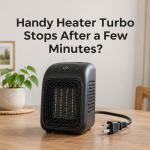
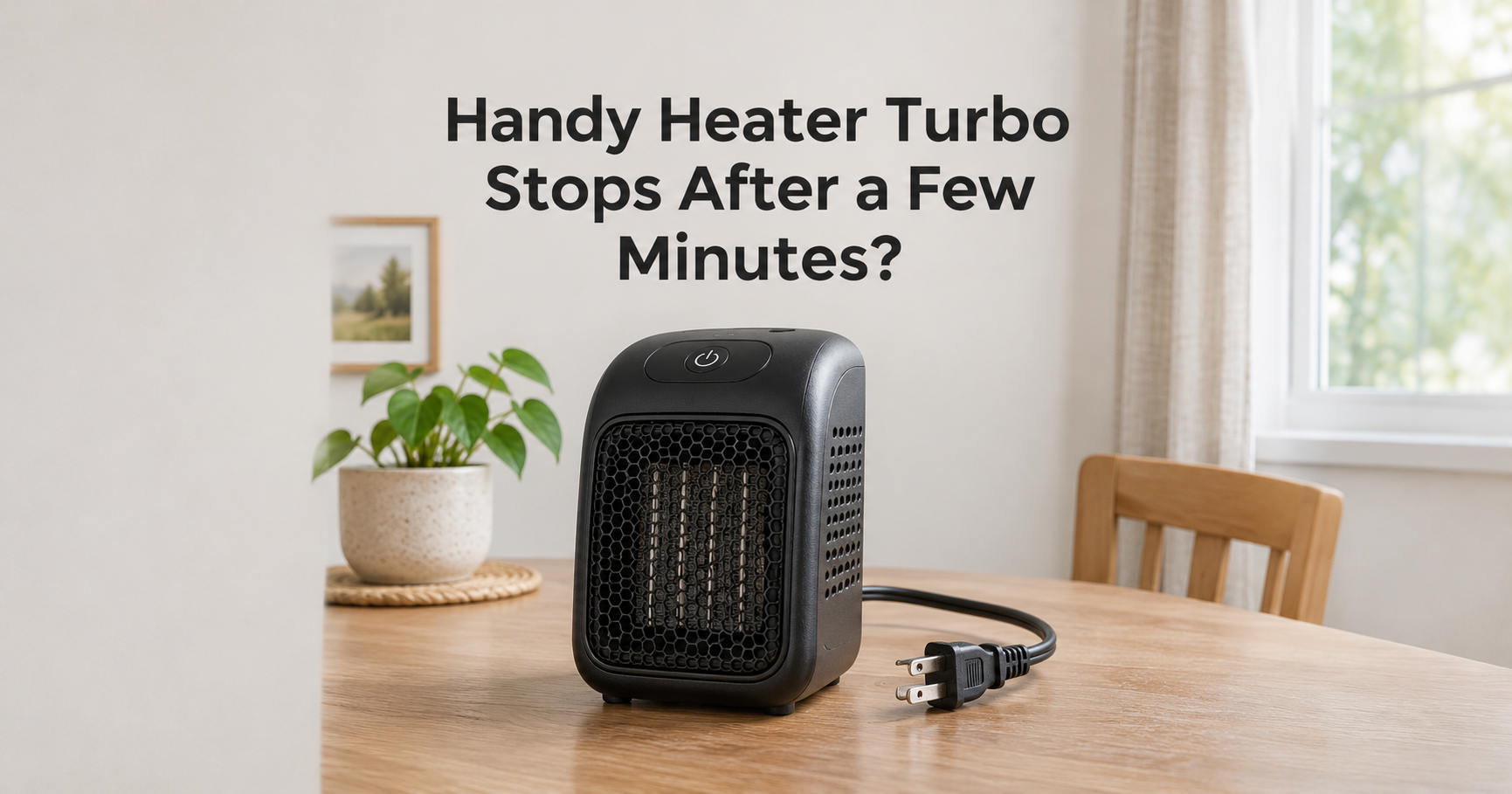

You switch on your Handy Heater Turbo, the room starts warming up nicely, and then, a few minutes later, it simply stops. No warning, no click, just silence. It is frustrating, especially on a cold evening, and it is natural to wonder whether the heater is broken.
The good news is that in most cases the heater is doing exactly what it was designed to do: protecting itself and you. Small portable heaters like the Handy Heater Turbo have built-in safety systems that cut the power when something is not right. The trick is to work out what triggered the shutdown. In this guide you will learn the most common reasons a heater turns off after a few minutes, how to fix each one step by step, and when it is time to stop using the unit.
Quick Answer
If your Handy Heater Turbo stops after a few minutes, the most likely cause is its overheat protection switching it off. This usually happens because of dust-clogged vents, poor airflow, or placement too close to walls and furniture. Other common causes include a tilted or uneven surface (tip-over switch), a weak power connection, an active timer or eco mode, or a worn internal part. Unplug the heater, let it cool, clean the vents, plug it directly into a wall outlet, and place it on a hard, flat floor with plenty of clear space around it.
Why Heaters Shut Off on Purpose
Electric heaters turn electricity into heat, so they must manage that heat carefully. Most portable heaters include several protection features:
- Thermal cut-off or thermal fuse: a sensor that cuts power if internal temperatures climb too high.
- Thermostat: switches the heating element on and off to keep the room at a set temperature.
- Tip-over switch: turns the unit off if it is knocked over or leans too far.
- Timer or auto shut-off: some models stop automatically after a preset period.
When one of these is triggered, the heater stops. Understanding which one is responsible is the key to fixing the problem for good.

Common Causes (and How to Fix Each One)
1. Overheat Protection Is Being Triggered
This is the number one reason. Heaters pull in room air, warm it, and push it out. If the air intake or outlet is partly blocked, heat builds up inside the casing. After a few minutes, the temperature sensor reaches its limit and cuts power.
What causes it:
- Dust, pet hair, and lint covering the grille or air inlet
- A dirty or clogged air filter, if your model has one
- Objects blocking the front or back of the heater
How to fix it:
- Unplug the heater and let it cool for at least 30 minutes.
- Use a vacuum with a soft brush attachment to clean the front grille and the rear vents.
- Use a dry, soft brush or compressed air to remove dust from the openings.
- Wipe the outside with a dry cloth. Never use water or spray liquid cleaner into the vents.
- Plug the heater back in and test it.
2. Poor Airflow Around the Heater
Even a clean heater can overheat if it has no room to breathe. Placing it close to a sofa, curtains, a wall, or a bed traps hot air around the unit. The sensor then reads a high temperature and shuts the heater down.
How to fix it: Keep at least 3 feet (about 1 meter) of clear space around the heater on all sides, and keep anything flammable well away. Make sure the air outlet is not facing a wall or furniture.

3. The Tip-Over Switch Is Activating
Many heaters have a safety switch at the base. If the unit tilts, even slightly, the switch can think it has fallen and cut the power. A soft carpet, a rug edge, or an uneven floor can cause a small lean that is hard to notice.
How to fix it: Place the heater on a hard, flat, level surface such as tile or wood. Avoid thick carpet and never put it on a bed, sofa, or table that can wobble. Also check the base for debris or hair that may stop the switch from sitting properly.
4. Power Supply Problems
Heaters draw a lot of electricity. A weak connection can cause the heater to stop, restart, or shut down after a few minutes once the plug and cord warm up.
Check these things:
- Extension cords and power strips: these are not designed for the high load of a heater. Always plug directly into a wall outlet.
- Loose plug or worn outlet: if the plug feels loose or hot, try a different outlet.
- Shared circuits: if other high-power appliances are on the same circuit, the breaker may trip. Try running the heater alone.
- Damaged cord: look for cracks, burn marks, or bent prongs. If you see any, stop using the heater immediately.
If the plug or the outlet feels very hot, unplug the heater straight away and have the outlet checked by a qualified electrician.
5. Timer, Eco Mode, or Thermostat Setting
Sometimes the heater is not faulty at all. A timer setting or eco function can shut the unit off after a set period. Likewise, if the thermostat is set low, the heater may simply reach the target temperature and switch off the heating element, which can look like the heater has stopped working.
How to fix it: Check the control panel for an active timer or eco mode and turn it off. Raise the thermostat setting above the current room temperature and see if the heater keeps running.
6. A Faulty Part Inside the Heater
If you have cleaned the heater, improved the placement, and used a solid power connection, but it still stops, a part inside may be wearing out. Common culprits include a faulty thermostat, a weak thermal fuse, or a failing fan that no longer moves enough air.
Signs of a failing part include:
- The heater stops at roughly the same time every run, even when clean and well placed
- The fan sounds weak, noisy, or slow
- A burning smell, flickering light, or unusual sounds before the shutdown
These are internal electrical parts. Do not open the heater yourself. Contact the seller or manufacturer, or replace the unit.
Step-by-Step Troubleshooting Checklist
Follow these steps in order. Most users find the cause within the first three.
- Unplug and cool down: let the heater rest for at least 30 minutes.
- Clean the vents and filter: remove dust from the grille and rear openings.
- Use a wall outlet: remove any extension cord or power strip.
- Change the location: a hard, flat floor with a 3-foot clear zone.
- Check settings: turn off timer or eco mode and raise the thermostat.
- Test on a lower setting: if your heater has multiple power levels, try a lower one to see whether it runs longer.
- Time the shutdown: if it still stops, note how many minutes it runs. A consistent time often points to a thermal or part issue.

Safety Rules You Should Always Follow
Because heaters work with high heat and high electrical load, safety comes first. Please keep these points in mind:
- Never leave a heater running unattended or while you sleep.
- Never cover the heater or dry clothes on it.
- Keep it away from water, bathrooms, and damp areas.
- Keep children and pets away from the unit.
- Do not try to bypass or disable the safety switch or thermal protection. It exists to prevent fires.
- Do not open the heater to repair internal wiring unless you are a qualified technician.
When Should You Replace the Heater?
It may be time to stop using the heater and replace it, or contact the seller, if:
- It continues to shut off after you have tried every step above
- You notice a persistent burning smell, smoke, or sparks
- The cord, plug, or body is cracked, melted, or discolored
- The plug or the outlet becomes very hot
- The heater is under warranty and the fault appears to be an internal one
Continuing to use a heater that overheats or smells of burning is simply not worth the risk. If it is still under warranty, keep your receipt and ask the seller about repair or replacement options.
How to Prevent the Problem in the Future
A little regular care keeps your heater running longer and more safely. Make this checklist part of your routine, especially at the start and end of the cold season.

Beyond maintenance, remember to use a lower setting where possible, give the heater a short rest between long sessions, and store it in a dry, dust-free place when it is not in use.
Frequently Asked Questions
Why does my Handy Heater Turbo turn off after 5 minutes?
The most common reason is overheat protection. Dust on the vents, poor airflow, or placing the heater too close to objects can cause internal temperatures to rise quickly, and the safety sensor then turns the heater off. A timer setting or a tilted surface can also be responsible.
Is it safe to keep restarting a heater that keeps shutting off?
It is fine to restart it once after cleaning it and fixing the placement. However, if it keeps shutting off repeatedly, do not keep forcing it to run. Repeated shutdowns mean something is wrong, and it is safer to find the cause first.
Can a dirty filter or vent really stop a heater?
Yes. A blocked intake or outlet reduces airflow, so heat cannot escape. The safety sensor sees the rising temperature and cuts the power. Cleaning the vents often solves the problem right away.
Can I use an extension cord with my heater?
It is best not to. Heaters draw a lot of power, and many extension cords and power strips cannot handle that load safely. They may overheat or cause the heater to cut out. Plug directly into a wall outlet instead.
How long should a portable heater run continuously?
That depends on the model and the room, so check the manual. In general, a heater in good condition should keep running steadily as long as it has clean vents, good airflow, and a stable power supply. Always supervise it while it is on.
Does a heater that stops after a few minutes mean it is broken?
Not necessarily. Many cases are fixed by cleaning and moving the heater. If the problem continues after every step in this guide, then an internal part may have failed and the heater should be replaced or checked by the manufacturer.
Final Thoughts
A Handy Heater Turbo that stops after a few minutes is usually trying to protect itself, not simply failing. Start with the easy fixes: clean the vents, give the heater room to breathe, place it on a flat, hard surface, and plug it straight into a wall outlet. These simple steps solve the majority of cases.
If the heater still shuts off, treat it as a warning sign rather than an annoyance. Stop using it, and contact the seller or replace the unit. Staying warm is important, but staying safe is more important.