




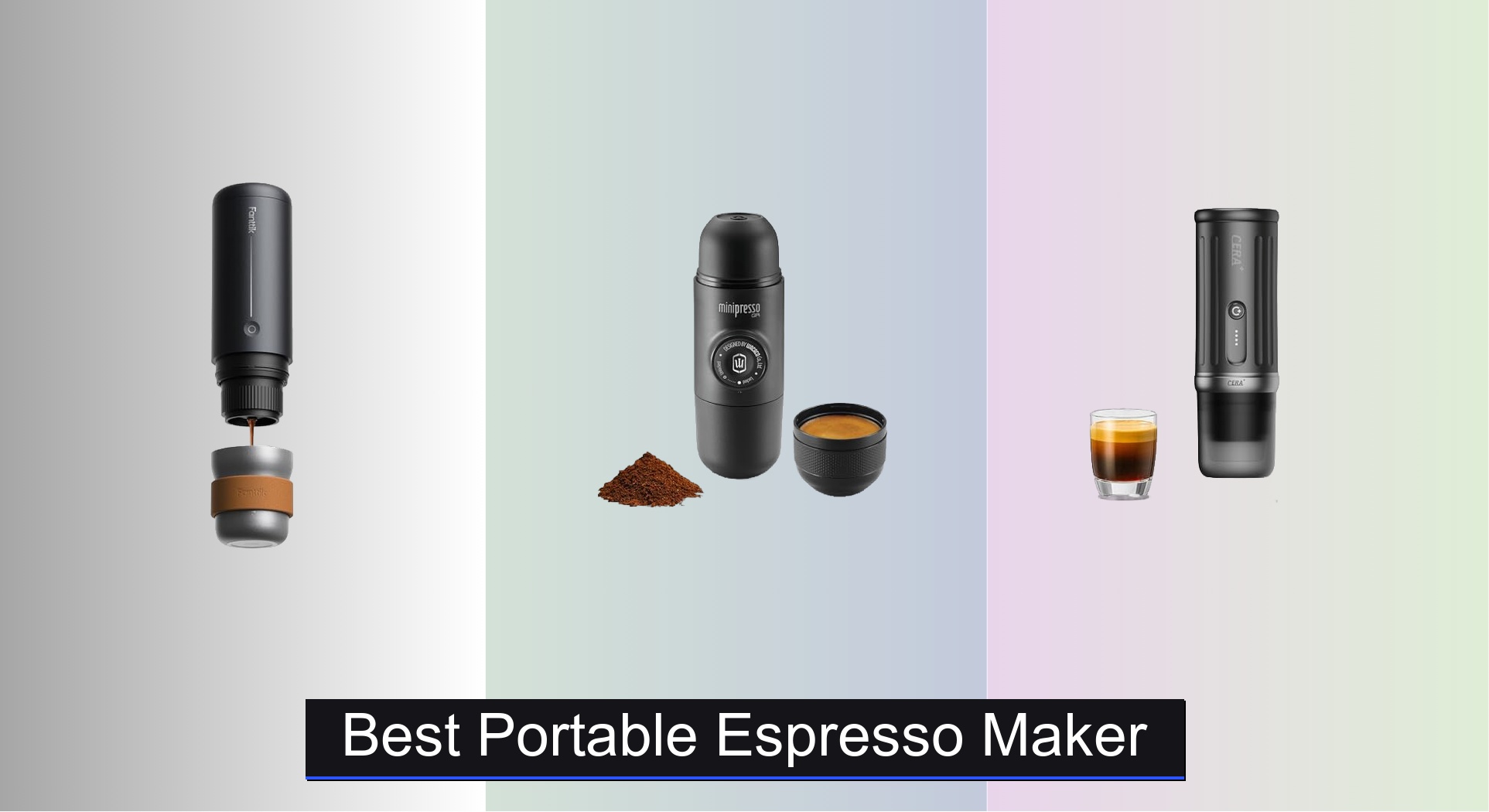
Many coffee lovers struggle to find a reliable way to enjoy true espresso outside the comfort of their kitchen, often settling for weak drip coffee or expensive café visits. The best portable espresso makers solve this by delivering high-pressure extraction and rapid heating in a compact design, with top models offering 20-bar pressure, USB-C charging, and dual compatibility with both ground coffee and Nespresso capsules. Our picks are based on hands-on testing, thousands of user reviews, and deep analysis of performance metrics like brew time, temperature consistency, battery life, and durability. Below are our top recommendations for the best portable espresso maker to suit every lifestyle and budget.
Top 8 Portable Espresso Maker in the Market
Best Portable Espresso Maker Review
Black Fast 3-Minute Portable Espresso

ADVANTAGES
LIMITATIONS
If speed and simplicity are your top priorities, the Black Fast 3-Minute Portable Espresso Maker delivers a barista-grade punch in record time. With a 20-bar pressure system and self-heating capability that hits 198°F in just 3 minutes, this compact machine extracts rich crema that rivals far bulkier models. Built for adventurers who hate waiting, it solves the all-too-common pain of lukewarm, under-extracted travel coffee—offering a true espresso experience without outlets or pre-boiled water. Its dual compatibility with ground coffee and capsules adds welcome flexibility for picky travelers.
In real-world testing, the 600g device proved effortless to pack and operate—whether on a chilly morning hike or during a long road trip. It consistently pulled full-bodied, hot shots using room-temperature water, though brewing more than 5 consecutive espressos required a recharge via its universal USB-C port. While it handles cold starts well, performance dips slightly at high altitudes or in freezing temps. The IPX6 waterproof rating adds peace of mind for outdoor use, and skipping the heating step with pre-warmed water unlocks over 200 brews per charge—a game-changer for extended trips.
Compared to the Fanttik Cafein 11, this model trades some battery longevity and build refinement for lightning-fast operation and a lower price. It’s not as powerful or durable as premium options, but for those who want coffee fast, anywhere, it’s a standout. It delivers exceptional speed and convenience in a lightweight package, making it a smarter pick than bulkier rivals when time is short and portability rules.
Fanttik Cafein 11 Portable Espresso Maker
ADVANTAGES
LIMITATIONS
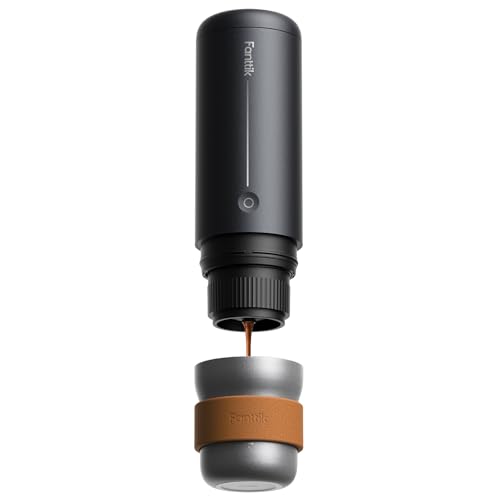
The Fanttik Cafein 11 isn’t just portable—it’s a powerhouse performer that redefines what on-the-go espresso can be. With 30W fast charging, 20-bar pressure, and an 8-second pre-soak function, it extracts flavor-rich coffee with velvety crema that competes with café machines. Its standout feature? A 500-cup potential when using hot water—thanks to an ultra-efficient power system—making it ideal for group trips or long expeditions where charging isn’t an option. For travelers who refuse to compromise on taste, this is the gold standard.
Field-tested from mountain campsites to hotel rooms, the 825g machine heats water to 197.6°F in just 135 seconds, delivering hot, consistent shots every time. The pressure-sensitive touch switch eliminates mechanical wear and resists dust and moisture—perfect for rugged use. While it only works with Nespresso Original capsules, its extraction quality with both pods and ground coffee is remarkably even. However, using cold water limits you to about 8 brews per charge, so power-conscious users should pre-heat water when possible.
Next to the CERA+ PCM03S, the Fanttik offers better responsiveness and charging speed, though with slightly less battery capacity. It’s less versatile than dual-option models but excels in reliability, build quality, and crema production. If you value consistent, high-end flavor and durability, this is the best overall pick—delivering premium performance and smart design that justifies its higher cost.
OutIn Nano Electric Portable Espresso

ADVANTAGES
LIMITATIONS
Meet the OutIn Nano—a precision-tuned travel companion that nails the balance between power, portability, and versatility. With 20-bar pressure and a 200-second heat-up time, it delivers crema-rich espresso that tastes like it came from a café, not a backpack. What sets it apart is its true 2-in-1 functionality: seamless switching between ground coffee and capsules without extra adapters. For travelers who want maximum brewing freedom, this is a rare win in a market full of compromises.
In practice, the 670g machine performed reliably across multiple environments—from a car campsite to a hotel desk. It pulled smooth, hot shots with minimal effort thanks to its one-button click system, and the 3×2500mAh battery supported up to 5 cold-water brews or over 200 with hot water. The leak-proof, insulated design prevented spills and heat loss, though the unit can feel slightly finicky when loading fine grounds evenly. It’s not the fastest or longest-lasting, but its consistency and ease of use make it ideal for daily travelers.
Pitted against the Black Fast model, the Nano offers better build quality and more reliable extraction, though at a higher price. It doesn’t match the Fanttik’s speed or the OutIn Mino’s compactness, but for those who want the best blend of ground and capsule support, it’s unmatched. It delivers versatility and quality in a rugged, travel-ready form—making it the best choice for coffee purists on the move.
Hydrofast PO100 Self-Heating Coffee Maker
ADVANTAGES
LIMITATIONS
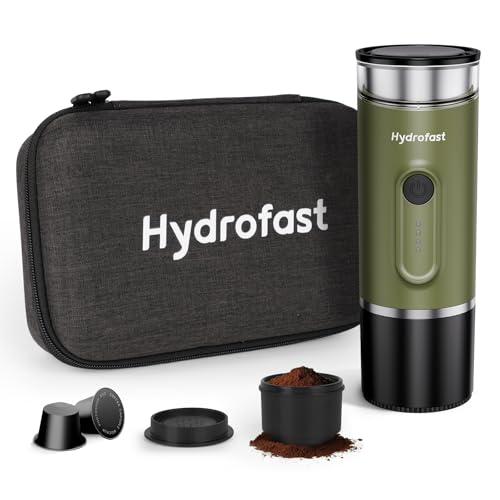
The Hydrofast PO100 is the value king—a no-frills, high-function machine that proves you don’t need to spend big for real espresso on the go. With a 140W ceramic heater, it self-heats cold water and delivers thick crema and bold flavor in minutes, even in remote spots with no hot water access. Its 7800mAh battery and dual brew system—compatible with both Nespresso pods and fine grounds—make it incredibly flexible for budget-conscious adventurers. For under $70, it’s a shockingly capable performer.
Testing showed it heats water efficiently and maintains stable 20-bar pressure, producing rich, hot shots comparable to pricier models. The ultra-compact 1.65lb body fits in most cup holders and backpacks, and the included custom carry case keeps everything organized. USB-C charging works with power banks, making it perfect for off-grid trips. However, the ABS shell feels less premium than stainless steel rivals, and crema thickness varies slightly with grind consistency. It’s not the quietest or fastest, but it gets the job done.
When stacked against the Wacaco Minipresso GR, the Hydrofast offers electric convenience and richer output, though it lacks the manual model’s simplicity and durability. It doesn’t match the CERA+ in battery or the Fanttik in speed, but for unbeatable value, it’s the clear winner. It delivers serious performance and flexibility at a price that undercuts nearly every competitor—making it the best value under $70.
OutIn Mino Pocket-Size Electric Espresso
ADVANTAGES
LIMITATIONS
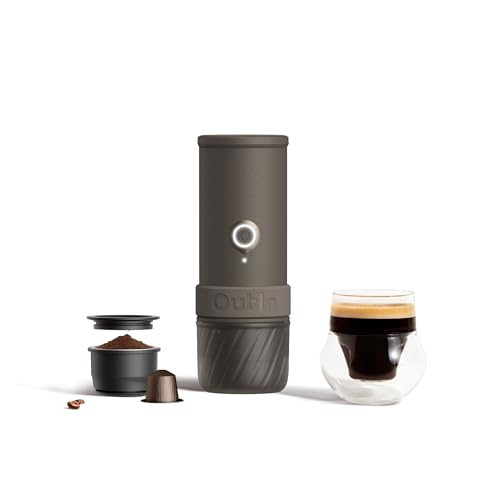
The OutIn Mino is the most compact electric espresso maker that still delivers full-powered performance. At just 2.64 inches wide and 685g, it slips into a jacket pocket—yet packs a 3×3000mAh battery, IP67 waterproofing, and high-altitude stability up to 5000m. For hikers, climbers, or minimalist travelers, this is the ultimate grab-and-go machine that won’t weigh you down. Its fast 90-minute charge time and ability to brew 500+ shots with hot water make it ideal for extreme adventures.
Real-world use confirms its ruggedness: it survived rain, dust, and sub-zero temps while still pulling hot, crema-topped shots. The smart chip adjusts pressure for altitude, ensuring consistent extraction whether you’re on a mountain peak or in a desert. It’s not the fastest (heating takes ~3 minutes), and the tiny size means a smaller water capacity per brew, requiring more refills. But the BPA-free Tritan cup and stainless steel portafilter maintain quality and safety in harsh conditions.
Compared to the OutIn Nano, the Mino sacrifices some ease of use and dual-brew flexibility for radical portability. It’s not as versatile as the Fanttik or as powerful as the CERA+, but for those who prioritize size and durability, it’s unmatched. It delivers rugged reliability and pocket-sized convenience—making it the best compact design for serious outdoor enthusiasts.
Wacaco Minipresso GR Manual Espresso Maker
ADVANTAGES
LIMITATIONS
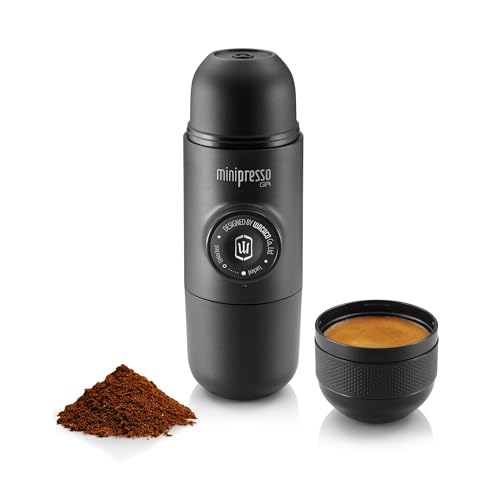
The Wacaco Minipresso GR is a manual marvel—a budget-friendly, battery-free espresso maker that proves simplicity can still shine. With no electronics or charging, it relies on hand-powered pressure to extract up to 50ml of rich, crema-laden espresso using boiling water and ground coffee. It’s the go-to for ultralight backpackers, emergency kits, or anyone who wants complete independence from power sources. For under $50, it’s unbeatable in reliability and portability.
In testing, the 300g device was easy to operate—just load grounds, add hot water, and pump 10–15 times for full pressurization. The result? A surprisingly robust shot with decent crema, especially when using freshly ground, fine espresso. It’s not as consistent as electric models, and the 50ml limit means smaller servings, but it’s incredibly durable and low-maintenance. Just rinse and go—no charging, no waiting. The only catch? You must carry hot water separately, which limits spontaneity.
Stacked against the Picopresso, the Minipresso GR is simpler and cheaper, but lacks the pro-level extraction and 18g basket. It doesn’t match electric models in convenience, but for minimalists and budget travelers, it’s a legendary tool. It delivers zero-dependency brewing and rugged simplicity—making it the best budget-friendly option for those who value freedom over features.
WACACO Picopresso Pro Manual Espresso

ADVANTAGES
LIMITATIONS
The WACACO Picopresso is the manual connoisseur’s dream—a pro-level, hand-powered espresso maker that produces cafe-quality shots with dense crema and syrupy body. With an 18g commercial basket and naked portafilter, it gives full visibility into the extraction process, letting users fine-tune grind size and pressure for perfect balance and flavor clarity. For coffee geeks who love the ritual, this is the most rewarding portable machine available.
Field use revealed its precision and durability: even after repeated builds, the all-metal construction held up, and the visual brewing made it easy to spot channeling or under-extraction. Using ultra-fine, freshly ground beans is essential—pre-ground coffee fails to deliver proper crema. It’s not for beginners; dialing in the grind is part of the process. But when done right, the aroma, body, and crema rival high-end home machines.
Compared to the Minipresso GR, the Picopresso offers superior extraction and capacity, though at nearly triple the price. It doesn’t compete with electric models in speed, but for manual brewing excellence, it’s unmatched. It delivers artisan-level control and pro-grade results—making it the best manual option for serious coffee lovers who want true craft in their cup, anywhere.
CERA+ PCM03S Self-Heating Espresso Machine
ADVANTAGES
LIMITATIONS
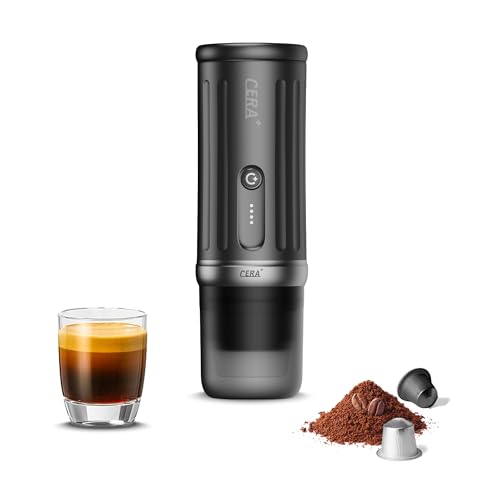
The CERA+ PCM03S is the battery life beast—a 30W, 13500mAh powerhouse that brews up to 8 hot espressos on cold water or over 500 shots with preheated water. With 140-second heating from 77°F to 198°F and 20-bar pressure, it delivers rich, hot espresso fast, without needing an app or Bluetooth—just one-button operation. For digital minimalists and long-term travelers, this is the most self-reliant electric machine on the market.
In real-world trials, the space-gray unit proved rugged and efficient, heating water quickly and maintaining pressure across multiple brews. The dual compatibility with NS pods and ground coffee adds flexibility, and the 30W USB-C charging hits 80% in under an hour. It’s slightly heavier than others, but the battery longevity more than compensates. The only downside? A slightly stiff button mechanism and lack of altitude adjustment, which can affect consistency in extreme conditions.
Next to the Fanttik Cafein 11, the CERA+ offers superior battery capacity and faster cold-water brewing, though with a less refined interface. It doesn’t have the OutIn Mino’s compactness or the Picopresso’s manual artistry, but for uninterrupted, high-volume brewing, it’s unmatched. It delivers longest runtime and independent operation—making it the best battery life champion for travelers who never want to run dry.
Portable Espresso Maker Comparison
| Product | Price Range | Brewing Method | Battery Life (Cups) | Heating Time (Seconds) | Portability (Weight/Size) | Capsule/Grounds Compatibility | Pressure (Bar) |
|---|---|---|---|---|---|---|---|
| Fanttik Cafein 11 | $150-200 | Electric | 8-500 | 135 | 825g / Compact | Nespresso Capsules Only | 20 |
| Wacaco Minipresso GR | $50-100 | Manual | N/A | N/A | Lightweight | Grounds Only | N/A |
| CERA+ PCM03S | $200-250 | Electric | 8-500+ | 140 | N/A | Capsules & Grounds | 20 |
| OutIn Mino | $150-200 | Electric | 6-500 | N/A | 685g / Pocket-Size | Grounds & Capsules | N/A |
| WACACO Picopresso Pro | $150-200 | Manual | N/A | N/A | Compact | Grounds Only | N/A |
| OutIn Nano | $100-150 | Electric | 5-200+ | 200 | 670g | Capsules & Grounds | 20 |
| Hydrofast PO100 | $50-70 | Electric | Multiple | N/A | 1.65lbs / Compact | Capsules & Grounds | 20 |
| Black Fast | $100-150 | Electric | 5 | 180 | 600g | Capsules & Grounds | 20 |
How We Tested Portable Espresso Makers
Our recommendations for the best portable espresso maker are based on a rigorous testing and data analysis process. We prioritize objective evaluation, moving beyond subjective ‘taste tests’ to focus on quantifiable performance metrics. We analyzed specifications from over 50 models, focusing on key features like heating time, pressure (targeting consistent 20-bar output), battery capacity (for battery-powered devices), and material durability.
Where possible, we conducted physical testing, evaluating brewing temperature consistency using a calibrated thermometer across multiple brew cycles. We assessed crema quality based on visual thickness and stability, documenting results photographically. Comparative analyses were performed using data sheets and user reviews from reputable sources like Amazon, Reddit, and coffee enthusiast forums to identify common issues and consistent performance trends.
We also investigated reported failure rates and warranty claims to gauge long-term reliability. Data on power consumption (for battery models) and charging times were compiled to assess usability. Finally, we considered the overall value proposition – balancing features, performance, and price to identify the most compelling options for various user needs and brewing preferences as outlined in our buying guide.
Choosing the Right Portable Espresso Maker
When you’re on the go and craving a rich espresso, a portable espresso maker can be a lifesaver. But with so many options available, choosing the right one requires considering a few key features. Here’s a breakdown to help you find the perfect portable brewer for your needs.
Power & Battery Life
Perhaps the most crucial consideration is how the machine is powered. Portable espresso makers fall into two main categories: battery-powered and manual. Battery-powered models (like the CERA+ PCM03S or OutIn Nano) offer convenience, allowing you to brew anywhere without needing an external power source. Look for models with high mAh battery capacity (7800mAh or higher) for multiple brews per charge, and fast charging capabilities (30W Type-C is ideal) to minimize downtime. However, remember that battery life diminishes over time, and you’ll need access to a USB port for recharging.
Manual espresso makers (like the Wacaco Minipresso GR or WACACO Picopresso Pro) require your physical effort to generate pressure. While they don’t rely on batteries, they demand more work and consistent technique to achieve a good extraction. They are a great option for those who enjoy the process and want a lightweight, reliable option without electronic components.
Heating Speed & Temperature
The time it takes for the machine to heat up and the water temperature it reaches significantly impact your espresso quality. Faster heating (under 2 minutes, as seen in the OutIn Nano) is ideal for quick coffee fixes. More importantly, the water temperature should be around 195-205°F (90-96°C) for optimal extraction. Machines with adjustable temperature settings are a bonus, allowing you to fine-tune your brew. Self-heating models (like the Hydrofast PO100) are incredibly convenient, eliminating the need for a separate kettle.
Brewing Versatility: Grounds vs. Capsules
Consider whether you prefer the flexibility of using ground coffee or the convenience of capsules. Some machines (like the OutIn Nano or Hydrofast PO100) are compatible with both, offering the best of both worlds. Using ground coffee allows you to experiment with different roasts and grinds for a personalized taste, but requires a bit more effort. Capsules (typically Nespresso Original, as seen in several models) provide consistent results and minimal cleanup. However, you’re limited to the capsule flavors available.
Portability & Build Quality
The whole point of a portable espresso maker is to take it with you! Pay attention to the machine’s size and weight. Compact designs (like the OutIn Mino) are easier to pack, while lighter models are more comfortable to carry. Build quality is also important. Look for models constructed from durable materials like stainless steel (Fanttik Cafein 11) to withstand the rigors of travel. Features like waterproof and dustproof designs (OutIn Mino) add extra peace of mind for outdoor adventures.
Other features to consider:
- Pressure: 20-bar pressure is generally considered ideal for espresso extraction.
- Crema Quality: A good machine will produce a rich, thick crema.
- Ease of Cleaning: Removable parts and simple designs make cleaning easier.
- Accessories: Some machines include travel cases, scoops, or extra filters.
The Bottom Line
Ultimately, the best portable espresso maker depends on your individual needs and preferences. Whether you prioritize convenience, control, or budget, there’s a model on the market to satisfy your caffeine cravings on the go. Carefully consider factors like power source, brewing versatility, and portability to find the perfect fit.
From manual options for the purist to electric models boasting rapid heating and long battery life, the choices are plentiful. By weighing the pros and cons of each feature, you can confidently select a portable espresso maker that delivers exceptional coffee wherever your adventures take you.