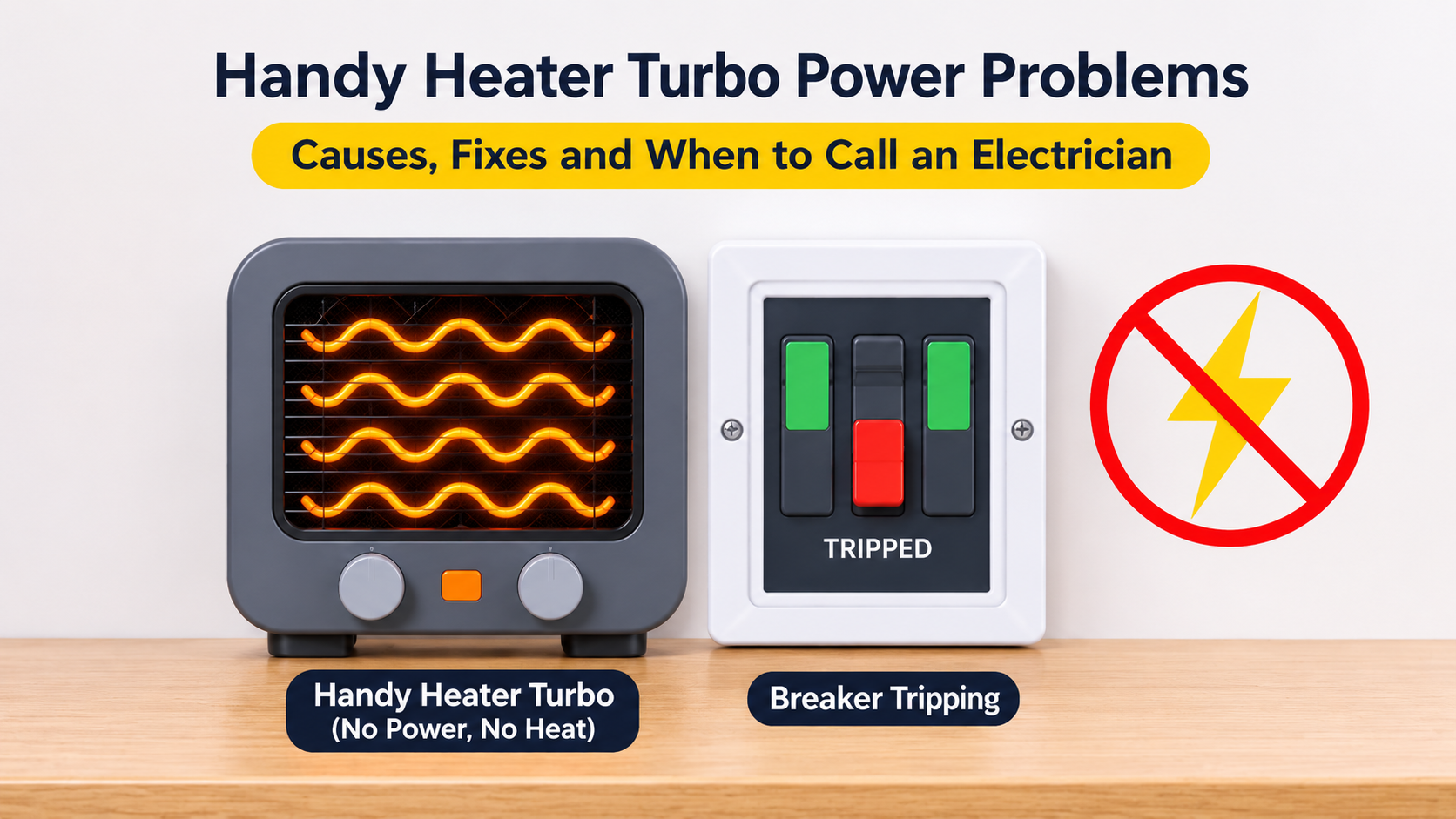
Handy Heater Turbo Power Problems: Causes, Fixes and When to Call an Electrician

You switch on your handy heater turbo on a cold evening and nothing happens. Or it starts, then shuts off after a few minutes. Or it trips the breaker, blows a fuse, makes the lights flicker, or blows only lukewarm air. Power problems are the most common complaint about portable room heaters, and they can be confusing because the fault might be in the heater, the plug, the socket, the extension cord or the wiring of your home.
This guide helps you work out what is going wrong with your handy heater turbo’s power, what you can safely check yourself, what you should never try, and when it is time to stop and call an electrician or replace the heater.
Most handy heater turbo power problems come from a small number of causes: a loose or damaged plug or socket, an overloaded circuit or extension cord, a tripped safety switch (tip-over or overheat), low or unstable voltage, or a worn internal part such as a switch, cord or element. Check the simple things first (socket, plug, breaker, placement), and stop using the heater immediately if you notice a hot plug, burning smell, smoke or sparks.
- Safety first: read this before troubleshooting
- Why a heater needs so much power
- Problem 1: Heater will not turn on
- Problem 2: Breaker or fuse keeps tripping
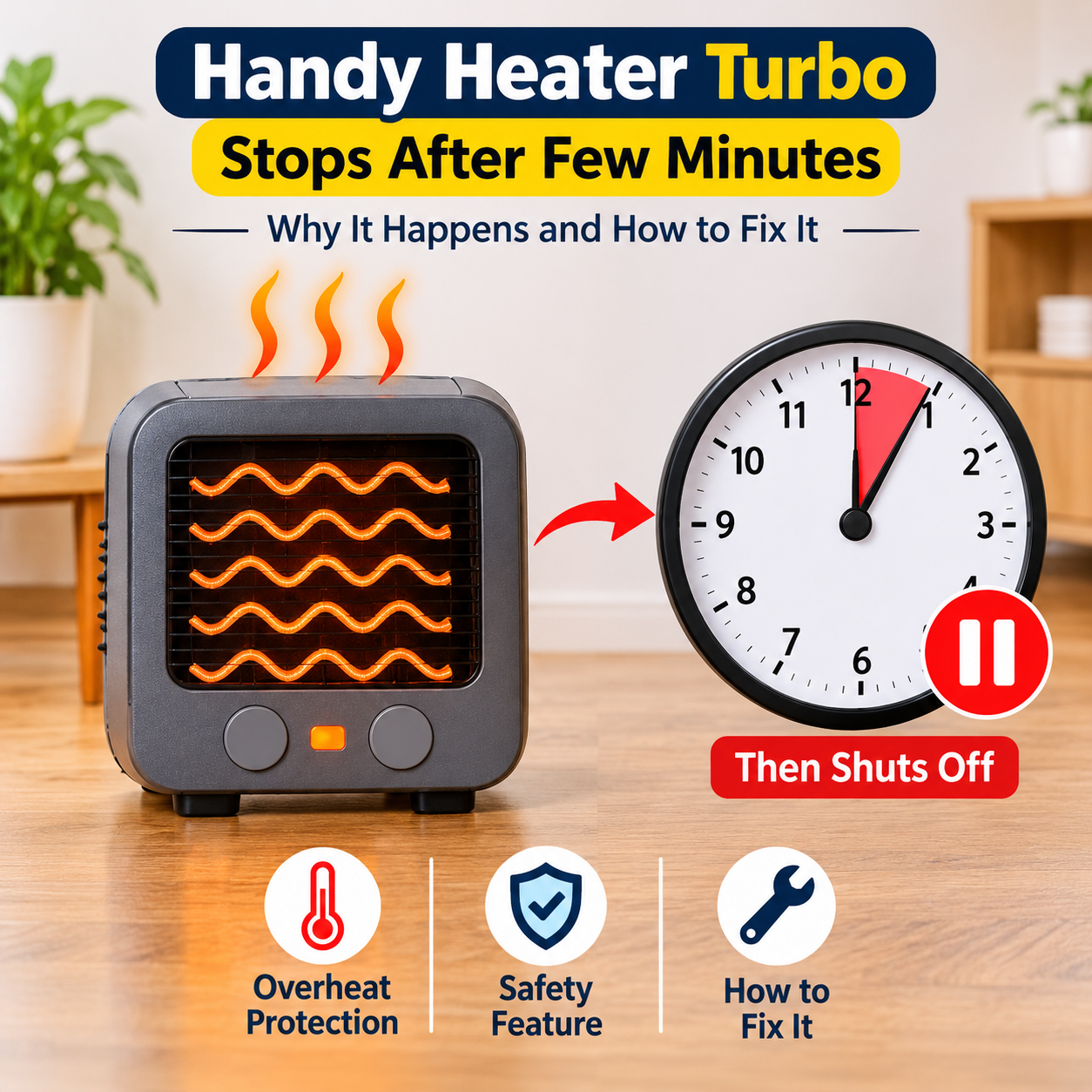
- Problem 3: Heater turns off by itself
- Problem 4: Plug, cord or socket gets hot
- Problem 5: Fan works but no heat
- Problem 6: Weak heat or lights dim
- Problem 7: Sparks, buzzing or burning smell
- Quick troubleshooting table
- What not to do
- Preventing power problems
- When to call a professional or replace the heater
- Frequently asked questions
- Final summary
Safety First: Read This Before Troubleshooting
- Unplug the heater before touching it, and never handle a plug or socket with wet hands.
- Do not open the heater’s casing or touch internal parts. Internal repairs are for qualified technicians only.
- Never bypass, tape down or remove any safety switch, fuse or protective device.
- Never replace a fuse or breaker with a higher-rated one to stop it tripping. The protection exists to protect your wiring.
- If you see smoke, sparks or flames, or smell a strong burning odour, stop using the heater and unplug it only if it is safe to do so.
- If you are not comfortable with any check in this guide, ask a qualified electrician.
Why a Heater Needs So Much Power
Heating is one of the most power-hungry jobs in a home. A handy heater turbo often draws 1000 to 2000 watts, far more than a fan, a light or a phone charger. The chart below puts it in perspective. The figures are typical, approximate values, so always check the label on your own appliances.
Because the load is so heavy and constant, small weaknesses that never matter with other devices, such as a slightly loose plug or a thin cord, can show up quickly with a heater. It also helps to know a simple fact about heating elements: their heat output depends strongly on voltage. If your supply voltage drops by about 10 percent, the heat output can fall by roughly 19 percent. That is why unstable or low voltage makes a heater feel weak.
Troubleshooting Flow: Heater Will Not Turn On
Use this simple decision flow to find the likely cause when the heater is completely dead.
Problem 1: Heater Will Not Turn On
Likely causes: dead socket or switched-off socket, loose plug, damaged cord, tripped breaker, activated tip-over switch, overheat protection that has not reset, or a failed switch or internal part.
What you can safely do:
- Make sure the wall socket switch is on and test the socket with a lamp or phone charger.
- Push the plug in firmly. If it feels loose in the socket, the socket may be worn.
- Inspect the cord and plug for cuts, kinks, discolouration or burn marks. If you see any, stop using the heater.
- Check the breaker or fuse box for a tripped switch.
- Place the heater upright on a flat, hard surface. A tip-over switch will not let it run if it is leaning or on a soft surface.
- If it overheated and shut down, unplug it, let it cool for 30 minutes, clear dust from the vents, and try again.
If the socket works, the plug and cord look good, and the heater is upright and cool but still dead, the fault is probably inside the heater. Do not open it. Contact the seller or a qualified technician.
Problem 2: Breaker or Fuse Keeps Tripping
A breaker trips to protect your wiring from too much current. Common reasons when running a heater:
- Overloaded circuit: the heater is on the same circuit as other heavy appliances such as an air conditioner, iron, kettle or geyser.
- Too many devices on one multi-plug.
- Faulty heater: a short circuit or leakage inside the heater.
- Damaged cord or plug: insulation damage causes current to leak or short.
- Worn or undersized breaker or wiring: older homes may have wiring not built for modern heavy loads.
What you can safely do: turn off other heavy appliances on that circuit and try the heater alone on a lower setting. If it runs fine alone, the problem was overload. If the breaker trips again, even with nothing else on, stop using the heater.
What not to do: do not keep resetting a breaker that trips repeatedly, and never fit a higher-rated fuse or breaker. Repeated tripping means something is wrong, and an electrician or technician must find out what.
Problem 3: Heater Turns Off by Itself
If the heater runs for a few minutes and then switches off, one of these safety or control features may be acting:
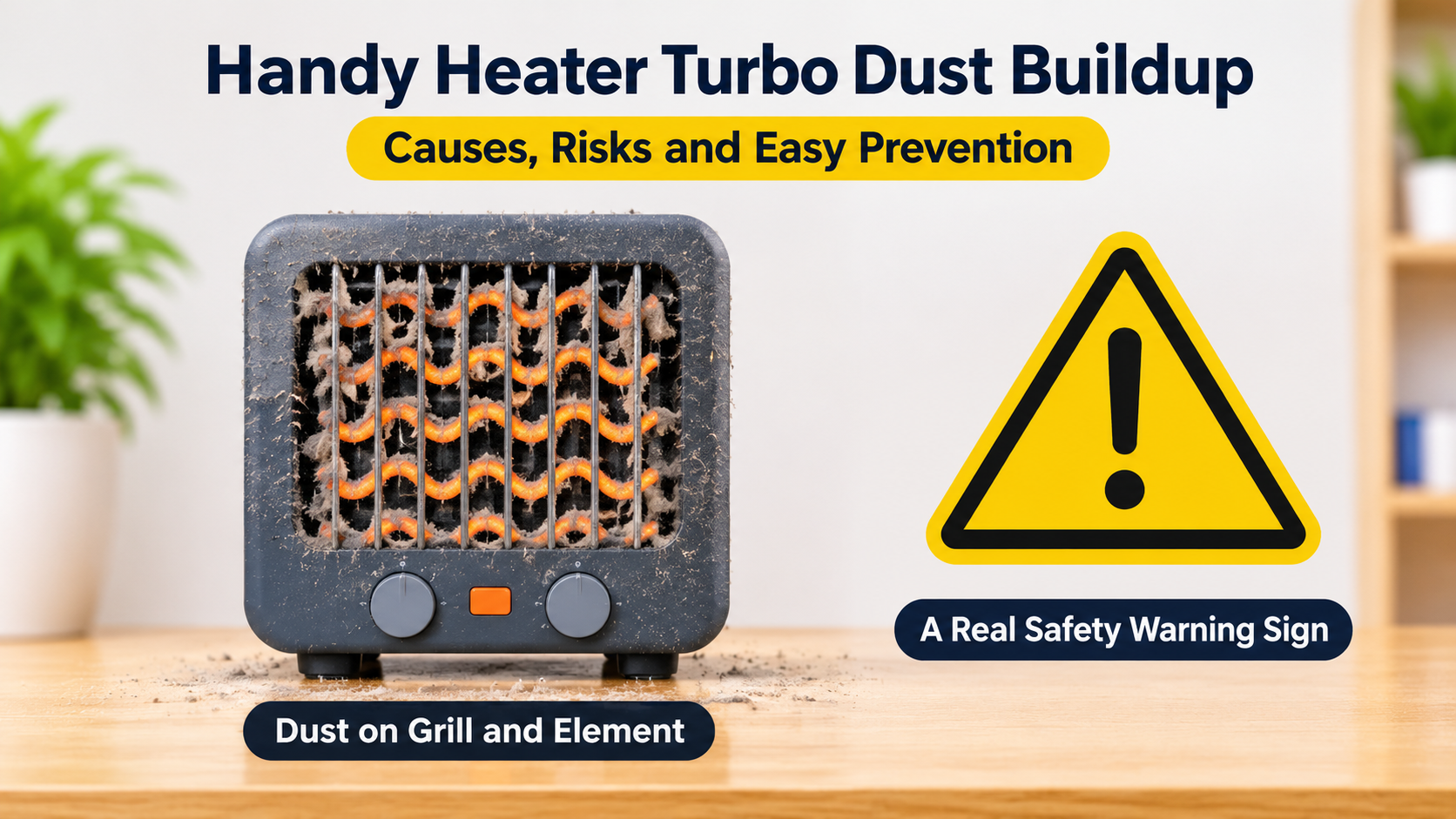
- Overheat protection: blocked vents, dust, a blocked grill or lack of clear space make internal temperature rise.
- Thermostat: the room has reached the temperature you set, so it cycles off. This is normal.
- Tip-over switch: the heater is on an uneven or soft surface, or is leaning.
- Timer or auto shut-off: if your model has one, check its setting.
- Loose connection: a loose plug, damaged cord or worn socket cuts power intermittently.
- Voltage drop: a weak supply or overloaded line.
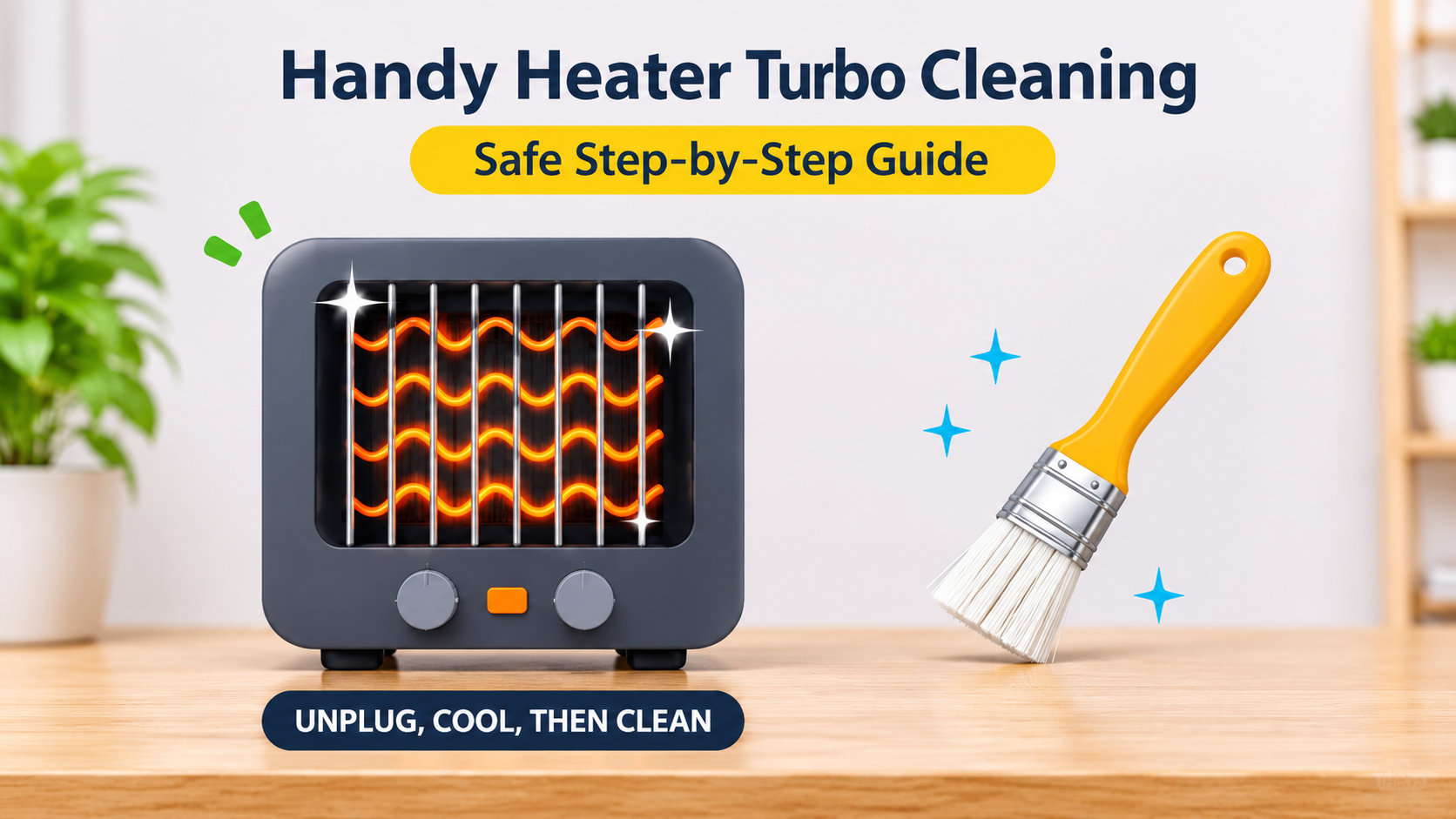
Unplug the heater, clean the vents with a soft brush or vacuum, make sure it stands on a flat, hard floor with at least 1 metre (3 feet) of clear space, and try again on a lower setting. If it keeps shutting off, stop using it and get it checked.
Problem 4: Plug, Cord or Socket Gets Hot
A plug that is warm to the touch after a long run can be normal. A plug or socket that is hot, discoloured, soft or smelling of burning is not.
Common causes: loose fit in a worn socket, dirty or corroded contacts, thin or damaged cord, extension cord or multi-plug overload, or a poor connection inside the plug.
If the plug, cord or socket is too hot to touch comfortably, unplug the heater (if safe), stop using it and get the socket and heater checked. A hot plug is a fire risk. Do not use an extension cord to “fix” the problem.
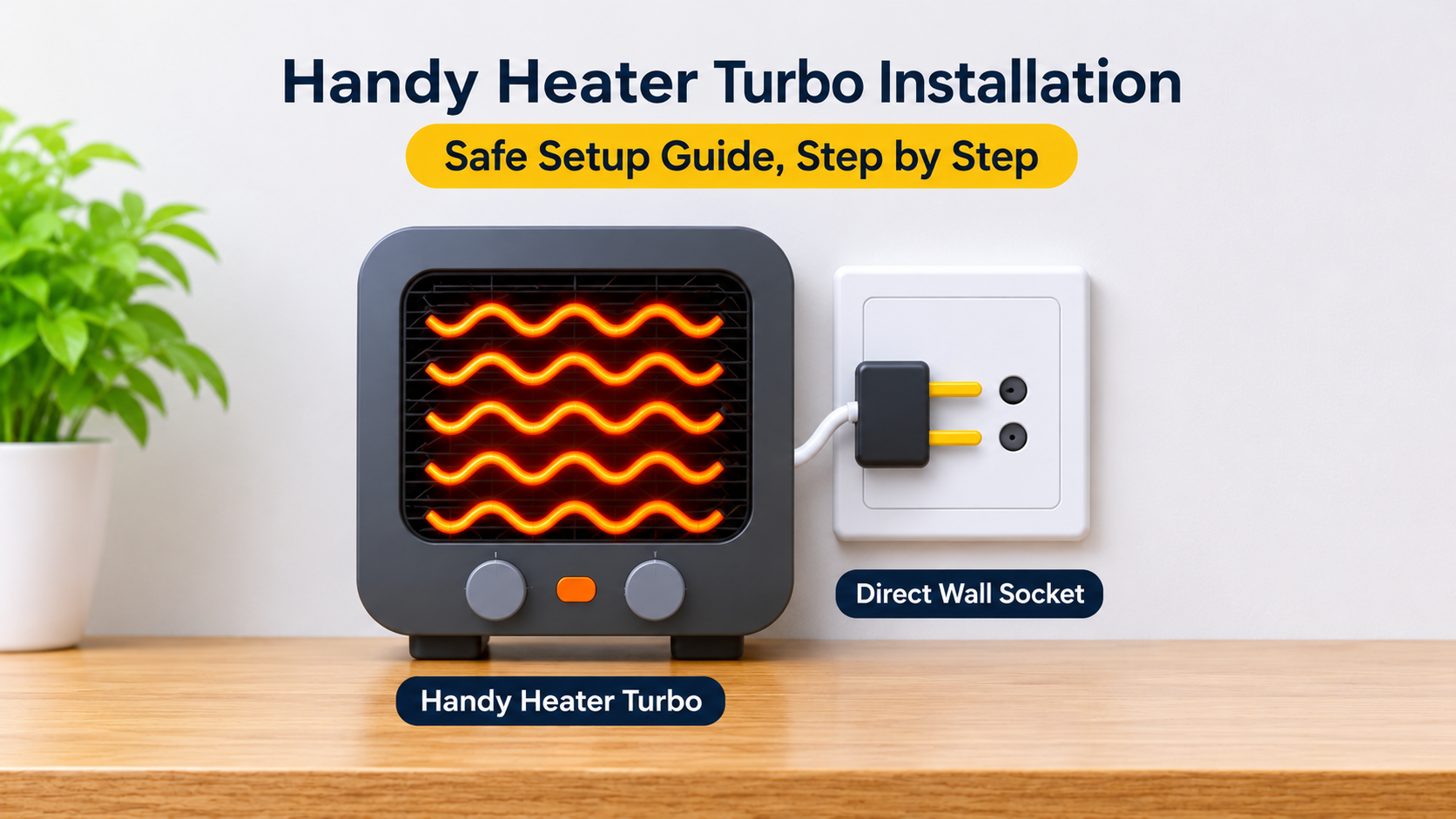
Always plug a heater directly into a good wall socket. A worn socket should be replaced by a qualified electrician, not just tolerated.
Problem 5: Fan Works but No Heat
If air is blowing but it stays cool, check these simple things first:
- Is the heat selector or turbo switch actually set to a heating position, not fan-only?
- Is the thermostat knob turned low? Turn it up and see if the heat returns.
- Has the overheat protection tripped? Unplug, cool and clean the vents, then try again.
If it still blows cold air, the heating element, a thermal fuse or the switch may have failed. These are internal parts and should not be repaired at home. Contact the seller or a technician, or consider replacing the heater, especially if it is old and low-cost.
Problem 6: Weak Heat or Lights Dim When the Heater Starts
Heaters are heavy loads. When you switch one on, you may notice lights dimming for a moment, a TV or fan slowing slightly, or a heater that feels weaker than it should. Possible causes:
- Low or unstable supply voltage: common during peak hours or in areas with weak distribution.
- Long, thin extension cord: cord resistance wastes power as heat.
- Overloaded circuit: too many high-power appliances on one line.
- Loose wiring connections: inside the home, at the socket or the breaker panel.
Plug the heater directly into a wall socket, avoid running other heavy appliances at the same time, and use a lower heater setting if the supply is weak. If lights flicker or dim often or severely, or you hear buzzing from the socket or panel, ask an electrician to inspect your wiring. A voltage stabiliser may help in areas with unstable power, but it must be rated for the heater’s wattage, so check the specifications with the seller or an electrician first.
Problem 7: Sparks, Buzzing or Burning Smell
A very light smell the first few times you use a new heater, or when dust burns off after storage, is common. These signs are not:
- Visible sparks from the plug, socket or heater
- Smoke or a strong, sharp, acrid burning smell
- Loud buzzing, crackling or popping
- Melted or blackened plastic on the heater, plug or socket
Switch off the heater and unplug it only if it is safe. If there is smoke or fire, follow your local emergency procedure and leave the area. Do not use the heater again until a qualified technician has checked it, and replace it if it is damaged.
Quick Troubleshooting Table
| Symptom | Common causes | Safe first step | Stop and get help if |
|---|---|---|---|
| Heater completely dead | Dead socket, tripped breaker, loose plug, tip-over switch | Test socket, check breaker, stand it upright on a flat floor | Cord or plug is damaged, or it stays dead with a good socket |
| Breaker trips | Overload, damaged cord, internal fault | Switch off other heavy loads and try on a low setting | It trips again or trips on its own |
| Turns off by itself | Overheat protection, blocked vents, loose plug | Unplug, cool, clean vents, clear space | It keeps shutting off |
| Plug or socket hot | Worn socket, poor connection, overload | Stop and unplug if safe | Always get the socket and heater checked |
| Fan runs, no heat | Heat switch off, thermostat low, tripped protection | Check settings, cool down and clean | Still cold, probably a failed element or thermal part |
| Weak heat, lights dim | Low voltage, long cord, overloaded circuit | Plug directly into wall, run alone on the circuit | Frequent dimming, buzzing or flickering |
| Sparks, smoke, strong burning smell | Electrical fault, damaged part, bad connection | Stop using the heater | Always, do not use again until checked |
What Not to Do
Avoid these mistakes
- Using a long or thin extension cord or crowded multi-plug
- Resetting a breaker again and again
- Fitting a higher-rated fuse or breaker
- Taping or bypassing a safety switch
- Opening the heater to “fix” it yourself
- Using the heater with a damaged cord or plug
- Ignoring a hot plug or burning smell
Do this instead
- Plug directly into a healthy wall socket
- Find the cause, then ask an electrician if it persists
- Keep the protection rated as the wiring requires
- Fix the cause, such as dust, tilt or lack of space
- Contact the seller or a qualified technician
- Replace the damaged part or heater
- Stop, unplug if safe, and get it checked
Preventing Power Problems
- Use a good wall socket with a firm fit, and replace worn sockets.
- Avoid extension cords and multi-plugs with a heater.
- Do not share the circuit with other heavy appliances while the heater runs.
- Check the cord and plug every week for damage, kinks, heat marks and discolouration.
- Keep vents clean so the overheat protection is not triggered unnecessarily.
- Place it on a flat, hard surface so the tip-over switch works correctly.
- Do not coil the cord tightly while in use or trap it under furniture or a rug.
- Use lower settings when the room is warm or the supply is weak.
- Buy a quality heater with proper safety features, a thick cord, a solid plug and a warranty.
When to Call a Professional or Replace the Heater
- Call a qualified electrician if the socket is worn, hot or loose; if the breaker trips repeatedly; if lights flicker or dim often; or if you need a new socket or a dedicated circuit.
- Contact the seller or a technician if the heater is dead with a good socket, runs but never heats, or has an internal fault, especially if it is under warranty.
- Replace the heater if the cord, plug or body is damaged, if plastic is melted or blackened, if it sparks or smokes, or if repair costs more than a new unit.
Frequently Asked Questions
Why won’t my handy heater turbo turn on?
Start with the simple things: check that the socket is live, the plug is firm, the cord is undamaged, the breaker has not tripped, and the heater is standing upright on a flat surface. If it is still dead, the problem is probably inside the heater and needs a technician.
Why does my heater keep tripping the breaker?
The usual causes are an overloaded circuit, a damaged cord or plug, or an internal fault. Turn off other heavy appliances and test the heater alone on a low setting. If it trips again, stop using it and get the heater and wiring checked.
Can I use an extension cord with my heater?
It is strongly recommended not to. Heaters draw a high, constant current, and extension cords and multi-plugs can overheat. Plug the heater straight into a wall socket.
Is it normal for the plug to feel warm?
A slightly warm plug after a long run can be normal, but a hot, discoloured or soft plug or a burning smell is not. Stop using the heater and have the socket and plug checked.
Why does my heater turn off after a few minutes?
It may be the overheat protection due to dust or blocked vents, the thermostat reaching its set temperature, the tip-over switch on an uneven surface, or a loose connection. Clean the vents, place it on a flat floor with clear space, and check the plug and socket.
Why does the fan work but there is no heat?
Check that the heat setting and thermostat are turned up, and that the overheat protection has not tripped. If it still blows cold, the element or a thermal part may have failed and the heater needs professional repair or replacement.
Why do my lights dim when I switch on the heater?
A heater is a heavy load, so a brief dip can happen, especially if the supply is weak. Frequent or severe dimming, flickering or buzzing suggests a wiring or supply problem, and an electrician should inspect it.
Can a voltage stabiliser help?
It can help where supply voltage is unstable, but it must be rated for the heater’s wattage. Check the heater label and ask the seller or an electrician which rating is suitable before buying.
Final Summary
Most handy heater turbo power problems have simple, safe explanations. A heater is a heavy electrical load, so small weaknesses in the socket, plug, cord or circuit show up quickly. Remember these key points:
- Check the basics first: socket, plug, cord, breaker, upright placement and clean vents.
- Plug directly into the wall: avoid extension cords and shared circuits.
- Never bypass safety devices or fit higher-rated protection to stop tripping.
- Do not open the heater: internal repairs are for qualified technicians.
- Stop at once if you see a hot plug, sparks, smoke or a strong burning smell.
- Replace or repair damaged heaters and worn sockets instead of living with them.
With careful checks and sensible habits, you can solve many power problems quickly and keep your handy heater turbo warm, reliable and safe all winter.