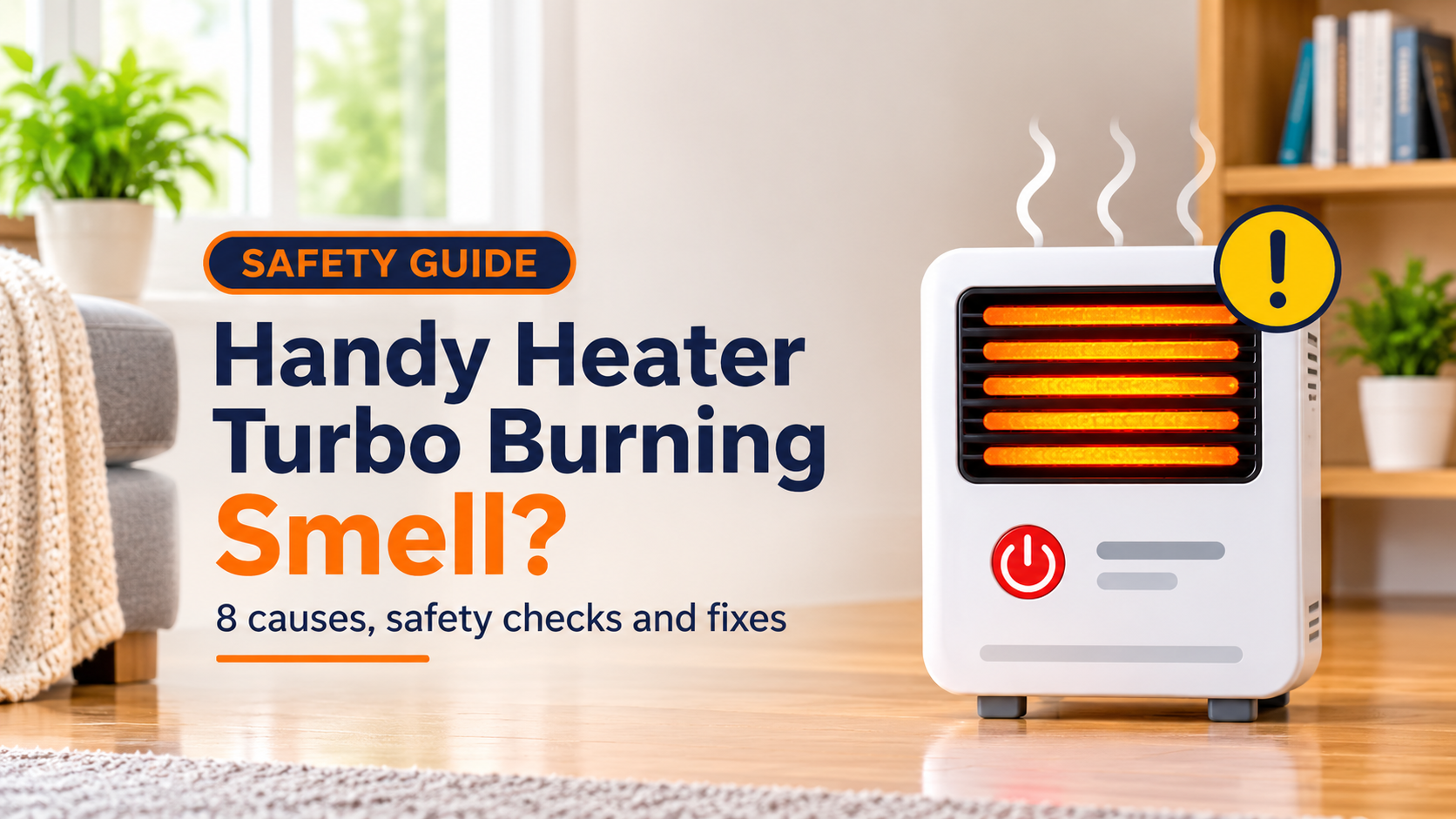
Handy Heater Turbo Burning Smell? 8 Causes and What to Do
You switch on your Handy Heater Turbo and, within a minute or two, you notice it: a burning smell. It might be faint and dusty, or sharp and chemical, or it might remind you of hot plastic. Either way, it is alarming. A heater sits close to you, runs on high current and gets hot by design, so it is natural to worry that something is about to go wrong.
The truth is that a burning smell from a portable heater has many possible causes. Some are completely harmless and fade quickly, such as dust burning off the element after months in storage. Others are real warnings that the heater, the cord or the outlet is overheating. This guide helps you work out which type of smell you have, what causes it, what to do immediately, and when to stop using your Handy Heater Turbo for good.
Safety first: If you notice smoke, sparks, flames, melting plastic or a strong, sharp or fishy smell, switch off and unplug the heater only if you can do so safely, move everyone away from it, ventilate the room and call your local emergency number if there is any fire risk. Do not carry on using the heater to see whether the smell goes away.
- What does the smell tell you?
- Where burning smells come from
- Cause 1: First-use or new-product smell
- Cause 2: Dust burning off after storage
- Cause 3: Blocked vents and a dirty filter
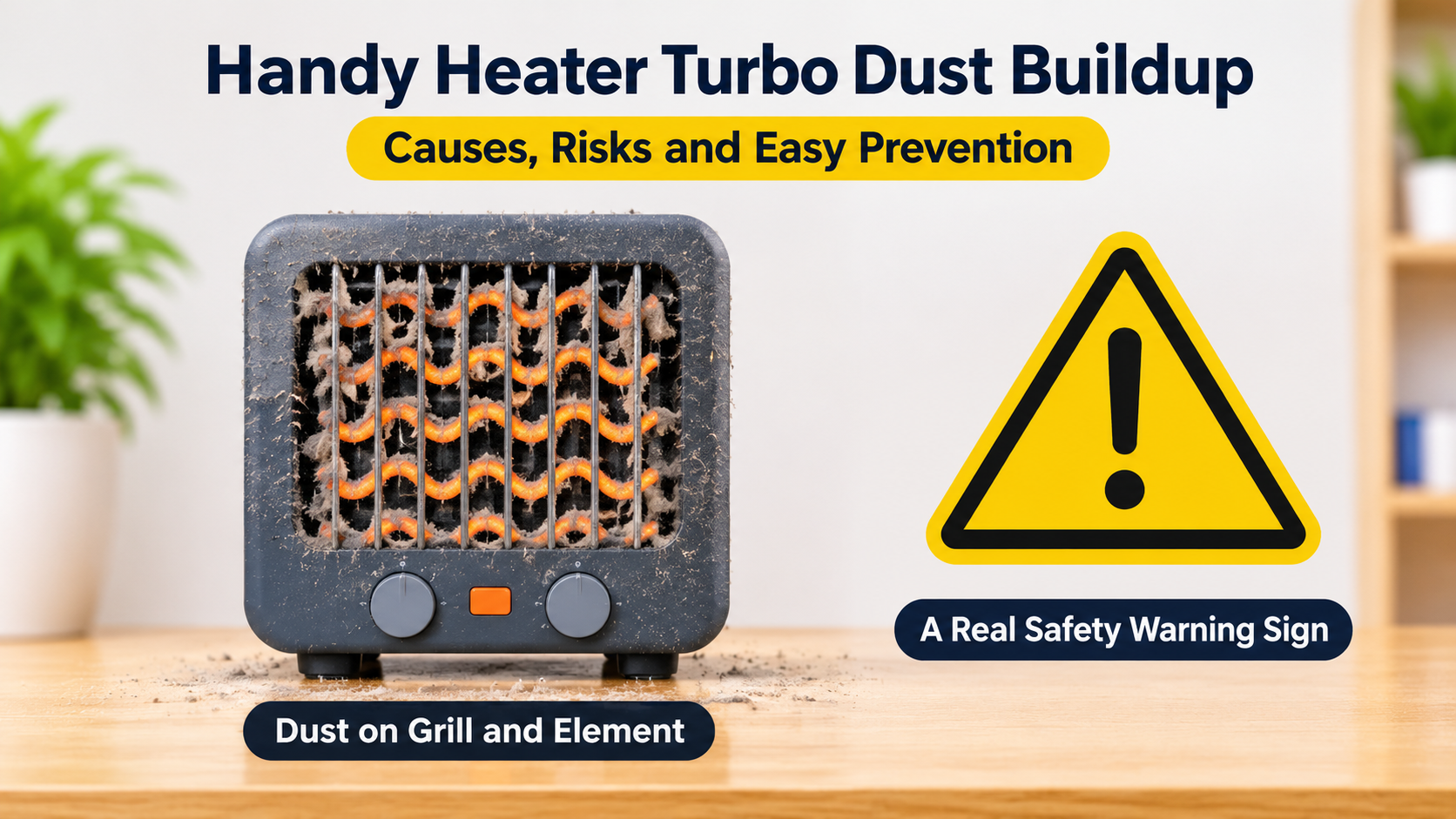
- Cause 4: Hair, lint or debris on the element
- Cause 5: Fabric, furniture or sprays too close
- Cause 6: Overloaded outlet, extension cord or plug
- Cause 7: Damaged cord or internal electrical fault
- Cause 8: Overheating from poor airflow or a failed fan
- What to do right now
- When to stop using the heater
- How to prevent burning smells
- Frequently asked questions
What Does the Smell Tell You?
Not every burning smell is the same, and the type of smell is your best clue. An electric heater does not burn fuel, so it should not keep producing a burning smell once it has been running for a while. A mild smell that appears at the start and fades quickly is very different from a sharp smell that stays or gets stronger.
Where Burning Smells Come From
Smells in a portable heater come from four main areas: the vents and grilles, the heating element, the plug and cord, and the casing and internal parts. Knowing which area the smell comes from makes troubleshooting much easier. Always unplug the heater and let it cool before you investigate.
Cause 1: First-Use or New-Product Smell
If your Handy Heater Turbo is brand new, a faint chemical or “hot metal” smell during the first few uses is common. Manufacturing residues, protective coatings and small amounts of oil on the heating element can burn off as the unit heats for the first time. This kind of smell is usually mild and gets weaker with each use.
What to do: Run the heater for a short period in a well-ventilated room, with a window slightly open and no one sleeping nearby. The smell should fade within a few uses. If it stays strong, gets worse or reminds you of melting plastic, stop using the heater and contact the seller.
Cause 2: Dust Burning Off After Storage
Heaters spend months in a closet or garage between seasons. Dust settles on the element and grille, and when you switch the heater on for the first time that season, the dust heats and burns off. The result is a dry, dusty “burnt toast” smell that normally lasts a few minutes at most.
What to do: Before the first use each season, unplug the heater and wipe it with a dry cloth, then clean the grilles with a soft brush or a vacuum with a brush attachment. If the smell persists beyond the first few minutes, move on to the other causes below.
Cause 3: Blocked Vents and a Dirty Filter
When dust and lint clog the intake grille or filter, airflow drops. Heat builds up inside the heater, and the dust trapped inside begins to cook on hot surfaces. This causes a stronger and more lasting burning smell, and it can trigger the overheat protection so the heater shuts off.
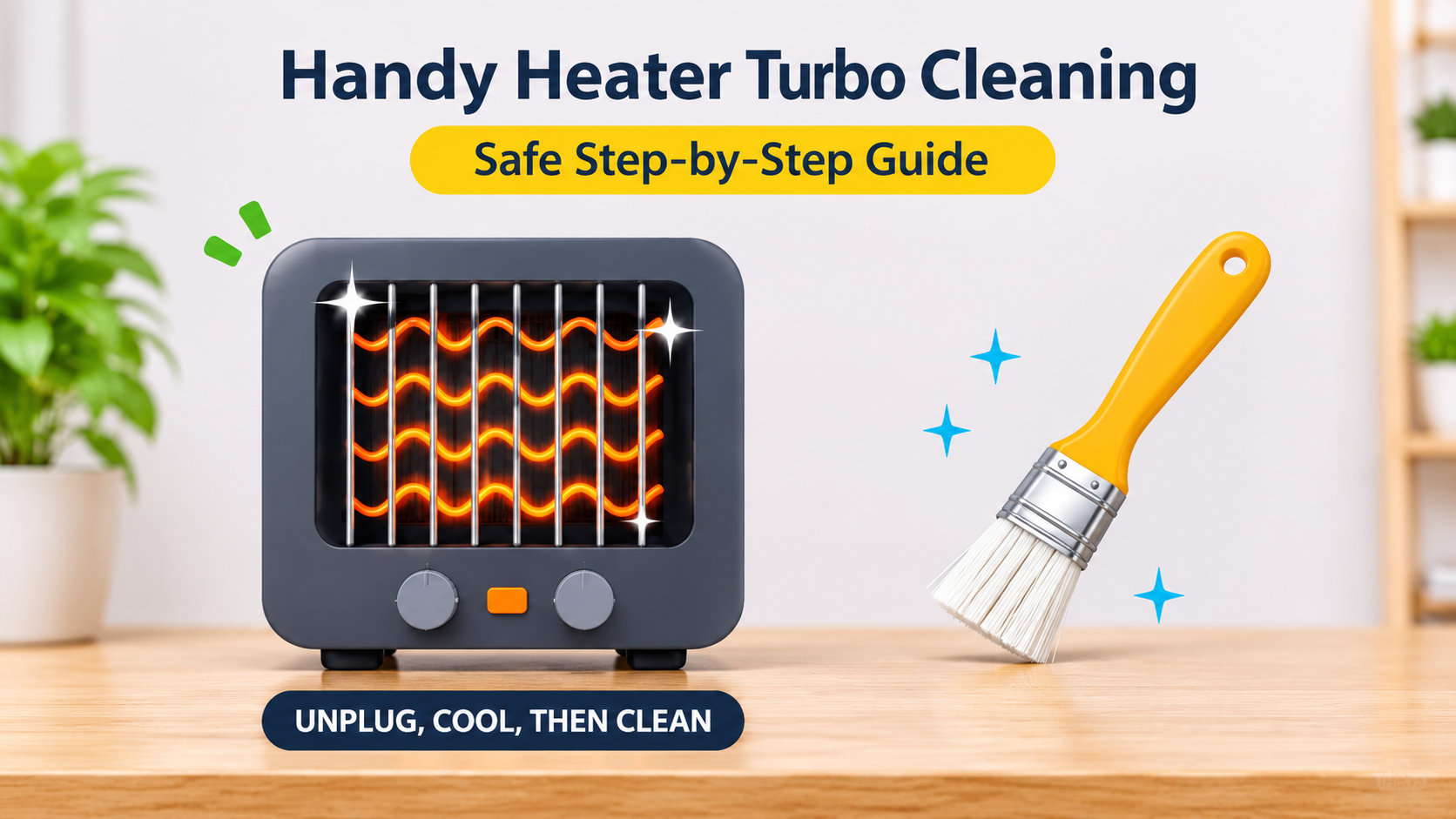
How to clean it safely:
- Unplug the heater and let it cool for at least 30 minutes.
- Clean the front and rear grilles with a soft brush or a vacuum with a brush attachment.
- If your model has a removable filter, clean it as the manual describes and dry it fully.
- Wipe the outside with a dry or barely damp cloth, and never let liquid get inside.
- Do not push metal tools through the grille.
Quick tip: Cleaning the vents every two to four weeks in the heating season prevents most dust-related smells.
Cause 4: Hair, Lint or Debris on the Element
Pet hair, threads, paper bits and other debris can be sucked in through the grille and land on or near the heating element. When they heat up, they smolder and smell like burning hair or fabric. Debris can also build up around the fan and restrict airflow.
What to do: Unplug and cool the heater, then look through the grille with a flashlight. Remove anything you can reach safely with a vacuum brush attachment. If you see a larger object inside or cannot reach it, do not use the heater and ask the manufacturer or a qualified technician for help.
Cause 5: Fabric, Furniture or Sprays Too Close
Sometimes the smell is not coming from the heater at all. Curtains, throws, clothing, rugs, upholstery and other items placed too close can heat up and give off a burning odor. Aerosol sprays, air fresheners, polish and cleaning products used near a heater can also leave residue on hot surfaces and produce a strong smell.
- Keep at least three feet (one meter) of free space around the heater, or follow your manual.
- Never place clothes, towels or blankets on or near the heater.
- Do not use sprays, solvents or flammable liquids near a running or hot heater.
- Move the heater to an open, hard, flat surface and test it again.
Cause 6: Overloaded Outlet, Extension Cord or Plug
Heaters draw a lot of current. A thin extension cord, a power strip, a loose plug or a worn outlet can create resistance, and resistance creates heat. This often produces a hot plastic or sharp electrical smell near the plug or the wall rather than at the front of the heater. A plug that feels too hot to touch is a clear warning sign.
Safety warning: If the plug, cord or outlet is very hot, discolored or smells burnt, unplug the heater and do not use that outlet again until a qualified electrician has checked it.
What to do:
- Plug the heater straight into a wall outlet and remove any extension cord or power strip.
- Make sure the plug fits firmly and does not wobble.
- Do not share the outlet with other high-power appliances.
- Have worn or loose outlets inspected and repaired.
Cause 7: Damaged Cord or Internal Electrical Fault
A frayed or kinked cord, a loose connection, a failing switch or a damaged internal component can all overheat and produce a sharp, acrid, fishy or “ozone” smell, often together with crackling, buzzing or flickering. This is the most serious cause, because it can lead to electric shock or fire.
Warning signs:
- A cord that is cracked, flattened, frayed or discolored.
- Melted, soft or darkened plastic on the plug or casing.
- Crackling, buzzing or sparking sounds.
- A smell that appears suddenly and gets stronger as the heater runs.
- The heater turns on and off by itself.
Do not open the heater or try to repair it. Heaters contain mains-voltage and very hot parts. If you suspect an electrical fault, stop using the unit and contact the seller or manufacturer about a warranty claim or replacement.
Cause 8: Overheating From Poor Airflow or a Failed Fan
The fan removes heat from inside the heater. If the fan is slow, noisy or stopped, or if the unit sits against a wall or under a blanket, internal temperatures rise quickly. The plastic parts, wiring insulation and dust inside can then start to smell. This type of smell often appears together with a very hot casing and repeated shut-offs.
- Check that the fan turns and that air is coming out of the front.
- Make sure nothing blocks the vents.
- Give the heater plenty of space and a hard, flat surface.
- If the fan has stopped while the heater is hot, unplug it right away and do not use it again.
What to Do Right Now
If your heater smells of burning, follow these steps in order:
| Smell or symptom | Most likely cause | What to do |
|---|---|---|
| Mild chemical smell on a brand-new heater | Manufacturing residue burning off | Ventilate the room, run briefly, watch it fade |
| Dusty smell for a few minutes after storage | Dust on the element | Clean before use, ventilate |
| Lasting burnt-dust smell, very hot casing | Blocked vents or dirty filter | Unplug, cool, clean the vents |
| Smell of burnt hair or fabric | Debris on the element | Unplug, remove debris, clean grilles |
| Smell from the room, not the heater | Fabric, furniture or sprays too close | Move items away, keep 3 ft clear |
| Hot plug, smell near the wall | Overloaded outlet or extension cord | Unplug, use a different wall outlet, call an electrician |
| Sharp or fishy smell, crackling, sparks | Electrical fault or damaged cord | Unplug and stop using immediately |
When to Stop Using the Heater
Do not keep troubleshooting and do not keep the heater running in these cases:
- The smell is strong, sharp or fishy, or reminds you of melting plastic.
- You have seen smoke, sparks or flames, or heard crackling.
- The plug, cord or casing is discolored, soft, cracked or melted.
- The smell returns after you cleaned the heater and moved it to a safe place.
- The heater shuts off repeatedly or the fan has stopped.
- The unit is old and has had other problems.
- It is under warranty. Contact the seller or manufacturer first.
If you decide to replace it, look for these features:
- Overheat protection and tip-over protection built in.
- A recognized safety certification for your country.
- An adjustable thermostat and a power rating that fits your room.
- A sturdy cord and plug, and easy-to-clean vents or filter.
- A clear warranty and responsive support.
How to Prevent Burning Smells
- Clean the grilles and filter every two to four weeks during use, and before the first use each season.
- Plug directly into a wall outlet and avoid extension cords and power strips.
- Keep about three feet of free space around the heater.
- Never cover the heater or dry anything on it.
- Do not use sprays or flammable liquids near the heater.
- Run a new heater in a ventilated room for its first few uses.
- Inspect the cord and plug before each season, and store the heater in a dry, dust-free place.
- Do not leave the heater running while you sleep or are away from home.
Good to know: A portable heater is a spot heater, not a replacement for your main heating. For better comfort, add draft sealing and insulation instead of running the heater harder or longer.
Frequently Asked Questions
Is a burning smell normal when I first use my heater?
A mild smell during the first few uses of a new heater, or the first use after a long storage period, can be normal because dust and residue burn off. It should fade quickly. A strong, sharp or lasting smell is not normal.
Why does my heater smell like burning plastic?
Hot plastic smells can come from a plug or cord that is overheating, from items too close to the heater, or from overheated internal parts. Unplug the heater, let it cool and inspect it. If you see discoloration or melting, stop using it.
Why does my heater smell like burning dust?
Dust on the element, the grille or inside the heater burns off when it heats up. Clean the vents, and if the smell fades quickly, there is probably nothing wrong. If it continues, check for blocked vents or debris.
Can I keep using the heater if the smell goes away?
If it was a mild, brief dusty or new-product smell, yes. If the smell was sharp, plastic-like, electrical or came with smoke, sparks or a hot plug, do not use the heater again until the cause is found and fixed.
Is a burning smell from a heater dangerous?
It can be. Some smells are harmless, but others signal overheating, damaged wiring or a risk of fire. When in doubt, unplug the heater and stop using it.
Can an extension cord cause a burning smell?
Yes. A thin extension cord or power strip can overheat under a heater’s high current. Always plug the heater directly into a wall outlet.
Why does my heater smell worse on high settings?
High settings run the element hotter, so dust, residue or nearby items burn more noticeably. If the smell is strong, check for blocked vents or debris and stop using it if the smell stays.
Can I repair the heater myself?
You can clean the outside grilles and move the heater to a safe place. Internal repairs should be done only by the manufacturer or a qualified technician.
Final Thoughts
A burning smell from your Handy Heater Turbo does not always mean disaster. A faint, short-lived smell from dust or a new heating element is common and usually harmless. But a strong, sharp, plastic-like or electrical smell is a warning you should never ignore.
Unplug the heater, ventilate the room, let the unit cool and look for the cause: dust, blocked vents, debris, items too close, a hot plug or a damaged cord. If the smell returns or you see any sign of melting, sparks or smoke, stop using the heater and replace it with one that has proper safety features. Your safety matters more than any heater.
Disclaimer: This article is for general information only. Features differ between models, so always follow the manufacturer’s user manual for your specific heater, and consult a qualified electrician for any electrical problem in your home. In an emergency, contact your local emergency services.