

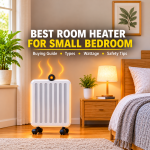
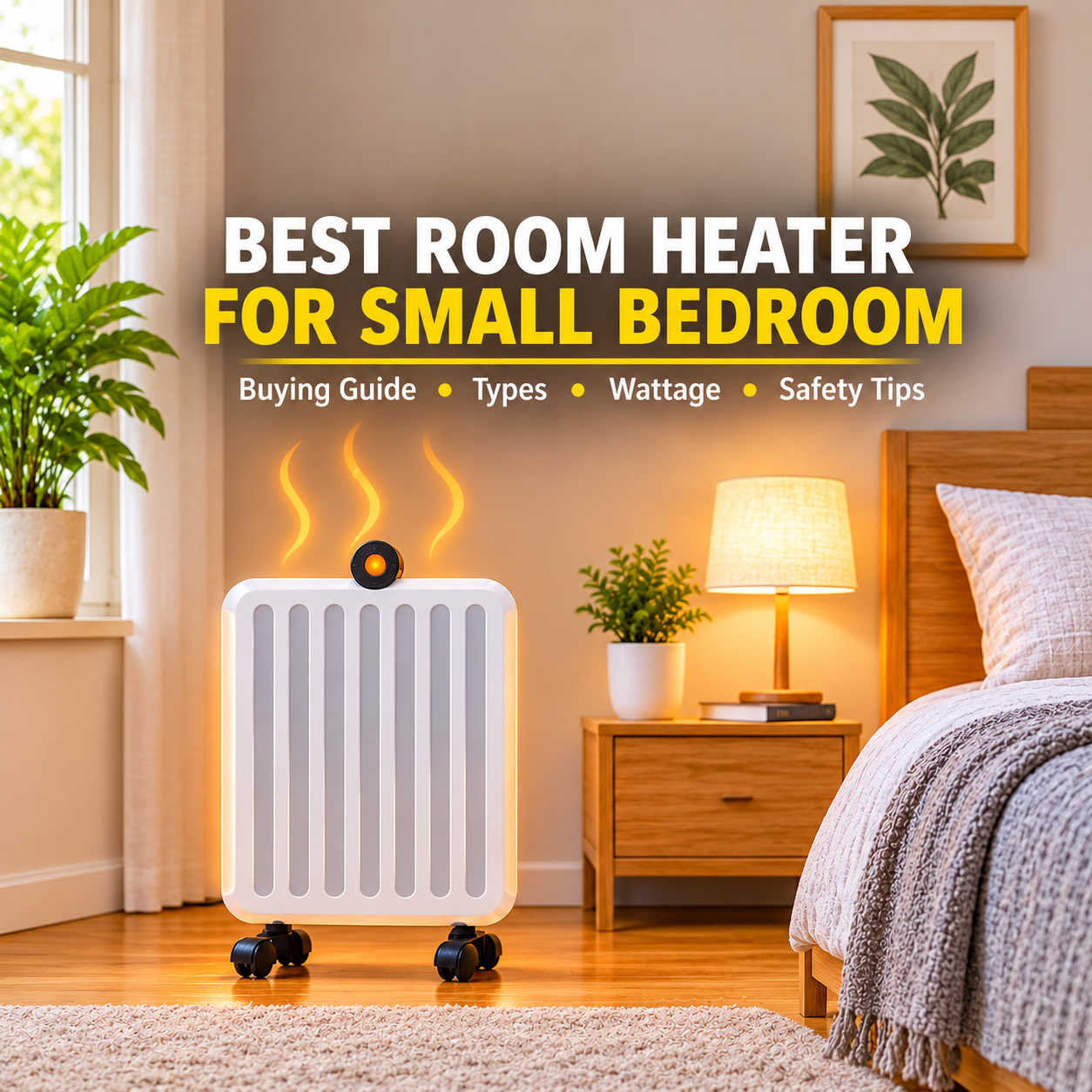

When the temperature drops, a cold bedroom can make it hard to fall asleep and even harder to get out of bed in the morning. The good news is that you don’t need to heat your whole home to stay comfortable. A well-chosen room heater for a small bedroom can warm the space quickly, keep your energy bills under control, and make winter nights far more pleasant.
But with so many options on the market, such as oil-filled radiators, ceramic fan heaters, infrared panels and more, choosing the right one can feel confusing. A heater that is perfect for a large living room can be too powerful, too noisy or simply unsafe in a compact bedroom. This guide walks you through everything you need to know: the main heater types, the right wattage for your room size, essential safety features, running costs and practical tips to stay warm.
Quick Takeaways
- Size matters: most small bedrooms (about 80 to 150 sq ft) need roughly 800 to 1,500 watts.
- Best for sleeping: oil-filled radiators and convector heaters are silent and give steady warmth.
- Best for fast warm-up: ceramic fan heaters heat a small room in minutes.
- Safety first: look for tip-over protection, overheat protection and an adjustable thermostat.
- Placement: keep any heater at least 3 feet (about 1 metre) away from beds, curtains and furniture.
Why a Small Bedroom Needs a Different Kind of Heater
A small bedroom has less air to warm, which sounds like an advantage, and it is. But it also brings special challenges. Space is limited, so a bulky heater can block walkways. The bed, bedding and curtains are close by, which raises safety concerns. And because you will probably use the heater in the evening or around sleep time, noise and light from the unit matter more than they do in other rooms.
The ideal bedroom heater is therefore:
- Right-sized so it warms the room without overheating it or wasting electricity.
- Quiet so it doesn’t disturb your sleep.
- Compact so it fits in a corner without crowding the room.
- Equipped with safety features because it will operate close to bedding and fabrics.
- Thermostat-controlled so it holds a comfortable temperature instead of running at full blast all night.
Types of Room Heaters for a Small Bedroom
Almost all portable electric heaters turn electricity into heat very efficiently, so the real differences come down to how they deliver that heat, how quickly, and how loudly. Here is a quick visual comparison before we go through each type in detail.

1. Oil-Filled Radiator Heaters
An oil-filled radiator contains sealed thermal oil that is warmed by an electric element. The hot oil heats the metal fins, which then radiate warmth into the room. Because the oil holds heat for a long time, the unit stays warm even after the heating element cycles off.
Pros: completely silent, gentle and steady warmth, no drying fan, stays warm after switching off.
Cons: slower to heat up, heavier and bulkier, and the surface gets hot to the touch.
Best for: people who want quiet, all-night comfort and are happy to switch it on a little earlier.
2. Ceramic Fan Heaters
Ceramic fan heaters pass air over a hot ceramic element and blow it into the room. They are among the fastest ways to take the chill off a small space and are usually light and affordable.
Pros: very fast warm-up, lightweight and portable, often cheaper to buy.
Cons: fan noise, heat stops soon after switching off, and the airflow can feel drying.
Best for: quickly warming the room before bed or while getting dressed in the morning.
3. Infrared (Radiant) Heaters
Infrared heaters warm people and objects directly rather than heating the air first. You feel the warmth almost immediately when you are in front of the unit, which makes them useful for targeted heating.
Pros: instant warmth, silent operation, no air movement.
Cons: you need to be in the line of sight to feel the heat, and the room itself warms slowly.
Best for: a desk, a reading chair or a spot beside the bed.
4. Convector Heaters
Convector heaters warm the air that passes over a heated element. The warm air rises and circulates, gradually bringing the whole room to temperature. Many models are slim and some can be wall-mounted or placed low along a wall.
Pros: even heat distribution, quiet, often come with digital thermostats and timers.
Cons: moderate warm-up speed and less effective in very drafty rooms.
Best for: maintaining a comfortable temperature through the night.
5. Panel and Wall-Mounted Heaters
Slim panel heaters combine gentle convection with a little radiant heat. Because they hang on the wall or stand on short feet, they take almost no floor space, which is a real benefit in a tight bedroom.
Pros: space-saving, quiet, low surface temperatures on many designs.
Cons: lower heat output, so they suit smaller or well-insulated rooms best.
Best for: very small bedrooms, kids’ rooms and guest rooms.
6. Ceramic Tower Heaters
Tower heaters are tall, slim versions of the ceramic fan heater. They often oscillate to spread warmth and include remote controls, timers and thermostats, all in a footprint that fits neatly in a corner.
Pros: small footprint, oscillation, feature-rich.
Cons: fan noise at higher settings; tall units must be stable.
Best for: corners, narrow rooms and anyone who wants remote control convenience.
Quick Comparison Table
| Heater Type | Warm-Up Speed | Noise Level | Best Use |
|---|---|---|---|
| Oil-filled radiator | Slow | Silent | Overnight comfort |
| Ceramic fan heater | Very fast | Low to moderate | Quick warm-up |
| Infrared heater | Instant (direct) | Silent | Spot heating |
| Convector heater | Medium | Silent | Even, all-night warmth |
| Panel / wall-mounted | Medium | Silent | Very small rooms |
| Ceramic tower | Fast | Low to moderate | Corners, remote control |
How Many Watts Do You Need for a Small Bedroom?
Choosing the correct wattage is one of the most important decisions. A heater that is too weak will run constantly without ever making the room comfortable. One that is too powerful will overheat the space, cycle on and off sharply and use more electricity than necessary.
A widely used rule of thumb is about 10 watts of heating power per square foot of floor area (roughly 108 watts per square metre) in a room with average insulation. A small bedroom typically measures somewhere between 80 and 150 square feet, which points to a heater of around 800 to 1,500 watts.

| Room Size | Suggested Wattage |
|---|---|
| Up to 60 sq ft (5.6 m²) | About 600 W |
| Around 100 sq ft (9.3 m²) | About 1,000 W |
| Around 150 sq ft (14 m²) | About 1,500 W |
| Around 200 sq ft (18.6 m²) | About 2,000 W |
Factors That Change the Wattage You Need
- Insulation: older homes with thin walls need more power than well-insulated ones.
- Windows: large or single-glazed windows lose a lot of heat.
- Ceiling height: higher ceilings mean more air to warm.
- Climate: very cold regions may need the upper end of the range.
- Outside walls: a bedroom with several exterior walls loses heat faster.
Also check your local electrical supply. Many portable heaters in North America top out at 1,500 watts because of standard household outlet limits, and heaters sold elsewhere must match your local voltage.
Essential Safety Features to Look For
Because a bedroom heater sits near bedding, clothing and curtains, safety should be the first thing you check, ahead of price and style. Make sure your heater includes the following:
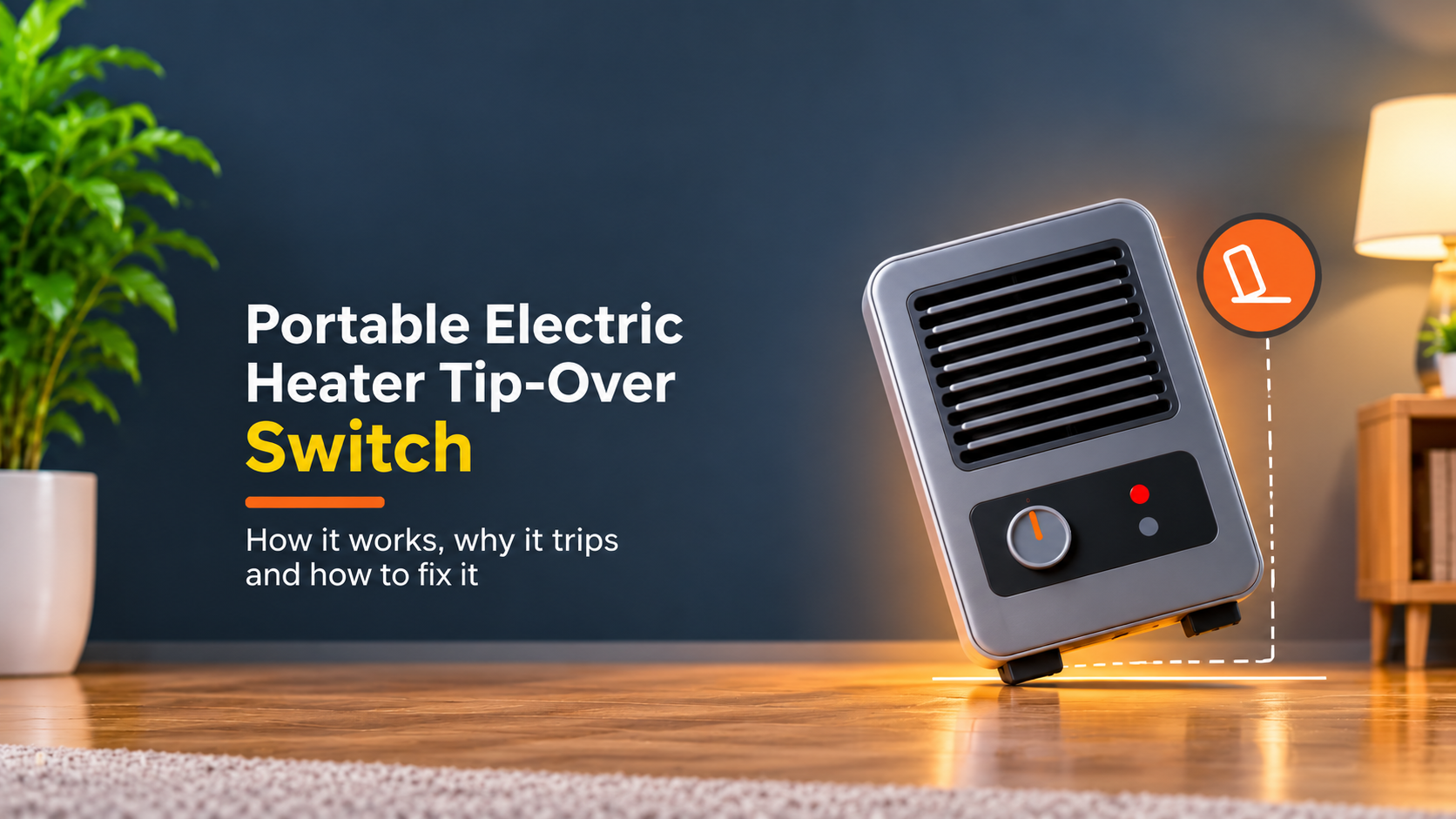
- Tip-over protection: automatically cuts power if the heater is knocked over.
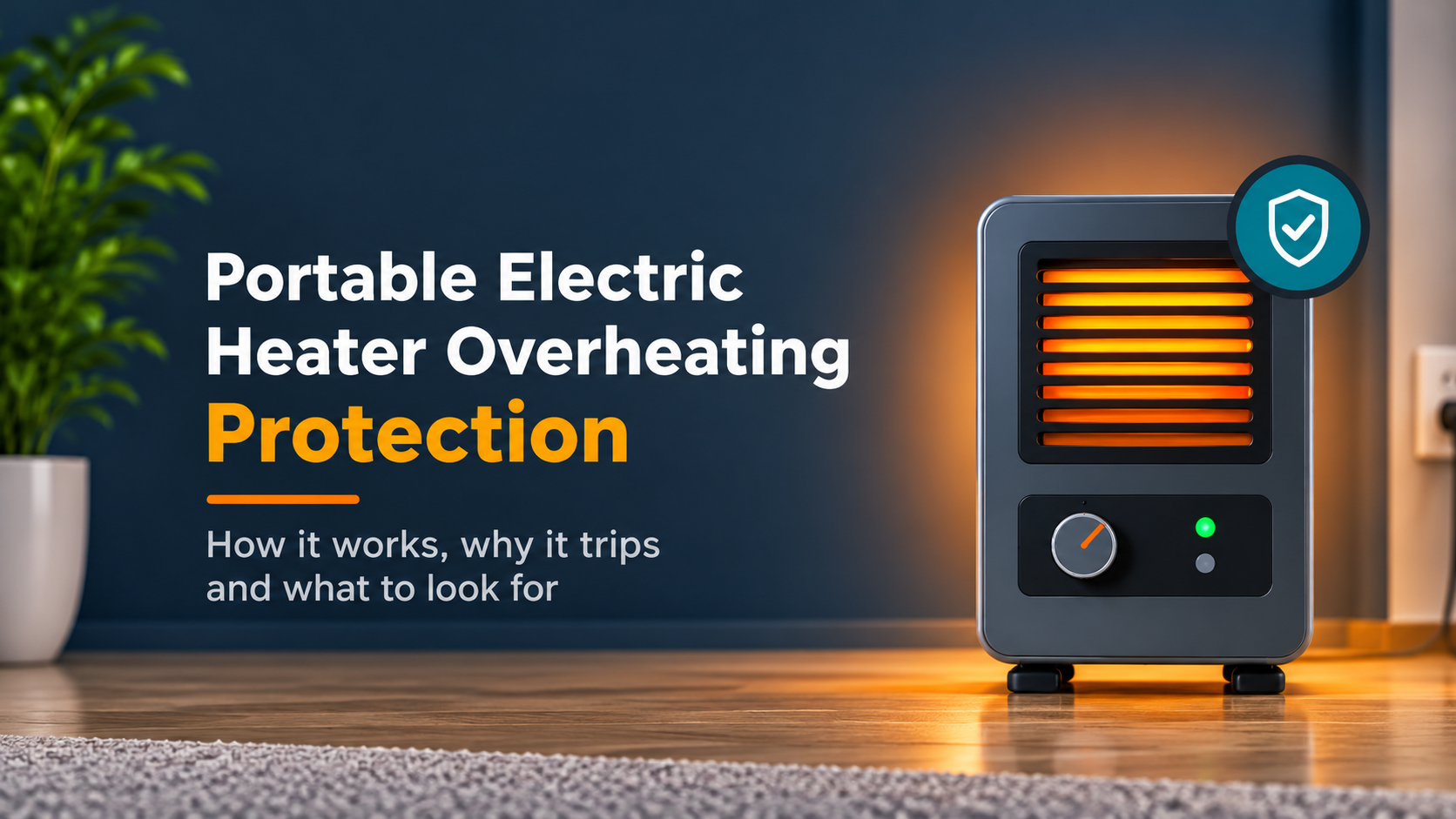
- Overheat protection: shuts the unit off if internal temperatures get too high.
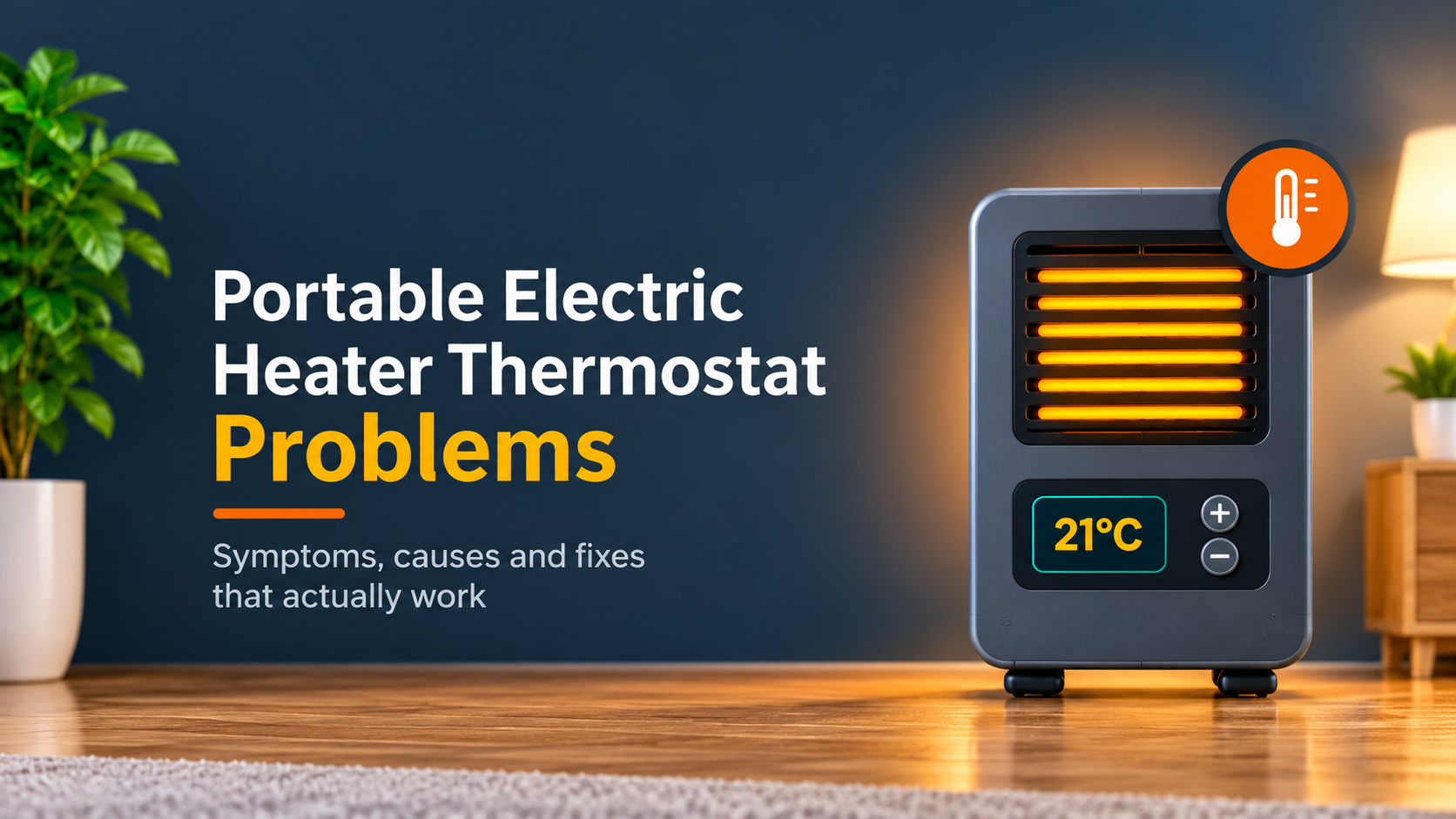
- Adjustable thermostat: keeps the room at a steady temperature and prevents constant full-power running.
- Timer or auto shut-off: lets you heat the room before bed and turn off automatically.
- Cool-touch housing or guards: reduce burn risk, especially if children or pets are around.
- Recognised safety certification: look for a mark from a reputable testing body on the product and packaging.
- Sturdy, wide base: prevents accidental tipping on carpets and uneven floors.
Where to Place a Heater in a Small Bedroom
Even the safest heater can cause problems if it is placed poorly. In a small room it is tempting to push the heater right up against the bed or tuck it under a window, but both are bad ideas. Follow these placement rules:

- Keep a 3-foot (1 metre) clearance from beds, bedding, curtains, clothes and furniture.
- Use a flat, hard surface. Avoid placing heaters on thick rugs, beds or unstable furniture.
- Plug directly into a wall outlet. Avoid extension cords and power strips, which can overheat with high-wattage appliances.
- Don’t cover the heater or use it to dry clothes.
- Position it near the coldest part of the room (often by the window or an outside wall) while still respecting the clearance rule. This helps counter cold air at the source.
- Install working smoke alarms and test them regularly.
How Much Does It Cost to Run a Room Heater?
Nearly all electric resistance heaters convert almost all the electricity they use into heat. That means a 1,000-watt oil-filled heater and a 1,000-watt ceramic heater cost about the same to run for the same amount of time. What really controls your bill is wattage, hours of use and your electricity rate.
Here is a simple formula:
Cost = (Watts ÷ 1,000) × Hours used × Price per kWh
For example, a 1,000-watt heater running for 8 hours uses 8 kWh. If your electricity costs $0.15 per kWh (an illustrative rate only), running it continuously for those 8 hours would cost about $1.20. In practice, a thermostat-controlled heater cycles on and off once the room is warm, so the real cost is usually lower.
Smart Ways to Lower Your Heating Costs
- Use the thermostat and set it to a comfortable but not excessive temperature.
- Use a timer to pre-warm the room, then let bedding and blankets keep you warm.
- Close the bedroom door to keep warm air in.
- Choose eco or low-power modes when available.
Practical Tips to Keep a Small Bedroom Warm
A heater works best as part of a warm room. A few simple tweaks can make the same wattage feel noticeably more effective:
- Block drafts. Seal gaps around windows and doors with weatherstripping or a draught excluder.
- Use thick curtains. Heavy or thermal curtains reduce heat loss through glass. Remember to keep them clear of the heater.
- Add a rug. A rug insulates cold floors and makes the room feel cosier.
- Layer your bedding. A good duvet and blankets let you sleep comfortably at a lower room temperature.
- Handle dry air. Heaters can make the air feel dry. A small humidifier or an open container of water can help in very dry climates.
- Don’t overheat. Many sleep experts suggest a bedroom temperature of roughly 15 to 19°C (60 to 67°F) for sleeping, so you rarely need maximum heat all night.
How to Choose the Right Heater: A Simple Checklist
- Measure your room and pick a wattage in the matching range.
- Decide what matters most: silence (oil-filled or convector), speed (ceramic fan) or space-saving (panel or tower).
- Check safety features: tip-over and overheat protection are essential.
- Look for a thermostat and timer to save energy and add convenience.
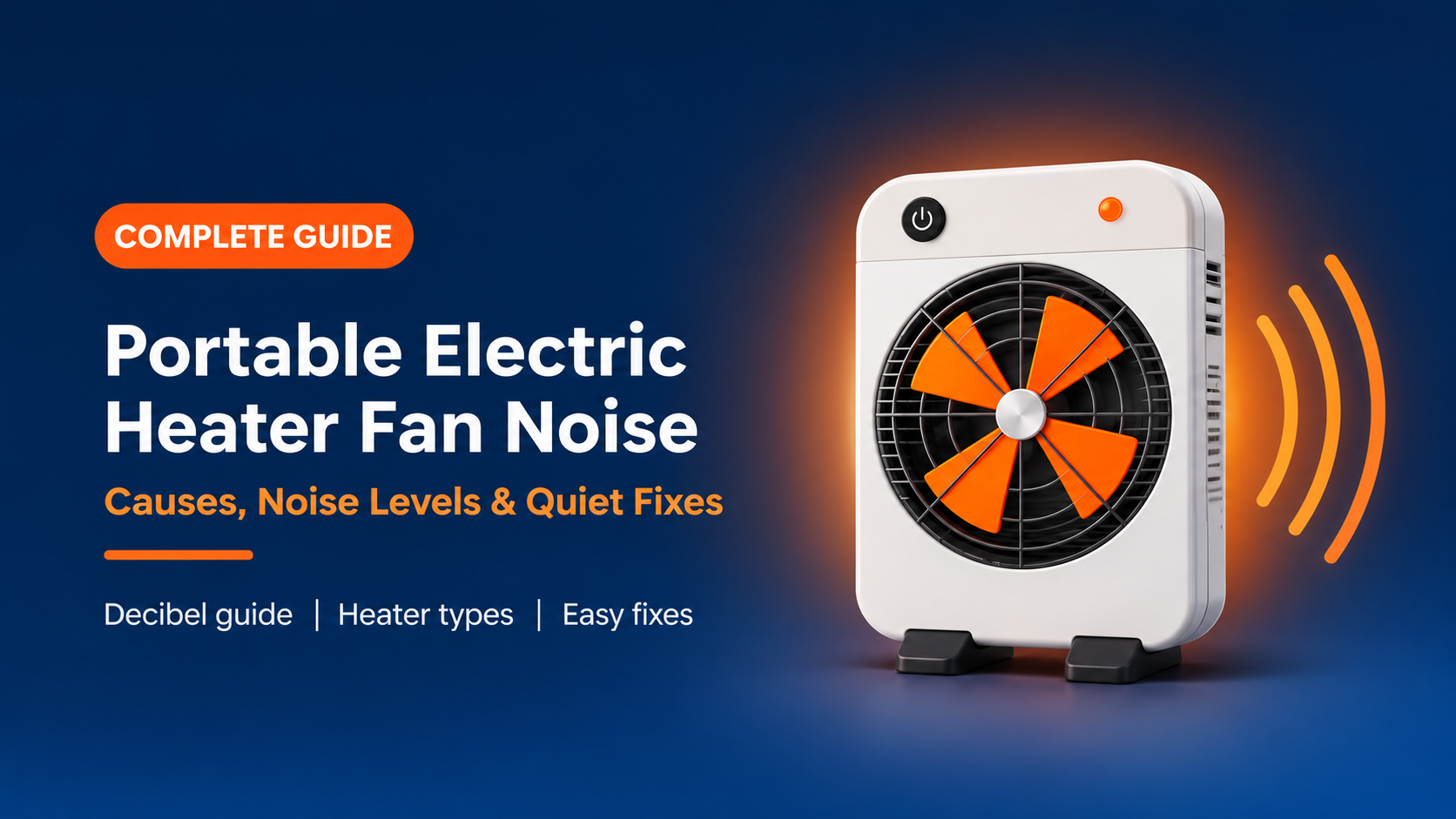
- Consider noise levels if you are a light sleeper.
- Check the size and weight, and make sure it fits your available space safely.
- Verify voltage and plug type for your country.
Which Heater Is Best for You?
- Light sleeper: choose an oil-filled radiator or a convector heater for silent operation.
- Need heat fast in the morning: a ceramic fan or tower heater warms the room in minutes.
- Very small room or limited floor space: go with a slim panel heater or a compact tower.
- Want to warm just your bed or desk area: an infrared heater provides focused warmth.
- Prefer set-and-forget: pick a heater with a digital thermostat, timer and remote.
Frequently Asked Questions
What size heater do I need for a small bedroom?
For most small bedrooms between 80 and 150 square feet, a heater rated between 800 and 1,500 watts is suitable. Smaller or well-insulated rooms can use the lower end, while colder or drafty rooms may need the higher end.
Is it safe to leave a room heater on all night?
Many safety organisations advise against leaving portable heaters running unattended or while you sleep. If you choose to use one, always follow the manufacturer’s instructions. Pick a model with a thermostat, timer, tip-over protection and overheat protection, keep it at least 3 feet away from anything flammable, and plug it directly into a wall outlet. A safer habit is to pre-warm the room with a timer and switch the heater off before you go to sleep.
Which type of heater is cheapest to run?
Electric resistance heaters are all close to 100% efficient at turning electricity into heat, so running costs depend on wattage and hours of use rather than type. A thermostat and a well-insulated room are the best ways to lower your bill.
What is the quietest heater for a bedroom?
Oil-filled radiators, convector heaters, panel heaters and infrared heaters have no fan, which makes them the quietest options. Fan-based ceramic heaters are noisier, although many modern models have a quiet or low mode.
Can I use an extension cord with a room heater?
It is best not to. Heaters draw a lot of power, and extension cords or power strips can overheat. Plug the heater directly into a wall outlet whenever possible.
Do heaters make the air dry?
Any heater can make the air feel drier because warm air holds more moisture, and fan heaters can add to the sensation. If you notice dry skin or a dry throat, try a small humidifier and avoid blowing hot air directly at your face.
Should I choose an oil-filled heater or a ceramic heater?
Choose an oil-filled heater if you want silent, steady heat that lasts. Choose a ceramic heater if you want fast warmth and a lightweight, portable unit. Both are good choices for a small bedroom when used safely.
Final Thoughts
The best room heater for a small bedroom is the one that matches your room size, fits your space safely, and suits how you actually live. For quiet, consistent warmth, an oil-filled radiator or convector heater is hard to beat. For quick warm-ups, a ceramic fan or tower heater is a smart choice. And for tight spaces, a slim panel or compact tower can deliver comfort without taking over the room.
Whichever type you pick, focus on the right wattage, a reliable thermostat, strong safety features and sensible placement. Combine your heater with simple habits like sealing drafts, using thicker curtains and layering your bedding, and you can enjoy a warm, cosy bedroom all winter long without overspending on energy.